Kirjojen hintavertailu – 12 903 725 kirjaa ja 27 kauppaa
Kirjailija
Helena Norberg-Hodge
Kirjat ja teokset yhdessä paikassa: 6 kirjaa, julkaisuja vuosilta 2001–2019, suosituimpiin kuuluu From the Ground Up. Vertaile teosten hintoja ja tarkista saatavuus suomalaisista kirjakaupoista.
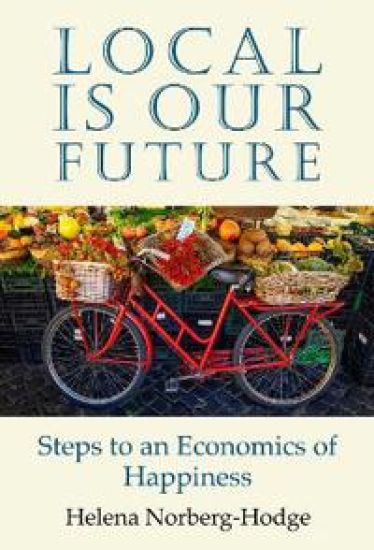
From a renowned pioneer of the anti-globalization movement, a primer on working towards a localized world From disappearing livelihoods to financial instability, from climate chaos to an epidemic of depression, we face crises on a number of seemingly unrelated fronts. This well-referenced book traces the common roots of these problems in a globalized economy that is incompatible with life on a finite planet. But Local is Our Future does more than just describe the problem: it describes the policy shifts and grassroots steps – many of them already underway around the world – that can move us towards the local and, thereby, towards a better world.
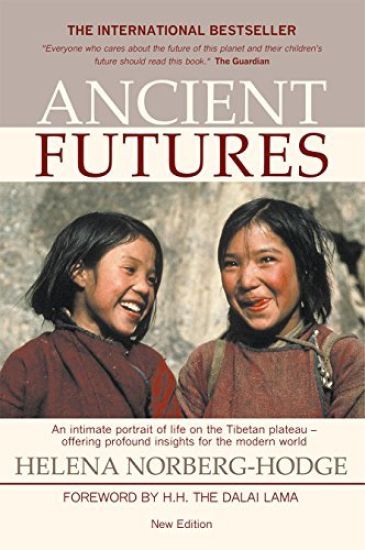
A moving portrait of tradition and change in Ladakh, or "Little Tibet," Ancient Futures is also a scathing critique of the global economy and a rallying call for economic localization. When Helena Norberg-Hodge first visited Ladakh in 1975, she found a pristine environment, a self-reliant economy and a people who exhibited a remarkable joie de vivre. But then came a tidal wave of economic growth and development. Over the last four decades, this remote Himalayan land has been transformed by outside markets and Western notions of "progress." As a direct result, a whole range of problems―from polluted air and water to unemployment, religious conflict, eating disorders and youth suicide―have appeared for the first time. Yet this is far from a story of despair. Social and environmental breakdown, Norberg-Hodge argues, are neither inevitable nor evolutionary, but the products of political and economic decisions―and those decisions can be changed. In a new Preface, she presents a kaleidoscope of projects around the world that are pointing the way for both human and ecological well-being. These initiatives are the manifestation of a rapidly growing localization movement, which works to rebuild place-based cultures―strengthening community and our connection with nature. Ancient Futures challenges us to redefine what a healthy economy means, and to find ways to carry centuries-old wisdom into our future. The book and a related film by the same title have, between them, been translated into more than 40 languages.
XIII. Cooperative Economics and Creating Community Where You Are On the three-legged stool of sustainability, less attention has been given to economics than to the more robust ecological and social dimensions. But that doesn't mean it's less important. (It's hard to keep a stool upright with only two legs.) Half the articles in this bundle are focused on what we're learning about values-based ways to make a living (which is a quality of life issue if there ever was one). The other stories are devoted to taking the inspiration of community beyond the boundary of shared property. If you figure that there are only 100,000 people in the US living in some form of self-identified intentional community, yet 100 million wanting a greater sense of community in their life, it's obvious that we should be exporting what we're learning to neighborhoods, churches, schools, and workplaces almost everywhere. Half of the 20 articles in this bundle focus on that expansive task. This Digital Issue of Cooperative Economics and Creating Community Where You Are includes: 1. Recipe for a Thriving Community by Jonathan Dawson, #119 2. Regaining Our Sense of Oneness through Localization by Helena Norberg-Hodge, #154, 15-16 . 3. Our Own Money: A Recipe for Local Economic Revival (including Local Currencies, Stephen Burke) by by Albert Bates, #133 4. When a Dollar Is Worth More than 100 Cents by Gwynelle Dismukes, #136 5. Social Class & Money in Community by Allen Hancock, #98 6. Our Community Revolving Loan Fund: How Walnut Street Co-op Financed Its Property by Tree Bressen, #128 7. Inventing a Rural Economy, Business by Business: How The Farm Lost its Community Subsidy and Formed a Stable Economy in Its Place by Douglas Stephenson, #116 8. Self-Reliance, Right Livelihood, and Economic "Realities": Finding Peace in Compromise by Abeja Hummel, #158 9. Communities That Serve Others...and Love Doing It by Darin Fenger, #131 10. Free to Serve: Notes from a Needs-Based Economy by Chris Foraker, #141 11. Householding: Communal Living on a Small Scale by Elizabeth Barrette, #144 12. Balancing Act: How Much Are You Willing to Share? by Janel Healy, #152 13. The Values of Shared Ownership by Tim Miller, #159 14. The Quest for Community: A Personal Journey into the Grey Zone by Tree Bressen, #139 15. Gardens of Gratitude: ATwo-Day Garden Party Blitz in L. A. by Ginny LeRossignol Blades, #144 16. Chicken a la West Birch Avenue by Hilary Giovale, #142 17. Lighten Up: A Community Energy-Reduction Experiment by Kelly Barth, #143 18. What Are the Boundaries of an Intentional Community? An Experiment in Geographically-Dispersed Community-Building by Don Schneider and Elin England, #143 19. Greening Your H'Hood David Leach, #157 20. Let's Do Greywater First by Laura Dvorak and J. Brush, #137
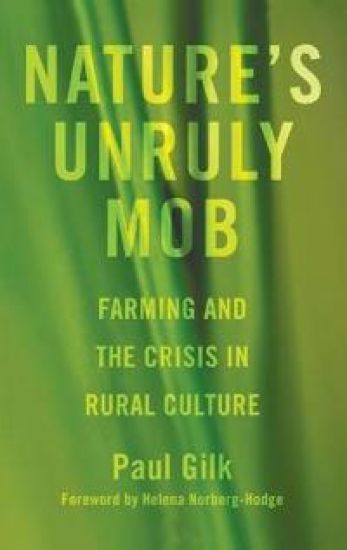
Growing up in the mostly wooded rural countryside of northern Wisconsin, in the decades immediately after the Second World War, meant immersion in cultural transformation. An economy of subsistence and self-provisioning was rapidly becoming industrialized and commercial. The culture of the local and small-scale was being overpowered by the metropolitan and large-scale. This experience provided the practical groundedness for exploring the decline and even the demise of small-scale farming, not just in northern Wisconsin, but as an example and illustration of how industrialization and globalization undermine local rural culture everywhere. Linked with an ecological critique that asserts the unsustainability of globalized industrialism, the exploration into the meaning of rural culture took on larger significance, especially when seen in relation to the collapse of all prior civilizations. In addition, the investigation into the origins of civilization revealed the predatory relationship civilization developed in regard to agriculture and rural life. The rampant globalization of civilization results in the destitution and impoverishment of agrarian culture. The question then becomes whether civilization has finally achieved the technical mastery by which to protect and extend itself permanently or whether its complexity only assures a more catastrophic collapse or whether civilization may learn to be flexible enough to merge with an essentially noncivilized folk culture to create a new cultural sensibility that enhances the best of both worlds. This is the question the entire world is now facing. Weapons of mass destruction, climate change, and peak oil all combine the force a resolution to this dilemma.
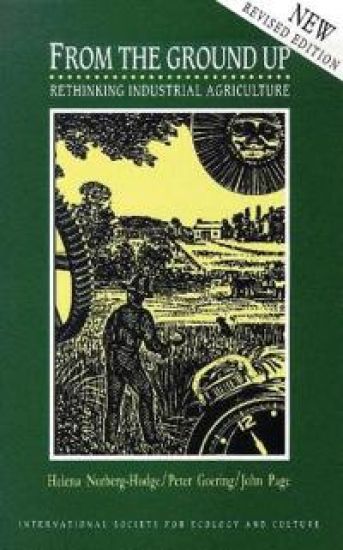
Modern industrial agriculture is in crisis. In our obsession with 'efficiency' and short-term profit, we are losing all real connection with the natural world. As a result, the dream of global abundance promised by the introduction of chemical fertilisers, pesticides and hybrid seeds is becoming a nightmare of health risks, degraded land and ailing communities. The way we produce our food is destructive and quite simply unsustainable. From the Ground Up sets the decline of agriculture within the broader context of industrialisation as a whole, and explores some of the fundamental principles which underlie the 'growth-at-any-cost' thinking of modern society. At the same time, it documents the growing public distrust of conventional agricultural practices, and highlights some of the most promising alternatives leading to more sane, environmentally healthy ways of producing food. This book is a valuable reference for those concerned with the future of agriculture - in the industrialised countries as well as in the South, where agricultural development continues to be modelled on the industrial ideal.