Kirjojen hintavertailu – 12 903 735 kirjaa ja 27 kauppaa

Kirjailija

Helga Nowotny

Kirjat ja teokset yhdessä paikassa: 21 kirjaa, julkaisuja vuosilta 1993–2026, suosituimpiin kuuluu Thinking ahead : research, funding and the future (RJ Yearbook 2015/2016). Vertaile teosten hintoja ja tarkista saatavuus suomalaisista kirjakaupoista.

21 kirjaa

Kirjojen julkaisuvuodet: 1993–2026.

Zeit (Time) - From Durer to Bonvicini

Zeit (Time) - From Durer to Bonvicini

Catherine Hug; Helga Nowotny; Monica Bello; Rudiger Safranski; Josef Teichmann; Sebastien Vivas; Stefan Zweifel

SNOECK VERLAGSGESELLSCHAFT MBH
2023
sidottu
Time is one of the great mysteries in the history of civilization. Its definitions are many and can be found in the most diverse disciplines, from religion to biology and economics, above all, of course, in physics, and as an well-established theme in art. Surprisingly, for all Switzerland's reputation as a watchmaking nation, few art museums in the country have yet staged an exhibition on the subject of time that spans multiple eras and disciplines. The sensual journey of the Kunsthaus Z rich through the history of time therefore now takes a comprehensive look at paintings, films, installations, performances, and real objects such as clocks from the 1550s to the present. Even though the clock as a time-measuring instrument is the starting point: temporal perspectives such as the biological, the paleontological, and even of personal sensations, are explored in depth in this show, curated by Cath rine Hug, with works by, among others, Sinzo Aanza, Giacomo Balla, Black Qantum Futurism, Manon de Boer & George van Dam, Abraham-Louis Breguet, Pieter Claesz, Honor Daumier, Jean Dubuffet, William Hogarth, Roni Horn, Monica Ursina J ger, On Kawara, Herlinde Koelbl.
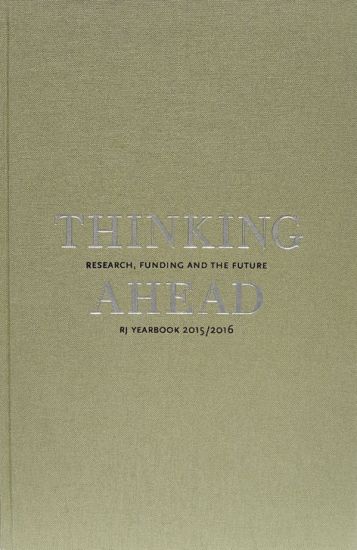
Thinking ahead : research, funding and the future (RJ Yearbook 2015/2016)

Thinking ahead : research, funding and the future (RJ Yearbook 2015/2016)

Jenny Björkman; Björn Fjæstad; Katarina Bernhardsson; Göran Blomqvist; Göran Djupsund; Lars Geschwind; Ylva Hasselberg; Peter Hedström; Ulf Heyman; Poul Holm; Wang Hui; Mikael Härlin; Gunn Johansson; Svein Kyvik; Liv Langfeldt; Orvar Löfgren; Helga Nowotny; Bente Rosenbeck; Ulf Sandström; Sverker Sörlin; Linda Wedlin; Agnes Wold; Eva Österberg; Johan Östling

Makadam förlag
2015
nidottu
More world-leading research; more internationalisation; more mobility; more open access; more impact; more arts and humanities perspectives on other disciplines; more research links in teaching; we want more of most things, quite simply But how should Swedish research be organised and funded to achieve all this? The question covers numerous problems and dilemmas. What should be the distribution between major programmes and minor projects? Should research proposals be evaluated with reference to the applicants earlier achievements bibliometrically, for example or to the results expected? How much weight should be given to practical social benefits? Should assessments mainly be done by other researchers (peer review)? If so, how can they avoid spending more and more of their time evaluating other researchers? What specific role should research play in academic teaching? At universities in general? Or in politics, for that matter? Shouldnt researchers, to a higher degree, impart their results to decision-makers and the public with far greater outreach than today? Nowadays, more than half of Swedens university research is paid for by research funders outside the higher education institutions. Such funders include central government agencies, but also independent bodies. Riksbankens Jubileumsfond (RJ), the Swedish Foundation for Humanities and Social Sciences, fosters and supports research in these disciplines. This book, published to mark RJs Golden Jubilee in 2015, is an attempt to think ahead on issues concerning the future of research.
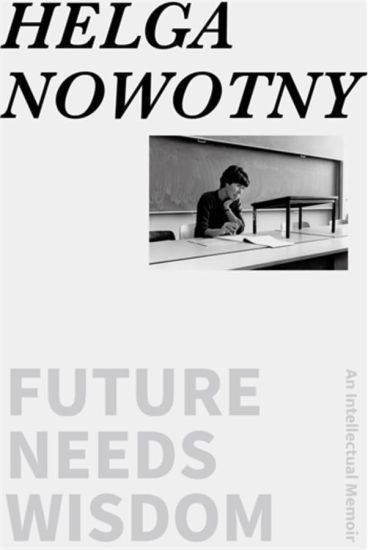
Future Needs Wisdom: An Intellectual Memoir

Future Needs Wisdom: An Intellectual Memoir

Helga Nowotny

Chinese University of Hong Kong Press
2025
sidottu

Halvin toimitettuna 56,00 €

Helga Nowotny's memoir provides a detailed account of her life, highlighting the challenges and triumphs of a woman who defied convention in a male-dominated field of science. From her early days in Science and Technology Studies, where she faced bureaucratic hurdles, to her influential role in shaping the European Research Council, Nowotny offers a candid look at her career. She shares personal stories of navigating the complexities of academia and policy, revealing the uncertainties and contingencies that shaped her life and work. This memoir resonates with anyone who has pursued a path less traveled, and offers a glimpse into the resilience and ambition required to succeed in challenging environments.
In AI We Trust

In AI We Trust

Helga Nowotny

JOHN WILEY AND SONS LTD
2024
nidottu
One of the most persistent concerns about the future is whether it will be dominated by the predictive algorithms of AI – and, if so, what this will mean for our behaviour, for our institutions and for what it means to be human. AI changes our experience of time and the future and challenges our identities, yet we are blinded by its efficiency and fail to understand how it affects us. At the heart of our trust in AI lies a paradox: we leverage AI to increase our control over the future and uncertainty, while at the same time the performativity of AI, the power it has to make us act in the ways it predicts, reduces our agency over the future. This happens when we forget that that we humans have created the digital technologies to which we attribute agency. These developments also challenge the narrative of progress, which played such a central role in modernity and is based on the hubris of total control. We are now moving into an era where this control is limited as AI monitors our actions, posing the threat of surveillance, but also offering the opportunity to reappropriate control and transform it into care. As we try to adjust to a world in which algorithms, robots and avatars play an ever-increasing role, we need to understand better the limitations of AI and how their predictions affect our agency, while at the same time having the courage to embrace the uncertainty of the future.
In AI We Trust

In AI We Trust

Helga Nowotny

Polity Press
2021
sidottu
One of the most persistent concerns about the future is whether it will be dominated by the predictive algorithms of AI – and, if so, what this will mean for our behaviour, for our institutions and for what it means to be human. AI changes our experience of time and the future and challenges our identities, yet we are blinded by its efficiency and fail to understand how it affects us. At the heart of our trust in AI lies a paradox: we leverage AI to increase our control over the future and uncertainty, while at the same time the performativity of AI, the power it has to make us act in the ways it predicts, reduces our agency over the future. This happens when we forget that that we humans have created the digital technologies to which we attribute agency. These developments also challenge the narrative of progress, which played such a central role in modernity and is based on the hubris of total control. We are now moving into an era where this control is limited as AI monitors our actions, posing the threat of surveillance, but also offering the opportunity to reappropriate control and transform it into care. As we try to adjust to a world in which algorithms, robots and avatars play an ever-increasing role, we need to understand better the limitations of AI and how their predictions affect our agency, while at the same time having the courage to embrace the uncertainty of the future.
An Orderly Mess

An Orderly Mess

Helga Nowotny

Central European University Press
2017
nidottu
This book was triggered by the recent geopolitical shifts and the turn towards an allegedly post-factual era. An Orderly Mess is a timely diagnosis of the current dissolution of the modern order, while highlighting the opportunities of messiness. The essay focuses on the temporal and spatial dimensions in which messiness becomes apparent today: broken time lines and fragmented spaces. Messiness is framed by a blurring of the world orderings inherited from modernity. Against the backdrop of rapid digitalization, we may find ourselves again in a phase of transition toward new ways of world ordering. The focus on messiness reveals the different patterns of order and disorder that underpin the current process of transition. In the second half of the volume the author revisits her 1989 book on Eigenzeit, which explored how moderns experience time, or are exposed to it. A quarter century later she finds that the new inventions of technology have challenged the traditional meaning of time (and also of space) even more, increasing the non-simultaneity of human existence. Today, small devices channel into one’s fingertips medial eigenzeit: the time that one has to oneself in order to spend it with those who are absent. The past has shrunk and the present extends to the future: “there is no pre¬determined future, only a future that is as radically open as it is inherently uncertain”.
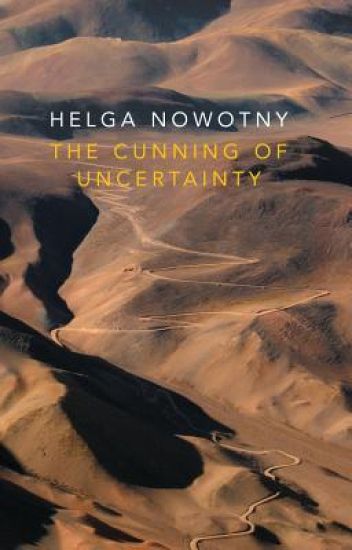
The Cunning of Uncertainty

The Cunning of Uncertainty

Helga Nowotny

Polity Press
2017
nidottu
Uncertainty is interwoven into human existence. It is a powerful incentive in the search for knowledge and an inherent component of scientific research. We have developed many ways of coping with uncertainty. We make promises, manage risks and make predictions to try to clear the mists and predict ahead. But the future is inherently uncertain - and the mist that shrouds our path an inherent part of our journey. The burning question is whether our societies can face up to uncertainty, learn to embrace it and whether we can open up to a constantly evolving future. In this new book, Helga Nowotny shows how research can thrive at the cusp of uncertainty. Science, she argues, can eventually transform uncertainty into certainty, but into certainty which remains always provisional. Uncertainty is never completely static. It is constantly evolving. It encompasses geological time scales and, at the level of human experience, split-second changes as cells divide. Life and death decisions are taken in the blink of the eye, while human interactions with the natural environment may reveal their impact over millennia. Uncertainty is cunning. It appears at unexpected moments, it shuns the straight line, takes the oblique route and sometimes the unexpected short-cut. As we acknowledge the cunning of uncertainty, its threats retreat. We accept that any scientific inquiry must produce results that are provisional and uncertain. This message is vital for politicians and policy-makers: do not be tempted by small, short-term, controllable gains to the exclusion of uncertain, high-gain opportunities. Wide-ranging in its use of examples and enriched by the author’s experience as President of the European Research Council, one of the world’s leading funding organisations for fundamental research. The Cunning of Uncertainty is a must-read for students and scholars of all disciplines, politicians, policy-makers and anyone concerned with the fundamental role of knowledge and science in our societies today.
The Cunning of Uncertainty

The Cunning of Uncertainty

Helga Nowotny

Polity Press
2015
sidottu
Uncertainty is interwoven into human existence. It is a powerful incentive in the search for knowledge and an inherent component of scientific research. We have developed many ways of coping with uncertainty. We make promises, manage risks and make predictions to try to clear the mists and predict ahead. But the future is inherently uncertain - and the mist that shrouds our path an inherent part of our journey. The burning question is whether our societies can face up to uncertainty, learn to embrace it and whether we can open up to a constantly evolving future. In this new book, Helga Nowotny shows how research can thrive at the cusp of uncertainty. Science, she argues, can eventually transform uncertainty into certainty, but into certainty which remains always provisional. Uncertainty is never completely static. It is constantly evolving. It encompasses geological time scales and, at the level of human experience, split-second changes as cells divide. Life and death decisions are taken in the blink of the eye, while human interactions with the natural environment may reveal their impact over millennia. Uncertainty is cunning. It appears at unexpected moments, it shuns the straight line, takes the oblique route and sometimes the unexpected short-cut. As we acknowledge the cunning of uncertainty, its threats retreat. We accept that any scientific inquiry must produce results that are provisional and uncertain. This message is vital for politicians and policy-makers: do not be tempted by small, short-term, controllable gains to the exclusion of uncertain, high-gain opportunities. Wide-ranging in its use of examples and enriched by the author’s experience as President of the European Research Council, one of the world’s leading funding organisations for fundamental research. The Cunning of Uncertainty is a must-read for students and scholars of all disciplines, politicians, policy-makers and anyone concerned with the fundamental role of knowledge and science in our societies today.
Tänka vidare / Thinking ahead (2 vol)

Tänka vidare / Thinking ahead (2 vol)

Jenny Björkman; Björn Fjæstad; Katarina Bernhardsson; Göran Blomqvist; Göran Djupsund; Lars Geschwind; Ylva Hasselberg; Peter Hedström; Ulf Heyman; Poul Holm; Wang Hui; Mikael Härlin; Gunn Johansson; Svein Kyvik; Liv Langfeldt; Orvar Löfgren; Helga Nowotny; Bente Rosenbeck; Ulf Sandström; Sverker Sörlin; Linda Wedlin; Agnes Wold; Eva Österberg; Johan Östling

Makadam förlag
2015
nidottu
RJ:s årsbok 2015/2016 i två band: svensk och engelsk utgåva. Mer världsledande forskning, mer internationalisering, mer mobilitet, mer open access, mer impact, mer humanistiska perspektiv på andra vetenskaper, mer forskningsanknytning i undervisningen. Mer av det mesta, helt enkelt Men hur bör svensk forskning organiseras och finansieras för att åstadkomma allt detta? Frågorna rymmer en rad problem och dilemman. Hur bör fördelningen mellan stora program och små projekt se ut? Ska forskningsansökningar utvärderas med hänsyn till de sökandes tidigare prestationer, exempelvis genom bibliometri, eller utifrån förväntade resultat? Vilken vikt ska fästas vid konkret samhällsnytta? Ska bedömningar i huvudsak ske av andra forskare genom peer review? Hur undviker man i så fall att allt mer av forskarnas tid går åt till att utvärdera andra forskare? Och vilken konkret roll ska forskningen spela i den akademiska undervisningen? På universiteten som helhet? Eller för den delen i politiken? Borde inte forskare i högre grad sprida sina resultat just till beslutsfattare och allmänhet nå ut långt mer än i dag? Numera betalas mer än hälften av svensk universitetsforskning av forskningsfinansiärer som står utanför lärosätena. Här finns statliga myndigheter men också fristående organ. Riksbankens Jubileumsfond (RJ) är en stiftelse som främjar och stöder humanistisk och samhällsvetenskaplig forskning. Denna bok ges ut med anledning av fondens femtioårsjubileum 2015 och är ett försök att tänka vidare i frågor om forskningens framtid.
Tänka vidare : forskning, finansiering, framtid

Tänka vidare : forskning, finansiering, framtid

Jenny Björkman; Björn Fjæstad; Katarina Bernhardsson; Göran Blomqvist; Göran Djupsund; Lars Geschwind; Ylva Hasselberg; Peter Hedström; Ulf Heyman; Poul Holm; Wang Hui; Mikael Härlin; Gunn Johansson; Svein Kyvik; Liv Langfeldt; Orvar Löfgren; Helga Nowotny; Bente Rosenbeck; Ulf Sandström; Sverker Sörlin; Linda Wedlin; Agnes Wold; Eva Österberg; Johan Östling

Makadam förlag
2015
nidottu
Mer världsledande forskning, mer internationalisering, mer mobilitet, mer open access, mer impact, mer humanistiska perspektiv på andra vetenskaper, mer forskningsanknytning i undervisningen. Mer av det mesta, helt enkelt Men hur bör svensk forskning organiseras och finansieras för att åstadkomma allt detta? Frågorna rymmer en rad problem och dilemman. Hur bör fördelningen mellan stora program och små projekt se ut? Ska forskningsansökningar utvärderas med hänsyn till de sökandes tidigare prestationer, exempelvis genom bibliometri, eller utifrån förväntade resultat? Vilken vikt ska fästas vid konkret samhällsnytta? Ska bedömningar i huvudsak ske av andra forskare genom peer review? Hur undviker man i så fall att allt mer av forskarnas tid går åt till att utvärdera andra forskare? Och vilken konkret roll ska forskningen spela i den akademiska undervisningen? På universiteten som helhet? Eller för den delen i politiken? Borde inte forskare i högre grad sprida sina resultat just till beslutsfattare och allmänhet nå ut långt mer än i dag? Numera betalas mer än hälften av svensk universitetsforskning av forskningsfinansiärer som står utanför lärosätena. Här finns statliga myndigheter men också fristående organ. Riksbankens Jubileumsfond (RJ) är en stiftelse som främjar och stöder humanistisk och samhällsvetenskaplig forskning. Denna bok ges ut med anledning av fondens femtioårsjubileum 2015 och är ett försök att tänka vidare i frågor om forskningens framtid.
The Public Nature of Science under Assault

The Public Nature of Science under Assault

Helga Nowotny; Dominique Pestre; Eberhard Schmidt-Aßmann; Helmuth Schulze-Fielitz; Hans-Heinrich Trute

Springer-Verlag Berlin and Heidelberg GmbH Co. K
2010
nidottu
Science has development from a self-evident public good to being highly valued in other contexts for different reasons: strengthening the economic competitiveness and, especially in high-tech fields, as a financial investment for future gains. This has been accompanied by a shift from public to private funding with intellectual property rights gaining importance. But in contemporary democracies citizens have also begun to voice their concerns about science and technology related risks, demanding greater participation in decision-making and in the setting of research priorities. The book examines the legal issues and responses vis-à-vis these transformations of the nature of public science. It discusses their normative content as well as the inherent limitations of the law in meeting these challenges.
Insatiable Curiosity

Insatiable Curiosity

Helga Nowotny

MIT Press
2010
pokkari
An influential scholar in science studies argues that innovation tames the insatiable and limitless curiosity driving science, and that society's acute ambivalence about this is an inevitable legacy of modernity. Curiosity is the main driving force behind scientific activity. Scientific curiosity, insatiable in its explorations, does not know what it will find, or where it will lead. Science needs autonomy to cultivate this kind of untrammeled curiosity; innovation, however, responds to the needs and desires of society. Innovation, argues influential European science studies scholar Helga Nowotny, tames the passion of science, harnessing it to produce "deliverables." Science brings uncertainties; innovation successfully copes with them. Society calls for both the passion for knowledge and its taming. This ambivalence, Nowotny contends, is an inevitable result of modernity. In Insatiable Curiosity, Nowotny explores the strands of the often unexpected intertwining of science and technology and society. Uncertainty arises, she writes, from an oversupply of knowledge. The quest for innovation is society's response to the uncertainties that come with scientific and technological achievement. Our dilemma is how to balance the immense but unpredictable potential of science and technology with our acknowledgement that not everything that can be done should be done. We can escape the old polarities of utopias and dystopias, writes Nowotny, by accepting our ambivalence-as a legacy of modernism and a positive cultural resource.
The Public Nature of Science under Assault

The Public Nature of Science under Assault

Helga Nowotny; Dominique Pestre; Eberhard Schmidt-Aßmann; Helmuth Schulze-Fielitz; Hans-Heinrich Trute

Springer-Verlag Berlin and Heidelberg GmbH Co. K
2005
sidottu
Science has development from a self-evident public good to being highly valued in other contexts for different reasons: strengthening the economic competitiveness and, especially in high-tech fields, as a financial investment for future gains. This has been accompanied by a shift from public to private funding with intellectual property rights gaining importance. But in contemporary democracies citizens have also begun to voice their concerns about science and technology related risks, demanding greater participation in decision-making and in the setting of research priorities. The book examines the legal issues and responses vis-à-vis these transformations of the nature of public science. It discusses their normative content as well as the inherent limitations of the law in meeting these challenges.
After the Breakthrough

After the Breakthrough

Helga Nowotny; Ulrike Felt

Cambridge University Press
2002
pokkari
The discovery of high-temperature superconductivity was hailed as a major scientific breakthrough, inducing an unprecedented excitement and expectation among the scientific community and in the international press. This book sets this research breakthrough in context, and reconstructs the history of the discovery. The authors analyse the emergence of this new research field and the way its development was shaped by scientists and science policy-makers. They also examine the various settings in which the research was undertaken, as well as considering the scientific backgrounds and motivations of researchers who entered the field following the original discovery. The industrial connection and the general belief in promises of future applications were important elements in strategies devised to obtain funding. A remarkable factor in this process was the media’s role. The sustained attention that followed the discovery of high-temperature superconductivity resulted in it being seen as the symbol of a new technological frontier.
Re-Thinking Science

Re-Thinking Science

Helga Nowotny; Peter B. Scott; Michael T. Gibbons

Polity Press
2001
sidottu
Re-Thinking Science presents an account of the dynamic relationship between society and science. Despite the mounting evidence of a much closer, interactive relationship between society and science, current debate still seems to turn on the need to maintain a 'line' to demarcate them. The view persists that there is a one-way communication flow from science to society - with scant attention given to the ways in which society communicates with science. The authors argue that changes in society now make such communications both more likely and more numerous, and that this is transforming science not only in its research practices and the institutions that support it but also deep in its epistemological core. To explain these changes, Nowotny, Scott and Gibbons have developed an open, dynamic framework for re-thinking science. The authors conclude that the line which formerly demarcated society from science is regularly transgressed and that the resulting closer interaction of science and society signals the emergence of a new kind of science: contextualized or context-sensitive science. The co-evolution between society and science requires a more or less complete re-thinking of the basis on which a new social contract between science and society might be constructed. In their discussion the authors present some of the elements that would comprise this new social contract.
Re-Thinking Science

Re-Thinking Science

Helga Nowotny; Peter B. Scott; Michael T. Gibbons

JOHN WILEY AND SONS LTD
2001
nidottu
This text presents an account of the dynamic relationship between society and science. That line separating society from science is regularly transgressed, and the closer interaction between the two signals the emergence of a new kind of science - contextualized or context-sensitive science.
Time

Time

Helga Nowotny

Polity Press
1996
nidottu

Halvin toimitettuna 32,10 €

"Helga Nowotny's exploration of the forms and meaning of time in contemporary life is panoramic without in any way partaking of the blandness of a survey. From the artificial time of the scientific laboratory to the distinctively modern yearning for one’s own time, she regards every topic in this wide-ranging book from a fresh angle of vision, one which reveals unsuspected affinities between the bravest, newest worlds of global technology and the most ancient worlds of myth." --Lorraine Daston, University of Chicago This book represents a major contribution to the understanding of time, giving particular attention to time in relation to modernity. The development of industrialism, the author points out, was based upon a linear and abstract conception of time. Today we see that form of production, and the social institutions associated with it, supplanted by flexible specialization and just-in-time production systems. New information and communication technologies have made a fundamental impact here. But what does all this mean for temporal regimes? How can we understand the transformation of time and space involved in the bewildering variety of options on offer in a postmodern world? The author provides an incisive analysis of the temporal implications of modern communication. She considers the implications of worldwide simultaneous experience, made possible by satellite technologies, and considers the reorganization of time involved in the continuous technological innovation that marks our era. In this puzzling universe of action, how does one achieve a 'time of one's own'? The discovery of a specific time perspective centred in the individual, she shows, expresses a yearning for forms of experience that are subversive of established institutional patterns. This brilliant study, became a classic in Germany, will be of interest to students and professionals working in the areas of social theory, sociology, politics and anthropology.
The New Production of Knowledge

The New Production of Knowledge

Michael Gibbons; Camille Limoges; Helga Nowotny; Simon Schwartzman; Peter Scott; Martin Trow

SAGE Publications Ltd
1994
nidottu
In this provocative and broad-ranging work, the authors argue that the ways in which knowledge - scientific, social and cultural - is produced are undergoing fundamental changes at the end of the twentieth century. They claim that these changes mark a distinct shift into a new mode of knowledge production which is replacing or reforming established institutions, disciplines, practices and policies. Identifying features of the new mode of knowledge production - reflexivity, transdisciplinarity, heterogeneity - the authors show how these features connect with the changing role of knowledge in social relations. While the knowledge produced by research and development in science and technology is accorded central concern, the authors also outline the changing dimensions of social scientific and humanities knowledge and the relations between the production of knowledge and its dissemination through education.