Kirjojen hintavertailu – 12 859 819 kirjaa ja 27 kauppaa

Kirjailija

Hendrik Dey

Kirjat ja teokset yhdessä paikassa: 4 kirjaa, julkaisuja vuosilta 2019–2025, suosituimpiin kuuluu The Making of Medieval Rome. Vertaile teosten hintoja ja tarkista saatavuus suomalaisista kirjakaupoista.

4 kirjaa

Kirjojen julkaisuvuodet: 2019–2025.

The Making of Medieval Rome

The Making of Medieval Rome

Hendrik Dey

Cambridge University Press
2025
pokkari

Halvin toimitettuna 39,70 €

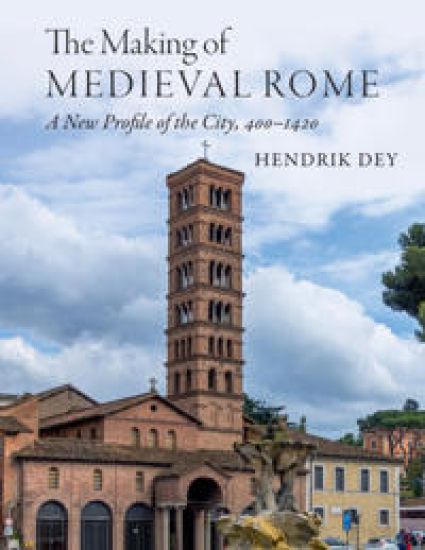
Integrating the written sources with Rome's surviving remains and, most importantly, with the results of the past half-century's worth of medieval archaeology in the city, The Making of Medieval Rome is the first in-depth profile of Rome's transformation over a millennium to appear in any language in over forty years. Though the main focus rests on Rome's urban trajectory in topographical, architectural, and archaeological terms, Hendrik folds aspects of ecclesiastical, political, social, military, economic, and intellectual history into the narrative in order to illustrate how and why the cityscape evolved as it did during the thousand years between the end of the Roman Empire and the start of the Renaissance. A wide-ranging synthesis of decades' worth of specialized research and remarkable archaeological discoveries, this book is essential reading for anyone interested in how and why the ancient imperial capital transformed into the spiritual heart of Western Christendom.
The Making of Medieval Rome

The Making of Medieval Rome

Hendrik Dey

Cambridge University Press
2021
sidottu
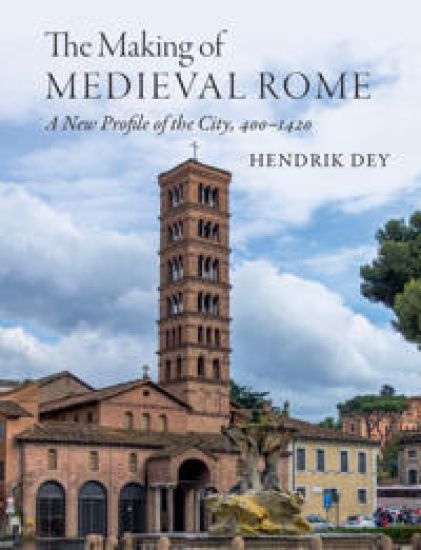
Integrating the written sources with Rome's surviving remains and, most importantly, with the results of the past half-century's worth of medieval archaeology in the city, The Making of Medieval Rome is the first in-depth profile of Rome's transformation over a millennium to appear in any language in over forty years. Though the main focus rests on Rome's urban trajectory in topographical, architectural, and archaeological terms, Hendrik folds aspects of ecclesiastical, political, social, military, economic, and intellectual history into the narrative in order to illustrate how and why the cityscape evolved as it did during the thousand years between the end of the Roman Empire and the start of the Renaissance. A wide-ranging synthesis of decades' worth of specialized research and remarkable archaeological discoveries, this book is essential reading for anyone interested in how and why the ancient imperial capital transformed into the spiritual heart of Western Christendom.
Fifty Early Medieval Things

Fifty Early Medieval Things

Deborah Deliyannis; Hendrik Dey; Paolo Squatriti

Cornell University Press
2019
pokkari
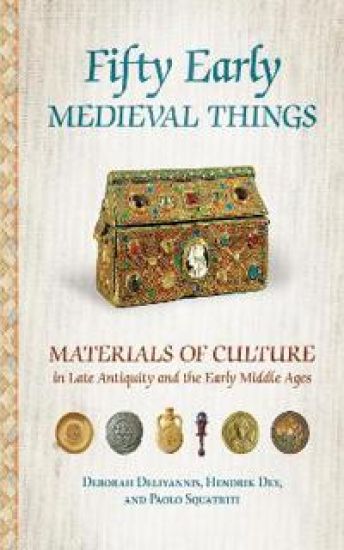
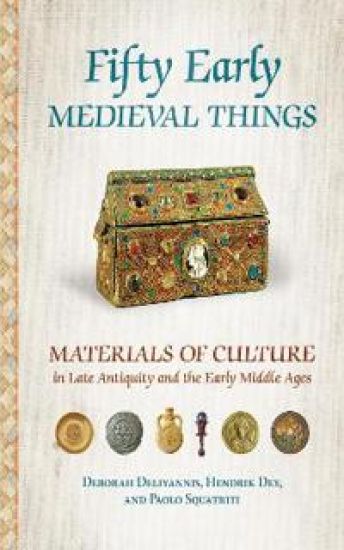
This important book [...] is a helpful guide to thinking with things and teaching with things. Each entry challenges the reader to approach objects as historical actors that can speak to the changes and continuities of life in the late antique and early medieval world.â• Early Medieval Europe Lavishly illustrated and engagingly written, Fifty Early Medieval Things demonstrates how to read objects in ways that make the distant past understandable and approachable. Fifty Early Medieval Things introduces readers to the material culture of late antique and early medieval Europe, north Africa, and western Asia. Ranging from Iran to Ireland and from Sweden to Tunisia, Deborah Deliyannis, Hendrik Dey, and Paolo Squatriti present fifty objects-artifacts, structures, and archaeological features-created between the fourth and eleventh centuries, an ostensibly "Dark Age" whose cultural richness and complexity is often underappreciated. Each thing introduces important themes in the social, political, cultural, religious, and economic history of the postclassical era. Some of the things, like a simple ard (plow) unearthed in Germany, illustrate changing cultural and technological horizons in the immediate aftermath of Rome's collapse; others, like the Arabic coin found in a Viking burial mound, indicate the interconnectedness of cultures in this period. Objects such as the Book of Kells and the palace-city of Anjar in present-day Jordan represent significant artistic and cultural achievements; more quotidian items (a bone comb, an oil lamp, a handful of chestnuts) belong to the material culture of everyday life. In their thing-by-thing descriptions, the authors connect each object to both specific local conditions and to the broader influences that shaped the first millennium AD, and also explore their use in modern scholarly interpretations, with suggestions for further reading.
Fifty Early Medieval Things

Fifty Early Medieval Things

Deborah Deliyannis; Hendrik Dey; Paolo Squatriti

Cornell University Press
2019
sidottu
This important book [...] is a helpful guide to thinking with things and teaching with things. Each entry challenges the reader to approach objects as historical actors that can speak to the changes and continuities of life in the late antique and early medieval world.â• Early Medieval Europe Lavishly illustrated and engagingly written, Fifty Early Medieval Things demonstrates how to read objects in ways that make the distant past understandable and approachable. Fifty Early Medieval Things introduces readers to the material culture of late antique and early medieval Europe, north Africa, and western Asia. Ranging from Iran to Ireland and from Sweden to Tunisia, Deborah Deliyannis, Hendrik Dey, and Paolo Squatriti present fifty objects-artifacts, structures, and archaeological features-created between the fourth and eleventh centuries, an ostensibly "Dark Age" whose cultural richness and complexity is often underappreciated. Each thing introduces important themes in the social, political, cultural, religious, and economic history of the postclassical era. Some of the things, like a simple ard (plow) unearthed in Germany, illustrate changing cultural and technological horizons in the immediate aftermath of Rome's collapse; others, like the Arabic coin found in a Viking burial mound, indicate the interconnectedness of cultures in this period. Objects such as the Book of Kells and the palace-city of Anjar in present-day Jordan represent significant artistic and cultural achievements; more quotidian items (a bone comb, an oil lamp, a handful of chestnuts) belong to the material culture of everyday life. In their thing-by-thing descriptions, the authors connect each object to both specific local conditions and to the broader influences that shaped the first millennium AD, and also explore their use in modern scholarly interpretations, with suggestions for further reading.