
Kirjailija
Hendrik Willem Van Loon
Kirjat ja teokset yhdessä paikassa: 134 kirjaa, julkaisuja vuosilta 1942–2026, suosituimpiin kuuluu Understanding Art: Hendrik Willem Van Loon's How To Look At Pictures. Vertaile teosten hintoja ja tarkista saatavuus suomalaisista kirjakaupoista.
134 kirjaa
Kirjojen julkaisuvuodet: 1942–2026.




History is the mighty Tower of Experience, which Time has built amidst the endless fields of bygone ages. It is no easy task to reach the top of this ancient structure and get the benefit of the full view. There is no elevator, but young fe -Hendrik Van Loon, in the Foreword to The Story of Mankind It was intended for children, and of course much of the science is hopelessly out of date, but this ambitious, even audacious attempt to offer an overview of the entirety of human history remains a breathtaking work today. A 1921 bestseller, The Story AUTHOR BIO: Dutch-American author and educator Hendrik Willem van Loon (1882-1944) sold more than six million books during his lifetime, including The Story of the Bible (1923), Tolerance (1925), and America (1927). After studies at Harvard, Cornell, and the Unive





The Stratosphere, The
K. Labitzke; Hendrik Willem van Loon; H. van Loon
Springer-Verlag Berlin and Heidelberg GmbH Co. K
1999
sidottu
This book describes the discovery of the stratosphere itself and of various unexpected phenomena in the stratosphere: e.g., a manned balloon flight in 1901 as high as 11 km; an expedition to Lake Victoria in Africa in 1908 which found inexplicable west winds in the stratosphere above the equator; and the discovery of the ozone layer in the 1930s, the Berlin Phenomenon in 1952, the Quasi-Biennial Oscillation in 1960, the influence of volcanic eruptions in 1970, the ozone hole in 1984, and the influence of the 11-year solar cycle in 1987. The book also describes how these phenomena are connected with each other and how they create variability in the climate system, in addition to man-made changes, such as the decrease in ozone. We use the stratosphere as one example of Nature's complexity and of how often discoveries are ignored because they do not fit prevalent concepts.
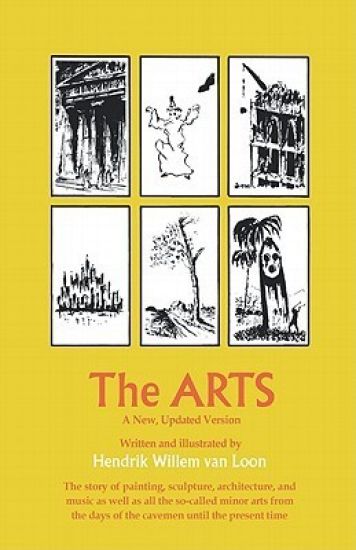
The story of painting, sculpture, architecture, and music as well as all the so-called minor arts from the days of the cavemen until the present time.

As a thrilling, magnificent story of the backgrounds of our country, of those rough pioneers who build that we might live, of the struggle to preserve our unity and our happiness, and of those modern circumstances that shape our present lives this chronicle is unequaled.