
Kirjojen hintavertailu – 12 903 735 kirjaa ja 27 kauppaa

Kirjailija

Henk van Nierop

Kirjat ja teokset yhdessä paikassa: 3 kirjaa, julkaisuja vuosilta 2003–2017, suosituimpiin kuuluu Treason in the Northern Quarter. Vertaile teosten hintoja ja tarkista saatavuus suomalaisista kirjakaupoista.

3 kirjaa

Kirjojen julkaisuvuodet: 2003–2017.

Treason in the Northern Quarter

Treason in the Northern Quarter

Henk van Nierop

Princeton University Press
2017
pokkari
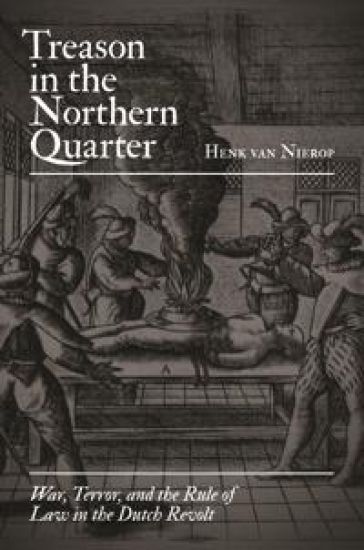
In the spring of 1575, Holland's Northern Quarter--the waterlogged peninsula stretching from Amsterdam to the North Sea--was threatened with imminent invasion by the Spanish army. Since the outbreak of the Dutch Revolt a few years earlier, the Spanish had repeatedly failed to expel the rebels under William of Orange from this remote region, and now there were rumors that the war-weary population harbored traitors conspiring to help the Spanish invade. In response, rebel leaders arrested a number of vagrants and peasants, put them on the rack, and brutally tortured them until they confessed and named their principals--a witch-hunt that eventually led to a young Catholic lawyer named Jan Jeroenszoon. Treason in the Northern Quarter tells how Jan Jeroenszoon, through great personal courage and faith in the rule of law, managed to survive gruesome torture and vindicate himself by successfully arguing at trial that the authorities remained subject to the law even in times of war. Henk van Nierop uses Jan Jeroenszoon's exceptional story to give the first account of the Dutch Revolt from the point of view of its ordinary victims--town burghers, fugitive Catholic clergy, peasants, and vagabonds. For them the Dutch Revolt was not a heroic struggle for national liberation but an ordinary dirty war, something to be survived, not won. An enthralling account of an unsuspected story with surprising modern resonance, Treason in the Northern Quarter presents a new image of the Dutch Revolt, one that will fascinate anyone interested in the nature of revolution and civil war or the fate of law during wartime.
Treason in the Northern Quarter

Treason in the Northern Quarter

Henk van Nierop

Princeton University Press
2009
sidottu
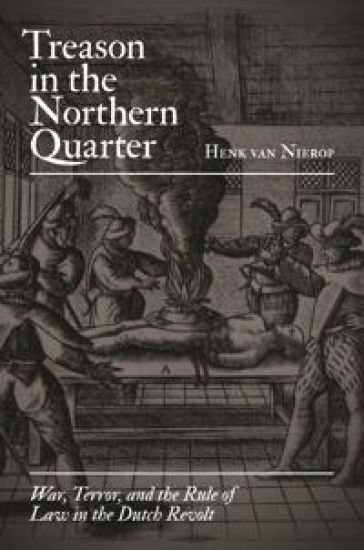
In the spring of 1575, Holland's Northern Quarter--the waterlogged peninsula stretching from Amsterdam to the North Sea--was threatened with imminent invasion by the Spanish army. Since the outbreak of the Dutch Revolt a few years earlier, the Spanish had repeatedly failed to expel the rebels under William of Orange from this remote region, and now there were rumors that the war-weary population harbored traitors conspiring to help the Spanish invade. In response, rebel leaders arrested a number of vagrants and peasants, put them on the rack, and brutally tortured them until they confessed and named their principals--a witch-hunt that eventually led to a young Catholic lawyer named Jan Jeroenszoon. Treason in the Northern Quarter tells how Jan Jeroenszoon, through great personal courage and faith in the rule of law, managed to survive gruesome torture and vindicate himself by successfully arguing at trial that the authorities remained subject to the law even in times of war. Henk van Nierop uses Jan Jeroenszoon's exceptional story to give the first account of the Dutch Revolt from the point of view of its ordinary victims--town burghers, fugitive Catholic clergy, peasants, and vagabonds. For them the Dutch Revolt was not a heroic struggle for national liberation but an ordinary dirty war, something to be survived, not won. An enthralling account of an unsuspected story with surprising modern resonance, Treason in the Northern Quarter presents a new image of the Dutch Revolt, one that will fascinate anyone interested in the nature of revolution and civil war or the fate of law during wartime.
Colonial Empires Compared

Colonial Empires Compared

Bob Moore; Henk van Nierop

Ashgate Publishing Limited
2003
sidottu
During the seventeenth century, the Dutch and English emerged as the world's leading trading nations, building their prosperity largely upon their maritime successes. During this period both nations strongly contested for maritime supremacy and colonial dominance, yet by the nineteenth century, it was Britain who had undoubtedly come out on top of this struggle, with a navy that dominated the seas and an empire of unparalleled size. This volume examines the colonial development of these two nations at a crucial period in which the foundations for the modern nineteenth and twentieth century imperial state were laid. The volume consists of ten essays (five by British and five by Dutch scholars) based on papers originally delivered to the Fourteenth Anglo-Dutch Historical Conference, 2000. The essays are arranged into five themes which take a strongly comparative approach to explore the development of the British and Dutch colonial empires in the late eighteenth and early nineteenth centuries. These themes examine the nature of Anglo-Dutch relations, the culture of imperialism and perceptions of the overseas world, the role of sea power in imperial expansion, the economics of colonial expansion and the extension of the metropolitan state to the colonies. Taken together, these essays form an important collection which will greatly add to the understanding of the British and Dutch colonial empires, and their relative successes and failures.