
Kirjojen hintavertailu – 12 903 725 kirjaa ja 27 kauppaa

Kirjailija

Henning Lehmann

Kirjat ja teokset yhdessä paikassa: 2 kirjaa, julkaisuja vuosilta 2002–2008, suosituimpiin kuuluu Students of the Bible in 4th & 5th Century Syria. Vertaile teosten hintoja ja tarkista saatavuus suomalaisista kirjakaupoista.

2 kirjaa

Kirjojen julkaisuvuodet: 2002–2008.

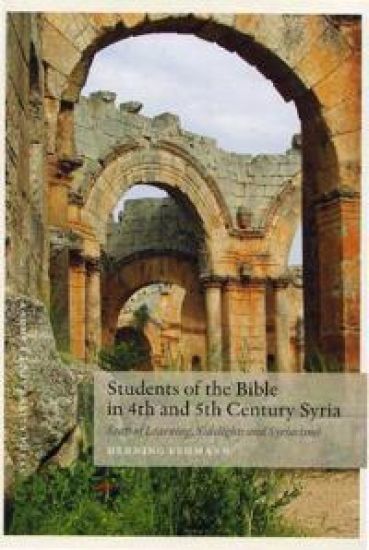
Students of the Bible in 4th & 5th Century Syria

Students of the Bible in 4th & 5th Century Syria

Henning Lehmann

Aarhus University Press
2008
sidottu
A number of prolific writers were active in the Syrian Church of the 4th and 5th centuries. However, in some cases these writers are only accessible by virtue of sidelights thrown e.g. from Armenian and Latin translations (as is the case with Eusebius of Emesa); or, their works may be hidden under false attributions in Greek manuscripts (eg: in Pseudo-Chrysostomica -- in fact belonging to Severian of Gabala); or, their relationship to the Syriac language and culture may be misrepresented in modern research (as for Theodoret of Cyrrhus). Since the 1960s Henning Lehmann's research has concentrated on disclosing secrets and answering puzzling questions in such contexts, in particular concerning Eusebius, Severian and Theodoret, calling for sound scholarship in identifying syriacisms and school traditions. The 15 chapters of this book, originally published over the years 1969-2005 in various conference reports, periodicals, Festschriften etc., and in various languages, can be studied here as a coherent collection - all in English.
Album of Armenian Paleography

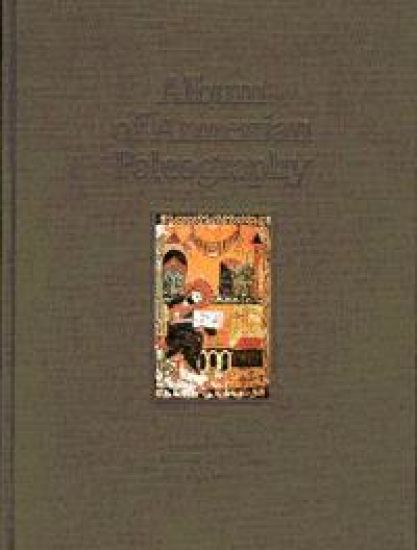
Album of Armenian Paleography

Michael Stone; Dickran Kouymjian; Henning Lehmann

Aarhus University Press
2002
sidottu
Provides a comprehensive selection of some 200 definitively dated, hand-written texts, sampled from among the 30,000 manuscripts preserved in the major public collections of Europe, the Middle East, the former USSR and North America. Selected specimen pages from these manuscripts are presented in chronological order, and span the period from AD 862 to 1911. Each text is illustrated by a high-quality colour facsimile of a typical page, and is accompanied by an alphabet table for the folio in question and a sample transcription. All photographs are new, taken especially for the Album. Thanks to the large format of the volume it has been possible to show all manuscript pages (except the very largest) in actual size. In addition, each facsimile page is accompanied by a colour enlargement of several lines of the text, enabling the reader to study the lettering in even greater detail. In a separate section, computerised tables are used to show changes in the forms of individual letters. By following the development of letter shapes, it is possible to discern the evolutionary process of the Armenian scripts in a far more detailed and sophisticated manner than the traditional division of the Armenian hands into types: erkatagir, bolorgir, notrgir, duagir, thereby providing much more precise datings than those previously available to scholars. The foundations are thus laid for a better understanding of the chronology of Armenian manuscripts and the literature and art they contain. This volume will be an indispensable tool for any serious student of the Armenian language, literature and art, and its innovative approach to the study of lettering will be of interest to paleographers and codicologists.