Kirjojen hintavertailu – 12 903 725 kirjaa ja 27 kauppaa

Kirjailija

Henri Parens

Kirjat ja teokset yhdessä paikassa: 13 kirjaa, julkaisuja vuosilta 1977–2019, suosituimpiin kuuluu Renewal of Life. Vertaile teosten hintoja ja tarkista saatavuus suomalaisista kirjakaupoista.

13 kirjaa

Kirjojen julkaisuvuodet: 1977–2019.

Dependence in Man

Dependence in Man

Henri Parens; Leon J. Saul

Routledge
2019
sidottu
This book provides an outline of the phenomenon of dependence as a reality in psychological functioning. It presents clinical examples to show how defense mechanisms are mobilized in response to what the individual conceives of as a threat to his autonomy and separateness.
War Is Not Inevitable

War Is Not Inevitable

Henri Parens

Lexington Books
2015
nidottu
In 1932 Einstein asked Freud, ‘Is there any way of delivering mankind from the menace of war?’ Freud answered that war is inevitable because humans have an instinct to self-destroy, a death instinct which we must externalize to survive. But nearly four decades of study of aggression reveal that rather than being an inborn drive, destructiveness is generated in us by experiences of excessive psychic pain. In War is Not Inevitable: On the Psychology of War and Aggression, Henri Parens argues that the death-instinct based model of aggression can neither be proved nor disproved as Freud’s answer is untestable. By contrast, the ‘multi-trends theory of aggression’ is provable and has greater heuristic value than does a death-instinct based model of aggression. When we look for causes for war we turn to history as well as national, ethnic, territorial, and or political issues, among many others, but we also tend to ignore the psychological factors that play a large role. Parens discusses such psychological factors that seem to lead large groups into conflict. Central among these are the psychodynamics of large-group narcissism. Interactional conditions stand out: hyper-narcissistic large-groups have, in history, caused much narcissistic injury to those they believe they are superior to. But this is commonly followed by the narcissistically injured group’s experiencing high level hostile destructiveness toward their injury-perpetrator which, in time, will compel them to revenge. Among groups that have been engaged in serial conflicts, wars have followed from this psychodynamic narcissism-based cyclicity. Parens details some of the psychodynamics that led from World War I to World War II and their respective aftermath, and he addresses how major factors that gave rise to these wars must, can, and have been counteracted. In doing so, Parens considers strategies by which civilization has and is constructively preventing wars, as well as the need for further innovative efforts to achieve that end.
War Is Not Inevitable

War Is Not Inevitable

Henri Parens

Lexington Books
2014
sidottu
In 1932 Einstein asked Freud, ‘Is there any way of delivering mankind from the menace of war?’ Freud answered that war is inevitable because humans have an instinct to self-destroy, a death instinct which we must externalize to survive. But nearly four decades of study of aggression reveal that rather than being an inborn drive, destructiveness is generated in us by experiences of excessive psychic pain. In War is Not Inevitable: On the Psychology of War and Aggression, Henri Parens argues that the death-instinct based model of aggression can neither be proved nor disproved as Freud’s answer is untestable. By contrast, the ‘multi-trends theory of aggression’ is provable and has greater heuristic value than does a death-instinct based model of aggression. When we look for causes for war we turn to history as well as national, ethnic, territorial, and or political issues, among many others, but we also tend to ignore the psychological factors that play a large role. Parens discusses such psychological factors that seem to lead large groups into conflict. Central among these are the psychodynamics of large-group narcissism. Interactional conditions stand out: hyper-narcissistic large-groups have, in history, caused much narcissistic injury to those they believe they are superior to. But this is commonly followed by the narcissistically injured group’s experiencing high level hostile destructiveness toward their injury-perpetrator which, in time, will compel them to revenge. Among groups that have been engaged in serial conflicts, wars have followed from this psychodynamic narcissism-based cyclicity. Parens details some of the psychodynamics that led from World War I to World War II and their respective aftermath, and he addresses how major factors that gave rise to these wars must, can, and have been counteracted. In doing so, Parens considers strategies by which civilization has and is constructively preventing wars, as well as the need for further innovative efforts to achieve that end.
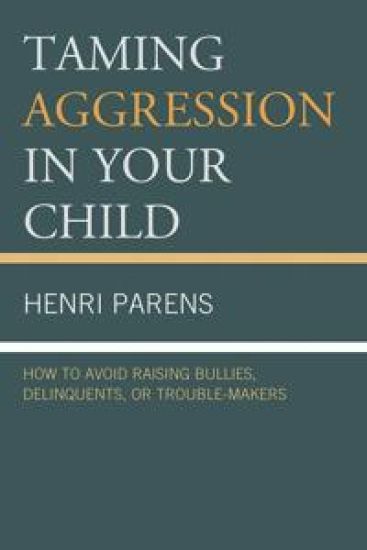
Taming Aggression in Your Child

Taming Aggression in Your Child

Henri Parens

Jason Aronson Inc. Publishers
2011
sidottu
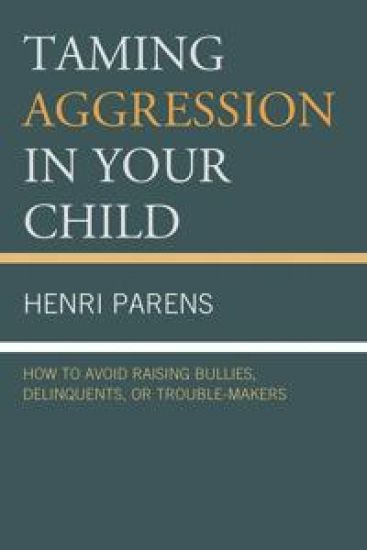
Taming Aggression in Your Child: How to Avoid Raising Bullies, Delinquents, or Trouble-Makers is a guide to preventing children from developing aggressive behaviors from birth through adolescence. Hostile destructive kids become hostile destructive adults and often create serious problems for society, and Dr. Henri Parens argues that effective parenting can help prevent aggressive behaviors like bullying, delinquency, and even criminal behavior from developing. Parens explains to caregivers and educators what causes aggression to develop in children and how it affects them as they grow, differentiates between compliance (the goal of effective parenting) and obedience (an often mis-used term, signifying an unquestioning yielding to authority), and explains how to achieve compliance in children through effective limit-setting, discipline, and punishment. He also demonstrates how to help children learn to express hostility in acceptable ways, how to handle temper tantrums in growth-promoting ways, and how to optimize the parent-child relationship in order to minimize the development of aggression in children. Offering concrete strategies for dealing with aggression, Taming Aggression in Your Child is a must read for all parents, whether you are frustrated by your toddler’s temper tantrums or worry that your older child is bullying siblings or classmates.
Taming Aggression in Your Child: How to Avoid Raising Bullies, Delinquents, or Trouble-Makers
Taming Aggression in Your Child: How to Avoid Raising Bullies, Delinquents, or Trouble-Makers is a guide to preventing children from developing aggressive behaviors from birth through adolescence. Hostile destructive kids become hostile destructive adults and often create serious problems for society, and Dr. Henri Parens argues that effective parenting can help prevent aggressive behaviors like bullying, delinquency, and even criminal behavior from developing. Parens explains to caregivers and educators what causes aggression to develop in children and how it affects them as they grow, differentiates between compliance (the goal of effective parenting) and obedience (an often mis-used term, signifying an unquestioning yielding to authority), and explains how to achieve compliance in children through effective limit-setting, discipline, and punishment. He also demonstrates how to help children learn to express hostility in acceptable ways, how to handle temper tantrums in growth-promoting ways, and how to optimize the parent-child relationship in order to minimize the development of aggression in children. Offering concrete strategies for dealing with aggression, Taming Aggression in Your Child is a must read for all parents, whether you are frustrated by your toddler’s temper tantrums or worry that your older child is bullying siblings or classmates.
Handling Children's Aggression Constructively

Handling Children's Aggression Constructively

Henri Parens

Jason Aronson Inc. Publishers
2011
sidottu
Hostile, destructive kids become hostile destructive adults and create serious problems for society. Handling Children's Aggression Constructively: Toward Taming Human Destructiveness shows how to prevent the development of disturbed aggressive behaviors in children, giving caregivers and educators the tools they need to handle problems in the making so they won't become more difficult and costly problems to deal with later on. Unlike the fine books previously published on how to handle children who already suffer from significant aggressive behavior disorders, this book takes a preventive approach. It focuses on how the ways in which young children are raised contribute toward aggressive behaviors and recommends techniques to manage children's aggression constructively that can be applied from birth through adolescence.
Lying, Cheating, and Carrying On

Lying, Cheating, and Carrying On

Salman Akhtar; Henri Parens

Jason Aronson Inc. Publishers
2009
sidottu
What constitutes a lie? What are the different types of lies? Why do people lie? Is dishonesty ubiquitous in human experience? And what should be done with individuals who seek pschotherapeutic help and yet can not reveal important aspects of their lives and even fabricate histories, associations, and dreams? Such questions form the backbone of this exceptional book. Starting with the emergence of the capacity to lie in childhood and the formative influence of the family in children's moral development, the discourse goes on to include the variety of adulthood lies, including social lies, existential lies, pathological lies, narcissistic lies, and sociopathic lies. Contributions from distinguished psychoanalysts like Salman Akhtar, Harold Blum, Ruth Fischer, Lucy LaFarge, Henri Parens, and Michael Stone, along with others, explore the impact of dishonesty on the internal and external realities of an individual. Malignant forms of lies involving serious character pathology and criminality, as well as their detection, are also discussed. The book's aim is to help therapists enhance their empathy with patients who are compelled to lie and to provide them with better therapeutic strategies to deal with the clinical dilemmas that arise in working with such children and adults.
Lying, Cheating, and Carrying On

Lying, Cheating, and Carrying On

Salman Akhtar; Henri Parens

Jason Aronson Inc. Publishers
2009
nidottu
What constitutes a lie? What are the different types of lies? Why do people lie? Is dishonesty ubiquitous in human experience? And what should be done with individuals who seek pschotherapeutic help and yet can not reveal important aspects of their lives and even fabricate histories, associations, and dreams? Such questions form the backbone of this exceptional book. Starting with the emergence of the capacity to lie in childhood and the formative influence of the family in children's moral development, the discourse goes on to include the variety of adulthood lies, including social lies, existential lies, pathological lies, narcissistic lies, and sociopathic lies. Contributions from distinguished psychoanalysts like Salman Akhtar, Harold Blum, Ruth Fischer, Lucy LaFarge, Henri Parens, and Michael Stone, along with others, explore the impact of dishonesty on the internal and external realities of an individual. Malignant forms of lies involving serious character pathology and criminality, as well as their detection, are also discussed. The book's aim is to help therapists enhance their empathy with patients who are compelled to lie and to provide them with better therapeutic strategies to deal with the clinical dilemmas that arise in working with such children and adults.
The Development of Aggression in Early Childhood

The Development of Aggression in Early Childhood

Henri Parens

Jason Aronson Inc. Publishers
2007
nidottu
Now more than ever, understanding the nature of aggression is crucial to our understanding of individual and social ills produced by the accumulation in humans of hostile destructiveness. The Development of Aggression in Early Childhood, first published in 1979, is here reissued in a revised edition because the author's "multi-trends theory of aggression" and its clinical and social applications have held up cogently and productively for nearly thirty years. Dr. Parens' observation-based explication of highly different forms or trends of aggression is experience-near and is, he argues, of greater heuristic merit than the assumption that humans are inherently 'seething cauldrons of destructive excitations.' The responsibility for the hostility and hate we experience in our world today, according to Dr. Parens, lies with the way we are reared, educated, and treated individually and socially—and not with the assumption that we are ab ovo driven to destroy. In this revised edition, Parens' theory is offset by a two-part Preface that provides a historical overview of the multitudinous theories of aggression in psychoanalytic thought and discusses the clinical applications of the multi-trends theory of aggression with case studies and further clinical theorizing about hostile destructiveness and clinical technique. This book is intended not only for mental health professionals of all degrees and orientations, but also for all those who tend children, be they caregivers, pediatricians, educators, or pastoral counselors.
Renewal of Life

Renewal of Life

Henri Parens

SCHREIBER PUBLISHING
2004
pokkari
The author, a world-renowned psychoanalyst, was rescued from Nazi-occupied France as a child and brought to the United States, where he became an authority on violence in children.
Internal Mother

Internal Mother

Henri Parens

Jason Aronson Inc. Publishers
1977
sidottu
This work analyses the concept of object constancy in the light of developmental research and clinical practice. The clinical implications of disturbances in object constancy are discussed with reference to therapeutic work with both children and adults.
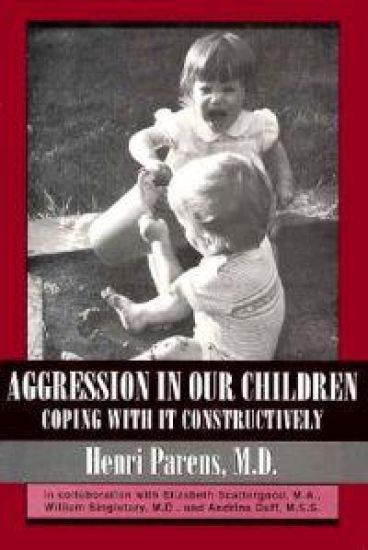
Aggression in Our Children

Aggression in Our Children

Henri Parens

Jason Aronson Inc. Publishers
1977
nidottu
The constructive management of children's aggression is among the most difficult and important challenges for parents, mental-health professionals and other child-care givers. In this practical volume, Dr Parens provides an understanding of the nature of aggression and the rationale behind specific strategies and parental interventions to deal with six key parent-child interactions in which two basic forms of aggression are activated. This proper handling of aggression has profound implications for emotional development formation of personality, the child-parent relationship, and society at large. Aggressive behaviours attempt to help us control, act upon and master ourselves and the environment, including the people in it. Two major forms confront parents: Non Destructive Aggression, seen in assertive, non-hostile, self-protective, goal-achieving and mastery behaviours; and Hostile Destructiveness in anger, rage, bullying, torture and the like that is generated by excessive unpleasure or emotional distress. The first type is highly desirable and necessary for survival and achievement, whereas hostile aggression leads to pain and suffering, even though at times it may be necessary for adaption of survival. Parens illustrates the parental intervention and the general steps that can be taken to promote parenting that optimises the child-parent relationship. Using case examples, he demostrates: dealing with excessive unpleasure; allowing sufficient and reasonable autonomy; setting limits; teaching how to cope with and express anger and hostility reasonably and in acceptable ways; handling rage reactions and tantrums; and, recognising the causes and circumstances of such emotional feelings as anxiety and depression in order to help the child cope with these. Empathy as an ongoing process, as a vital point of contact with the child is central in all of Parens' discussions. By empathy, he means that parents need to be emotionally available for the child or adolescent's appeal for help. Parents and mental-health clinicians can apply what they have learned here about children's aggression and what is required for healthy development to other areas of child-rearing as well. We can seize the opportunities inherent in daily interactions with children of all ages to better influence the course of all of our lives. The book was written in collaboration with Elizabeth Scattergood, MA, William Singeltary, MD and Andrina Duff, MSS.