Kirjojen hintavertailu – 12 903 725 kirjaa ja 27 kauppaa

Kirjailija

Henriette Gunkel

Kirjat ja teokset yhdessä paikassa: 6 kirjaa, julkaisuja vuosilta 2010–2021, suosituimpiin kuuluu Visual Cultures as Time Travel. Vertaile teosten hintoja ja tarkista saatavuus suomalaisista kirjakaupoista.

6 kirjaa

Kirjojen julkaisuvuodet: 2010–2021.

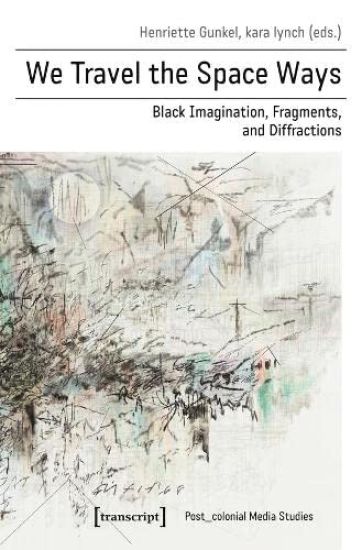
We Travel the Space Ways – Black Imagination, Fragments, and Diffractions
A new take on Afrofuturism, this book gathers together a range of contemporary voices who, carrying legacies of 500 years of contact between Africa, Europe, and the Americas, reach towards the stars and unknown planets, galaxies, and ways of being. Writing from queer and feminist perspectives and circumnavigating continents, they recalibrate definitions of Afrofuturism. The editors and contributors of this exciting volume thus reflect upon the re-emergence of Black visions of political and cultural futures, proposing practices, identities, and collectivities. With contributions from AfroFuturist Affair, John Akomfrah, Jamika Ajalon, Stefanie Alisch, Jim Chuchu, Grisha Coleman, Thomas F. DeFrantz, Abigail DeVille, M. Asli Dukan with Wildseeds, Kodwo Eshun, Anna Everett, Raimi Gbadamosi, Alexis Pauline Gumbs, Milumbe Haimbe, Ayesha Hameed, Kiluanji Kia Henda, Kara Keeling, Carla J. Maier, Tobias Nagl, Tavia Nyongo, Rasheedah Phillips, Daniel Kojo Schrade, Nadine Siegert, Robyn Smith, Greg Tate and Frohawk Two Feathers.
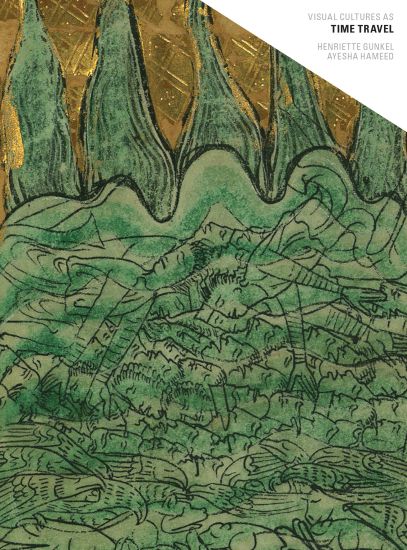
Visual Cultures as Time Travel

Visual Cultures as Time Travel

Henriette Gunkel; Ayesha Hameed

Sternberg Press
2021
pokkari
The notion of time travel marked by both possibility and loss: making the case for cultural research that is oriented toward the future. Visual Cultures as Time Travel makes a case for cultural, aesthetic, and historical research that is oriented toward the future, not the past, actively constructing new categories of assembly that don't yet exist. Ayesha Hameed considers the relationship between climate change and plantation economies, proposing a watery plantationocene that revolves around two islands: a former plantation in St. George's Parish in Barbados, and the port city of Port of Spain in Trinidad. It visits a marine research institute on a third island, Seili in Finland, to consider how notions of temporality and adaptation are produced in the climate emergency we face. Henriette Gunkel introduces the idea of time travel through notions of dizziness, freefall, and of being in vertigo as set out in Octavia Butler's novel Kindred and Kitso Lynn Lelliott's multimedia installation South Atlantic Hauntings, exploring what counts as technology, how it operates in relation to time, including deep space time, and how it interacts with the different types of bodies--human, machine, planetary, spectral, ancestral--that inhabit the terrestrial and extraterrestrial worlds. In conversation, Hameed and Gunkel propose a notion of time travel marked by possibility and loss--in the aftermath of transatlantic slavery and in the moment of mass illegalized migration, of blackness and time, of wildfires and floods, of lost and co-opted futures, of deep geological time, and of falling. Copublished with Goldsmiths, University of London
Futures and Fictions [Large Print 16 Pt Edition]

Futures and Fictions [Large Print 16 Pt Edition]

Henriette Gunkel; Ayesha Hameed; Simon O'Sullivan

Readhowyouwant
2018
pokkari
In what ways could we imagine a world different from the one in which we currently live? This is the question addressed by the essays and conversations in Futures and Fictions, which explore possibilities for a different "political imaginary". With discussions around decolonization, new Afro- and other futurisms, post-capitalism, science fiction, and new kinds of social movements - and the intersections of these with contemporary art practice and visual culture - Futures and Fictions creates a space for alternate narratives and image-worlds that might be pitched against our neoliberal present. With contributions from Mark Fisher, Ursula Le Guin, Kodwo Eshun and Oreet Ashery.
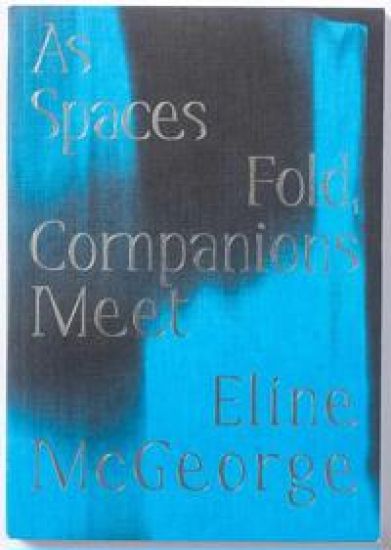
As spaces fold, companions meet

As spaces fold, companions meet

Marcus Verhagen; Line Ulekleiv; Marit Paasche; Marianne Hultman; Henriette Gunkel; Eline McGeorge

Uten tittel
2017
sidottu
Eline McGeorges arbeider spenner mellom det helt abstrakte og det helt konkrete og dokumentariske. Demokratiske og miljørelaterte problemstillinger, så vel som feministisk idéarv og science fiction inngår alle i McGeorges tematikk. Gjennom tegning, animasjon, collager, vev og kunstnerbøker settes tematikkene sammen. Boken inneholder arbeider fra utstillingen "As Spaces Fold, Companions Meet", og tekster av Eline McGeorge, kunstkritikerne og kunsthistorikerne Marcus Verhagen, Marit Paasche og Marianne Hultman. Det er første gang Eline McGeorge arbeider med en publikasjon som knytter sammen hennes kunstneriske virke over tid. I «As Spaces Fold, Companions Meet» utgjør folder en rød tråd visuelt og tematisk. Utstillingen omhandler også det science fiction-inspirerte begrepet om det foldete rommet som muligjør at fiktive og virkelige karakterer møtes på tvers av tid og rom.
The Cultural Politics of Female Sexuality in South Africa
Sexual identity has emerged into the national discourse of post-apartheid South Africa, bringing the subject of rights and the question of gender relations and cultural authenticity into the focus of the nation state’s politics. This book is a fascinating reflection on the effects of these discourses on non-normative modes of sexuality and intimacy and on the country more generally. While in 1996, South Africa became the first country in the world that explicitly incorporated lesbian and gay rights within a Bill of Rights, much of the country has continued to see homosexuality as un-African. Henriette Gunkel examines how colonialism and apartheid have historically shaped constructions of gender and sexuality and how these concepts have not only been re-introduced and shaped by understandings of homosexuality as un-African but also by the post-apartheid constitution and continued discourse within the nation.
The Cultural Politics of Female Sexuality in South Africa
Sexual identity has emerged into the national discourse of post-apartheid South Africa, bringing the subject of rights and the question of gender relations and cultural authenticity into the focus of the nation state’s politics. This book is a fascinating reflection on the effects of these discourses on non-normative modes of sexuality and intimacy and on the country more generally. While in 1996, South Africa became the first country in the world that explicitly incorporated lesbian and gay rights within a Bill of Rights, much of the country has continued to see homosexuality as un-African. Henriette Gunkel examines how colonialism and apartheid have historically shaped constructions of gender and sexuality and how these concepts have not only been re-introduced and shaped by understandings of homosexuality as un-African but also by the post-apartheid constitution and continued discourse within the nation.