Kirjojen hintavertailu – 12 859 818 kirjaa ja 27 kauppaa

Kirjailija

Henriette Steiner

Kirjat ja teokset yhdessä paikassa: 9 kirjaa, julkaisuja vuosilta 2009–2024, suosituimpiin kuuluu Tower to Tower. Vertaile teosten hintoja ja tarkista saatavuus suomalaisista kirjakaupoista.

9 kirjaa

Kirjojen julkaisuvuodet: 2009–2024.

Tower to Tower

Tower to Tower

Henriette Steiner; Kristin Veel

MIT PRESS LTD
2024
pokkari
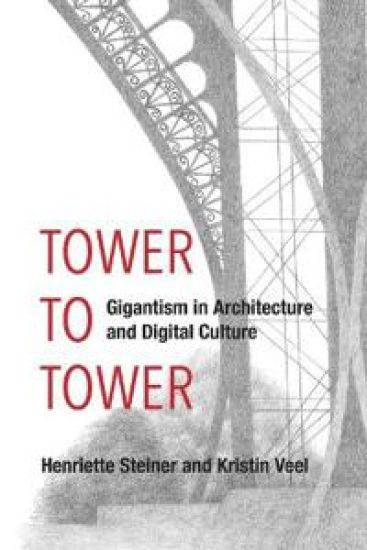
A cultural history of gigantism in architecture and digital culture, from the Eiffel Tower to the World Trade Center. The gigantic is everywhere, and gigantism is manifest in everything from excessively tall skyscrapers to globe-spanning digital networks. In this book, Henriette Steiner and Kristin Veel map and critique the trajectory of gigantism in architecture and digital culture--the convergence of tall buildings and networked infrastructures--from the Eiffel Tower to One World Trade Center. They show how these two forms of gigantism intersect in the figure of the skyscraper with a transmitting antenna on its roof, a gigantic building that is also a nodal point in a gigantic digital infrastructure. Steiner and Veel focus on two paradigmatic tower sites: the Eiffel Tower and the Twin Towers of the destroyed World Trade Center (as well as their replacement, the One World Trade Center tower). They consider, among other things, philosophical interpretations of the Eiffel Tower; the design and destruction of the Twin Towers; the architectural debates surrounding the erection of One World Trade Center on the Ground Zero site; and such recent examples of gigantism across architecture and digital culture as Rem Koolhaas's headquarters for China Central TV and the phenomenon of the "tech giant." Examining the cultural, architectural, and media history of these towers, they analyze the changing conceptions of the gigantism that they represent, not just as physical structures but as sites for the projection of cultural ideas and ideals.
Ufortalte historier

Ufortalte historier

Jannie Rosenberg Bendsen; Svava Riesto; Henriette Steiner

-
2023
sidottu
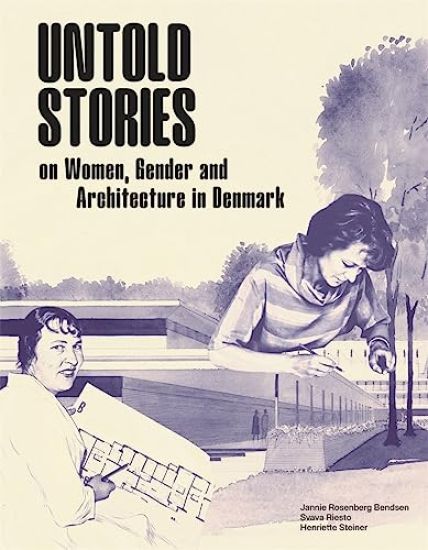
Denne bog fortæller en ny historie om det 20. århundredes arkitektur iDanmark. For første gang får vi et samlet billede af den store betydning, kvinder har haft i perioden 1930-1980 for udviklingen af velfærdssamfundets arkitektur. Bogens fem kapitler præsenterer hidtil ufortalte historier om, hvordan arkitektur bliver til i kraft af kreative samarbejder på tværs af køn og fagligheder. Kvinder har bidraget til alt fra køkkener og bygninger til landskabsarkitektur og byplanlægning, og deres historier tydeliggør den skjulte mangfoldighed, der har formet vores bygninger, byer og landskaber. Det er nødvendigt at forstå betydningen af denne mangfoldighed, for at vi kan skabe nye måder at bo og bygge på i fremtiden i lyset af de mange kriser, vi som samfund står over for. Bogen er skrevet af Jannie Rosenberg Bendsen, Svava Riesto og Henriette Steiner som en del af forskningsprojektet Kvinder i dansk arkitektur påKøbenhavns Universitet.
Touch in the Time of Corona

Touch in the Time of Corona

Henriette Steiner; Kristin Veel

De Gruyter
2021
isokokoinen pokkari
A chronicle, a memoir, a reflection on the pandemic, and a cultural analysis of the new spatial, social, and epistemological forms that have arisen with it, this volume weaves together cultural history, aesthetics, and urban and digital studies. It looks at the particular ways in which the possibilities for touch, touching and being touched, both physically and affectively, are reconfigured by the pandemic. How are love, care, and humanity’s complex relationships with technology and nature played out in the interval between abandoned city centres and digitally mediated gatherings? How can we comprehend the reconfiguration of relationships through the human response to the pandemic as an experience that concerns us all but affects each of us in different ways? How do we think through the technological and material dependencies that the pandemic situation establishes? And how does this allow us to imagine the world beyond the pandemic—both utopian and dystopian? The essays in this book explore the new forms of intimacy and distance that are developing in the wake of COVID-19, offering a distinctive, topical analysis in the fields of urban and digital studies.
Phenomenologies of the City

Phenomenologies of the City

Henriette Steiner; Maximilian Sternberg

Routledge
2017
nidottu
Phenomenologies of the City: Studies in the History and Philosophy of Architecture brings architecture and urbanism into dialogue with phenomenology. Phenomenology has informed debate about the city from social sciences to cultural studies. Within architecture, however, phenomenological inquiry has been neglecting the question of the city. Addressing this lacuna, this book suggests that the city presents not only the richest, but also the politically most urgent horizon of reference for philosophical reflection on the cultural and ethical dimensions of architecture. The contributors to this volume are architects and scholars of urbanism. Some have backgrounds in literature, history, religious studies, and art history. The book features 16 chapters by younger scholars as well as established thinkers including Peter Carl, David Leatherbarrow, Alberto Pérez-Gomez, Wendy Pullan and Dalibor Vesely. Rather than developing a single theoretical statement, the book addresses architecture’s relationship with the city in a wide range of historical and contemporary contexts. The chapters trace hidden genealogies, and explore the ruptures as much as the persistence of recurrent cultural motifs. Together, these interconnected phenomenologies of the city raise simple but fundamental questions: What is the city for, how is it ordered, and how can it be understood? The book does not advocate a return to a naive sense of ’unity’ or ’order’. Rather, it investigates how architecture can generate meaning and forge as well as contest social and cultural representations.
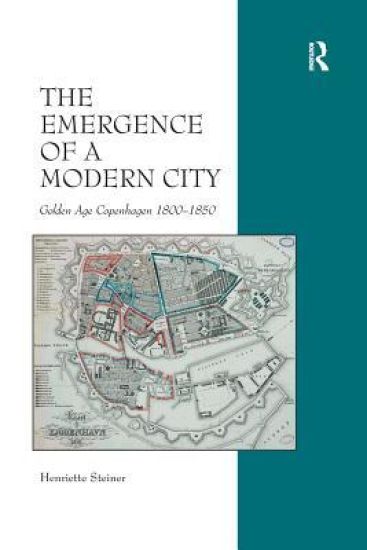
The Emergence of a Modern City

The Emergence of a Modern City

Henriette Steiner

Routledge
2016
nidottu
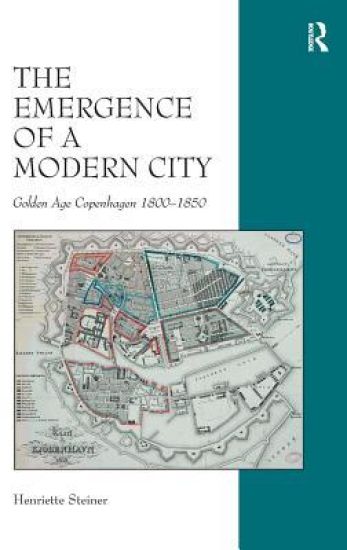
This book is an exploration of how urban life in Copenhagen, in the period known as the Golden Age (c. 1800 to 1850), was experienced and structured socially, institutionally, and architecturally. It draws on a broad historical source material - spanning urban anecdotes, biography, philosophy, literature, and visual culture - to do so. The book argues that Copenhagen emerged as a modern city at this time, despite the fact that the Golden Age never witnessed the appearance of the main characteristics of the modernisation of cities associated with industrialisation, such as street lighting, sewer systems, and railroads. The book outlines the historical and topographical context of Copenhagen in the Golden Age with a special focus on the works of the most prominent architect of the period, C. F. Hansen. The characterisation of the city is complemented by investigations into writings of three citizens: the philosopher Soren Kierkegaard, the novelist Thomasine Gyllembourg, and the criminal Ole Kollerod, who all take an interest in the city's institutional and urban structures as well as their own place in it. From these different sources, a picture is painted of urban life and thought at a time when the city began to take on characteristics of ambiguity and alienation in European thinking, while at the same time the city itself retained some pre-modern motifs of a symbolic order. This transformation is set in a larger process of cultural re-orientation, from traditional Baroque culture to what might be termed Romantic culture. The book reconsiders the significance of this transformation for the emergent order of the modern European city in the nineteenth century and thus of the very foundation on which our own urban culture rests.
Phenomenologies of the City

Phenomenologies of the City

Henriette Steiner; Maximilian Sternberg

Ashgate Publishing Limited
2015
sidottu
Phenomenologies of the City: Studies in the History and Philosophy of Architecture brings architecture and urbanism into dialogue with phenomenology. Phenomenology has informed debate about the city from social sciences to cultural studies. Within architecture, however, phenomenological inquiry has been neglecting the question of the city. Addressing this lacuna, this book suggests that the city presents not only the richest, but also the politically most urgent horizon of reference for philosophical reflection on the cultural and ethical dimensions of architecture. The contributors to this volume are architects and scholars of urbanism. Some have backgrounds in literature, history, religious studies, and art history. The book features 16 chapters by younger scholars as well as established thinkers including Peter Carl, David Leatherbarrow, Alberto Pérez-Gomez, Wendy Pullan and Dalibor Vesely. Rather than developing a single theoretical statement, the book addresses architecture’s relationship with the city in a wide range of historical and contemporary contexts. The chapters trace hidden genealogies, and explore the ruptures as much as the persistence of recurrent cultural motifs. Together, these interconnected phenomenologies of the city raise simple but fundamental questions: What is the city for, how is it ordered, and how can it be understood? The book does not advocate a return to a naive sense of ’unity’ or ’order’. Rather, it investigates how architecture can generate meaning and forge as well as contest social and cultural representations.
The Emergence of a Modern City

The Emergence of a Modern City

Henriette Steiner

Routledge
2014
sidottu
This book is an exploration of how urban life in Copenhagen, in the period known as the Golden Age (c. 1800 to 1850), was experienced and structured socially, institutionally, and architecturally. It draws on a broad historical source material - spanning urban anecdotes, biography, philosophy, literature, and visual culture - to do so. The book argues that Copenhagen emerged as a modern city at this time, despite the fact that the Golden Age never witnessed the appearance of the main characteristics of the modernisation of cities associated with industrialisation, such as street lighting, sewer systems, and railroads. The book outlines the historical and topographical context of Copenhagen in the Golden Age with a special focus on the works of the most prominent architect of the period, C. F. Hansen. The characterisation of the city is complemented by investigations into writings of three citizens: the philosopher Soren Kierkegaard, the novelist Thomasine Gyllembourg, and the criminal Ole Kollerod, who all take an interest in the city's institutional and urban structures as well as their own place in it. From these different sources, a picture is painted of urban life and thought at a time when the city began to take on characteristics of ambiguity and alienation in European thinking, while at the same time the city itself retained some pre-modern motifs of a symbolic order. This transformation is set in a larger process of cultural re-orientation, from traditional Baroque culture to what might be termed Romantic culture. The book reconsiders the significance of this transformation for the emergent order of the modern European city in the nineteenth century and thus of the very foundation on which our own urban culture rests.
Memory Culture and the Contemporary City

Memory Culture and the Contemporary City

Uta Staiger; Henriette Steiner; Andrew Webber

Palgrave Macmillan
2009
sidottu
These essays by leading figures from academia, architecture and the arts consider how cultures of memory are constructed for and in contemporary cities. They take Berlin as a key case of a historically burdened metropolis, but also extend to other global cities: Jerusalem, Buenos Aires, Cape Town and New York.