Kirjojen hintavertailu – 12 859 819 kirjaa ja 27 kauppaa
Kirjailija
Henrik Ibsen
Kirjat ja teokset yhdessä paikassa: 1 079 kirjaa, julkaisuja vuosilta 1856–2026, suosituimpiin kuuluu Nora. Vertaile teosten hintoja ja tarkista saatavuus suomalaisista kirjakaupoista.
Get everything you need to achieve your full potential at English Literature A Level or AS with York Notes Study Guides, now updated for Assessment Objectives 1 to 5.
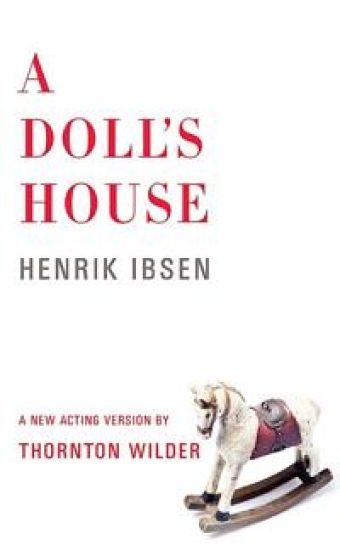
"In Wilder's] "A Doll's House ." . . the relationship of dialogue to action is very special, like nothing that had been heard on stage before." David Hammond, PlayMakers Repertory CompanyNot staged since its Broadway premiere starring Ruth Gordon in 1937, the first-ever publication of this adaptation of Henrik Ibsen's classic drama is revitalized through the shrewd lens of American drama master, Thornton Wilder. With his famous, clarifying dialogue, Wilder uproots this classic from Norway and funnels it through an American lens. The marriage of Ibsen's famed naturalistic style melds with Wilder's knack for emotional nuance to create a rich, demonstrative edition of the revered standard "A Doll's House." Henrik Ibsen has often been referred to as the father of realistic drama. The Norwegian playwright is best known for his major works "Brand," "Peer Gynt," "Emperor and Galilean," "A Doll's House," "Ghosts," "An Enemy of the People," "The Wild Duck," "Hedda Gabler," and "The Master Builder." Thornton Wilder was an accomplished novelist and playwright in the twentieth century. Two of his four major plays garnered Pulitzer Prizes, "Our Town "(1938) and "The Skin of Our Teeth "(1943). His play "The Matchmaker "was later adapted into the record-breaking musical "Hello, Dolly ""The Bridge of San Luis Rey," one of his seven novels, won the Pulitzer Prize in 1928, and his next-to-last novel, "The Eighth Day "received the National Book Award (1968). "Our Town "continues to be the most produced American play in the world."
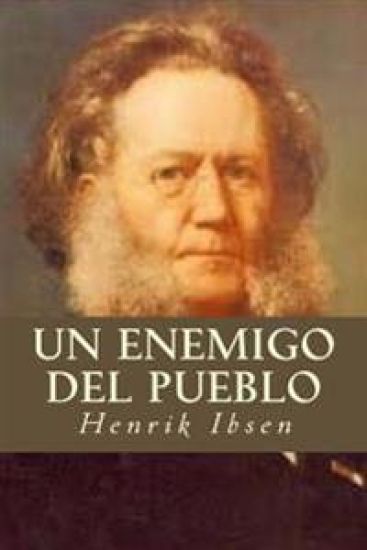
Henrik Johan Ibsen fue un dramaturgo y poeta noruego. Es considerado el m s importante dramaturgo noruego y uno de los autores que m s han influido en la dramaturgia moderna, padre del drama realista moderno y antecedente del teatro simb lico.
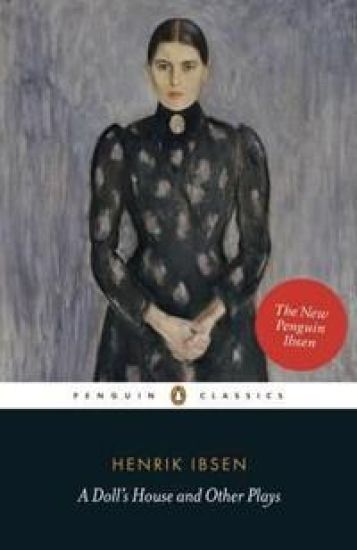
A Doll's House/Ghosts/Pillars of the Community/An Enemy of the People'Our home has never been anything other than a play-house. I've been your doll-wife here, just as at home I was Daddy's doll-child'These four plays established Ibsen as the leading figure in the theatre of his day, sending shockwaves throughout Europe and beyond. A Doll's House scandalized audiences with its free-thinking heroine Nora. Ibsen's even more radical follow-up, Ghosts, exposes family secrets and sexual double-dealing, while Pillars of the Community and An Enemy of the People both explore the hypocrisy and the dark tensions at the heart of society. This new translation, the first to be based on the latest critical edition of Ibsen's works, offers the best version available in English. A new translation by DEBORAH DAWKIN and ERIK SKUGGEVIK With an Introduction by TORE REM General Editor TORE REM
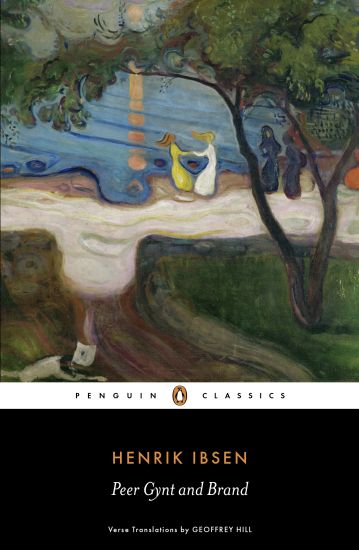
A new Penguin edition of Ibsen's two great verse plays, in masterful versions by one of our greatest living poets, Geoffrey Hill. These two powerful and contrasting verse dramas by Ibsen made his reputation as a playwright. The fantastical adventures of the irrepressible Peer Gynt - poet, idler, procrastinator, seducer - draw on Norwegian folklore to conjure up mountains, kidnappings, shipwrecks and trolls in an exuberant examination of truth and the self; while Brand, an unsparing vision of an idealistic priest who lives by his steely faith, explores free will and sacrifice. This volume brings together the poet Geoffrey Hill's acclaimed stage version of Brand with a new poetic rendering of Peer Gynt, published for the first time. This Penguin edition includes an interview with Geoffrey Hill about recreating Ibsen in English, an introduction by Janet Garton and editorial materials by Tore Rem.
The play opens on the day of the feast celebrating the third wedding anniversary of the wedding of Bengt Guateson and Margit. Erik of Hogge, a friend of Knut Gesling, the King's sheriff, and Knut himself are seeking permission for Knut to marry Margit's sister, Signe. Knut, a warlike man, is advised that he must demonstrate peaceful ways for a year before Margit will support the marriage. They are invited to the feast, under pledge that they will be peaceful that night. They depart to look for Margit's kinsman, Gudmund Alfson, who they know to be outlawed and suspect to be nearby. Once they depart and her husband leaves, Margit speaks of her regret in marrying Bengt Gauteson, even though he was a wealthy older landowner. Her woe is captured by her phrase, "I myself am the Hill-King's wife " Gudmund Alfson arrives. Margit, who has loved him since he departed three years earlier, treats him poorly until she realizes that, although once close to the king, he has been outlawed and is on the run. She then dreams of marrying him and obtains poison to administer to Bengt. Meanwhile Gudmund speaks to Signe, who has grown up since he last saw her, expressing his love. Signe remembers him well and is most willing. Knut returns in the evening for the feast. Finding Gudmund there, although he is the sheriff, Knut does not take Gudmund to demonstrate his intent to be peaceful, but declares that this day shall end peacefully. They both speak together, expressing their intent to marry. After some discussion they both proclaim, and realize they woo the same woman. Since Signe loves Gudmund, Knut announces he is leaving peacefully, but will return in the morn to take Gudmund. Magrit prepares to poison Bengt after many of the guests depart, leaving him a poisoned drink as she goes to bed. He is advised of Knut's return and, setting aside his drink, goes to meet Knut and his men. Gudmund & Signe enter and almost drink the poison. As Knut returns in the morning and meets Bengt who is set upon defending his household, Knut slays him. Bengt's friends capture Knut and bring him before Magrit. The king's men arrive. Gudmund is prepared to surrender, but finds that the king has recognized his error and restored all of Gudmund's property and standing. Margit wishes Gudmund and Signe well and goes off to St. Sunniva's cloister.
The Borkman family fortunes have been brought low by the imprisonment of John Gabriel who used his position as a bank manager to speculate with his investors' money. The action of the play takes place eight years after Borkman's release when John Gabriel Borkman, Mrs. Borkman, and her twin sister Ella Rentheim fight over young Erhart Borkman's future. Though John Gabriel Borkman continues the line of naturalism and social commentary that marks Ibsen's middle period, the final act suggests a new phase for the playwright, a phase brought to fruition in his final more symbolic work When We Dead Awaken.
Rosmersholm is a play written in 1886 by Norwegian playwright Henrik Ibsen. In the estimation of many critics the piece is Ibsen's masterwork, only equalled by The Wild Duck of 1884. As expressed by the protagonist, Rosmer, the theme of the play is social and political change, in which the traditional ruling classes relinquish their right to impose their ideals on the rest of society, but the action is entirely personal, resting on the conduct of the immoral, or amoral, "free thinking" heroine, Rebecca, who sets herself to undermine Rosmer's religious and political beliefs because of his influential position in the community. Rebecca has abandoned not only Christianity but, unlike Rosmer, she has abandoned the whole ethical system of Christianity as well. Possibly she may be taken as Ibsen's answer to the question of whether or not Christian ethics can be expected to survive the death of the Christian religion.
The play was published by Gyldendal AS, Copenhagen, in 1892 and its first performance was on 19 January 1893 at the Lessing Theatre, Berlin, with Emanuel Reicher as Solness. It opened at the Trafalgar Theatre, London on the 20th of the following month, with Herbert H. Waring in the name part and Elizabeth Robins as Hilda. The English translation was by the theatre critic William Archer. Productions in Oslo and Copenhagen were coordinated to open on 8 March 1893. In the following year the work was taken up by Th tre de l'OEuvre, the international company based in Paris, and they mounted productions in Paris, London and other European capitals. The first U. S. performance was at the Carnegie Lyceum, New York, on 16 January 1900, with William Pascoe and Florence Kahn.
Ghosts is a play by the Norwegian playwright Henrik Ibsen. It was written in 1881 and first staged in 1882 in Chicago, Illinois, in a production by a Danish company on tour. Like many of Ibsen's plays, Ghosts is a scathing commentary on 19th-century morality. Because of its subject matter, which includes religion, venereal disease, incest and euthanasia, it immediately generated strong controversy and negative criticism. Since then the play has fared better, and is considered a "great play" that historically holds a position of "immense importance".
Existen dos c digos de moral, dos conciencias diferentes, una del hombre y otra de la mujer. Y a la mujer se la juzga seg n el c digo de los hombres. ...] Una mujer no puede ser aut nticamente ella en la sociedad actual, una sociedad exclusivamente masculina, con leyes exclusivamente masculinas, con jueces y fiscales que la juzgan desde el punto de vista masculino." Ibsen. Casa de mu ecas, representada por primera vez en 1879, provoc gran controversia mundial al contar el rechazo de una mujer a seguir siendo una f til mu eca sin autonom a para su marido. La protagonista, aparentemente es feliz con su marido y sus hijos. Sin embargo, un episodio sombr o se proyecta sobre su alegr a. Nora se vio forzada a os atr s a recurrir a una artima a financiera para costear un viaje en salvaguarda de la salud de Helmer, su marido, al tiempo que su padre se hallaba moribundo. A medida que la tensi n del conflicto va in crescendo, la monoton a burguesa de la protagonista se va convirtiendo en un nudo corredizo que va dej ndola sin aire. Ante su impotencia, observa la imposici n de todo un mundo de valores contradictorios que amenazan su idea de felicidad. La obra se estren en gran parte de los pa ses de Europa generando una enorme pol mica, siendo inevitable posicionarse a favor o en contra de su protagonista Nora, su portazo final fue motivo de esc ndalo (Henrik Ibsen cambi este final para su estreno en Alemania), sectores opinaron que era un ataque a los fundamentos de la familia.
Ghosts (Gengangere) By Henrik Ibsen. Translated, with an Introduction, by William Archer Ghosts (original title: Gengangere) is a play by the Norwegian playwright Henrik Ibsen. It was written in 1881 and first staged in 1882 in Chicago, Illinois, in a production by a Danish company on tour. Like many of Ibsen's plays, Ghosts is a scathing commentary on 19th-century morality. Because of its subject matter, which includes religion, venereal disease, incest and euthanasia, it immediately generated strong controversy and negative criticism. Since then the play has fared better, and is considered a