Kirjojen hintavertailu – 12 859 818 kirjaa ja 27 kauppaa

Kirjailija

Henry Adams

Kirjat ja teokset yhdessä paikassa: 322 kirjaa, julkaisuja vuosilta 1982–2026, suosituimpiin kuuluu The Education of Henry Adams. Vertaile teosten hintoja ja tarkista saatavuus suomalaisista kirjakaupoista.

322 kirjaa

Kirjojen julkaisuvuodet: 1982–2026.

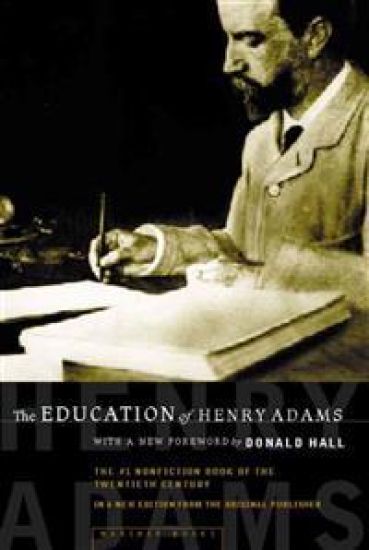
The Education of Henry Adams

The Education of Henry Adams

Henry Adams; Donald (INT) Hall

Houghton Mifflin (Trade)
2000
pokkari
As a journalist, historian, and novelist born into a distinguished family that included two past presidents of the United States, Henry Adams was inescapably a part of the American experience. The Education of Henry Adams (1918) recounts his own and the country's development from 1838, the year of his birth, to 1905, and became an immediate bestseller, awarded the Pulitzer Prize in 1919. The Civil War, economic expansion, and the growth of the United States are among its subjects, as well as his own 'dynamic theory of history'.
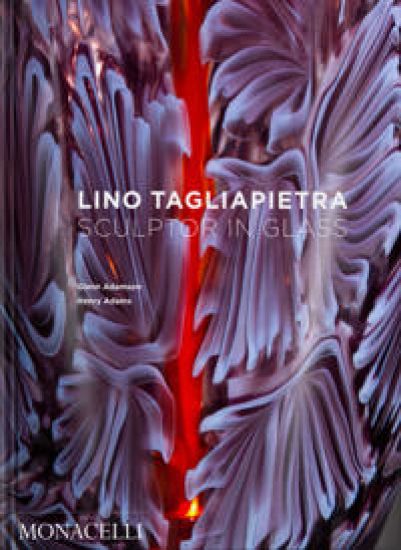
Lino Tagliapietra

Lino Tagliapietra

Glenn Adamson; Henry Adams

Monacelli Press
2023
sidottu
The most comprehensive monograph available on the greatest living glassblower, Lino Tagliapietra Lino Tagliapietra has been described as the world’s greatest glassblower, a figure born from the five-hundred-year-old culture of Venetian glass, but one who also revolutionized glass as a discipline, inventing new techniques to create his masterful works. Even more astonishing, as Tagliapietra hit his full stride, he has become a notable figure in the unfolding story of modern sculpture – an artist whose distinctive works are coveted by collectors of contemporary abstract art and whose vision makes us think about art history in new and profound ways. This is the most comprehensive monograph available on his work and features insightful texts by Glenn Adamson and Henry Adams, as well as hundreds of new photographs, which showcase the impressive breadth and depth of Taglipietra’s repertoire.
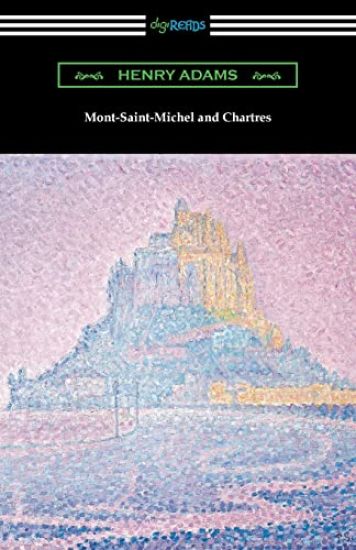
Mont-Saint-Michel and Chartres

Mont-Saint-Michel and Chartres

Henry Adams

Digireads.com
2021
pokkari
Henry Adams, grandson of President John Quincy Adams and great-grandson of President John Adams, was a journalist, historian and novelist who, in 1919, was awarded the Pulitzer Prize for his autobiography "The Education of Henry Adams". One of his less well-known but equally brilliant works, "Mont-Saint-Michel and Chartres", was privately published in 1904. American architect Ralph Adams Cram pushed for the public release of the book in 1913, with the support of the American Institute of Architects. The work is a detailed exploration of medieval society, its poetry, mysticism and philosophy, written through his examination of Gothic architecture, sculpture and stained glass. The great cathedrals of France served as inspiration for this work, in which Adams also delves into the Catholic views of St. Michel, the ideology symbolized by St. Mary, the debate between William of Champaux and Peter Abelard, and the ideas of St. Thomas Aquinas. This work is a wonderful companion novel to the author's autobiography. This edition is printed on premium acid-free paper.
Esther

Esther

Henry Adams

Graphic Arts Books
2021
sidottu
Esther is a free-thinking young woman who enjoys her independence. Her strained relationship with her father usually keeps her far from the church, until she is hired to paint a mural for a Christian church in New York. There, the pastor, Stephen, is in awe of Esther’s work. He makes a consistent effort to connect with her, memorized by her talent. Though she initially recoils from his attention, Esther starts to fall in love with Stephen after he helps her through a family matter. Growing closer as her father’s health declines, Esther and Stephen connect despite their differences. From the start, Esther and Stephen must face conflicts in personality, faith, intellect, and social beliefs. Their relationship is built on rocky ground, threatening Esther’s independence, but offering comfort in her time of need. Intrigued by Stephen’s faith and moved by her love for him, Esther tries to become religious, even though it conflicts with her reason and threatens her independence as a woman. Though her love for Stephen is strong, Esther struggles to decide if it is more important than her autonomy and if his faith is any match for her beliefs of intellectual reason. Clashing personalities, sexism, and the battle between faith and reason make a clever and thoughtful setting for this romance, challenging Esther and Stephen’s relationship with philosophical, theological, and social debate. Esther, written by Henry Adams, examines common ethical and intellectual differences in society and the effect such contrasts have on both romantic and platonic relationships. Though it was published over one hundred years ago, Esther depicts problems that current readers can relate to, and Adam’s wit offers surprising insight and depth. Now presented with a new and appealing cover design and font, paired with classic, well-developed characters, and a lively setting, John Adam’s Esther is easier than ever to enjoy. With a deep, complicated romance and thoughtful representation of the forever relevant debate between reason and religion, Esther is an American classic well deserving of praise and conversation.
Esther

Esther

Henry Adams

Graphic Arts Books
2021
pokkari
Esther is a free-thinking young woman who enjoys her independence. Her strained relationship with her father usually keeps her far from the church, until she is hired to paint a mural for a Christian church in New York. There, the pastor, Stephen, is in awe of Esther’s work. He makes a consistent effort to connect with her, memorized by her talent. Though she initially recoils from his attention, Esther starts to fall in love with Stephen after he helps her through a family matter. Growing closer as her father’s health declines, Esther and Stephen connect despite their differences. From the start, Esther and Stephen must face conflicts in personality, faith, intellect, and social beliefs. Their relationship is built on rocky ground, threatening Esther’s independence, but offering comfort in her time of need. Intrigued by Stephen’s faith and moved by her love for him, Esther tries to become religious, even though it conflicts with her reason and threatens her independence as a woman. Though her love for Stephen is strong, Esther struggles to decide if it is more important than her autonomy and if his faith is any match for her beliefs of intellectual reason. Clashing personalities, sexism, and the battle between faith and reason make a clever and thoughtful setting for this romance, challenging Esther and Stephen’s relationship with philosophical, theological, and social debate. Esther, written by Henry Adams, examines common ethical and intellectual differences in society and the effect such contrasts have on both romantic and platonic relationships. Though it was published over one hundred years ago, Esther depicts problems that current readers can relate to, and Adam’s wit offers surprising insight and depth. Now presented with a new and appealing cover design and font, paired with classic, well-developed characters, and a lively setting, John Adam’s Esther is easier than ever to enjoy. With a deep, complicated romance and thoughtful representation of the forever relevant debate between reason and religion, Esther is an American classic well deserving of praise and conversation.
The Education of Henry Adams

The Education of Henry Adams

Henry Adams

Oxford University Press
2008
nidottu
'Every generalisation that we settled forty years ago, is abandoned' As a journalist, historian and novelist born into a family that included two past presidents of the United States, Henry Adams was constantly focused on the American experiment. An immediate bestseller awarded the Pulitzer Prize in 1919, his The Education of Henry Adams (1918) recounts his own and the country's education from 1838, the year of his birth, to 1905, incorporating the Civil War, capitalist expansion and the growth of the United States as a world power. Exploring America as both a success and a failure, contradiction was the very impetus that compelled Adams to write the Education, in which he was also able to voice his deep scepticism about mankind's power to control the direction of history. Written with immense wit and irony, reassembling the past while glimpsing the future, Adams's vision expresses what Henry James declared the `complex fate' to be an American, and remains one of the most compelling works of American autobiography today. ABOUT THE SERIES: For over 100 years Oxford World's Classics has made available the widest range of literature from around the globe. Each affordable volume reflects Oxford's commitment to scholarship, providing the most accurate text plus a wealth of other valuable features, including expert introductions by leading authorities, helpful notes to clarify the text, up-to-date bibliographies for further study, and much more.
The Education of Henry Adams

The Education of Henry Adams

Henry Adams

Modern Library Inc
1999
pokkari

Halvin toimitettuna 22,00 €

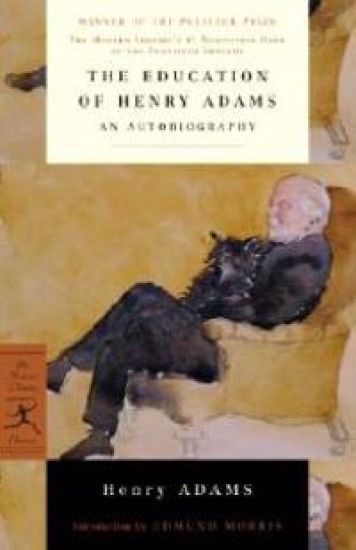
Selected by the Modern Library as one of the 100 best nonfiction books of all time 'I cannot remember when I was not fascinated by Henry Adams, ' said Gore Vidal. 'He was remarkably prescient about the coming horrors.' His political ideals shaped by two presidential ancestors great-grandfather John Adams and grandfather John Quincy Adams Henry Adams was one of the most powerful and original minds to confront the American scene from the Civil War to the First World War. Printed privately in 1907 and published to wide acclaim shortly after the author&'s death in 1918, The Education of Henry Adams is a brilliant, idiosyncratic blend of autobiography and history that charts the great transformation in American life during the so-called Gilded Age. With an introduction by renowned historian Edmund Morris. From the eBook edition."
The Letters of Henry Adams

The Letters of Henry Adams

Henry Adams

Harvard University Press
1989
sidottu
Henry Adams’s letters are among the best in the language. They are, in Alfred Kazin’s words, “magnificent, his most spontaneous and freest literary works.” With the completion of this edition, they may well be judged his most significant achievement. “The letters are not a gloss on a life’s work; in a real sense they are his life’s work,” the reviewer for American Literature stated. We encounter Adams in 1892 at a turning point in his career, at the beginning of the period in which his leading ideas would be crystallized and his major literary works take shape. He had survived the shock of his wife’s suicide and had completed his great History of the Jefferson era, and after his long journey in the South Seas his frustrated passion for Elizabeth Cameron had begun to calm. His wanderlust now took him to the Carolinas and the Rockies, to Mexico, Cuba, Egypt, the Near East, Greece, Italy, central Europe, Russia, and the North Cape. His interest came increasingly to center on the geopolitical present and the medieval past. Prompted by the Panic of 1893, he began an intensive study of the new finance capitalism and the imperial power it created; by the end of the decade he was beginning to foresee the shift of global dominance from Britain to the United States and Russia. Meanwhile a tour of the churches and abbeys of Normandy fired his imagination and led to the absorption in the art and culture of medieval France that would bear fruit in Mont-Saint-Michel and Chartres. At his home on Lafayette Square, across from the White House, he became an informal adviser to statesmen, John Hay and Theodore Roosevelt among them. Out of his friendly association with scientists and his own study of science came his conviction that the dynamo and radium were bringing a revolution in physics. His germinating ideas about science, technology, and economic power were conveyed in his letters over many years before they were formulated into The Education of Henry Adams, his “Study of Twentieth-Century Multiplicity.” The Adams who emerges from the letters is far more complex, contradictory, and human than the protagonist of the Education. He writes to women, Mrs. Cameron above all, about politics, economics, and science as well as social news and palace gossip, just as he writes to men about art as well as power. The multiplicity of his interests, his sharp perceptions, eye for telling detail, and passion for generalization, together with his irony and wit, make his letters the engrossing record of an extraordinary life-in-progress and an incomparable commentary upon his age.

The Letters of Henry Adams

The Letters of Henry Adams

Henry Adams

Harvard University Press
1982
sidottu
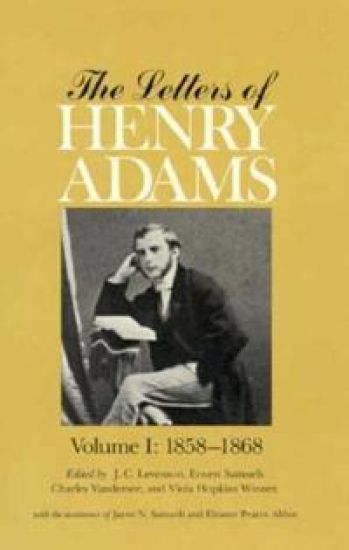
Henry Adams’s letters are one of the vital chronicles of the life of the mind in America. A perceptive analyst of people, events, and ideas, Adams recorded, with brilliance and wit, sixty years of enormous change at home and abroad. Volume I shows him growing from a high-spirited but self-conscious 20-year-old to a self-assured man of the world. In Washington in the chaotic months before Lincoln’s inauguration, then in London during the war years and beyond, he serves as secretary to his statesman father and is privy to the inner workings of politics and diplomacy. English social life proves as absorbing as affairs of state. Volume II takes him from his years as a crusading journalist in Grant’s Washington, through his marriage to Clover Hooper and his pioneer work as a history professor at Harvard and editor of the North American Review, to his settling in Washington as a professional historian. There he and his wife, described by Henry James as “one of the two most interesting women in America,” establish the first intellectual salon of the capital. This halcyon period comes to a catastrophic close with Clover’s suicide. Volume III traces his gradual recovery from the shock of his wife’s death as he seeks distraction in travel—to Japan, to Cuba, and in 1891–92 to the South Seas—a recovery complicated by his falling dangerously in love with Elizabeth Cameron, beautiful young wife of a leading senator. His South Seas letters to Mrs. Cameron are the most brilliant of all. Fewer than half of Adams’s letters have been published even in part, and earlier collections have been marred by expurgations, mistranscriptions, and editorial deletions. In the six volumes of this definitive edition, readers will have access to a major document of the American past.