Kirjailija
Henry D. Thoreau
Kirjat ja teokset yhdessä paikassa: 47 kirjaa, julkaisuja vuosilta 1993–2024, suosituimpiin kuuluu A Week on the Concord and Merrimack Rivers. Vertaile teosten hintoja ja tarkista saatavuus suomalaisista kirjakaupoista.
Nimi esiintyy myös muodoissa: Henry D Thoreau
47 kirjaa
Kirjojen julkaisuvuodet: 1993–2024.
Walden, Civil Disobedience, and Other Writings
Henry D. Thoreau
Createspace Independent Publishing Platform
2016
nidottu
Excursions (1863), by Henry D. Thoreau is (anthology of several essays): Ralph Waldo Emerson (May 25, 1803 - April 27, 1882), known professionally as
Ralph Waldo Emerson; Henry D. Thoreau
Createspace Independent Publishing Platform
2016
nidottu
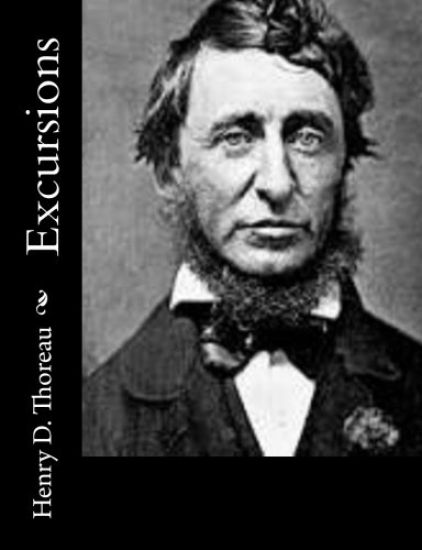
Excursions is an 1863 anthology of several essays by American transcendentalist Henry David Thoreau. The anthology contains an introduction entitled "Biographical Sketch" in which fellow transcendentalist Ralph Waldo Emerson provides a description of Thoreau.he book, other than R. W. Emerson's biography of Thoreau, contains nine of Thoreau's essays: Natural History of Massachusetts, A Walk to Wachusett, The Landlord, A Winter Walk, The Succession of Forest Trees, Walking, Autumnal Tints, Wild Apples, and Night and Moonlight. Henry David Thoreau (see name pronunciation; July 12, 1817 - May 6, 1862) was an American author, poet, philosopher, abolitionist, naturalist, tax resister, development critic, surveyor, and historian. A leading transcendentalist, Thoreau is best known for his book Walden, a reflection upon simple living in natural surroundings, and his essay Resistance to Civil Government (also known as Civil Disobedience), an argument for disobedience to an unjust state. Thoreau's books, articles, essays, journals, and poetry total over 20 volumes. Among his lasting contributions are his writings on natural history and philosophy, where he anticipated the methods and findings of ecology and environmental history, two sources of modern-day environmentalism. His literary style interweaves close natural observation, personal experience, pointed rhetoric, symbolic meanings, and historical lore, while displaying a poetic sensibility, philosophical austerity, and "Yankee" love of practical detail. He was also deeply interested in the idea of survival in the face of hostile elements, historical change, and natural decay; at the same time he advocated abandoning waste and illusion in order to discover life's true essential needs... Ralph Waldo Emerson (May 25, 1803 - April 27, 1882), known professionally as Waldo Emerson, was an American essayist, lecturer, and poet who led the Transcendentalist movement of the mid-19th century. He was seen as a champion of individualism and a prescient critic of the countervailing pressures of society, and he disseminated his thoughts through dozens of published essays and more than 1,500 public lectures across the United States. Emerson gradually moved away from the religious and social beliefs of his contemporaries, formulating and expressing the philosophy of Transcendentalism in his 1836 essay, "Nature". Following this ground-breaking work, he gave a speech entitled "The American Scholar" in 1837, which Oliver Wendell Holmes Sr. considered to be America's "Intellectual Declaration of Independence". Emerson wrote most of his important essays as lectures first, then revised them for print. His first two collections of essays Essays: First Series and Essays: Second Series, published respectively in 1841 and 1844-represent the core of his thinking, and include such well-known essays as "Self-Reliance", "The Over-Soul", "Circles", "The Poet" and "Experience". Together with "Nature", these essays made the decade from the mid-1830s to the mid-1840s Emerson's most fertile period.
A Yankee in Canada, with Anti-slavery and reform papers. (Original Classics): Henry D. Thoreau
Henry D. Thoreau
Createspace Independent Publishing Platform
2016
nidottu

A Yankee in Canada, with Anti-slavery and reform papers. (Original Classics)
Henry D. Thoreau
Createspace Independent Publishing Platform
2016
nidottu
Excursions (1863) by Henry D. Thoreau (Original Classics)
Henry D. Thoreau
Createspace Independent Publishing Platform
2016
nidottu
Excursions (1863) by Henry D. Thoreau (Original Classics)
Henry D. Thoreau
Createspace Independent Publishing Platform
2016
nidottu
Cape Cod by Henry David Thoreau is a book that explores the natural beauty and cultural history of Cape Cod, a peninsula located in Massachusetts. Thoreau, an American author, poet, and philosopher, spent several months living on the Cape in the mid-1800s, and this book is a collection of his observations, musings, and reflections on the area. The book is divided into several chapters, each focusing on a different aspect of Cape Cod. Thoreau discusses the geology and ecology of the region, describing the beaches, dunes, and marshes that make up the landscape. He also writes about the wildlife that inhabits Cape Cod, including birds, fish, and seals. In addition to the natural world, Thoreau also delves into the human history of the Cape. He visits several towns and villages, meeting with local residents and learning about the area's maritime and fishing industries. He also reflects on the role of Cape Cod in American history, particularly in relation to the Pilgrims and the American Revolution. Throughout the book, Thoreau's prose is lyrical and contemplative, as he meditates on the beauty and meaning of the natural world. He also includes several sketches and drawings, which add to the book's visual appeal. Overall, Cape Cod is a classic work of American nature writing, offering a unique and insightful perspective on one of the country's most iconic landscapes. This Is A New Release Of The Original 1908 Edition. This scarce antiquarian book is a facsimile reprint of the old original and may contain some imperfections such as library marks and notations. Because we believe this work is culturally important, we have made it available as part of our commitment for protecting, preserving, and promoting the world's literature in affordable, high quality, modern editions, that are true to their original work.


A Yankee in Canada with Anti-Slavery and Reform Papers
Henry D. Thoreau
Literary Licensing, LLC
2014
nidottu

A Yankee in Canada with Anti Slavery and Reform Papers
Henry D. Thoreau
Literary Licensing, LLC
2014
nidottu
A Yankee in Canada with Anti Slavery and Reform Papers (LARGE PRINT EDITION)
Henry D. Thoreau
KESSINGER PUBLISHING, LLC
2011
sidottu

Mitte des 19. Jahrhunderts unternahm der amerikanische Schriftsteller Henry David Thoreau ein bis dato einzigartiges Daseinsexperiment: Für zwei Jahre zog er sich tief in die Wälder Massachusetts? zurück. Dabei ging es ihm nicht um simple Weltflucht, sondern um die Erforschung menschlicher Existenz, um ein wahrhaft bewusstes Leben und die Beschränkung auf das Wesentliche. Seit ihrem Erscheinen 1854 wurden Thoreaus höchst kunstvoll arrangierte Aufzeichnungen ganzen Generationen von Lesern zur Quelle der Inspiration, darunter Leo Tolstoi und Mahatma Gandhi, der Naturschutzbewegung wie der 68er-Generation.