

Kirjailija
Henry David Thoreau
Kirjat ja teokset yhdessä paikassa: 873 kirjaa, julkaisuja vuosilta 1849–2026, suosituimpiin kuuluu Viikko virran vietävänä. Vertaile teosten hintoja ja tarkista saatavuus suomalaisista kirjakaupoista.
873 kirjaa
Kirjojen julkaisuvuodet: 1849–2026.

Vom Ungehorsam gegen den Staat / Vom Gehen durch die Natur
Henry David Thoreau
Anaconda Verlag
2010
sidottu
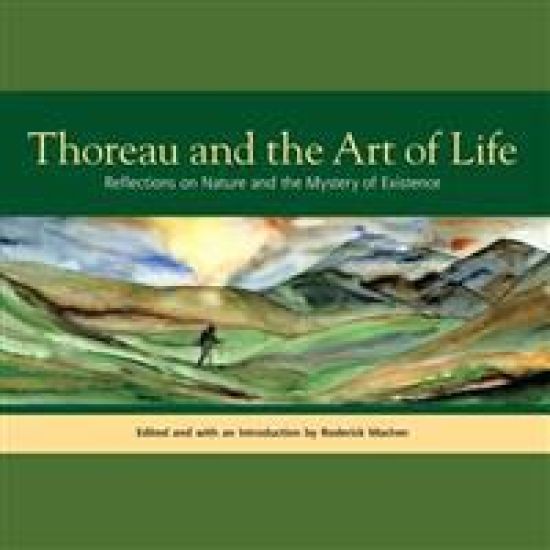
Featuring nearly 100 luminous watercolor illustrations, "Thoreau and the Art of Life "collects eloquent passages from the writings""of the seminal author and philosopher. Drawn mainly from""his journals, the short excerpts provide fascinating insight into""his thought processes by presenting his raw, unedited feelings""about the things that meant the most to him. The book reflects""Thoreau's deep beliefs and ideas about nature, relationships, creativity, ""spirituality, aging, simplicity, and wisdom. By eloquently""expressing his thoughts about life and what gives it value, he""leads the reader to a closer examination of life. Thoreau's work""asks us to live our own truths with joy and discipline and to recognize""that we live in a universe of extraordinary beauty, mystery, ""and wonder. An avid reader of Thoreau, editor and illustrator Roderick""MacIver organized the passages by themes: love and friendship;""art, creativity, and writing; aging, disease, and death; human society""and culture; nature and the human connection to the natural""world; and wisdom, truth, solitude, and simplicity. The book""includes a chronology and brief biography. Thoreau's words of""wisdom combined with MacIver's vivid illustrations of the American""landscape will resonate with nature enthusiasts and a broad""range of readers interested in art, environmentalism, literature, and""philosophy. "It is something to be able to paint a particular picture, or to carve a statue, and so to make a few objects beautiful, but it is more glorious to carve and paint the very atmosphere and medium through which we look, which morally we can do. To affect the quality of the day, that is the highest of arts. Every man is tasked to make his life, even in its details, worthy of the contemplation of his most elevated and critical hour."--Henry David Thoreau

Walden by Henry David Thoreau is an American classic first published in the 19th century. It details Thoreau's stay in a cabin near Walden Pond for about two years, in a woodland not far from his family home.
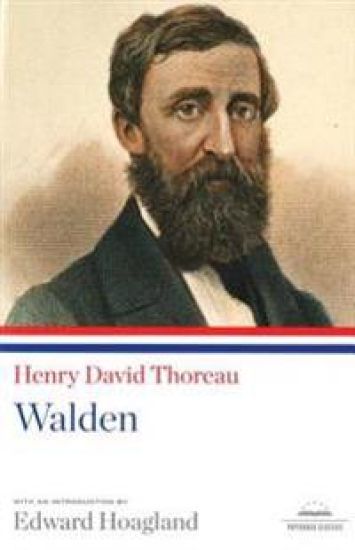
Perhaps the most remarkable book in the American canon. As dense as scripture, crowded with aphorism, Walden is full enough of ideas for a score of ordinary books. -Bill McKibben In 1845 Henry David Thoreau left his pencil-manufacturing business and began building a cabin on the shore of Walden Pond near Concord, Massachusetts. This lyrical yet practical-minded book is at once the record of the 26 months Thoreau spent in withdrawal from society-an account of the daily details of building, planting, hunting, cooking, and always, observing nature-and a declaration of independence from the oppressive mores and spiritual sterility of the world he left behind. Elegant, funny, profound, and quietly searching, Walden remains the most persuasive American argument for simplicity of life and clarity of conscience. For almost thirty years, The Library of America has presented America's best and most significant writing in acclaimed hardcover editions. Now, a new series, Library of America Paperback Classics, offers attractive and affordable books that bring The Library of America's authoritative texts within easy reach of every reader. Each book features an introductory essay by one of a leading writer, as well as a detailed chronology of the author's life and career, an essay on the choice and history of the text, and notes. The contents of this Paperback Classic are drawn from Henry David Thoreau: A Week, Walden, The Maine Woods, Cape Cod, volume number 28 in the Library of America series. That volume is joined in the series by a companion volume, number 124, Henry David Thoreau: Collected Essays and Poems.

The Maine Woods, Thoreau’s best-known book after Walden, is now available for the first time in a lavishly produced, fully annotated gift-book edition “On the 31st of August, 1846, I left Concord in Massachusetts for Bangor and the backwoods of Maine”—thus begins The Maine Woods, the evocative story of Thoreau’s journeys through a familiar yet untouched land. As he explores Mt. Katahdin (an Indian word meaning “highest land”), Lake Chesuncook, the Allagash River, and the East Branch of the Penobscot, Thoreau muses on his own vulnerability and the humility engendered by his solitude in the wilderness. Throughout Thoreau invokes the forest of Maine—the mountains, waterways, fauna, flora, and the people—in his singular style. Echoing Walden, Thoreau’s passionate outcry against the degradation of the environment in The Maine Woods will resonate strongly today. This fully annotated gift edition of The Maine Woods makes a wonderful companion volume to Walden: A Fully Annotated Edition and I to Myself: An Annotated Selection from the Journal of Henry D. Thoreau.

Henry David Thoreau's Journal was his life's work: the daily practice of writing that accompanied his daily walks, the workshop where he developed his books and essays, and a project in its own right--one of the most intensive explorations ever made of the everyday environment, the revolving seasons, and the changing self. It is a treasure trove of some of the finest prose in English and, for those acquainted with it, its prismatic pages exercise a hypnotic fascination. Yet at roughly seven thousand pages, or two million words, it remains Thoreau's least-known work. This reader's edition, the largest one-volume edition of Thoreau's Journal ever published, is the first to capture the scope, rhythms, and variety of the work as a whole. Ranging freely over the world at large, the Journal is no less devoted to the life within. As Thoreau says, "It is in vain to write on the seasons unless you have the seasons in you."
Pertaining To Thoreau (1901)
Samuel Arthur Jones; Henry David Thoreau
KESSINGER PUBLISHING, LLC
2009
pokkari

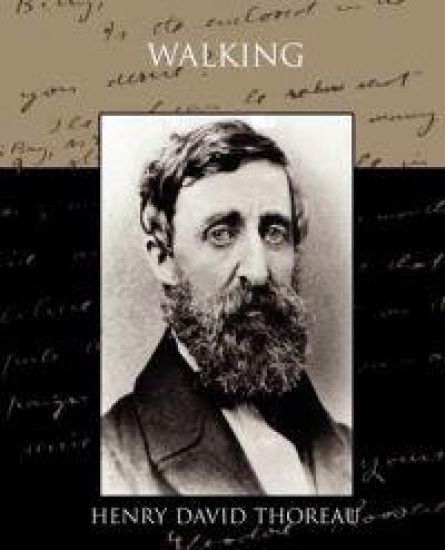
From 1837 to 1861, Henry D. Thoreau kept a Journal that would become the principal imaginative work of his career. The source of much of his published writing, the Journal is also a record of his interior life and of his monumental studies of the natural history of his native Concord, Massachusetts. Unlike earlier editions, the Princeton edition reproduces Thoreau's Journal in its original and complete form, in a text free of editorial interpolations and keyed to a comprehensive scholarly apparatus. This seventh volume of the Journal is edited from the 454-page manuscript that Thoreau kept from August 19, 1853, through February 12, 1854. During the six months covered here, Thoreau continued to add to his store of observations about local animals, plants, and weather. Most of the Journal is dedicated to describing natural phenomena, such as changes in leaf color and the ripening of berries, in the context of seasonal cycles. His observations create a detailed portrait of Concord and the surrounding areas that will be of interest to ecologists and others who study phenological patterns and variations. In addition, Thoreau integrates these observations with ethical reflections about living in harmony with nature, following the model of the Roman agricultural writers. The volume also includes Thoreau's account of a September 1853 trip to the Maine woods that appeared in 1858 as "Chesuncook"; the draft is published here for the first time.


"'År 1845 byggde sig Thoreau en stuga vid tjärnen Walden nära Concord i Massachusetts. Han levde där nära naturen i över två år och hade under tiden få kontakter med civilisationen. Skildringen av det enkla och oberoende livet i skogarna är ett gott exempel på hans kritik mot det framväxande moderna samhällets avigsidor. Thoreaus egensinniga tänkande har påverkat miljoner människor världen över. Natur & Kulturs klassikerserie Levande litteratur har en över 80-årig tradition av kvalitetsutgivning. I serien presenteras nu en oavkortad nyöversättning av Thoreaus mest berömda verk. Med efterord av Thoreau-experterna Steven Hartman och Henrik Otterberg. Översättning Peter Handberg "