Kirjailija
Henry David Thoreau
Kirjat ja teokset yhdessä paikassa: 873 kirjaa, julkaisuja vuosilta 1849–2026, suosituimpiin kuuluu Viikko virran vietävänä. Vertaile teosten hintoja ja tarkista saatavuus suomalaisista kirjakaupoista.
873 kirjaa
Kirjojen julkaisuvuodet: 1849–2026.

Reproduction of the original. The publishing house Megali specialises in reproducing historical works in large print to make reading easier for people with impaired vision.

Reproduction of the original. The publishing house Megali specialises in reproducing historical works in large print to make reading easier for people with impaired vision.


Histoire du XIXe siècle (volume 1/3) : I. Directoire. Origine des Bonaparte (Edition1)
Henry David Thoreau
Alpha Editions
2024
nidottu
A Yankee in Canada, with Anti-slavery and reform papers"", constitue un phare dans le monde du livre, comblant le foss entre le pass et le pr sent. Autrefois consid r parmi les livres anciens, cet ouvrage classique, comme tant de livres anciens et oubli s, a fa onn notre compr hension de la culture et de l'histoire. exemple remarquable de livres d'histoire qui ont influenc des g n rations, et maintenant, gr ce au d vouement d'Alpha Editions, votre diteur de livres de confiance, il rena t dans un format frais et l gant. Nous avons soigneusement retap , remani et am lior ce livre pour qu'il soit bien plus qu'un simple titre lire. Vous pouvez d sormais profiter de pages claires et faciles lire, sans num risation floue ni texte d color . En choisissant cette dition, vous investissez dans plus qu'un livre: vous sauvegardez un h ritage. Votre soutien maintient en vie un morceau remarquable du patrimoine humain, garantissant que ses le ons et ses inspirations continuent de r sonner dans le futur.
Walden is a book by American transcendentalist writer Henry David Thoreau and is a reflection upon simple living in natural surroundings. Walden details Thoreau's experiences over the course of two years, two months, and two days in a cabin he built near Walden Pond, amidst woodland owned by his friend and mentor Ralph Waldo Emerson, near Concord, Massachusetts. The work is part personal declaration of independence, social experiment, voyage of spiritual discovery, satire, and manual for self-reliance. It is one of the most influential and compelling books in American literature. Civil Disobedience or Resistance to Civil Government is an essay by Thoreau in which he argues that individuals should not permit governments to overrule or atrophy their consciences, and that they have a duty to avoid allowing such acquiescence to enable the government to make them the agents of injustice. It is an internationally admired work that is known to have influenced writer Leo Tolstoy and political activist Mahatma Gandhi, and many members of the American Civil Rights Movement. Walking is a transcendental essay in which Thoreau talks about the importance of nature to mankind, and how people cannot survive without nature, physically, mentally, and spiritually, yet we seem to be spending more and more time entrenched by society. For Thoreau walking is a self-reflective spiritual act that occurs only when you are away from society, that allows you to learn about who you are, and find other aspects of yourself that have been chipped away by society.
Transcendentalism Collection
Henry David Thoreau; Ralph Waldo Emerson
Classy Publishing
2024
nidottu
ESSENTIAL WORKS OF TRANSCENDENTALISM IN ONE CONVENIENT VOLUMEHenry David Thoreau's masterwork, Walden, is a collection of his reflections on life and society. Civil Disobedience is an essay in which he argues that individuals should not permit governments to overrule or atrophy their consciences, and that they have a duty to avoid allowing such acquiescence to enable the government to make them the agents of injustice. Walking is a transcendental essay in which Thoreau talks about the importance of nature to mankind, and how people cannot survive without nature, physically, mentally, and spiritually, yet we seem to be spending more and more time entrenched by society. Within Nature, Emerson divides nature into four usages-Commodity, Beauty, Language, and Discipline. These distinctions define the ways by which humans use nature for their basic needs, their desire for delight, their communication with one another, and their understanding of the world. The American Scholar is a Speech, it was organized into four sections that detail the current issues with man and lays out the road to becoming an American scholar. Self-Reliance contains the most thorough statement of one of his recurrent themes-the need for each person to avoid conformity and false consistency, and follow his or her own instincts and ideas. Emerson emphasizes the importance of individualism and its effect on a person's satisfaction in life, explaining how life is 'learning and forgetting and learning again'.
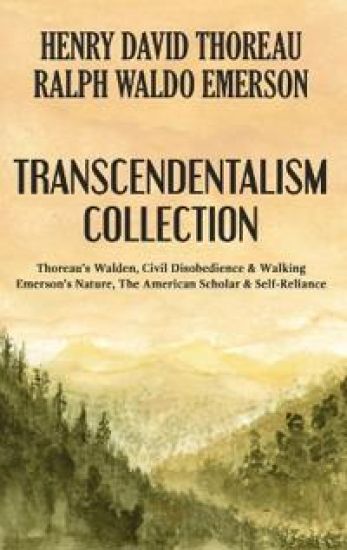
Transcendentalism Collection
Henry David Thoreau; Ralph Waldo Emerson
Classy Publishing
2024
sidottu
ESSENTIAL WORKS OF TRANSCENDENTALISM IN ONE CONVENIENT VOLUMEHenry David Thoreau's masterwork, Walden, is a collection of his reflections on life and society. Civil Disobedience is an essay in which he argues that individuals should not permit governments to overrule or atrophy their consciences, and that they have a duty to avoid allowing such acquiescence to enable the government to make them the agents of injustice. Walking is a transcendental essay in which Thoreau talks about the importance of nature to mankind, and how people cannot survive without nature, physically, mentally, and spiritually, yet we seem to be spending more and more time entrenched by society. Within Nature, Emerson divides nature into four usages-Commodity, Beauty, Language, and Discipline. These distinctions define the ways by which humans use nature for their basic needs, their desire for delight, their communication with one another, and their understanding of the world. The American Scholar is a Speech, it was organized into four sections that detail the current issues with man and lays out the road to becoming an American scholar. Self-Reliance contains the most thorough statement of one of his recurrent themes-the need for each person to avoid conformity and false consistency, and follow his or her own instincts and ideas. Emerson emphasizes the importance of individualism and its effect on a person's satisfaction in life, explaining how life is 'learning and forgetting and learning again'.
Walden is a book by American transcendentalist writer Henry David Thoreau and is a reflection upon simple living in natural surroundings. Walden details Thoreau's experiences over the course of two years, two months, and two days in a cabin he built near Walden Pond, amidst woodland owned by his friend and mentor Ralph Waldo Emerson, near Concord, Massachusetts. The work is part personal declaration of independence, social experiment, voyage of spiritual discovery, satire, and manual for self-reliance. It is one of the most influential and compelling books in American literature. Civil Disobedience or Resistance to Civil Government is an essay by Thoreau in which he argues that individuals should not permit governments to overrule or atrophy their consciences, and that they have a duty to avoid allowing such acquiescence to enable the government to make them the agents of injustice. It is an internationally admired work that is known to have influenced writer Leo Tolstoy and political activist Mahatma Gandhi, and many members of the American Civil Rights Movement. Walking is a transcendental essay in which Thoreau talks about the importance of nature to mankind, and how people cannot survive without nature, physically, mentally, and spiritually, yet we seem to be spending more and more time entrenched by society. For Thoreau walking is a self-reflective spiritual act that occurs only when you are away from society, that allows you to learn about who you are, and find other aspects of yourself that have been chipped away by society.
IN THE SPIRIT OF UNDYING ADVENTURE Sauntering through natural landscapes is a noble art; and one that Henry David Thoreau held in the highest regard. Though he is perhaps best known for Walden: Life in the Woods and his essay "Civil Disobedience," Thoreau was an early advocate of recreational hiking, canoeing, and conserving natural resources. A passionate nature writer, he penned many articles that shared these philosophies and perspectives. This carefully restored re-creation of the 1863 essay collection Excursions features the nine original essays that were published posthumously: "Natural History of Massachusetts" "A Walk to Wachusett" "The Landlord" "A Winter Walk" "The Succession of Forest Trees" "Walking" "Autumnal Tints" "Wild Apples" "Night and Moonlight" This revised special edition also includes the original detailed biographical sketch of Thoreau by fellow transcendentalist and friend Ralph Waldo Emerson. Featuring a brand-new foreword by J. F. Penn, best-selling author of PILGRIMAGE: Lessons Learned from Walking Three Ancient Ways, and a fresh introduction from editor Mark Leslie. ______ "In these ever more fast-moving times, as the constant noise of media in every form buffets us, and bad news from across the world shakes our sense of well-being daily, we can find truth in Thoreau's words that 'in society you will not find health, but in nature.'" - J. F. Penn
IN THE SPIRIT OF UNDYING ADVENTURE Sauntering through natural landscapes is a noble art; and one that Henry David Thoreau held in the highest regard. Though he is perhaps best known for Walden: Life in the Woods and his essay "Civil Disobedience," Thoreau was an early advocate of recreational hiking, canoeing, and conserving natural resources. A passionate nature writer, he penned many articles that shared these philosophies and perspectives. This carefully restored re-creation of the 1863 essay collection Excursions features the nine original essays that were published posthumously: "Natural History of Massachusetts" "A Walk to Wachusett" "The Landlord" "A Winter Walk" "The Succession of Forest Trees" "Walking" "Autumnal Tints" "Wild Apples" "Night and Moonlight" This revised special edition also includes the original detailed biographical sketch of Thoreau by fellow transcendentalist and friend Ralph Waldo Emerson. Featuring a brand-new foreword by J. F. Penn, best-selling author of PILGRIMAGE: Lessons Learned from Walking Three Ancient Ways, and a fresh introduction from editor Mark Leslie. ______ "In these ever more fast-moving times, as the constant noise of media in every form buffets us, and bad news from across the world shakes our sense of well-being daily, we can find truth in Thoreau's words that 'in society you will not find health, but in nature.'" - J. F. Penn

In Walden, Thoreau describes his experiences over two years, two months, and two days in a cabin he constructed close to Walden Pond amid Ralph Waldo Emerson's property near Concord, Massachusetts. Thoreau makes precise scientific observations of nature as well as metaphorical and poetic uses of natural phenomena. He identifies many plants and animals by both their popular and scientific names, records in detail the color and clarity of different bodies of water, precisely dates and describes the freezing and thawing of the pond, and recounts his experiments to measure the depth and shape of the bottom of the supposedly "bottomless" Walden Pond. There has been much speculation as to why Thoreau went to live at the pond in the first place. E. B. White stated on this note, "Henry went forth to battle when he took to the woods, and Walden is the report of a man torn by two powerful and opposing drives-the desire to enjoy the world and the urge to set the world straight," while Leo Marx noted that Thoreau's stay at Walden Pond was an experiment based on his teacher Emerson's "method and of nature" and that it was a "report of an experiment in transcendental pastoralism."
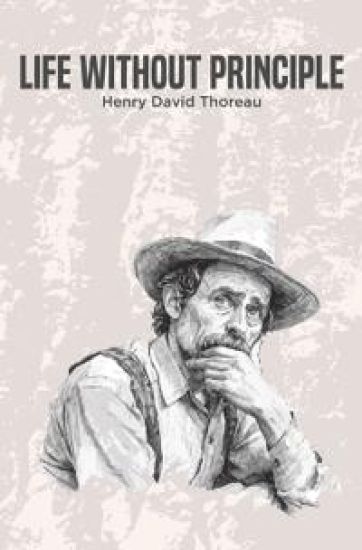
This influential work delves into Thoreau's critique of a society obsessed with economic gain and material success, advocating for a life rooted in deeper values and principles. Thoreau challenges conventional wisdom, questioning the relentless pursuit of wealth and the toll it takes on the human spirit and community well-being. He emphasizes the importance of individual conscience and the need to align one's livelihood with personal values and integrity. Thoreau's reflections extend to the realms of work, economy, and personal fulfillment, urging a closer connection to nature and simplicity. Life Without Principle is a timeless piece that resonates in the modern world, encouraging readers to reconsider what truly constitutes a life well-lived and to seek a path that leads to genuine satisfaction and ethical living.

H. D. Thoreau mostr al mundo la importancia fundamental de la naturaleza en su relaci n con el ser humano cuando decidi irse a vivir en mitad del bosque y publicar su experiencia. Despu s de aquella obra cumbre, Walden, el autor volcaba en este librito sus reflexiones en torno al arte de caminar. Salir y explorar los lugares m s remotos, pisar caminos y bosques no solo libera nuestra mente, sino que tambi n nos asoma a una vida m s sencilla y aut ntica, m s cercana al primigenio estado salvaje. H. D. Thoreau showed the world the fundamental importance of nature and its relationship with humans when he decided to go live in the middle of the forest and write about his experience. After reading that masterpiece, the author of this book was inspired to write down his reflections on the art of walking. Spending time wandering in nature not only frees our mind, but also gives us a glimpse of a simpler and more authentic life.
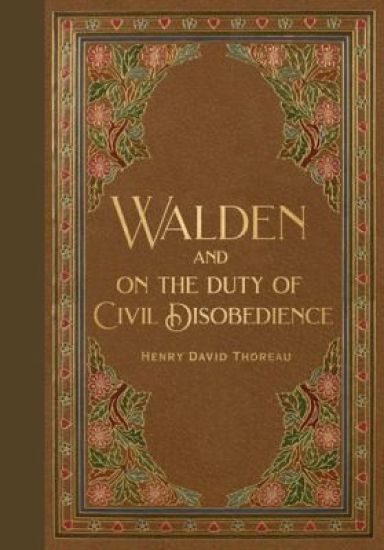
Walden & Civil Disobedience (Masterpiece Library Edition)
Henry David Thoreau
PETER PAUPER PRESS
2024
sidottu
Read Henry David Thoreau's most influential works in one stunning volume With reflections on politics, simplicity, and independent living, Thoreau's writings ask readers to question the status quo and live in accordance with their principles. - Rediscover these beloved classics in this elegant yet affordable Masterpiece Library Edition, honoring the Peter Pauper Press founders' tradition of publishing beautiful books.- Deluxe hardcover keepsake volume is bound with care and elegance.- The cover is embossed and enhanced with iridescent highlighting.- The spine is stamped with gold foil.- Reinforced cloth quarter-binding provides extra strength and durability.- Premium acid-free archival-quality paper resists damage from air and light, for greater longevity.- The pages are cream-colored, with a font, type size, and line spacing carefully chosen to provide a comfortable and luxurious reading experience, even in low light.- Keepsake volume comes with a matching satin ribbon bookmark with which to keep your place.- A must-have for every home library.- 320 pages. Henry David Thoreau (1817-1862) was a philosopher and naturalist from Concord, Massachusetts. A leading voice in transcendentalist philosophy, Thoreau wrote and spoke on themes of intellectual independence, spiritual growth, and connection to nature.


The Thoreau Classics: Walden, Civil Disobedience & Walking
Henry David Thoreau
Sharp Ink
2023
pokkari