Kirjailija
Henry Edward Krehbiel
Kirjat ja teokset yhdessä paikassa: 100 kirjaa, julkaisuja vuosilta 2004–2026, suosituimpiin kuuluu Annotated Bibliography Of Fine Art. Vertaile teosten hintoja ja tarkista saatavuus suomalaisista kirjakaupoista.
100 kirjaa
Kirjojen julkaisuvuodet: 2004–2026.
Music and Manners in the classical Period is an unchanged, high-quality reprint of the original edition of 1898. Hansebooks is editor of the literature on different topic areas such as research and science, travel and expeditions, cooking and nutrition, medicine, and other genres. As a publisher we focus on the preservation of historical literature. Many works of historical writers and scientists are available today as antiques only. Hansebooks newly publishes these books and contributes to the preservation of literature which has become rare and historical knowledge for the future.

A Book of Operas is a classic opera guide by Henry Edward Krehbiel. The history of what is popularly called Italian opera begins in the United States with a performance of Rossini's lyrical comedy "Il Barbiere di Siviglia"; it may, therefore, fittingly take the first place in these operatic studies. The place was the Park Theatre, then situated in Chambers Street, east of Broadway, and the date November 29, 1825. It was not the first performance of Italian opera music in America, however, nor yet of Rossini's merry work. In the early years of the nineteenth century New York was almost as fully abreast of the times in the matter of dramatic entertainments as London. Contents: Il barbiere de Siviglia -- Le nozze di Figaro -- Die Zauberfl te -- Don Giovanni -- Fidelio -- Faust -- Mefistofele -- La damnation de Faust -- La traviata -- A da -- Der Freisch tz -- Tannh user -- Tristan und Isolde -- Parsifal -- Die Meistersinger von N rnberg -- Lohengrin -- H nsel and Gretel.



A Second Book of Operas
Henry Edward Krehbiel
Createspace Independent Publishing Platform
2015
nidottu
How to Listen to Music
Henry Edward Krehbiel
Createspace Independent Publishing Platform
2015
nidottu
How to Listen to Music, by Henry Edward Krehbiel, is classic music appreciation guide that provides "hints and suggestions to untaught lovers of the art."
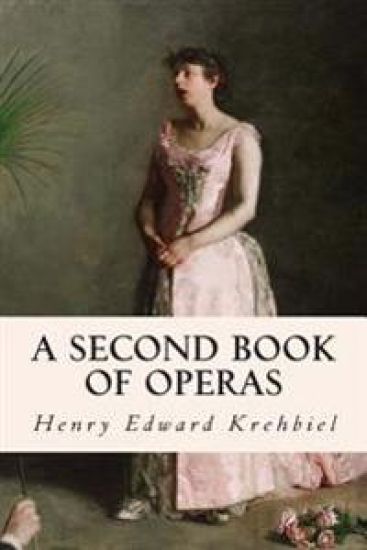
A Second Book of Operas
Henry Edward Krehbiel
Createspace Independent Publishing Platform
2015
nidottu
A Second Book of Operas is a classic opera guide by Henry Edward Krehbiel and a sequel to the author's venerable volume, A Book of Operas. Whether or not the English owe a grudge to their Lord Chamberlain for depriving them of the pleasure of seeing operas based on Biblical stories I do not know. If they do, the grudge cannot be a deep one, for it is a long time since Biblical operas were in vogue, and in the case of the very few survivals it has been easy to solve the difficulty and salve the conscience of the public censor by the simple device of changing the names of the characters and the scene of action if the works are to be presented on the stage, or omitting scenery, costumes and action and performing them as oratorios. Contents: Biblical operas -- Bible stories in opera and oratorio -- Rubinstein and his "Geistlich oper" -- "Samson et Dalila" -- "Die k nigin von Saba" -- "H rodiade" -- "Lakm " -- "Pagliacci" -- "Cavalleria rusticana" -- The career of Mascagni -- "Iris" -- "Madama Butterfly" -- "Der rosenkavalier" -- "K nigskinder" -- "Boris Godounoff" -- "Madame Sans-G ne" and other operas by Giordano -- Two operas by Wolf-Ferrari.
A Second Book of Operas
Henry Edward Krehbiel
Createspace Independent Publishing Platform
2015
nidottu
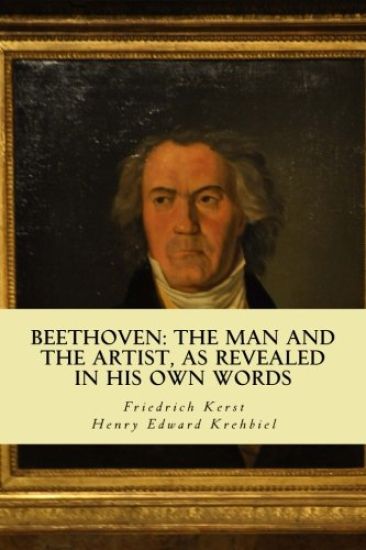
Beethoven: the Man and the Artist, as Revealed in his own Words
Henry Edward Krehbiel; Friedrich Kerst
Createspace Independent Publishing Platform
2014
nidottu
Beethoven, the great German composer, is revealed in his own words in this classical music biography. Beethoven's thoughts and feelings about the creative process and the business of making music are found within these pages along with the great composer's attitudes about religion, education and a number of other topics. This book provides valuable insight to what made Beethoven one of the most enigmatic figures in the history of music. Ludwig van Beethoven, baptised 17 December 1770 - 26 March 1827) was a German composer and pianist. A crucial figure in the transition between the Classical and Romantic eras in Western art music, he remains one of the most famous and influential of all composers. Born in Bonn, then the capital of the Electorate of Cologne and part of the Holy Roman Empire, Beethoven displayed his musical talents at an early age and was taught by his father Johann van Beethoven and by composer and conductor Christian Gottlob Neefe. At the age of 21 he moved to Vienna, where he began studying composition with Joseph Haydn and gained a reputation as a virtuoso pianist. He lived in Vienna until his death. By his late 20s his hearing began to deteriorate, and by the last decade of his life he was almost completely deaf. In 1811 he gave up conducting and performing in public but continued to compose; many of his most admired works come from these last 15 years of his life. Beethoven was the grandson of Ludwig van Beethoven (1712-73), a musician from the town of Mechelen in the Duchy of Brabant in the Flemish region of what is now Belgium, who at the age of 21 moved to Bonn. 2] 3] Ludwig (he adopted the German cognate of the Dutch Lodewijk) was employed as a bass singer at the court of the Elector of Cologne, eventually rising to become, in 1761, Kapellmeister (music director) and thereafter the pre-eminent musician in Bonn. The portrait he commissioned of himself towards the end of his life remained proudly displayed in his grandson's rooms as a talisman of his musical heritage. 4] Ludwig had one son, Johann (1740-1792), who worked as a tenor in the same musical establishment and gave keyboard and violin lessons to supplement his income. 2] Johann married Maria Magdalena Keverich in 1767; she was the daughter of Johann Heinrich Keverich (1701-1751), who had been the head chef at the court of the Archbishopric of Trier. Beethoven was born of this marriage in Bonn. There is no authentic record of the date of his birth; however, the registry of his baptism, in a Catholic service at the Parish of St. Regius on 17 December 1770, survives. 6] As children of that era were traditionally baptised the day after birth in the Catholic Rhine country, and it is known that Beethoven's family and his teacher Johann Albrechtsberger celebrated his birthday on 16 December, most scholars accept 16 December 1770 as his date of birth. 7] 8] Of the seven children born to Johann van Beethoven, only Ludwig, the second-born, and two younger brothers survived infancy. Kaspar Anton Karl was born on 8 April 1774, and Nikolaus Johann, the youngest, was born on 2 October 1776. 9] Beethoven's first music teacher was his father. He later had other local teachers: the court organist Gilles van den Eeden (d. 1782), Tobias Friedrich Pfeiffer (a family friend, who provided keyboard tuition), and Franz Rovantini (a relative, who instructed him in playing the violin and viola). 2] From the outset his tuition regime, which began in his fifth year, was harsh and intensive, often reducing him to tears; with the involvement of the insomniac Pfeiffer there were irregular late-night sessions with the young Beethoven being dragged from his bed to the keyboard. 10] His musical talent was obvious at a young age. Johann, aware of Leopold Mozart's successes in this area (with his son Wolfgang and daughter Nannerl), attempted to promote his son as a child prodigy, claiming that Beethoven was six.

A Book of Operas Their Histories, Their Plots and Their Music
Henry Edward Krehbiel
Literary Licensing, LLC
2014
nidottu

How to Listen to Music: Hints and Suggestions to Untaught Lovers of the Art
Henry Edward Krehbiel
Literary Licensing, LLC
2014
nidottu

Afro-American Folk Songs: A Study In Racial And National Music
Henry Edward Krehbiel
Literary Licensing, LLC
2014
nidottu

How to Listen to Music, 7th Ed. Hints and Suggestions to Untaught Lovers of the Art
Henry Edward Krehbiel
Tredition Classics
2011
pokkari

A Book of Operas Their Histories, Their Plots, and Their Music
Henry Edward Krehbiel
Tredition Classics
2011
pokkari

Chapters of Opera Being Historical and Critical Observations and Records Concerning the Lyric Drama in New York from Its Earliest Days Down to the Pre
Henry Edward Krehbiel
Tredition Classics
2011
pokkari