
Kirjailija
Henry Fielding
Kirjat ja teokset yhdessä paikassa: 574 kirjaa, julkaisuja vuosilta 1786–2026, suosituimpiin kuuluu Tom Jones. Vertaile teosten hintoja ja tarkista saatavuus suomalaisista kirjakaupoista.
Nimi esiintyy myös muodoissa: Henry. Fielding
574 kirjaa
Kirjojen julkaisuvuodet: 1786–2026.

The history of the adventures of Joseph Andrews and his friend Mr Abraham Adams. By: Henry Fielding ( NOVEL )
Henry Fielding
Createspace Independent Publishing Platform
2017
nidottu
Joseph Andrews, or The History of the Adventures of Joseph Andrews and of his Friend Mr. Abraham Adams, was the first published full-length novel of the English author and magistrate Henry Fielding, and indeed among the first novels in the English language. Published in 1742 and defined by Fielding as a "comic epic poem in prose", it is the story of a good-natured footman's adventures on the road home from London with his friend and mentor, the absent-minded parson Abraham Adams. The novel represents the coming together citation needed] of the two competing aesthetics of eighteenth-century literature: the mock-heroic and neoclassical (and, by extension, aristocratic) approach of Augustans such as Alexander Pope and Jonathan Swift; and the popular, domestic prose fiction of novelists such as Daniel Defoe and Samuel Richardson. The novel draws on a variety of inspirations. Written "in imitation of the manner of Cervantes, the author of Don Quixote" (see title page on right), the work owes much of its humour to the techniques developed by Cervantes, and its subject-matter to the seemingly loose arrangement of events, digressions and lower-class characters to the genre of writing known as picaresque. In deference to the literary tastes and recurring tropes of the period, it relies on bawdy humour, an impending marriage and a mystery surrounding unknown parentage, but conversely is rich in philosophical digressions, classical erudition and social purpose.
The history of Tom Jones, a foundling. By: Henry Fielding (vOLUME I ): Comic novel
Henry Fielding
Createspace Independent Publishing Platform
2017
nidottu
The History of Tom Jones, a Foundling, often known simply as Tom Jones, is a comic novel by the English playwright and novelist Henry Fielding. The novel is both a Bildungsroman and a picaresque novel. First published on 28 February 1749 in London, Tom Jones is among the earliest English prose works describable as a novel, and is the earliest novel mentioned by W. Somerset Maugham in his 1948 book Great Novelists and Their Novels among the ten best novels of the world. Totaling 346,747 words, it is divided into 18 smaller books, each preceded by a discursive chapter, often on topics unrelated to the book itself. It is dedicated to George Lyttleton. Though lengthy, the novel is highly organised; S. T. Coleridge argued that it has one of the "three most perfect plots ever planned". Although critic Samuel Johnson took exception to Fielding's "robust distinctions between right and wrong", it became a best seller, with four editions being published in its first year alone. Tom Jones is generally regarded as Fielding's greatest book, and as a very influential English novel. The novel's events occupy eighteen books. The kindly and wealthy Squire Allworthy and his sister Bridget are introduced in their wealthy estate in Somerset. Allworthy returns from London after an extended business trip and finds an abandoned baby sleeping in his bed. He summons his housekeeper, Mrs Deborah Wilkins, to take care of the child. After searching the nearby village, Mrs Wilkins is told about a young woman called Jenny Jones, servant of a schoolmaster and his wife, as the most likely person to have committed the deed. Jenny is brought before them and admits being the baby's mother but refuses to reveal the father's identity. Mr Allworthy mercifully removes Jenny to a place where her reputation will be unknown. Furthermore, he promises his sister to raise the boy, whom he names Thomas, in his household. Two brothers, Dr Blifil and Captain Blifil, regularly visit the Allworthy estate. The doctor introduces the captain to Bridget in hopes of marrying into Allworthy's wealth. The couple soon marry. After the marriage, Captain Blifil begins to show a coldness to his brother, who eventually feels obliged to leave the house for London where he soon dies "of a broken heart". Captain Blifil and his wife start to grow cool towards one another, and the former is found dead from apoplexy one evening after taking his customary evening stroll prior to dinner. By then he has fathered a boy, who grows up with the bastard Tom. Tom grows into a vigorous and lusty, yet honest and kind-hearted, youth. His first love is Molly, gamekeeper Black George's second daughter and a local beauty. She throws herself at Tom; he gets her pregnant and then feels obliged to offer her his protection. After some time, however, Tom finds out that Molly is somewhat promiscuous. He then falls in love with a neighbouring squire's lovely daughter, Sophia Western. Tom's status as a bastard causes Sophia's father and Allworthy to oppose their love; this criticism of class friction in society acted as a biting social commentary. The inclusion of prostitution and sexual promiscuity in the plot was also original for its time, and the foundation for criticism of the book's "lowness".... Henry Fielding (22 April 1707 - 8 October 1754) was an English novelist and dramatist best known for his rich, earthy humour and satirical prowess, and as the author of the novel Tom Jones. Additionally, he holds a significant place in the history of law enforcement, having used his authority as a magistrate to found (with his half-brother John) what some have called London's first police force, the Bow Street Runners. His younger sister, Sarah, also became a successful writer
The History of Tom Jones, a Foundling
Henry Fielding
Createspace Independent Publishing Platform
2017
nidottu

Amelia (NOVEL ) . By: Henry Fielding ( VOLUME 2 )
Henry Fielding
Createspace Independent Publishing Platform
2017
nidottu
Amelia (NOVEL ) . By: Henry Fielding ( VOLUME 1 )
Henry Fielding
Createspace Independent Publishing Platform
2017
nidottu
The History of Tom Jones, a Foundling. By: Henry Fielding ( NOVEL comic)
Henry Fielding
Createspace Independent Publishing Platform
2017
nidottu

Die Briefschreiber oder neues Mittel eine Frau zu Hause zu halten
Henry Fielding
Hansebooks
2017
pokkari






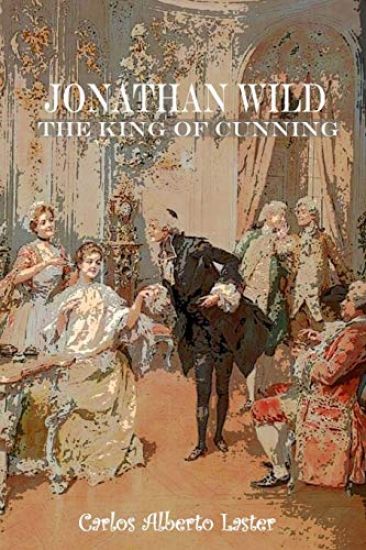
Jonathan Wild The King Of Cunning
Henry Fielding; Carlos Alberto Laster
Createspace Independent Publishing Platform
2016
nidottu
El Alcance Literario y Musical de la Historia de la vida de Jonathan Wild La ejecuci n de Wild fue un acto p blico notable, y se vendieron entradas con anticipaci n para los mejores puntos de observaci n. Incluso en un a o con un gran n mero de acontecimientos macabros, el p blico reunido en aquella ocasi n era una multitud particularmente numerosa e hist rica. El joven de 18 a os Henry Fielding estaba presente. Wild iba acompa ado de William Sperry, Robert Sandford y Robert Harpham, tres de los cuatro prisioneros que hab an sido condenados a morir con Wild unos d as antes. Debido a que estaba fuertemente drogado, fue el ltimo en morir despu s de los dem s. A diferencia de la ejecuci n de Sheppard, no hubo ning n incidente entre la multitud. A mitad de la noche, el cuerpo de Wild fue enterrado en secreto en el patio de la iglesia St. Pancras Old, al lado de Elizabeth Mann, su tercera mujer y una de sus muchas amantes. Ella hab a muerto en 1718, y l hab a expresado su deseo de ser enterrado all . Su enterramiento fue s lo temporal. Durante el s. XIX la investigaci n sobre cad veres estaba en pleno florecimiento, y las disecciones y autopsias de criminales c lebres revest an un valor cient fico especial. El cuerpo de Wild fue exhumado y vendido al Real Colegio de Cirug a, y su esqueleto a n se exhibe en el Museo Hunterian de Lincoln's Inn Fields. Jonathan Wild es famoso hoy en d a no tanto por ser el ejemplo de crimen organizado como por el tratamiento que los escritores sat ricos hicieron de su historia. Se convirti en un s mbolo de corrupci n e hipocres a. Cuando Wild fue colgado, los peri dicos se llenaron de relatos de su vida, recopilaci n de sus dichos y discursos de despedida. Daniel Defoe escribi un relato para el "Applebee's Journal" en Mayo y luego public "True and Genuine Account of the Life and Actions of the Late Jonathan Wild" en Junio de 1725. Su trabajo compiti con otro que alegaba ofrecer extractos de los diarios de J. Wild. La biograf a de un criminal era un g nero que ya exist a por entonces. Estas obras eran populares entonces, como lo son ahora, porque ofrec an un relato de necesidad, p rdida de la inocencia, sexo, violencia y luego arrepentimiento o un lacrimoso final. La fascinaci n p blica con el lado oscuro de la naturaleza humana, y con las causas del mal, nunca se ha desvanecido. En 1743 La Historia de la Vida del difunto se or Jonathan Wild el Grande (The History of The Life of The Late Mr. Jonathan Wild The Great) apareci en el tercer volumen de "Miscellanies" de Henry Fielding. Fielding fue despiadado en su ataque contra Walpole. En su trabajo, Wild sustituye directamente a Walpole, y, en particular, invoca el lenguaje de Walpole del "Gran Hombre". As se refer an a Walpole los escritores whig y, sat ricamente, los escritores tory, y Fielding tiene a su Wild constantemente esforz ndose, con est pida violencia, por ser "Grande". "La grandeza", seg n Fielding, "s lo se logra alcanzando lo alto de una escalera" (la de la horca). La s tira de Fielding tambi n consistentemente ataca al partido whig haciendo que Wild escoja, entre todos los t rminos propios de ladrones (l xicos de este tipo aparecieron con las "Lives of Wild" en 1725), "prig" (mojigato) para referirse a la profesi n de los que se dedican a robar en las casas. Fielding sugiere que para Wild, convertirse en un "Gran Prig" es lo mismo que para Walpole convertirse en un "Gran Whig" el robo y el partido whig nunca fueron relacionados tan directamente. M s recientemente, Jonathan Wild aparece como personaje en la novela de David Liss titulada "Una Conspiraci n de Papel" (Suma De Letras, S. L., 2002; Alfaguara, S. A., 2001).

Geschichte des Findelkinds Thomas Jones - Vierter Band ist ein unver nderter, hochwertiger Nachdruck der Originalausgabe aus dem Jahr 1788. Hansebooks ist Herausgeber von Literatur zu unterschiedlichen Themengebieten wie Forschung und Wissenschaft, Reisen und Expeditionen, Kochen und Ern hrung, Medizin und weiteren Genres. Der Schwerpunkt des Verlages liegt auf dem Erhalt historischer Literatur. Viele Werke historischer Schriftsteller und Wissenschaftler sind heute nur noch als Antiquit ten erh ltlich. Hansebooks verlegt diese B cher neu und tr gt damit zum Erhalt selten gewordener Literatur und historischem Wissen auch f r die Zukunft bei.

Der Hochzeittag oder Der Feind des Ehestandes
Henry Fielding; Gottlieb Stephanie; Christian Gottlob Stephanie
Hansebooks
2016
pokkari