Kirjojen hintavertailu – 12 868 690 kirjaa ja 27 kauppaa
Kirjailija
Henry Flores
Kirjat ja teokset yhdessä paikassa: 6 kirjaa, julkaisuja vuosilta 2004–2022, suosituimpiin kuuluu ¿Cómo funciona el dinero?. Vertaile teosten hintoja ja tarkista saatavuus suomalaisista kirjakaupoista.
Racism, Latinos, and the Public Policy Process traces the process by which race and racism are infused into the public policy process. This book provides a definition and short history of racism with a discussion of how individuals learn and absorb racial ideas and how these ideas become essential elements of the public policy process. Discussion of the three policy areas, gun control, immigration and voting rights, provide new insights into the relationship between decisional and individual belief structures and the decisional process.
Racism, Latinos, and the Public Policy Process traces the process through which race and racism are infused in the public policy process. It begins with a definition and short history of racism followed by a discussion of how individuals learn and absorb racial ideas and how these ideas become essential elements of the public policy process, with these three policy areas forming the empirical bases of the discussion other areas are highlighted as the discussion proceeds. The volume provides new insights on the relationship between decisional policy structures and individual beliefs and their relationship during the process.
This volume explores the role race and racism played in the Texas redistricting process and the creation and passage of the state’s Voter Identification Law in 2011. The author puts forth research techniques designed to uncover racism and racist intentions even in the face of denials by the public policy decision makers involved. In addition to reviewing the redistricting history of the state, this book also provides an analysis of court decisions concerning the Tenth Amendment to the Constitution, the Voting Rights Act, and a thorough discussion of the Shelby County decision. The author brings together scholarly research and the analysis of significant Supreme Court decisions focusing on race to discuss Texas’ election policy process. The core of the book centers on two federal court trials where both the state’s congressional, house redistricting efforts, and the Voter ID Bill were found to violate the Voting Rights Act. This is the first book that speaks specifically to the effects of electoral politics and Latinos. The author develops new ground in racial political studies calling for movement beyond the 'dual-race' theoretical models that have been used by both the academy and the courts in looking at the effects of race on the public policy process. The author concludes that the historically tense race relations between Anglos and Latinos in Texas unavoidably affected both the redistricting process and the creation and design of the Voter ID Bill.
This volume explores the role race and racism played in the Texas redistricting process and the creation and passage of the state’s Voter Identification Law in 2011. The author puts forth research techniques designed to uncover racism and racist intentions even in the face of denials by the public policy decision makers involved. In addition to reviewing the redistricting history of the state, this book also provides an analysis of court decisions concerning the Tenth Amendment to the Constitution, the Voting Rights Act, and a thorough discussion of the Shelby County decision. The author brings together scholarly research and the analysis of significant Supreme Court decisions focusing on race to discuss Texas’ election policy process. The core of the book centers on two federal court trials where both the state’s congressional, house redistricting efforts, and the Voter ID Bill were found to violate the Voting Rights Act. This is the first book that speaks specifically to the effects of electoral politics and Latinos. The author develops new ground in racial political studies calling for movement beyond the 'dual-race' theoretical models that have been used by both the academy and the courts in looking at the effects of race on the public policy process. The author concludes that the historically tense race relations between Anglos and Latinos in Texas unavoidably affected both the redistricting process and the creation and design of the Voter ID Bill.
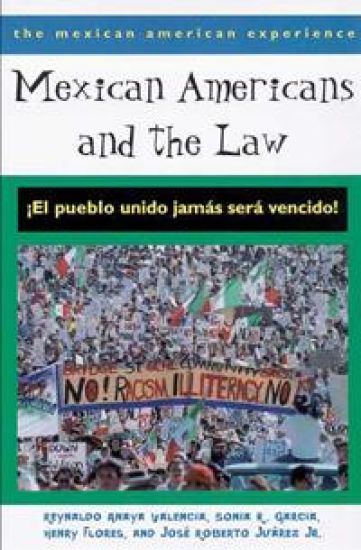
The experience of Mexican Americans in the United States has been marked by oppression at the hands of the legal system but it has also benefited from successful appeals to the same system. Mexican Americans and the Law illustrates how Mexican Americans have played crucial roles in mounting legal challenges regarding issues that directly affect their political, educational, and socioeconomic status. Each chapter highlights historical contexts, relevant laws, and policy concerns for a specific issue and features abridged versions of significant state and federal cases involving Mexican Americans. Beginning with People v. Zammora (1940), the trial that was a precursor to the Zoot Suit Riots in Los Angeles during World War II, the authors lead students through some of the most important and precedent-setting cases in American law: - Educational equality: from segregation concerns in Mendez v. Westminster (1946) to unequal funding in San Antonio Independent School District vs. Rodriguez (1973) - Gender issues: reproductive rights in Madrigal v. Quilligan (1981), workplace discrimination in EEOC v. Hacienda Hotel (1989), sexual violence in Aguirre-Cervantes v. INS (2001) - Language rights: Yniguez v. Arizonans for Official English (1995), Garcia v. Gloor (1980), Serna v. Portales Municipal Schools (1974) - Immigration-: search and seizure questions in U. S. v. Brignoni-Ponce (1975) and U. S. v. Martinez-Fuerte (1976); public benefits issues in Plyler v. Doe (1982) and League of United Latin American Citizens v. Wilson (1997) - Voting rights: redistricting in White v. Regester (1973) and Bush v. Vera (1996) - Affirmative action: Hopwood v. State of Texas (1996) and Coalition for Economic Equity v. Wilson (1997) - Criminal justice issues: equal protection in Hernandez v. Texas (1954); jury service in Hernandez v. New York (1991); self incrimination in Miranda v. Arizona (1966); access to legal counsel in Escobedo v. Illinois (1964) With coverage as timely as the 2003 Supreme Court decision on affirmative action, Mexican Americans and the Law offers invaluable insight into legal issues that have impacted Mexican Americans, other Latinos, other racial minorities, and all Americans. Discussion questions, suggested readings, and Internet sources help students better comprehend the intricacies of law.