Kirjailija
Henry James
Kirjat ja teokset yhdessä paikassa: 3 438 kirjaa, julkaisuja vuosilta 1879–2027, suosituimpiin kuuluu The Wings of the Dove. Vertaile teosten hintoja ja tarkista saatavuus suomalaisista kirjakaupoista.
3 438 kirjaa
Kirjojen julkaisuvuodet: 1879–2027.







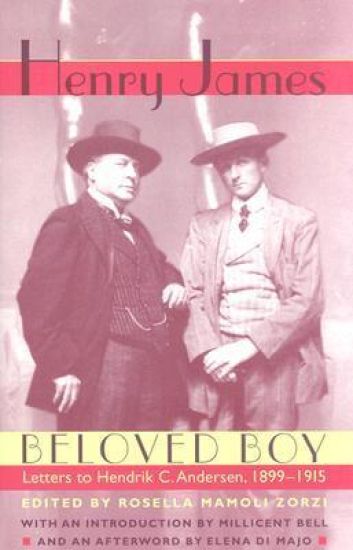
Already the subject of articles in the International Herald Tribune and the London Times, Beloved Boy is a remarkable collection of letters tracing Henry James's fascination with and enduring devotion to a young, Norwegian-American artist. James was already 56 when, visiting Rome in 1899, he was introduced to the 27-year-old Hendrik Andersen. In an uncanny instance of life imitating art, Andersen bore an unmistakable resemblance to the title character of James's 1875 novel Roderick Hudson - a figure who, like Andersen, was a young sculptor venturing into life as an expatriate in Italy. Although his initial meeting with Andersen was brief, James was deeply moved by the young man. He wrote to Andersen almost immediately after his return to his Sussex home, and remained a faithful correspondent until his own death in 1915. The two men met on only seven occasions, and never for more than a few days, so their friendship was almost entirely epistolary. The letters assembled here, nearly half of which are previously unpublished, exhibit a voice decidedly more vulnerable than that which we usually associate with James. They also shed new light on the writer's homoerotic leanings, as he approaches Andersen with a passion, as well as a tenderness, typically reserved for a lover. Even greater than his feelings for Andersen, however, was James's devotion to art. Despite an initially positive opinion, James was forced to reassess Andersen's work, which became increasingly grandiose - exhibiting ""megalomania,"" as James bluntly diagnosed it. The sculptor's tendency toward monumentality, including plans for a utopian ""World City,"" were at odds with James's commitment to observing reality in all its complexity and imperfection. Despite this, James's affection for his friend never wavered; his letters remained occasions to celebrate the youth and beauty personified for him in Andersen.



"Monsieur has bought my picture," said Mademoiselle Noemie. "When it's finished you'll carry it to him in a cab." "A little, my daughter, a little?" said M. Nioche perplexed. "How much?" "Two thousand!" said Mademoiselle Noemie. "Don't make a fuss or he'll take back his word." "Two thousand!" cried the old man, and he began to fumble for his snuff-box. He looked at Newman from head to foot; he looked at his daughter and then at the picture. "Take care you don't spoil it!" he cried almost sublimely.
In 1914, Henry James began work on a major novel about the immense new fortunes of America's Gilded Age. After an absence of more than twenty years, James had returned for a visit to his native country; what he found there filled him with profound dismay. In The Ivory Tower, his last book, the characteristic pattern underlying so much of his fiction-in which American "innocence" is transformed by its encounter with European "experience"-receives a new twist: raised abroad, the hero comes home to America to confront, as James puts it, "the black and merciless things that are behind the great possessions." James died in 1916 with the first three books of The Ivory Tower completed. He also left behind a "treatment," in which he charted the further progress of his story. This fascinating scenario, one of only two to survive among James's papers, is also published here together with a striking critical essay by Ezra Pound.
This brilliant satire of the women's rights movement in America is the story of the ravishing inspirational speaker Verena Tarrant and the bitter struggle between two distant cousins who seek to control her. Will the privileged Boston feminist Olive Chancellor succeed in turning her beloved ward into a celebrated activist and lifetime companion? Or will Basil Ransom, a conservative southern lawyer, steal Verena's heart and remove her from the limelight? ""The Bostonians has a vigor and blithe wit found nowhere else in James," writes A. S. Byatt in her Introduction. "It is about idealism in a democracy that is still recovering from a civil war bitterly fought for social ideals . . . [written] with a ferocious, precise, detailed--and wildly comic--realism."