Kirjojen hintavertailu – 12 859 819 kirjaa ja 27 kauppaa

Kirjailija

Henry James

Kirjat ja teokset yhdessä paikassa: 3 438 kirjaa, julkaisuja vuosilta 1879–2027, suosituimpiin kuuluu The Wings of the Dove. Vertaile teosten hintoja ja tarkista saatavuus suomalaisista kirjakaupoista.

3 438 kirjaa

Kirjojen julkaisuvuodet: 1879–2027.

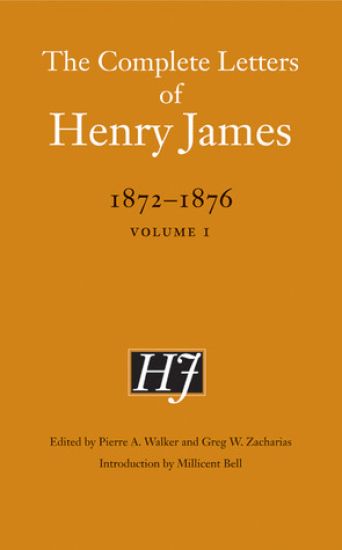
The Complete Letters of Henry James, 1872–1876

The Complete Letters of Henry James, 1872–1876

Henry James

University of Nebraska Press
2009
sidottu
Recipient of the “Approved Edition” seal from the Modern Language Association’s Committee on Scholarly EditionsThe Complete Letters of Henry James fills a crucial gap in modern literary studies by presenting in a scholarly edition the complete letters of one of the great novelists and letter writers of the English language. Comprising more than ten thousand letters reflecting on a remarkably wide range of topics-from James’s own life and literary projects to broader questions on art, literature, and criticism-this edition is an indispensable resource for students of James and of American and English literature, culture, and criticism as well as for research libraries throughout North America and Europe and for scholars who specialize in James, the European novel, and modern literature. This volume is the first of three to include James's letters from 1872 to 1876.
Internationality in American Fiction

Internationality in American Fiction

Henry James; William Dean Howells; William Faulkner

Peter Lang GmbH
2005
nidottu
This collection of essays is part of a project that surveys American literatures in terms of the writers' responses to international literature. Among English American novelists, 1860s to 1990s, James and Howells contributed significantly to the programmatic Great American Novel by broadening the internationality they engaged with to include French and Russian books among the works to which they related their own. Faulkner is a key figure of a later phase when a number of American authors, while drawing upon a similar breadth of internationality, in turn became exemplary abroad in various countries. Morrison, interpreted as contributing to intra-American internationality, and the French Canadian writer H bert, discussed in a summarizing essay, represent responses to Faulkner.
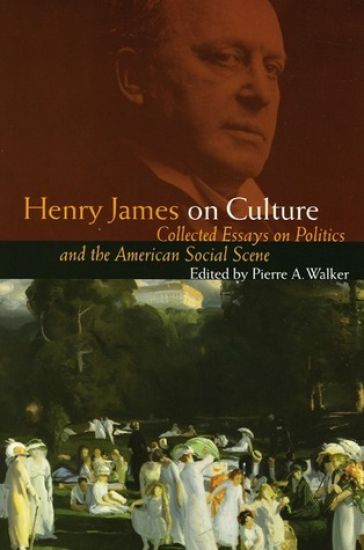
Henry James on Culture

Henry James on Culture

Henry James

University of Nebraska Press
2004
pokkari
The eighteen essays in this collection show Henry James (1843–1916) in a new and unexpected light—as a political commentator and social reformer. His acute powers of observation, his unerring feel for social nuance, and his abiding interest in the news, conversations, and controversies of the moment make these essays a witty and entertaining illumination of American, British, European, and colonial society in the years from 1878 to 1917. Included are writings on British politics and diplomacy, on the language and manners of Americans, on the possibility of an afterlife, and on the heroism and human costs of the First World War. Among the subjects that interest James are France's infatuation with the Prince of Wales, the trumped-up excuses for war in Afghanistan, the brutal frankness of Bismarck, the parliamentary games of Gladstone and Disraeli, the rise of Zulu power in South Africa, the use of "yeah" and "yup" for the American affirmative, the fearlessness of American women and their immunity from criticism, the effect of chewing gum on the discussion of opera, the sufferings of Americans at the hands of store clerks, the proper degrees of gratitude for roadside bicycle repairs, the work of the American Volunteer Motor Ambulance Corps, the use of the dash, the tyranny of the newspapers, the sinking of the Lusitania, and the conditions in military hospitals.
The Wings of the Dove: Introduction by Grey Gowrie
Of the three late masterpieces that crown the extraordinary literary achievement of Henry James, The Wings of the Dove (1902) is at once the most personal and the most elemental. James drew on the memory of a beloved cousin who died young to create one of the three central characters, Milly Theale, an heiress with a short time to live and a passion for experiencing life to its fullest. To the creation of the other two, Merton Densher and the magnificent, predatory Kate Croy, who conspire in an act of deceit and betrayal, he brought a lifetime's distilled wisdom about the frailty of the human soul when it is trapped in the depths of need and desire. And he brought to the drama that unites these three characters, in the drawing rooms of London and on the storm-lit piazzas of Venice, a starkness and classical purity almost unprecedented in his work. Under its brilliant, coruscating surfaces, beyond the scrim of its marvelous rhetorical and psychological devices, The Wings of the Dove offers an unfettered vision of our civilization and its discontents. It represents a culmination of James's art and, as such, of the art of the novel itself.
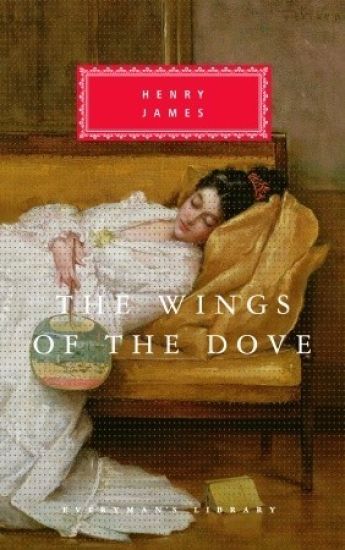
The Wings Of The Dove

The Wings Of The Dove

Henry James

Everyman's Library
1997
sidottu
In this extraordinary variation on the theme of the eternal triangle, Henry James contrasts two women who love one man: the magnificent but ambitious and unscrupulous Kate Croy, and the fragile heiress Millie Theale whose early death precipitates the story's surprising outcome. Together with THE GOLDEN BOWL and THE AMBASSADORS, this novel completes a celebrated trilogy in which James explores his perennial themes of love and renunciation with all the strength, drama and subtlety of a very great writer at the height of his powers.
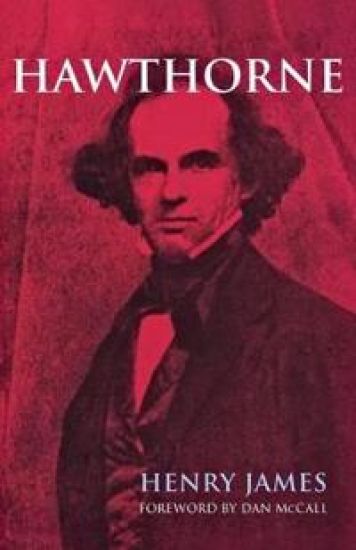
Hawthorne

Hawthorne

Henry James; Dan E. McCall

Cornell University Press
1997
pokkari
"The first extended study ever made of an American writer. It still remains one of the best."—Edmund WilsonOriginally published in 1879, Henry James's Hawthorne has been out of print for many years. Cornell University Press is proud to make this American classic available again in a new paperback edition. In this critique of one literary genius by another, James not only considers Hawthorne as a man and a writer, for whom he has a tender, if critical, regard, but he uses his subject as a vantage point from which to present his views on American culture. With his customary urbanity, James assesses the place of the writer in nineteenth-century America, and touches upon the antithetical values of the Old World and the New. Hawthorne's preoccupation with evil and guilt, his portentous imagination, and his otherworldliness are brought out in the critique of his works, together with James's keen appreciation of Hawthorne's remarkable gifts.
The American Essays of Henry James

The American Essays of Henry James

Henry James

Princeton University Press
1990
pokkari
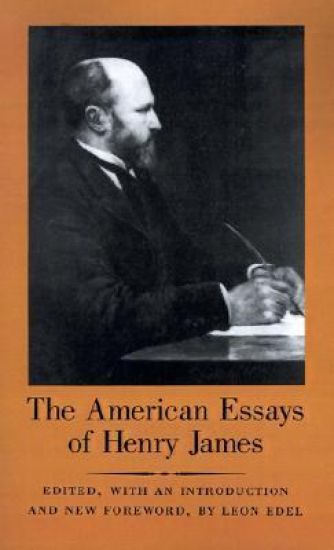
"No one, among American writers, was more contemporary or had a more powerful grasp of American history and American myth," writes Leon Edel of Henry James. This collection of James's essays on American letters, together with some of his miscellaneous writings on other American subjects, is a pivotal document in the reassessment of James as less cloistered--and more American--than previously supposed. James is relaxed and informal as he writes of Emerson, Hawthorne, Lowell, Godkin, Norton, and Howells: he is fondly recalling--but also criticizing--the cultural orthodoxy in which he was reared. The American Essays remarkably prefigures current efforts to revise and challenge the aesthetic idealism of the Emersonian tradition.
The Letters of Henry James

The Letters of Henry James

Henry James

Harvard University Press
1980
sidottu
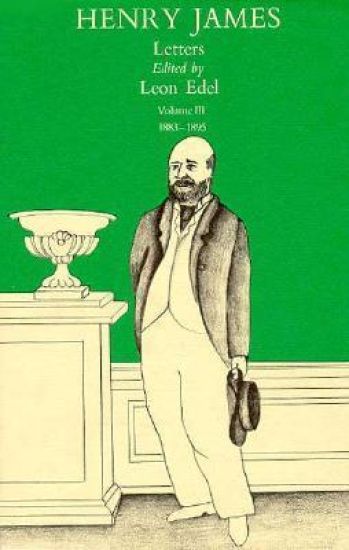
The third volume of Leon Edel’s superb edition of Henry James’s letters finds the novelist settled in Europe and his expatriation complete. The letters of this time reflect the growth of James’s literary and personal friendships and introduce the reader to the frescoed palazzos, Palladian villas, and great estates of the Roseberys, the Rothschilds, the Bostonian-Venetian Curtises, and the Florentine-American Boott circle. In all his travels, James closely observes the social scene and the dilemmas of the human beings within it. During this fruitful period he writes The Bostonians, The Princess Casamassima, The Tragic Muse, and some thirty-five of his finest international tales. Undermining his success, however, are a devastating series of disappointments. Financial insecurity, an almost paraniod defensiveness following the utter failure of his dramatic efforts, and the deaths of his sister, his friend Robert Louis Stevenson, and his ardent admirer Constance Fenimore Woolson all combine to take him to what he recognizes is the edge of an abyss of personal tragedy. And yet James endures, and throughtout these trials his letters reveal the flourish, the tongue-in-cheek humor, and the social insight that marked his genius. As Edel writes in his Introduction: “The grand style is there, the amusement at the vanities of this world, the insistence that the great ones of the earth lack the imagination he is called upon to supply, and then his boundless affection and empathy for those who have shown him warmth and feeling.” In an appendix Mr. Edel presents four remarkable unpublished letters from Miss Woolson to James. These throw light on their ambiguous relationship and on James’s feelings of guilt and shock after her suicide in Venice.
The Letters of Henry James

The Letters of Henry James

Henry James

Harvard University Press
1975
sidottu
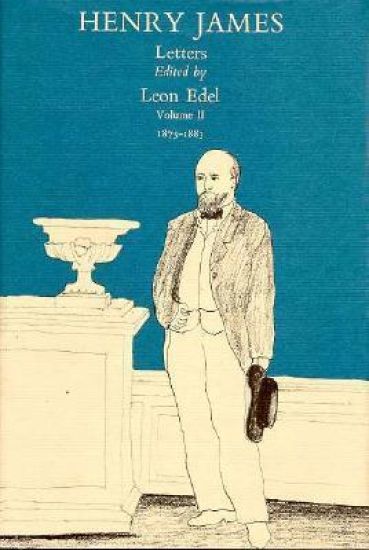
In this, the second volume of Leon Edel's superb edition of the letters, we see Henry James in his thirties, pursuing his writing in Paris and London and finding his first literary successes in Daisy Miller and The Portrait of a Lady. The letters of these years, describing for family and friends in Boston the expatriate's days, reveal the usual wit and sophistication, but there is a new tone: James is relentlessly building a personal career and begins to see himself as a professional writer. Few other letters so fully document the process of an artist in the making. James was a social success in London: in Mr. Edel's words, "England speedily opened its arms to him, as it does to anyone who is at ease with the world." The letters of this period pull us into the atmosphere of Victorian England, its drawing rooms, manors, and clubs, and James's keen American eyes give us views of this world probably unique in our literary annals. He used these observations to forge his great international theme, the confrontation of the Old and New Worlds.