Kirjojen hintavertailu – 12 859 826 kirjaa ja 27 kauppaa
Kirjailija
Henry James
Kirjat ja teokset yhdessä paikassa: 3 438 kirjaa, julkaisuja vuosilta 1879–2027, suosituimpiin kuuluu The Wings of the Dove. Vertaile teosten hintoja ja tarkista saatavuus suomalaisista kirjakaupoista.
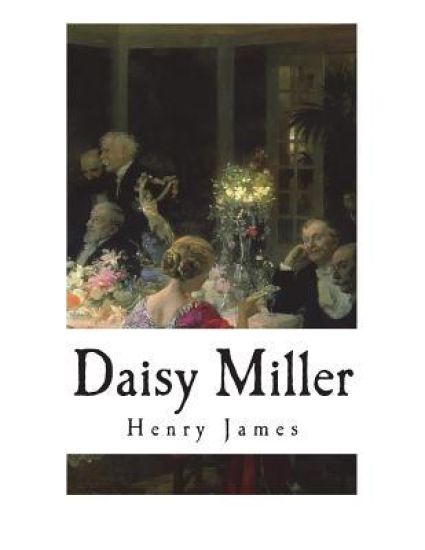
Daisy Miller is a novella by Henry James that first appeared in Cornhill Magazine in June-July 1878, and in book form the following year. It portrays the courtship of the beautiful American girl Daisy Miller by Winterbourne, a sophisticated compatriot of hers. His pursuit of her is hampered by her own flirtatiousness, which is frowned upon by the other expatriates when they meet in Switzerland and Italy.
Daisy Miller: A Study, In Two Parts by Henry James. The text is that of the first American appearance in book form, 1879. Daisy Miller is a novella by Henry James that first appeared in Cornhill Magazine in June-July 1878, and in book form the following year. It portrays the courtship of the beautiful American girl Daisy Miller by Winterbourne, a sophisticated compatriot of hers. His pursuit of her is hampered by her own flirtatiousness, which is frowned upon by the other expatriates when they meet in Switzerland and Italy. Annie "Daisy" Miller and Frederick Winterbourne first meet in Vevey, Switzerland, in a garden of the grand hotel, where Winterbourne is allegedly vacationing from his studies (an attachment to an older lady is rumoured). They are introduced by Randolph Miller, Daisy's nine-year-old brother. Randolph considers their hometown of Schenectady, New York, to be superior to all of Europe. Daisy, however, is absolutely delighted with the continent, especially the high society she wishes to enter.
Often considered to be a classic literary guidebook, A Little Tour in France was first published in 1884 and is a first person narrative of Henry James's travels through and thoughts on this country. From Tours to Dijon, James tells of the towns and cities, the church and inns, the museums and palaces. Wishing to see what lay beyond the bounds of the "celestial city", Henry James devoted much of the Autumn of 1882 to his tour of France. Beginning at Tours, the birthplace of Balzac, he went on various excursions to the great chateaux of the Loire - including Blois, Chambord and Chenonceaux. Then he made his leisurely way south to the heart of the Midi and to the historic cities of Nantes, Bordeaux, Carcassonne, Nimes and Avignon. This book recounts his travels.
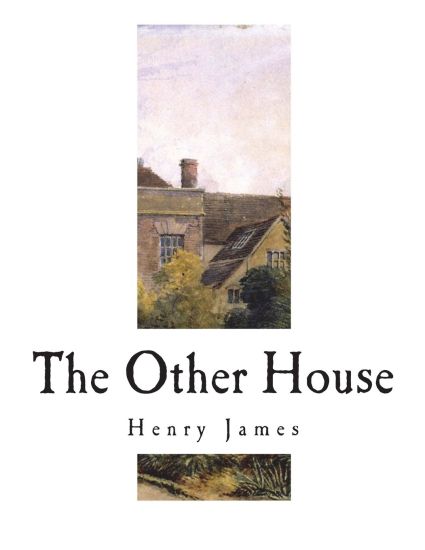
The Other House by Henry James. The Other House is a novel by Henry James, first published as a serial in the Illustrated London News in 1896 and then as a book later the same year. Set in England, this book is something of an oddity in the James canon for its plot revolving around a murder. The novel was originally planned as a play called The Promise. James sketched a scenario for the play in 1893, but it didn't interest theater managers. Julia Bream dies after giving birth to her only child, a daughter named Effie. Julia had a horrible stepmother, so she extracts a promise from her husband Tony never to marry again as long as Effie is alive. Several years pass. Julia's old school friend Rose Armiger is in love with Tony, though she is ostensibly engaged to Dennis Vidal. In an effort to overcome the promise Tony made to Julia, Rose drowns little Effie so Tony will be free to remarry.
The American is Henry James' comic novel about an uncultured but well-meaning young businessman from the USA, who travels to Europe and is amazed by what he finds. An illustrative example of humor in the later part of the 19th century, The American is a character-driven story about a man of commerce named Christopher Newman. Tired of the stresses and strains native to business in the USA, Newman decides to travel to Europe to seek adventure. On arrival, the beauties and sins of the Old World are both a shock and a thrill to the traveller, who despite a mixed reception from the peoples of the European continent remains nevertheless optimistic and driven to discovery. The novel is generally lighthearted in portraying the naivete and optimism of Newman for comic effect. However, Henry James more serious undertone was to illustrate that Americans - despite their lack of refined mannerisms - are essentially an optimistic, honest and driven people with much to offer the wider world.
The American is Henry James' comic novel about an uncultured but well-meaning young businessman from the USA, who travels to Europe and is amazed by what he finds. An illustrative example of humor in the later part of the 19th century, The American is a character-driven story about a man of commerce named Christopher Newman. Tired of the stresses and strains native to business in the USA, Newman decides to travel to Europe to seek adventure. On arrival, the beauties and sins of the Old World are both a shock and a thrill to the traveller, who despite a mixed reception from the peoples of the European continent remains nevertheless optimistic and driven to discovery. The novel is generally lighthearted in portraying the naivete and optimism of Newman for comic effect. However, Henry James more serious undertone was to illustrate that Americans - despite their lack of refined mannerisms - are essentially an optimistic, honest and driven people with much to offer the wider world.
Here's a comedic James, who deplored the media, about a match that may be ruined by a gossip column. George Flack is the Paris correspondent for an American scandal sheet called The Reverberator. Francie Dosson, a pretty but not always tactful American girl, confides to Flack some gossip about the Proberts, the Frenchified (but originally American) family of her fianc , Gaston Probert. Predictably to everybody except Francie, the nasty gossip winds up in The Reverberator, much to the horror of the stuffy Proberts. Francie makes no attempt to hide her role in giving Flack the juicy details. Gaston is initially dismayed by his fianc e's indiscretions. But with the somewhat surprising support of his sister Suzanne, he decides to accept Francie, who never tries to shift the blame to Flack. Gaston stands up to the outraged members of his family and marries his fianc e.
The Author of Beltraffio By Henry James American/British author of the late 19th and early 20th centuries, best-known for novels and novellas of morals. As such, he favors internal, psychological drama; his work is frequently about alienation, his prose frequently serpentine. His earlier work is considered Realist, but in fact throughout his long career he maintained a strong interest in a variety of artistic effects and movements. We are delighted to publish this classic book as part of our extensive Classic Library collection. Many of the books in our collection have been out of print for decades, and therefore have not been accessible to the general public. The aim of our publishing program is to facilitate rapid access to this vast reservoir literature, and our view is that this is a significant literary work, which deserves to be brought back into print after many decades. The contents of the vast majority of titles in the Classic Library have been scanned from the original works. To ensure a high quality product, each title has been meticulously hand curated by our staff. Our philosophy has been guided by a desire to provide the reader with a book that is as close as possible to ownership of the original work. We hope that you will enjoy this wonderful classic work, and that for you it becomes an enriching experience.
Flickerbridge by Henry James In Flickerbridge di Henry James il protagonista Frank Granger va in Inghilterra per ristabilirsi, deve dipingere il ritratto di una compatriota prima che lei ritorni in America. Ha lasciato la sua fidanzata a Parigi, anche se lo stato del loro impegno attualmente poco chiaro. Granger ha un attacco di influenza, ma quando riesce a partire vuole approfittare della scoperta della cugina omonima della fidanzata, Adelaide Wenham, che vive in un villaggio inglese, alla quale ha chiesto riposo per la convalescenza. Arrivando da Miss Whenham scopre una persona e un luogo deliziosamente incontaminati. Nel suo primo impeto di entusiasmo, scrive una lettera a Addie parlando di quel luogo cristallizzato nel tempo, ma capisce quanto possa essere facile rovinare quell'isolamento, allora scrive un'altra lettera e continua dicendo a Miss Wenham che non vuole rovinare il suo stato indisturbato. Secondo lei il cambiamento sarebbe invece piacevole. Addie scrive proponendo di fargli visita a Flickerbridge, ma Granger cerca di convincere la signorina Wenham che Addie scriver su di lei e il villaggio, spingendo la gente ad affluirvi. Miss Wenham crede che lei sia troppo vecchia per essere cambiata da tali cose. Addie sta per arrivare, ma Granger non rimane per incontrala. Il suo timore verso ci che accadr troppo forte e ci lo fa rinunciare al suo impegno. We are delighted to publish this classic book as part of our extensive Classic Library collection. Many of the books in our collection have been out of print for decades, and therefore have not been accessible to the general public. The aim of our publishing program is to facilitate rapid access to this vast reservoir of literature, and our view is that this is a significant literary work, which deserves to be brought back into print after many decades. The contents of the vast majority of titles in the Classic Library have been scanned from the original works. To ensure a high quality product, each title has been meticulously hand curated by our staff. Our philosophy has been guided by a desire to provide the reader with a book that is as close as possible to ownership of the original work. We hope that you will enjoy this wonderful classic work, and that for you it becomes an enriching experience.
The Figure in the Carpet: By Henry James by Henry James The Figure in the Carpet" is a story published in 1896 in London, by American writer Henry James. The story is usually referred to as a novella and is told in the first person. The narrator, whose name is never revealed, meets his favorite author and becomes obsessed with discovering the secret meaning or intention within all the author's works. Heretofore, "The Figure in the Carpet" has evaded definitive interpretation. In his book Henry James (1913), Ford Madox Ford wrote that after the nouvelle was published, James' contemporaries had set themselves on a quest to locate the Figure as an identifiable physical entity. In the preface to his Choice of Kipling's Verse (1941), T. S. Eliot wrote, "Nowadays, we all look for the Figure in the Carpet." Absent a definitive interpretation, it opened new possibilities for the study of ambiguity in literature. We are delighted to publish this classic book as part of our extensive Classic Library collection. Many of the books in our collection have been out of print for decades, and therefore have not been accessible to the general public. The aim of our publishing program is to facilitate rapid access to this vast reservoir of literature, and our view is that this is a significant literary work, which deserves to be brought back into print after many decades. The contents of the vast majority of titles in the Classic Library have been scanned from the original works. To ensure a high quality product, each title has been meticulously hand curated by our staff. Our philosophy has been guided by a desire to provide the reader with a book that is as close as possible to ownership of the original work. We hope that you will enjoy this wonderful classic work, and that for you it becomes an enriching experience.
The Next Time Henry James Henry James, OM (15 April 1843 - 28 February 1916) was an American author regarded as a key transitional figure between literary realism and literary modernism, and is considered by many to be among the greatest novelists in the English language. He was the son of Henry James Sr. and the brother of renowned philosopher and psychologist William James and diarist Alice James. He is best known for a number of novels dealing with the social and marital interplay between emigre Americans, English people, and continental Europeans - examples of such novels include The Portrait of a Lady, The Ambassadors, and The Wings of the Dove. His later works were increasingly experimental. In describing the internal states of mind and social dynamics of his characters, James often made use of a personal style in which ambiguous or contradictory motivations and impressions were overlaid or closely juxtaposed in the discussion of a single character's psyche. For their unique ambiguity, as well as for other aspects of their composition, his late works have been compared to impressionist painting. We are delighted to publish this classic book as part of our extensive Classic Library collection. Many of the books in our collection have been out of print for decades, and therefore have not been accessible to the general public. The aim of our publishing program is to facilitate rapid access to this vast reservoir of literature, and our view is that this is a significant literary work, which deserves to be brought back into print after many decades. The contents of the vast majority of titles in the Classic Library have been scanned from the original works. To ensure a high quality product, each title has been meticulously hand curated by our staff. Our philosophy has been guided by a desire to provide the reader with a book that is as close as possible to ownership of the original work. We hope that you will enjoy this wonderful classic work, and that for you it becomes an enriching experience.
Daisy Miller apareci en una revista en 1878 y en volumen en 1879. Fue uno de los raros cuentos (tal vez el nico) de Henry James del que se puede decir que tuvo en seguida xito popular. Desde luego en su obra, toda bajo el signo de la elusividad, de lo no dicho, de la esquivez, este cuento se nos aparece como uno de los m s claros, con el personaje de una muchacha llena de vida, que expl citamente aspira a simbolizar el desprejuicio y la inocencia de la joven Norteam rica. Y sin embargo es un cuento no menos misterioso que los dem s de este introvertido autor, un entretejido de temas que asoman, siempre entre luz y sombra, a lo largo de toda su obra. Como muchos de los cuentos y novelas de James, Daisy Miller se desarrolla en Europa y Europa es tambi n aqu la piedra de toque con que se enfrenta Norteam rica. Una Norteam rica reducida a un esp cimen sint tico: la colonia de los c ndidos turistas estadounidenses en Suiza y en Roma, ese mundo al que perteneci Henry James en los a os de su juventud, de espaldas al suelo natal y antes de echar ra ces en la brit nica patria ancestral.
Short story by the prolific American-born author and literary critic of the late 19th and early 20th centuries. He spent much of his life in Europe and became a British subject shortly before his death. He is primarily known for novels, novellas and short stories based on themes of consciousness and morality.
En buena ley, los plat nicos podr an imaginar que existe en el Cielo (o en la insondable inteligencia de Dios) un libro que registra las delicadas emociones de un hombre a quien nada, precisamente nada, le ocurre, y otro que va deshilvanando una serie infinita de actos impersonales, ejecutados por cualquiera o por nadie. El primero en la tierra es The Beast in the Jungle de Henry James; el otro, el Libro de las mil y Una Noches o nuestro amontonado recuerdo del Libro de las Mil y Una Noches. El primero es la meta de la novela psicol gica; el otro, de la novela de aventuras. (Jorge Luis Borges)
A ella ya casi desde el principio se le hab a ocurrido que en su posici n --la de una muchacha que llevaba, recluida entre mamparas y alambres, la vida de una cobaya o una urraca-- iba a conocer a much simas personas sin que stas se enteraran en absoluto. Eso hac a que fuera una emoci n todav a m s intensa --aunque singularmente exquisita y siempre, aun as , bastante soterrada-- el ver entrar a alguien a quien conoc a, como dec a ella, por fuera, y que pod a a adir algo a la triste realidad de su trabajo. Su trabajo era estar all sentada con dos hombres (el otro telegrafista y el chico del mostrador): manejar el tictic, que requer a constante manejo, expender sellos e impresos para giros postales, pesar cartas, contestar preguntas est pidas, dar cambios complicados y, sobre todo, contar palabras tan inn meras como las arenas del mar, las palabras de los telegramas que le echaban, de la ma ana a la noche, por la abertura que hab a en lo alto de la rejilla, por encima del estante atestado de cosas, hasta que le dol a el brazo de tanto alargarlo hacia aquella ranura que se abr a hacia adentro o hacia afuera, seg n fuese el lado del exiguo mostrador en que a uno le tocara estar.