Kirjojen hintavertailu – 12 859 826 kirjaa ja 27 kauppaa
Kirjailija
Henry James
Kirjat ja teokset yhdessä paikassa: 3 438 kirjaa, julkaisuja vuosilta 1879–2027, suosituimpiin kuuluu The Wings of the Dove. Vertaile teosten hintoja ja tarkista saatavuus suomalaisista kirjakaupoista.
The Beast in the Jungle is one of James' finest short novels touching upon such universal themes as loneliness, fate, love and death. The story can be interpreted as a confession or parable about James' own life. He never married and possibly never experienced a consummated sexual relationship. Although he did enjoy a thorough experience of aesthetic creativity, it is possible that he still regretted what he called the essential loneliness of his life. The parable of the protagonist, John Marcher and his peculiar destiny speaks about the worth and meaning of human life.
Henry James, OM (15 April 1843 - 28 February 1916) was an American author regarded as a key transitional figure between literary realism and literary modernism, and is considered by many to be among the greatest novelists in the English language. He was the son of Henry James Sr. and the brother of renowned philosopher and psychologist William James and diarist Alice James.
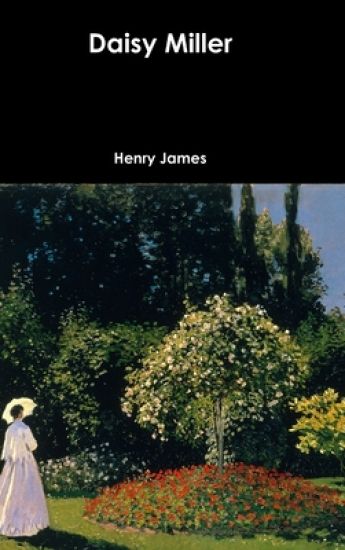
Daisy Miller is the story of a young woman from New York's willful yet innocent flirtation with a young Italian, and its unfortunate consequences. The novella was the first big success for author Henry James who would repeat the theme of a venturesome American girl in the treacherous waters of European society in his later masterpiece, The Portrait of a Lady.
Daisy Miller is the story of a young woman from New York's willful yet innocent flirtation with a young Italian, and its unfortunate consequences. The novella was the first big success for author Henry James who would repeat the theme of a venturesome American girl in the treacherous waters of European society in his later masterpiece, The Portrait of a Lady.
The houses were dark in the August night and the perspective of Beacon Street, with its double chain of lamps, was a foreshortened desert. The club on the hill alone, from its semi-cylindrical front, projected a glow upon the dusky vagueness of the Common, and as I passed it I heard in the hot stillness the click of a pair of billiard-balls. As "every one" was out of town perhaps the servants, in the extravagance of their leisure, were profaning the tables. The heat was insufferable and I thought with joy of the morrow, of the deck of the steamer, the freshening breeze, the sense of getting out to sea. I was even glad of what I had learned in the afternoon at the office of the company-that at the eleventh hour an old ship with a lower standard of speed had been put on in place of the vessel in which I had taken my passage. America was roasting, England might very well be stuffy, and a slow passage (which at that season of the year would probably also be a fine one) was a guarantee of ten or twelve days of fresh air.
Henry James examines one of his favorite topics-the artist's place in society-by profiling a "genius" who just can't seem to support himself. A dazzling intellectual and brilliant speaker, Mr. Saltram has become the most sought-after houseguest in England. But, as his intellectual labors slacken, it beomes harder and harder to get him to leave. A wry, edgy comedy about the fine line between making art...and freeloading. The Coxon Fund shows off a gift that is rarely appreciated about Henry James: he can be wickedly funny.
"The Real Thing" is a short story by Henry James, first published in multiple American newspapers and then in the British publication Black and White in April 1892. It is a classic tale that has been enjoyed by many for generations, this book also contains a number of other great tales by Henry James.
"Won't you stay a little longer?" the hostess asked while she held the girl's hand and smiled. "It's too early for every one to go- it's too absurd." Mrs. Churchley inclined her head to one side and looked gracious; she flourished about her face, in a vaguely protecting sheltering way, an enormous fan of red feathers. Everything in her composition, for Adela Chart, was enormous. She had big eyes, big teeth, big shoulders, big hands, big rings and bracelets, big jewels of every sort and many of them. The train of her crimson dress was longer than any other; her house was huge; her drawing-room, especially now that the company had left it, looked vast, and it offered to the girl's eyes a collection of the largest sofas and chairs, pictures, mirrors, clocks, that she had ever beheld. Was Mrs. Churchley's fortune also large, to account for so many immensities? Of this Adela could know nothing, but it struck her, while she smiled sweetly back at their entertainer, that she had better try to find out. Mrs.
This early work by Henry James was originally published in 1918. Henry James was born in New York City in 1843. One of thirteen children, James had an unorthodox early education, switching between schools, private tutors and private reading.. James published his first story, 'A Tragedy of Error', in the Continental Monthly in 1864, when he was twenty years old. In 1876, he emigrated to London, where he remained for the vast majority of the rest of his life, becoming a British citizen in 1915. From this point on, he was a hugely prolific author, eventually producing twenty novels and more than a hundred short stories and novellas, as well as literary criticism, plays and travelogues. Amongst James's most famous works are The Europeans (1878), Daisy Miller (1878), Washington Square (1880), The Bostonians (1886), and one of the most famous ghost stories of all time, The Turn of the Screw (1898).
I profess a certain vagueness of remembrance in respect to the origin and growth of The Tragic Muse, which appeared in the Atlantic Monthly again, beginning January 1889 and running on, inordinately, several months beyond its proper twelve. If it be ever of interest and profit to put one's finger on the productive germ of a work of art, and if in fact a lucid account of any such work involves that prime identification, I can but look on the present fiction as a poor fatherless and motherless, a sort of unregistered and unacknowledged birth. I fail to recover my precious first moment of consciousness of the idea to which it was to give form; to recognise in it-as I like to do in general-the effect of some particular sharp impression or concussion. I call such remembered glimmers always precious, because without them comes no clear vision of what one may have intended, and without that vision no straight measure of what one may have succeeded in doing.
We had been talking about the masters who had achieved but a single masterpiece-the artists and poets who but once in their lives had known the divine afflatus and touched the high level of perfection. Our host had been showing us a charming little cabinet picture by a painter whose name we had never heard, and who, after this single spasmodic bid for fame, had apparently relapsed into obscurity and mediocrity. There was some discussion as to the frequency of this phenomenon; during which, I observed, H- sat silent, finishing his cigar with a meditative air, and looking at the picture which was being handed round the table. "I don't know how common a case it is," he said at last, "but I have seen it. I have known a poor fellow who painted his one masterpiece, and"-he added with a smile- "he didn't even paint that. He made his bid for fame and missed it." We all knew H- for a clever man who had seen much of men and manners, and had a great stock of reminiscences. Some one immediately questioned him further, and while I was engrossed with the raptures of my neighbour over the little picture, he was induced to tell his tale.
WHY THIS EDITION IS SPECIAL? Includes one of James' most noted ghost stories, "The Jolly Corner" describes the adventures of Spencer Brydon as he prowls the now-empty New York house where he grew up. He encounters a "sensation more complex than had ever before found itself consistent with sanity."
Pemberton, a young American with an Oxford education and out of money, takes a job tutoring Morgan Moreen, the 12-year old son of an American couple living in Europe in a style not quite matched by their income. Mr. and Mrs. Moreen's main purpose in life, it appears, is to win acceptance in the higher circles of French and Italian society, partly in the hope that Morgan's two elder sisters will be taken off their hands. Morgan, who is highly intelligent, is also precocious and perceptive enough to come to understand his parents' ambitious aimlessness. Something of a crisis develops when the Moreens fail to make good on the salary they've promised Pemberton, and he leaves, needing a steady income. By then, however, the tutor has become sufficiently interested in and attached to his charge to be unwilling to leave Morgan for long, and comes back to join the family when when Morgan's mother tells him the boy has fallen ill. There, however, he finds the family shipwreck that he has feared is now taking place, and he is in time to witness it.
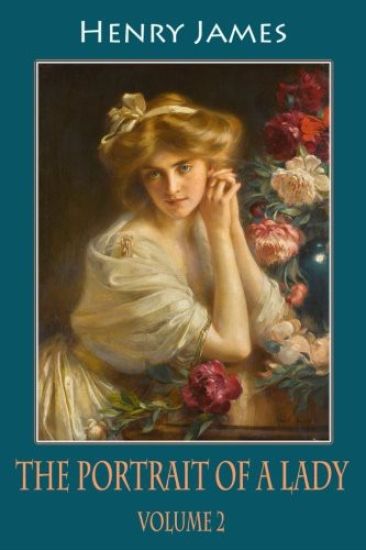
The Portrait of a Lady is a novel by Henry James, first published as a serial in The Atlantic Monthly and Macmillan's Magazine in 1880-81 and then as a book in 1881. It is one of James's most popular long novels and is regarded by critics as one of his finest. The Portrait of a Lady is the story of a spirited young American woman, Isabel Archer, who, in "confronting her destiny", finds it overwhelming. She inherits a large amount of money and subsequently becomes the victim of Machiavellian scheming by two American expatriates. Like many of James's novels, it is set in Europe, mostly England and Italy. Generally regarded as the masterpiece of James's early period, this novel reflects James's continuing interest in the differences between the New World and the Old, often to the detriment of the former. It also treats in a profound way the themes of personal freedom, responsibility, and betrayal. When Isabel Archer, a beautiful, spirited American, is brought to Europe by her wealthy Aunt Touchett, it is expected that she will soon marry. But Isabel, resolved to determine her own fate, does not hesitate to turn down two eligible suitors. She then finds herself irresistibly drawn to Gilbert Osmond, who, beneath his veneer of charm and cultivation, is cruelty itself. A story of intense poignancy, Isabel's tale of love and betrayal still resonates with modern audiences.
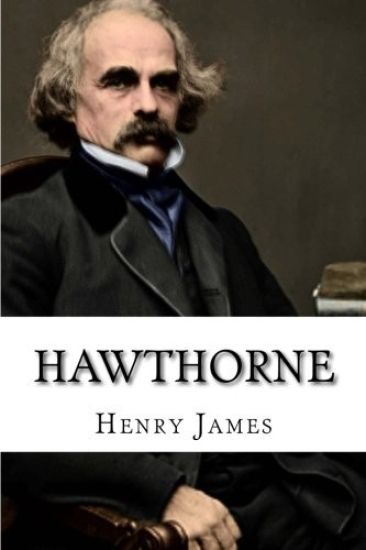
In this critique of one literary genius by another, James not only considers Hawthorne as a man and a writer, but he uses his subject as a vantage point from which to present his views on American culture. James assesses the place of the writer in 19th-century America as well as the disparate values of the Old World and the New.
The Portrait of a Lady is a novel by Henry James, first published as a serial in The Atlantic Monthly and Macmillan's Magazine in 1880-81 and then as a book in 1881. It is one of James's most popular long novels and is regarded by critics as one of his finest. The Portrait of a Lady is the story of a spirited young American woman, Isabel Archer, who, in "confronting her destiny", finds it overwhelming. She inherits a large amount of money and subsequently becomes the victim of Machiavellian scheming by two American expatriates. Like many of James's novels, it is set in Europe, mostly England and Italy. Generally regarded as the masterpiece of James's early period, this novel reflects James's continuing interest in the differences between the New World and the Old, often to the detriment of the former. It also treats in a profound way the themes of personal freedom, responsibility, and betrayal. When Isabel Archer, a beautiful, spirited American, is brought to Europe by her wealthy Aunt Touchett, it is expected that she will soon marry. But Isabel, resolved to determine her own fate, does not hesitate to turn down two eligible suitors. She then finds herself irresistibly drawn to Gilbert Osmond, who, beneath his veneer of charm and cultivation, is cruelty itself. A story of intense poignancy, Isabel's tale of love and betrayal still resonates with modern audiences.
The Portrait of a Lady is a novel by Henry James, first published as a serial in The Atlantic Monthly and Macmillan's Magazine in 1880-81 and then as a book in 1881. It is one of James's most popular long novels and is regarded by critics as one of his finest. The Portrait of a Lady is the story of a spirited young American woman, Isabel Archer, who, in "confronting her destiny", finds it overwhelming. She inherits a large amount of money and subsequently becomes the victim of Machiavellian scheming by two American expatriates. Like many of James's novels, it is set in Europe, mostly England and Italy. Generally regarded as the masterpiece of James's early period, this novel reflects James's continuing interest in the differences between the New World and the Old, often to the detriment of the former. It also treats in a profound way the themes of personal freedom, responsibility, and betrayal. When Isabel Archer, a beautiful, spirited American, is brought to Europe by her wealthy Aunt Touchett, it is expected that she will soon marry. But Isabel, resolved to determine her own fate, does not hesitate to turn down two eligible suitors. She then finds herself irresistibly drawn to Gilbert Osmond, who, beneath his veneer of charm and cultivation, is cruelty itself. A story of intense poignancy, Isabel's tale of love and betrayal still resonates with modern audiences.
The Portrait of a Lady is a novel by Henry James, first published as a serial in The Atlantic Monthly and Macmillan's Magazine in 1880-81 and then as a book in 1881. It is one of James's most popular long novels and is regarded by critics as one of his finest. The Portrait of a Lady is the story of a spirited young American woman, Isabel Archer, who, in "confronting her destiny", finds it overwhelming. She inherits a large amount of money and subsequently becomes the victim of Machiavellian scheming by two American expatriates. Like many of James's novels, it is set in Europe, mostly England and Italy. Generally regarded as the masterpiece of James's early period, this novel reflects James's continuing interest in the differences between the New World and the Old, often to the detriment of the former. It also treats in a profound way the themes of personal freedom, responsibility, and betrayal. When Isabel Archer, a beautiful, spirited American, is brought to Europe by her wealthy Aunt Touchett, it is expected that she will soon marry. But Isabel, resolved to determine her own fate, does not hesitate to turn down two eligible suitors. She then finds herself irresistibly drawn to Gilbert Osmond, who, beneath his veneer of charm and cultivation, is cruelty itself. A story of intense poignancy, Isabel's tale of love and betrayal still resonates with modern audiences.