Kirjojen hintavertailu – 12 859 829 kirjaa ja 27 kauppaa

Kirjailija

Henry Jenkins

Kirjat ja teokset yhdessä paikassa: 34 kirjaa, julkaisuja vuosilta 1992–2025, suosituimpiin kuuluu Evidences Of The Great Age Of Henry Jenkins, With Notices Respecting Longevity. Vertaile teosten hintoja ja tarkista saatavuus suomalaisista kirjakaupoista.

34 kirjaa

Kirjojen julkaisuvuodet: 1992–2025.

Konvergenskulturen

Konvergenskulturen

Henry Jenkins

Bokförlaget Daidalos
2012
nidottu
Välkommen till konvergenskulturen! Här möts och korsas nya och gamla medier, här kolliderar gräsrotsentusiaster och de stora mediebolagen, med ett resultat som ofta är allt annat än det förväntade. 1900-talets masskultur förutsatte passiva konsumenter. Vid slutet av århundradet introducerades en rad medietekniker som gjorde det möjligt för amatörer att producera eget medieinnehåll. Bandspelaren och videon innebar till exempel nya möjligheter till medial kulturproduktion, och internet har inneburit en kreativ revolution där den digitala användarkulturen allt mer blandas samman med det masskulturella utbudet. Det som kallas för webb 2.0 möjliggör ett transmedialt berättande och suddar ut gränsen mellan sändare och mottagare. Den centrala frågan är därför inte vad medierna gör med oss ? utan vad vi gör med medierna. Henry Jenkins hävdar att mediekonvergensen kommer att omforma den västerländska populärkulturen. Medieindustrin ser nya möjligheter att sprida sitt innehåll över fler kanaler och på så sätt nå en större marknad och ökade intäkter. Samtidigt uppfattar konsumenterna det nya medieklimatet som ett öppet offentligt rum som inte står under företagens kontroll. I vissa fall går företagens och gräsrotsentusiasternas intressen hand i hand och de stärker varandra genom att skapa ömsesidigt gynnsamma och allt tätare relationer mellan medieproducenter och konsumenter. I andra fall är intressena motstridiga och konflikter uppstår. Henry Jenkins är professor vid MIT och leder dess program i komparativa mediestudier. Han är författare till en rad böcker om media och populärkultur. Samma år som Konvergenskulturen utkom på engelska (2006) gav han också ut Bloggers and Gamers: Exploring Participatory Culture.

Colchester Castle Not a Roman Temple

Colchester Castle Not a Roman Temple

Edward Lewes Cutts; Henry Jenkins

British Library, Historical Print Editions
2011
pokkari
Title: Colchester Castle not a Roman Temple: being a review of "A Lecture on Colchester Castle, by the Rev. H. Jenkins, B. D." Reprinted, with additions, from the "Essex and West Suffolk Gazette" ... To which is added an appendix ... With illustrations. Publisher: British Library, Historical Print EditionsThe British Library is the national library of the United Kingdom. It is one of the world's largest research libraries holding over 150 million items in all known languages and formats: books, journals, newspapers, sound recordings, patents, maps, stamps, prints and much more. Its collections include around 14 million books, along with substantial additional collections of manuscripts and historical items dating back as far as 300 BC. The GENERAL HISTORICAL collection includes books from the British Library digitised by Microsoft. This varied collection includes material that gives readers a 19th century view of the world. Topics include health, education, economics, agriculture, environment, technology, culture, politics, labour and industry, mining, penal policy, and social order. ++++The below data was compiled from various identification fields in the bibliographic record of this title. This data is provided as an additional tool in helping to insure edition identification: ++++ British Library Cutts, Edward Lewes; Jenkins, Henry; 1853. 32, vii. p.; 8 . 10350.cc.22.(6.)
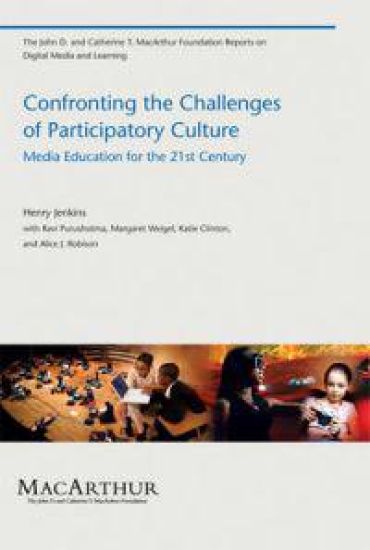
Confronting the Challenges of Participatory Culture
Many teens today who use the Internet are actively involved in participatory cultures-joining online communities (Facebook, message boards, game clans), producing creative work in new forms (digital sampling, modding, fan videomaking, fan fiction), working in teams to complete tasks and develop new knowledge (as in Wikipedia), and shaping the flow of media (as in blogging or podcasting). A growing body of scholarship suggests potential benefits of these activities, including opportunities for peer-to-peer learning, development of skills useful in the modern workplace, and a more empowered conception of citizenship. Some argue that young people pick up these key skills and competencies on their own by interacting with popular culture; but the problems of unequal access, lack of media transparency, and the breakdown of traditional forms of socialization and professional training suggest a role for policy and pedagogical intervention. This report aims to shift the conversation about the "digital divide" from questions about access to technology to questions about access to opportunities for involvement in participatory culture and how to provide all young people with the chance to develop the cultural competencies and social skills needed. Fostering these skills, the authors argue, requires a systemic approach to media education; schools, afterschool programs, and parents all have distinctive roles to play. The John D. and Catherine T. MacArthur Foundation Reports on Digital Media and Learning
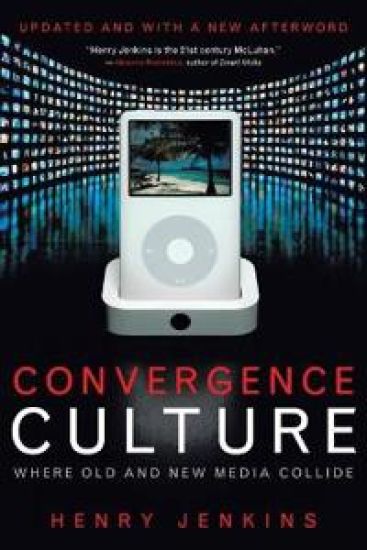
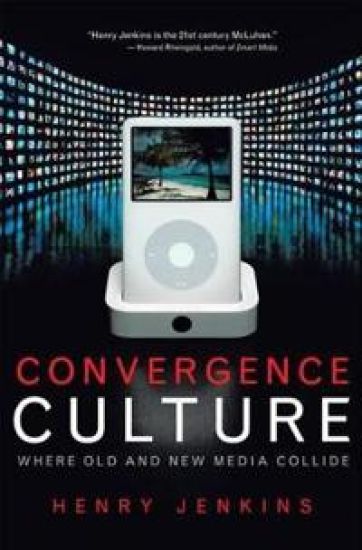
Convergence Culture

Convergence Culture

Henry Jenkins

New York University Press
2008
pokkari
Winner of the 2007 Society for Cinema and Media Studies Katherine Singer Kovacs Book Award 2007 Choice Outstanding Academic Title A classic study on the dynamic between an individual and different media channels Convergence Culture maps a new territory: where old and new media intersect, where grassroots and corporate media collide, where the power of the media producer and the power of the consumer interact in unpredictable ways. Henry Jenkins, one of America's most respected media analysts, delves beneath the new media hype to uncover the important cultural transformations that are taking place as media converge. He takes us into the secret world of Survivor Spoilers, where avid internet users pool their knowledge to unearth the show's secrets before they are revealed on the air. He introduces us to young Harry Potter fans who are writing their own Hogwarts tales while executives at Warner Brothers struggle for control of their franchise. He shows us how The Matrix has pushed transmedia storytelling to new levels, creating a fictional world where consumers track down bits of the story across multiple media channels. Jenkins argues that struggles over convergence will redefine the face of American popular culture. Industry leaders see opportunities to direct content across many channels to increase revenue and broaden markets. At the same time, consumers envision a liberated public sphere, free of network controls, in a decentralized media environment. Sometimes corporate and grassroots efforts reinforce each other, creating closer, more rewarding relations between media producers and consumers. Sometimes these two forces are at war. Jenkins provides a riveting introduction to the world where every story gets told and every brand gets sold across multiple media platforms. He explains the cultural shift that is occurring as consumers fight for control across disparate channels, changing the way we do business, elect our leaders, and educate our children.
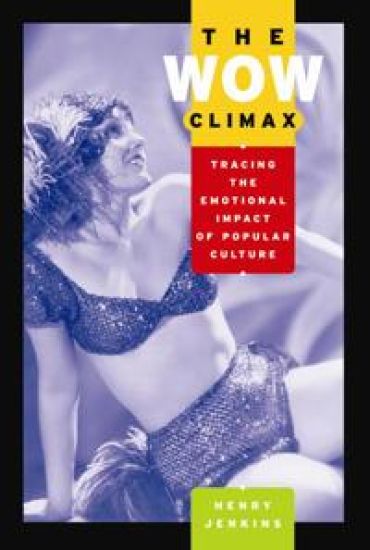
The Wow Climax

The Wow Climax

Henry Jenkins

New York University Press
2006
pokkari
A spirited collection of essays that get to the heart of what gives popular culture its emotional impact Vaudevillians used the term "the wow climax" to refer to the emotional highpoint of their acts—a final moment of peak spectacle following a gradual building of audience's emotions. Viewed by most critics as vulgar and sensationalistic, the vaudeville aesthetic was celebrated by other writers for its vitality, its liveliness, and its playfulness. The Wow Climax follows in the path of this more laudatory tradition, drawing out the range of emotions in popular culture and mapping what we might call an aesthetic of immediacy. It pulls together a spirited range of work from Henry Jenkins, one of our most astute media scholars, that spans different media (film, television, literature, comics, games), genres (slapstick, melodrama, horror, exploitation cinema), and emotional reactions (shock, laughter, sentimentality). Whether highlighting the sentimentality at the heart of the Lassie franchise, examining the emotional experiences created by horror filmmakers like Wes Craven and David Cronenberg and avant garde artist Matthew Barney, or discussing the emerging aesthetics of video games, these essays get to the heart of what gives popular culture its emotional impact.
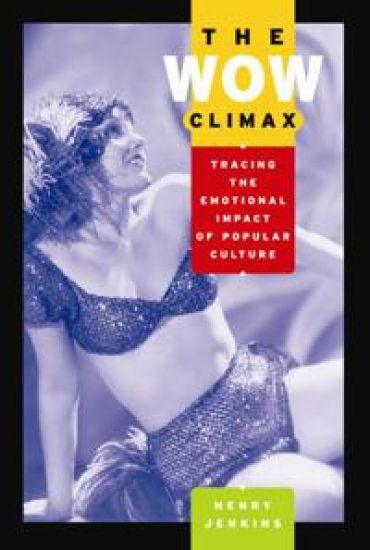
The Wow Climax

The Wow Climax

Henry Jenkins

New York University Press
2006
sidottu
A spirited collection of essays that get to the heart of what gives popular culture its emotional impact Vaudevillians used the term "the wow climax" to refer to the emotional highpoint of their acts—a final moment of peak spectacle following a gradual building of audience's emotions. Viewed by most critics as vulgar and sensationalistic, the vaudeville aesthetic was celebrated by other writers for its vitality, its liveliness, and its playfulness. The Wow Climax follows in the path of this more laudatory tradition, drawing out the range of emotions in popular culture and mapping what we might call an aesthetic of immediacy. It pulls together a spirited range of work from Henry Jenkins, one of our most astute media scholars, that spans different media (film, television, literature, comics, games), genres (slapstick, melodrama, horror, exploitation cinema), and emotional reactions (shock, laughter, sentimentality). Whether highlighting the sentimentality at the heart of the Lassie franchise, examining the emotional experiences created by horror filmmakers like Wes Craven and David Cronenberg and avant garde artist Matthew Barney, or discussing the emerging aesthetics of video games, these essays get to the heart of what gives popular culture its emotional impact.
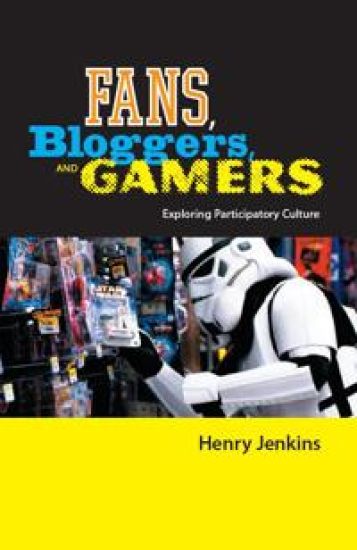
Fans, Bloggers, and Gamers

Fans, Bloggers, and Gamers

Henry Jenkins

New York University Press
2006
pokkari
Brings together the highlights of a decade and a half of groundbreaking research into the cultural life of media consumers Henry Jenkins's pioneering work in the early 1990s promoted the idea that fans are among the most active, creative, critically engaged, and socially connected consumers of popular culture and that they represent the vanguard of a new relationship with mass media. Though marginal and largely invisible to the general public at the time, today, media producers and advertisers, not to mention researchers and fans, take for granted the idea that the success of a media franchise depends on fan investments and participation. Bringing together the highlights of a decade and a half of groundbreaking research into the cultural life of media consumers, Fans, Bloggers, and Gamers takes readers from Jenkins's progressive early work defending fan culture against those who would marginalize or stigmatize it, through to his more recent work, combating moral panic and defending Goths and gamers in the wake of the Columbine shootings. Starting with an interview on the current state of fan studies, this volume maps the core theoretical and methodological issues in Fan Studies. It goes on to chart the growth of participatory culture on the web, take up blogging as perhaps the most powerful illustration of how consumer participation impacts mainstream media, and debate the public policy implications surrounding participation and intellectual property.
Convergence Culture

Convergence Culture

Henry Jenkins

New York University Press
2006
sidottu
Winner of the 2007 Society for Cinema and Media Studies Katherine Singer Kovacs Book Award 2007 Choice Outstanding Academic Title A classic study on the dynamic between an individual and different media channels Convergence Culture maps a new territory: where old and new media intersect, where grassroots and corporate media collide, where the power of the media producer and the power of the consumer interact in unpredictable ways. Henry Jenkins, one of America's most respected media analysts, delves beneath the new media hype to uncover the important cultural transformations that are taking place as media converge. He takes us into the secret world of Survivor Spoilers, where avid internet users pool their knowledge to unearth the show's secrets before they are revealed on the air. He introduces us to young Harry Potter fans who are writing their own Hogwarts tales while executives at Warner Brothers struggle for control of their franchise. He shows us how The Matrix has pushed transmedia storytelling to new levels, creating a fictional world where consumers track down bits of the story across multiple media channels. Jenkins argues that struggles over convergence will redefine the face of American popular culture. Industry leaders see opportunities to direct content across many channels to increase revenue and broaden markets. At the same time, consumers envision a liberated public sphere, free of network controls, in a decentralized media environment. Sometimes corporate and grassroots efforts reinforce each other, creating closer, more rewarding relations between media producers and consumers. Sometimes these two forces are at war. Jenkins provides a riveting introduction to the world where every story gets told and every brand gets sold across multiple media platforms. He explains the cultural shift that is occurring as consumers fight for control across disparate channels, changing the way we do business, elect our leaders, and educate our children.
Science Fiction Audiences

Science Fiction Audiences

Henry Jenkins; John Tulloch

Routledge
1995
sidottu
Science Fiction Audiences examines the astounding popularity of two television "institutions" - the series Doctor Who and ^Star Trek. Both of these programmes have survived cancellation and acquired an following that continues to grow. The book is based on over ten years of research including interviews with fans and followers of the series. In that period, though the fans may have changed, and ways of studying them as "audiences" may have also changed, the programmes have endured intact, with Star Trek for example now in its fourth television incarnation. John Tulloch and Henry Jenkins dive into the rich fan culture surrounding the two series, exploring issues such as queer identity, fan meanings, teenage love of science fiction, and genre expectations. They encompass the perspectives of a vast population of fans and followers throughout Britain, Australia and the US, who will continue the debates contained in the book, along with those who will examine the historically changing range of audience theory it presents. and continue to attract a huge community of fans and followers. Doctor Who has appeared in nine different guises and Star Trek is now approaching its fourth television incarnation. Science Fiction Audiences examines the continuing popularity of two television 'institutions' of our time through their fans and followers. Through dialogue with fans and followers of Star Trek and Dr Who in the US, Britain and Australia, John Tulloch and Henry Jenkins ask what it is about the two series that elicits such strong and active responses from their audiences. Is it their particular intervention into the SF genre? Their expression of peculiarly 'American' and 'British' national cultures. Their ideologies and visions of the future, or their conceptions of science and technology? Science Fiction Audiences responds to a rich fan culture which encompasses debates about fan aesthetics, teenage attitudes to science fiction, queers and Star Trek, and ideology and pleasure in Doctor Who. It is a book written both for fans of the two series, who will be able to continue their debates in its pages, and for students of media and cultural studies, offering a historical overview of audience theory in a fascinating synthesis of text, context and audience study.
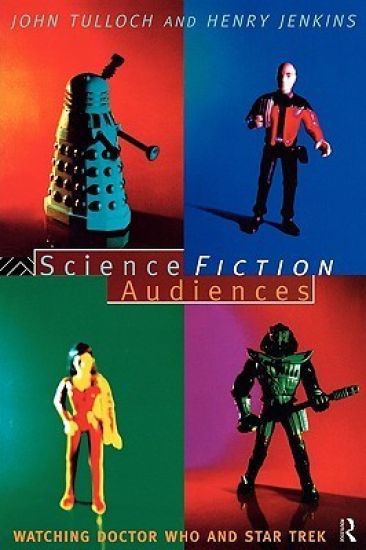
Science Fiction Audiences

Science Fiction Audiences

Henry Jenkins; John Tulloch

Routledge
1995
nidottu
Science Fiction Audiences examines the astounding popularity of two television "institutions" - the series Doctor Who and ^Star Trek. Both of these programmes have survived cancellation and acquired an following that continues to grow. The book is based on over ten years of research including interviews with fans and followers of the series. In that period, though the fans may have changed, and ways of studying them as "audiences" may have also changed, the programmes have endured intact, with Star Trek for example now in its fourth television incarnation. John Tulloch and Henry Jenkins dive into the rich fan culture surrounding the two series, exploring issues such as queer identity, fan meanings, teenage love of science fiction, and genre expectations. They encompass the perspectives of a vast population of fans and followers throughout Britain, Australia and the US, who will continue the debates contained in the book, along with those who will examine the historically changing range of audience theory it presents. and continue to attract a huge community of fans and followers. Doctor Who has appeared in nine different guises and Star Trek is now approaching its fourth television incarnation. Science Fiction Audiences examines the continuing popularity of two television 'institutions' of our time through their fans and followers. Through dialogue with fans and followers of Star Trek and Dr Who in the US, Britain and Australia, John Tulloch and Henry Jenkins ask what it is about the two series that elicits such strong and active responses from their audiences. Is it their particular intervention into the SF genre? Their expression of peculiarly 'American' and 'British' national cultures. Their ideologies and visions of the future, or their conceptions of science and technology? Science Fiction Audiences responds to a rich fan culture which encompasses debates about fan aesthetics, teenage attitudes to science fiction, queers and Star Trek, and ideology and pleasure in Doctor Who. It is a book written both for fans of the two series, who will be able to continue their debates in its pages, and for students of media and cultural studies, offering a historical overview of audience theory in a fascinating synthesis of text, context and audience study.
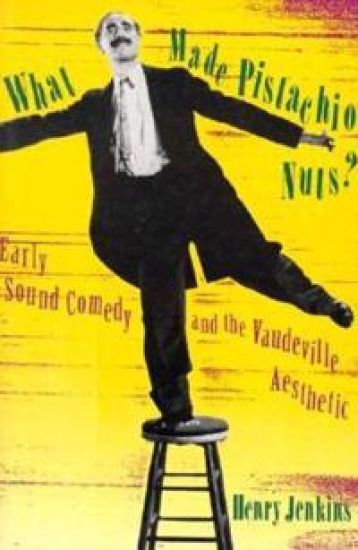
What Made Pistachio Nuts?

What Made Pistachio Nuts?

Henry Jenkins

Columbia University Press
1992
pokkari
Lively and highly readable, What Made Pistachio Nuts? examines what Henry Jenkins calls the anarchistic tradition of American film comedy. Anarchistic comedies of the 1930s mock the social order and celebrate the creativity and impulsiveness of their protagonists in a form of clowning that ultimately reestablishes the status quo. Jenkins focuses on well-known films such as the Marx Brothers' Duck Soup and W. C. Fields' It's a Gift, as well as all-but-forgotten works like Diplomaniacs,Hollywood Party, So Long Lefty, and others. He tracks the careers of the comic stars -Eddie Cantor, Winnie LIghtner, W. C. Fields, Charlotte Greenwood, the Marx Brothers, and Wheeler and Woolsey- as they moved from vaudeville and the New York reviews to Hollywood.