Kirjailija
Henry Louis Gates
Kirjat ja teokset yhdessä paikassa: 38 kirjaa, julkaisuja vuosilta 1990–2025, suosituimpiin kuuluu W.E.B. Du Bois: Black Reconstruction (LOA #350). Vertaile teosten hintoja ja tarkista saatavuus suomalaisista kirjakaupoista.
38 kirjaa
Kirjojen julkaisuvuodet: 1990–2025.
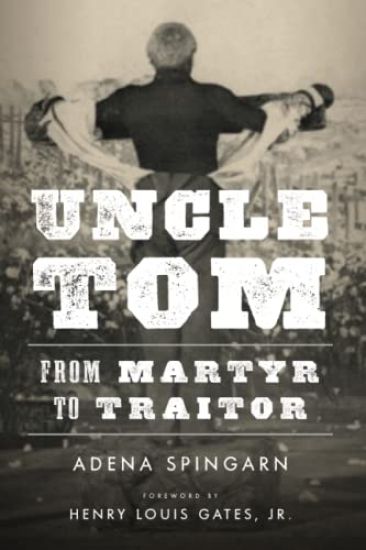
Uncle Tom charts the dramatic cultural transformation of perhaps the most controversial literary character in American history. From his origins as the heroic, Christ-like protagonist of Harriet Beecher Stowe's anti-slavery novel, the best-selling book of the nineteenth century after the Bible, Uncle Tom has become a widely recognized epithet for a black person deemed so subservient to whites that he betrays his race. Readers have long noted that Stowe's character is not the traitorous sycophant that his name connotes today. Adena Spingarn traces his evolution in the American imagination, offering the first comprehensive account of a figure central to American conversations about race and racial representation from 1852 to the present. We learn of the radical political potential of the novel's many theatrical spinoffs even in the Jim Crow era, Uncle Tom's breezy disavowal by prominent voices of the Harlem Renaissance, and a developing critique of "Uncle Tom roles" in Hollywood. Within the stubborn American binary of black and white, citizens have used this rhetorical figure to debate the boundaries of racial difference and the legacy of slavery. Through Uncle Tom, black Americans have disputed various strategies for racial progress and defined the most desirable and harmful images of black personhood in literature and popular culture.
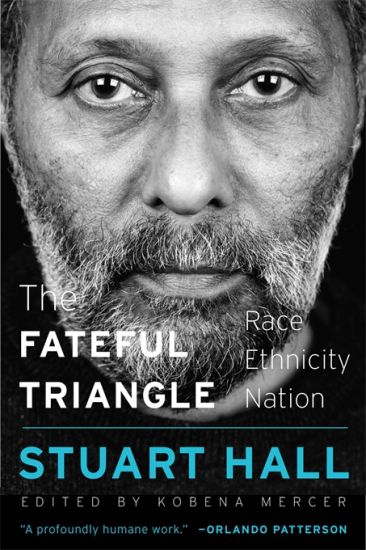
The Fateful Triangle
Stuart Hall; Henry Louis Gates
Harvard University Press
2021
nidottu
Halvin toimitettuna 28,60 €
“Given the current political conditions, these lectures on race, ethnicity, and nation, delivered by Stuart Hall almost a quarter of a century ago, may be even more timely today.”—Angela Y. DavisIn this defining statement one of the founding figures of cultural studies reflects on the divisive, often deadly consequences of our contemporary politics of race and identity. As he untangles the power relations that permeate categories of race, ethnicity, and nationhood, Stuart Hall shows how old hierarchies of human identity were forcefully broken apart when oppressed groups introduced new meanings to the representation of difference. Hall challenges us to find more sustainable ways of living with difference, redefining nation, race, and identity.“Stuart Hall bracingly confronts the persistence of race—and its confounding liberal surrogates, ethnicity and nation…This is a profoundly humane work that…finds room for hope and change.”—Orlando Patterson“Stuart Hall’s written words were ardent, discerning, recondite, and provocative, his spoken voice lyrical, euphonious, passionate, at times rhapsodic and he changed the way an entire generation of critics and commentators debated issues of race and cultural difference.”—Henry Louis Gates, Jr.“Essential reading for those seeking to understand Hall’s tremendous impact on scholars, artists, and filmmakers on both sides of the Atlantic.”—Artforum
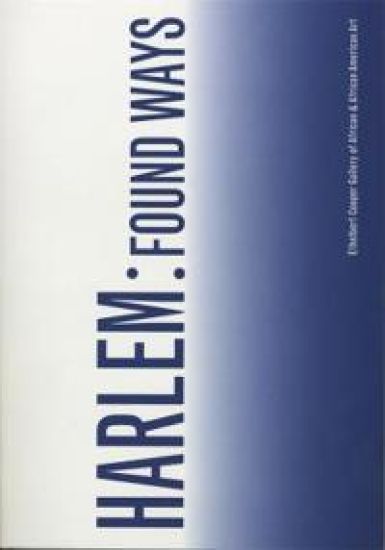
The art and artists of Harlem: Found Ways represent the place and its people, burnishing Harlem’s luster but never attempting to smooth its rough edges. The works in the exhibition span a variety of media to explore the invention of Harlem and, at the same time, reinvent it. Artists in the exhibition Harlem: Found Ways, at the Ethelbert Cooper Gallery of African & African American Art in Cambridge, MA, from 24 May to 15 July, 2017, included Dawoud Bey, Abigail DeVille, Glenn Ligon, Howard Tangye, Nari Ward, and Kehinde Wiley. The exhibition also included items from the Harlem Postcards project at The Studio Museum in Harlem. This catalog features essays, including a foreword by Henry Louis Gates, Jr., that contemplate the uniquely layered urban landscape of Harlem, a city within a city. Vibrantly illustrated with objects from the exhibition, the catalog itself is an important resource for students of contemporary African American art and of the city.
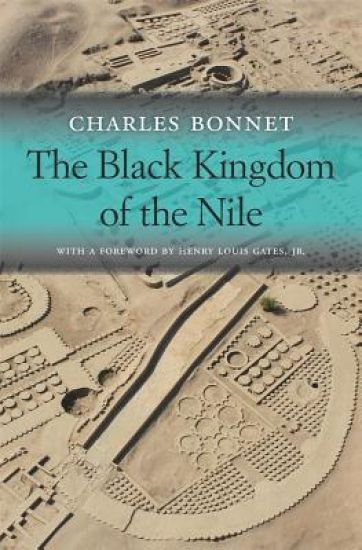
The Black Kingdom of the Nile
Charles Bonnet; Henry Louis Gates
Harvard University Press
2019
sidottu
Landmark archaeological excavations that radically revise the early history of Africa. For the past fifty years, Charles Bonnet has been excavating sites in present-day Sudan and Egypt that point to the existence of a sophisticated ancient black African civilization thriving alongside the Egyptians. In The Black Kingdom of the Nile, he gathers the results of these excavations to reveal the distinctively indigenous culture of the black Nubian city of Kerma, the capital of the Kingdom of Kush. This powerful and complex political state organized trade to the Mediterranean basin and built up a military strong enough to resist Egyptian forces. Further explorations at Dukki Gel, north of Kerma, reveal a major Nubian fortified city of the mid-second millennium BCE featuring complex round and oval structures. Bonnet also found evidence of the revival of another powerful black Nubian society, seven centuries after Egypt conquered Kush around 1500 BCE, when he unearthed seven life-size granite statues of Black Pharaohs (ca. 744–656 BCE). Bonnet’s discoveries have shaken our understanding of the origins and sophistication of early civilization in the heart of black Africa. Until Bonnet began his work, no one knew the extent and power of the Nubian state or the existence of the Black Pharaohs who presided successfully over their lands. The political, military, and commercial achievements revealed in these Nubian sites challenge our long-held belief that the Egyptians were far more advanced than their southern neighbors and that black kingdoms were effectively vassal states. Charles Bonnet’s discovery of this lost black kingdom forces us to rewrite the early history of the African continent.
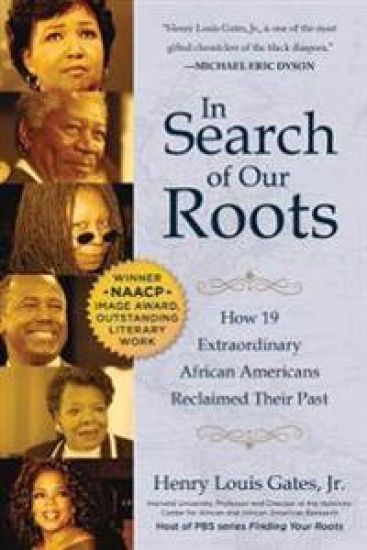
With a new preface, Henry Louis Gates, Jr. discusses African-American immigration and ancestry in the context of the American political climate. Unlike most white Americans who can search their ancestral records, identifying who among their forebears was the first to step foot on this country’s shores, most African Americans encounter a series of daunting obstacles when trying to trace their family’s past. Slavery brutally negated identity, denying black men and women even their names. But from that legacy of slavery have sprung generations who’ve struggled, thrived, and lived extraordinary lives. For too long, African Americans’ family trees have been barren of branches, but advanced genetic testing techniques, combined with archival research, have begun to fill in the gaps. Here, scholar Henry Louis Gates, Jr., backed by an elite team of geneticists and researchers, takes nineteen extraordinary African Americans on a once unimaginable journey, tracing family sagas through U. S. history and back to Africa. Dr. Gates brings to life the recovered pasts of: Oprah Winfrey Whoopi Goldberg Chris Rock Tina Turner Maya Angelou Peter Gomes Mae Jemison Quincy Jones Morgan Freeman Sara Lawrence-Lightfoot Tom Joyner Benjamin Carson T. D. Jakes Linda Johnson Rice Kathleen Henderson Jackie Joyner-Kersee Don Cheadle Bliss Broyard Chris Tucker More than a work of history, In Search of Our Roots is an important book that, for the first time, brings to light the lives of ordinary men and women who, by courageous example, blazed a path for their famous descendants. In accompanying the nineteen contemporary achievers on their journey into the past and meeting their remarkable forebears, we come to know ourselves.
Uncle Tom charts the dramatic cultural transformation of perhaps the most controversial literary character in American history. From his origins as the heroic, Christ-like protagonist of Harriet Beecher Stowe's anti-slavery novel, the best-selling book of the nineteenth century after the Bible, Uncle Tom has become a widely recognized epithet for a black person deemed so subservient to whites that he betrays his race. Readers have long noted that Stowe's character is not the traitorous sycophant that his name connotes today. Adena Spingarn traces his evolution in the American imagination, offering the first comprehensive account of a figure central to American conversations about race and racial representation from 1852 to the present. We learn of the radical political potential of the novel's many theatrical spinoffs even in the Jim Crow era, Uncle Tom's breezy disavowal by prominent voices of the Harlem Renaissance, and a developing critique of "Uncle Tom roles" in Hollywood. Within the stubborn American binary of black and white, citizens have used this rhetorical figure to debate the boundaries of racial difference and the legacy of slavery. Through Uncle Tom, black Americans have disputed various strategies for racial progress and defined the most desirable and harmful images of black personhood in literature and popular culture.
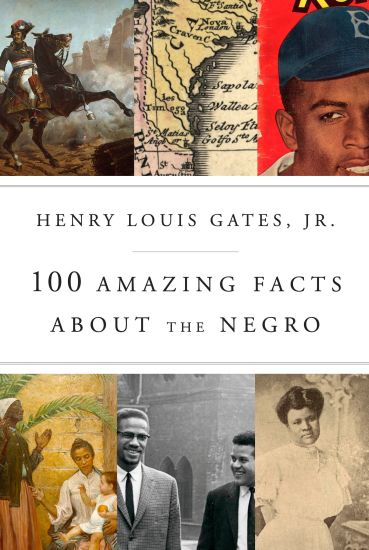
The first edition of Joel Augustus Rogers's now legendary 100 Amazing Facts About the Negro with Complete Proof, published in 1934, was billed as "A Negro 'Believe It or Not.'" Rogers's little book was priceless because he was delivering enlightenment and pride, steeped in historical research, to a people too long starved on the lie that they were worth nothing. For African Americans of the Jim Crow era, Rogers's was their first black history teacher. But Rogers was not always shy about embellishing the "facts" and minimizing ambiguity; neither was he above shock journalism now and then. With lan and erudition--and with winning enthusiasm--Henry Louis Gates, Jr. gives us a corrective yet loving homage to Roger's work. Relying on the latest scholarship, Gates leads us on a romp through African, diasporic, and African-American history in question-and-answer format. Among the one hundred questions: Who were Africa's first ambassadors to Europe? Who was the first black president in North America? Did Lincoln really free the slaves? Who was history's wealthiest person? What percentage of white Americans have recent African ancestry? Why did free black people living in the South before the end of the Civil War stay there? Who was the first black head of state in modern Western history? Where was the first Underground Railroad? Who was the first black American woman to be a self-made millionaire? Which black man made many of our favorite household products better? Here is a surprising, inspiring, sometimes boldly mischievous--all the while highly instructive and entertaining--compendium of historical curiosities intended to illuminate the sheer complexity and diversity of being "Negro" in the world.(With full-color illustrations throughout.)
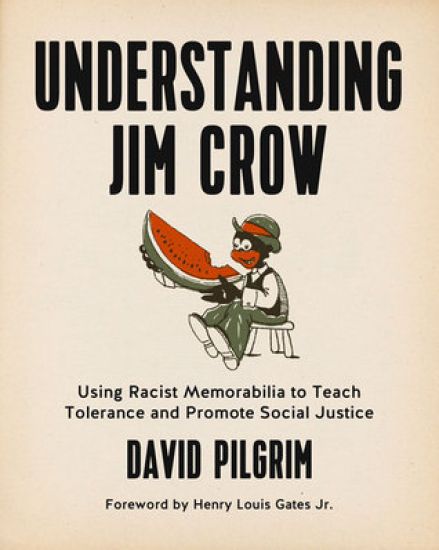
Selections of racist memorabilia from the collection at the Jim Crow Museum A proper understanding of race relations in this country must include a solid knowledge of Jim Crow--how it emerged, what it was like, how it ended, and its impact on the culture. Understanding Jim Crow introduces readers to the Jim Crow Museum of Racist Memorabilia, a collection of more than 10,000 contemptible collectibles that are used to engage visitors in intense and intelligent discussions about race, race relations, and racism. The items are offensive and they were meant to be offensive. The items in the Jim Crow Museum served to dehumanize Blacks and legitimized patterns of prejudice, discrimination, and segregation. Using racist objects as teaching tools seems counterintuitive--and, quite frankly, needlessly risky. Many Americans are already apprehensive discussing race relations, especially in settings where their ideas are challenged. The museum and this book exist to help overcome our collective trepidation and reluctance to talk about race. Fully illustrated, and with context provided by the museum's founder and director David Pilgrim, Understanding Jim Crow is both a grisly tour through America's past and an auspicious starting point for racial understanding and healing.
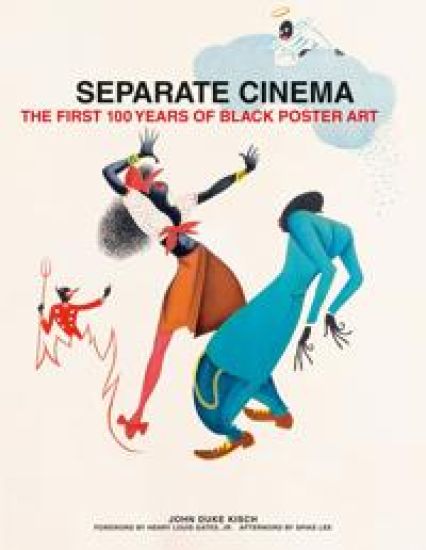
This magnificent volume is a celebration of the first 100 years of black film poster art. A visual feast, these images recount the diverse and historic journey of the black film industry from the earliest days of Hollywood to the present day, accompanied by insightful accompanying text, a foreword by black history authority and renowned academic Henry Louis Gates, Jr. and an afterword by Hollywood director Spike Lee. These posters have meaning for young and old alike, and possess the power to transcend ethnicity. They capture the spirit and energy of an earlier time, reminding people of the pioneers of the past, those courageous and daring African American filmmakers, entertainers and artists whose dreams and struggles paved the way for future generations. The wealth of imagery on these pages is taken from the Separate Cinema Archive, maintained by archive director John Kisch. The most extensive private holdings of African-American film memorabilia in the world, it contains over 35,000 authentic movie posters and photographs from over 30 countries. This stunning coffee table book represents some of the archive's greatest highlights.
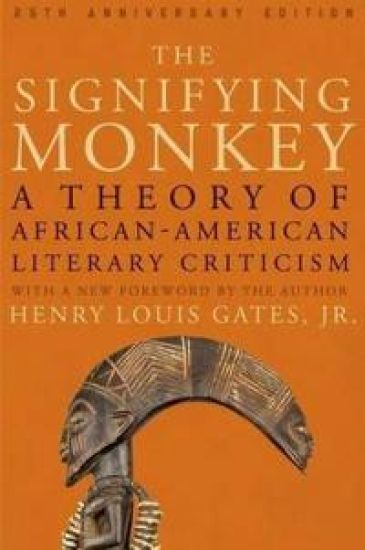
Henry Louis Gates, Jr.'s original, groundbreaking study explores the relationship between the African and African-American vernacular traditions and black literature, elaborating a new critical approach located within this tradition that allows the black voice to speak for itself. Examining the ancient poetry and myths found in African, Latin American, and Caribbean culture, and particularly the Yoruba trickster figure of Esu-Elegbara and the Signifying Monkey, whose myths help articulate the black tradition's theory of its literature, Gates uncovers a unique system of interpretation and a powerful vernacular tradition that black slaves brought with them to the New World. His critical approach relies heavily on the Signifying Monkey--perhaps the most popular figure in African-American folklore--and signification and Signifyin(g). Exploring signification in black American life and literature by analyzing the transmission and revision of various signifying figures, Gates provides an extended analysis of what he calls the 'Talking Book', a central trope in early slave narratives that virtually defines the tradition of black American letters. Gates uses this critical framework to examine several major works of African-American literature--including Zora Neale Hurston's Their Eyes Were Watching God, Ralph Ellison's Invisible Man, and Ishmael Reed's Mumbo Jumbo--revealing how these works signify on the black tradition and on each other. The second volume in an enterprising trilogy on African-American literature, The Signifying Monkey--which expands the arguments of Figures in Black--makes an important contribution to literary theory, African-American literature, folklore, and literary history.
Transformation of the African American Intelligentsia, 1880–2012
Martin Kilson; Henry Louis Gates
Harvard University Press
2014
sidottu
After Reconstruction, African Americans found themselves free, yet largely excluded from politics, higher education, and the professions. Drawing on his professional research into political leadership and intellectual development in African American society, as well as his personal roots in the social-gospel teachings of black churches and at Lincoln University (PA), the political scientist Martin Kilson explores how a modern African American intelligentsia developed in the face of institutionalized racism. In this survey of the origins, evolution, and future prospects of the African American elite, Kilson makes a passionate argument for the ongoing necessity of black leaders in the tradition of W. E. B. Du Bois, who summoned the "Talented Tenth" to champion black progress. Among the many dynamics that have shaped African American advancement, Kilson focuses on the damage--and eventual decline--of color elitism among the black professional class, the contrasting approaches of Du Bois and Booker T. Washington, and the consolidation of an ethos of self-conscious racial leadership. Black leaders who assumed this obligation helped usher in the civil rights movement. But mingled among the fruits of victory are the persistent challenges of poverty and inequality. As the black intellectual and professional class has grown larger and more influential than ever, counting the President of the United States in its ranks, new divides of class and ideology have opened in African American communities. Kilson asserts that a revival of commitment to communitarian leadership is essential for the continued pursuit of justice at home and around the world.
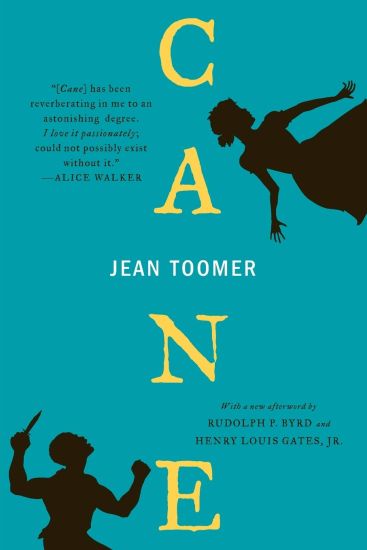
Cane
Jean Toomer; Rudolph P. Byrd; Henry Louis Gates
Liveright Publishing Corporation
2011
nidottu
Halvin toimitettuna 19,00 €
First published in 1923, Jean Toomer’s Cane is an innovative literary work—part drama, part poetry, part fiction—powerfully evoking black life in the South. Rich in imagery, Toomer’s impressionistic, sometimes surrealistic sketches of Southern rural and urban life are permeated by visions of smoke, sugarcane, dusk, and fire; the northern world is pictured as a harsher reality of asphalt streets. This iconic work of American literature is published with a new afterword by Rudolph Byrd of Emory University and Henry Louis Gates Jr. of Harvard University, who provide groundbreaking biographical information on Toomer, place his writing within the context of American modernism and the Harlem Renaissance, and examine his shifting claims about his own race and his pioneering critique of race as a scientific or biological concept.
A guide for recovering one's family heritage through revealing Oprah Winfrey's roots, and teaches that who we are is startlingly influenced by the paths of our ancestors.
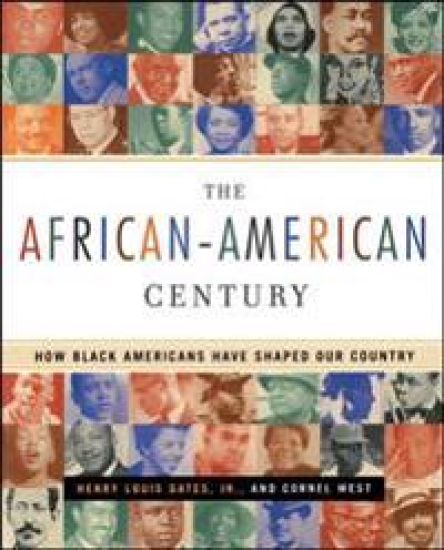
The African-American Century: How Black Americans Have Shaped Our Country
Henry Louis Gates; Cornel West
FREE PRESS
2002
nidottu
One hundred original profiles of the most influential African Americans of the twentieth century. Without Louis Armstrong or Miles Davis, we would not have jazz. Without Toni Morrison or Ralph Ellison, we would miss some of our greatest novels. Without Dr. King or Thurgood Marshall, we would be deprived of political breakthroughs that affirm and strengthen our democracy. Here, two of the leading African American scholars of our day, Henry Louis Gates, Jr., and Cornel West, show us why the twentieth century was the African American century, as they offer their personal picks of the African American figures who did the most to shape our world. This colorful collection of personalities includes much-loved figures such as scientist George Washington Carver, contemporary favorites such as comedian Richard Pryor and novelist Alice Walker, and even less-well-known people such as aviator Bessie Coleman. Gates and West also recognize the achievements of controversial figures such as Nation of Islam leader Louis Farrakhan and rap artist Tupac Shakur. Lively, accessible, and illustrated throughout, The African American Century is a celebration of black achievement and a tribute to the black struggle for freedom in America that will inspire readers for years to come.
This landmark guide covers research into every aspect of African-American life and work, offering a compendium of information and interpretation about almost 400 years of African-Americans' experiences as an ethnic group and as Americans. The first part of the Guide contains 12 essays on historical research aids, from traditional archival and reference materials to the Internet. The second and largest part presents comprehensive and chronological bibliographies, prepared by John Thornton, Peter H. Wood, Gary B. Nash, Stephanie Shaw, Richard J. M. Blackett, Eric Foner, Leon F. Litwack, Joe W. Trotter, Jeffrey Conrad Stewart, Nancy L. Grant, Darlene Clark Hine, Clayborne Carson, John H. Bracey, Adam Biggs, and Corey Walker. The third part contains listings of resources on the special subjects of women, prepared by Evelyn Brooks Higginbotham; geographical areas; and autobiography and biography, prepared by Randall K. Burkett, Leon F. Litwack, and Richard Newman. A companion CD-ROM packaged with the book makes more than 15,000 bibliography entries available for computer searching.
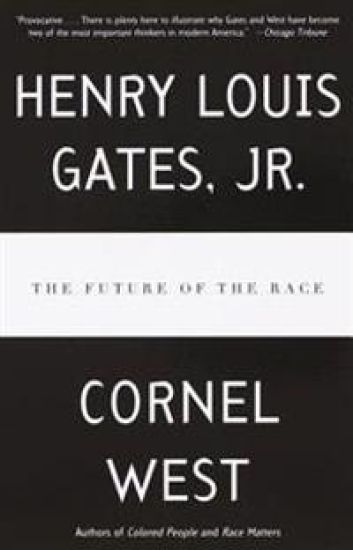
Almost one-hundred years ago, W. E. B. Du Bois proposed the notion of the "talented tenth," an African American elite that would serve as leaders and models for the larger black community. In this unprecedented collaboration, Henry Louis Gates, Jr., and Cornel West--two of Du Bois's most prominent intellectual descendants--reassess that relationship and its implications for the future of black Americans. If the 1990s are the best of times for the heirs of the Talented Tenth, they are unquestionably worse for the growing black underclass. As they examine the origins of this widening gulf and propose solutions for it, Gates and West combine memoir and biography, social analysis and cultural survey into a book that is incisive and compassionate, cautionary and deeply stirring. "Today's most public African American intellectual voices... West and Gates have made a valuable contribution."--Julian Bond, Philadelphia Inquirer "Brilliant...a social, cultural and political blueprint...that attempts to illumine the future path for blacks and American democracy."--New York Daily News "Henry Louis Gates., Jr., and Cornel West are among the most renowned American intellectuals of our time."--New York Times Book Review
Narrative of the Life of Frederick Douglass
Henry Louis Gates
Dell Publishing Co Inc.,U.S.
1997
pokkari
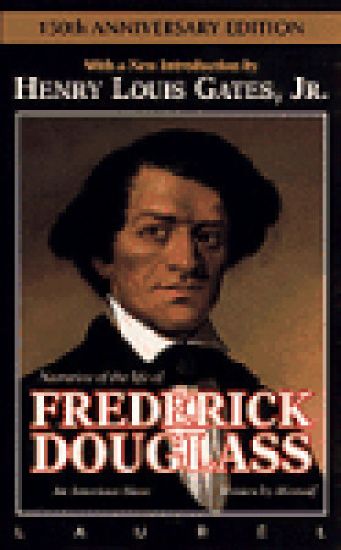
Born a slave in Maryland circa 1817, Frederick Douglass went on to become the most influential and distinguished African American of the nineteenth century. As an abolitionist, newspaper publisher, orator and statesman, Douglass dedicated his life to the triumph of freedom over oppression for all black Americans. Published shortly after his escape from slavery, The Narrative of the Life of Frederick Douglass, An American Slave became an immediate bestseller in 1845 and is still the most widely read slave narrative in American history. A piercing denounciation of slavery, the Narrative mobilized masses of people for the abolitionist cause. But the Narrative is also a deeply personal memoir in which Douglass chronicles his childhood years of deprivation and brutality, his efforts to teach himself to read (teaching a slave to read was illegal in the South), and his dangerous flight to freedom in 1838. In his insightful introduction, Professor Henry Louis Gates, Jr. celebrates the 150th anniversary of the book's publication and offers a fresh perspective on what the Narrative means today. The comprehensive bibliography lists the body of literature devoted to Douglass's life and writings. Already a staple for many courses in American literature and history, this edition is enhanced by Professor Gates's introduction and bibliography, and will be a must have for all readers of American literature.
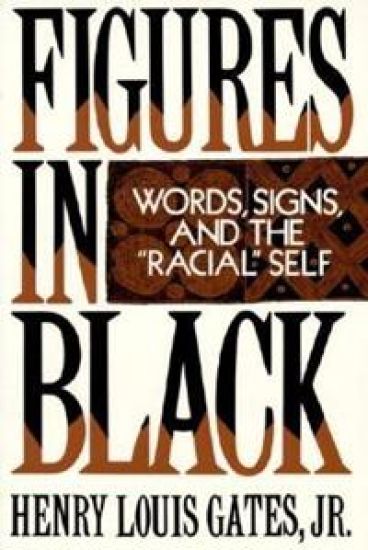
In this volume, Gates focuses critical attention on the most repressed element of African-American criticism - the language of the text. Incorporating the theoretical insights of critics such as Bakhtin, Foucault, Lacan, Derrida, and Bloom, he explores the work of a wide range of African-American writers from Phillis Wheatley to Ishmael Reed and Alice Walker.