Kirjailija
Henry MacKenzie
Kirjat ja teokset yhdessä paikassa: 54 kirjaa, julkaisuja vuosilta 1958–2025, suosituimpiin kuuluu The Works Of Henry Mackenzie. Vertaile teosten hintoja ja tarkista saatavuus suomalaisista kirjakaupoista.
54 kirjaa
Kirjojen julkaisuvuodet: 1958–2025.
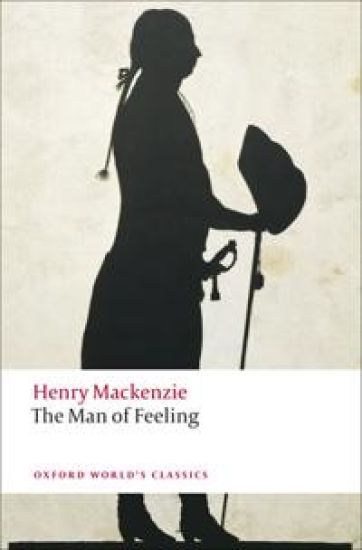
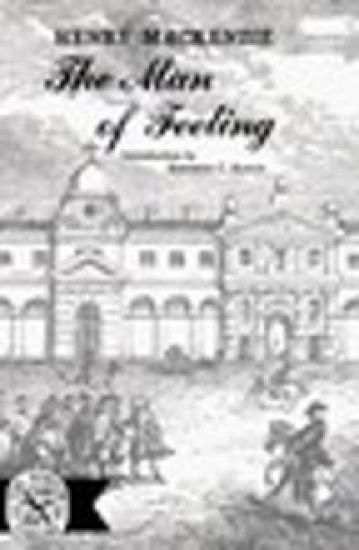
'a book I prize next to the Bible' Robert Burns Mackenzie's hugely popular novel of 1771 is the foremost work of the sentimental movement, in which sentiment and sensibility were allied with true virtue, and sensitivity is the mark of the man of feeling. The hero, Harley, is followed in a series of episodes demonstrating his benevolence in an uncaring world: he assists the down-trodden, loses his love, and fails to achieve worldly success. The novel asks a series of vital questions: what morality is possible in a complex commercial world? Does trying to maintain it make you a saint or a fool? Is sentiment merely a luxury for the leisured classes? This edition reprints Brian Vickers's authoritative text, with a new introduction that discusses the novel in the context of the Scottish Enlightenment and European sentimentalism. ABOUT THE SERIES: For over 100 years Oxford World's Classics has made available the widest range of literature from around the globe. Each affordable volume reflects Oxford's commitment to scholarship, providing the most accurate text plus a wealth of other valuable features, including expert introductions by leading authorities, helpful notes to clarify the text, up-to-date bibliographies for further study, and much more.
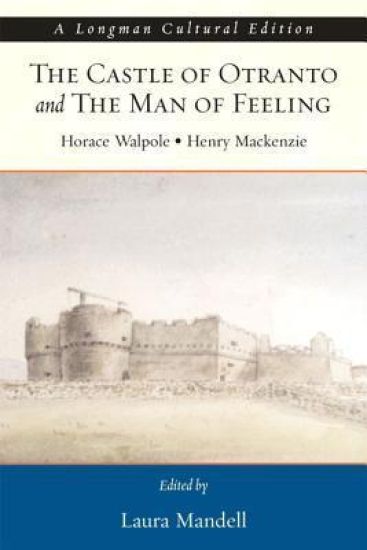
Castle of Otranto and the Man of Feeling
Horace Walpole; Henry Mackenzie; Laura Mandell
Pearson
2006
nidottu
From the Longman Cultural Editions series, The Castle of Otranto and The Man of Feeling, edited by Laura Mandell, presents a lively pairing of mid-eighteenth century works that mark a watershed in the history of the novel. These short novels, published within the same decade–Horace Walpole’s The Castle of Otranto (1764) and Henry Mackenzie’s The Man of Feeling (1771)–helped produce the turn from social realism to sentimentality and strangeness that will characterize works of the Romantic era as well as popular novels, Gothic spectacles (including film), and all literary works interested in modern notions of individualism and human sympathy.
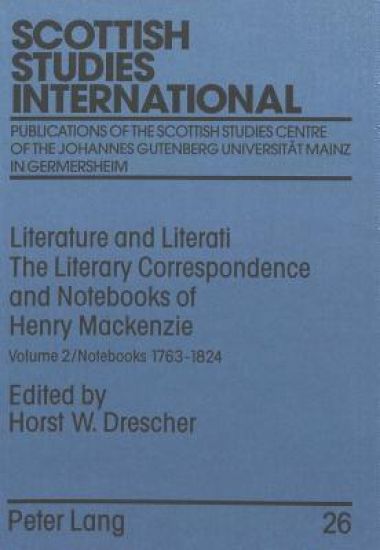
The second volume of Literature and Literati assembles for the first time Henry Mackenzie's early poetry, miscellaneous literary papers, literary criticism, anecdotal reminiscences, diary entries of a journey to Paris in 1784, political assessments, observations on language, education, writers and their work (including his own writings), aphorisms, egotisms, as well as succinct comments on the state of society. Together with his letters, Mackenzie's notebooks and numerous loose-leaf collections of sundry remarks on various subjects communicate Scottish Enlightenment thought and discourse. A critical mind and representing very much the intellectual climate of the Scottish Enlightenment in its European context, Mackenzie assumes the role of a chronicler of his time and is equally revealing both of his own idiosyncrasies and of the general attitudes of his day.
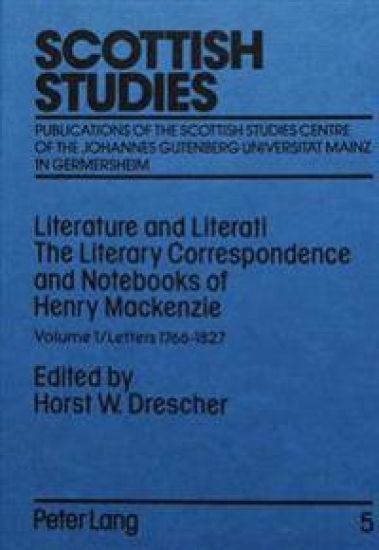
The letters of Henry Mackenzie (1745-1831), the man of feeling, now published for the first time, make up a unique collection of contemporary information on the cultural, intellectual, social, and political setting of their day. They communicate Scottish Enlightenment thought and openness; they follow the socio-cultural and literary cross-currents during one of the most significant periods of modern Scotland, extend their view to England and, though not forgetting regional boundaries and identities, include the European dimension.