Kirjojen hintavertailu – 12 903 725 kirjaa ja 27 kauppaa

Kirjailija

Henry Miers Elliot

Kirjat ja teokset yhdessä paikassa: 24 kirjaa, julkaisuja vuosilta 2007–2025, suosituimpiin kuuluu Elliot, H: History of India, as Told by Its Own Historians 8. Vertaile teosten hintoja ja tarkista saatavuus suomalaisista kirjakaupoista.

24 kirjaa

Kirjojen julkaisuvuodet: 2007–2025.

Supplement to the Glossary of Indian Terms. A-J
Supplement to the Glossary of Indian Terms. A-J is an unchanged, high-quality reprint of the original edition of 1860. Hansebooks is editor of the literature on different topic areas such as research and science, travel and expeditions, cooking and nutrition, medicine, and other genres. As a publisher we focus on the preservation of historical literature. Many works of historical writers and scientists are available today as antiques only. Hansebooks newly publishes these books and contributes to the preservation of literature which has become rare and historical knowledge for the future.
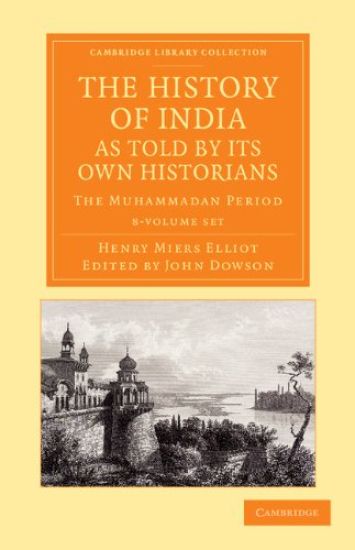
The History of India, as Told by its Own Historians

The History of India, as Told by its Own Historians

Henry Miers Elliot

Cambridge University Press
2013
pokkari
This extensive eight-volume work was first published between 1867 and 1877 by the linguist John Dowson (1820–81) from the manuscripts of the colonial administrator and scholar Sir Henry Miers Elliot (1808–53). Before his death, hoping to bolster British colonial ideology, Elliot had intended to evaluate scores of Arabic and Persian historians of India, believing that his translations would demonstrate the violence of the Muslim rulers and 'make our native subjects more sensible of the immense advantages accruing to them under the mildness and the equity of our rule'. Volume 4 covers the death of Timur in 1405 and continues to Akbar (1542–1605), including the autobiography of Babur (1483–1530), the Tarikh-i-Sher Shahi (1580), and the Tarikh-i-Daudi, covering the fall of the Karrani dynasty of Bengal and the rise of Akbar. The appendices discuss further anecdotal and related literature of the age.

The History of India, as Told by its Own Historians

The History of India, as Told by its Own Historians

Henry Miers Elliot

Cambridge University Press
2013
pokkari
This extensive eight-volume work was first published between 1867 and 1877 by the linguist John Dowson (1820–81) from the manuscripts of the colonial administrator and scholar Sir Henry Miers Elliot (1808–53). Before his death, hoping to bolster British colonial ideology, Elliot had intended to evaluate scores of Arabic and Persian historians of India, believing that his translations would demonstrate the violence of the Muslim rulers and 'make our native subjects more sensible of the immense advantages accruing to them under the mildness and the equity of our rule'. Volume 3 covers the period from the death of Nasir-ud-din Mahmud (1246–66) to the rise to power of Timur (1336–1405) at the end of the fourteenth century. It includes Timur's purported autobiography and the fifteenth-century Zafarnama of Sharafuddin Ali Yazdi, a history of the Timurid dynasty. The appendices contain studies of contemporaneous texts, including poetry and the Travels of Ibn Battuta.
The History of India, as Told by its Own Historians

The History of India, as Told by its Own Historians

Henry Miers Elliot

Cambridge University Press
2013
pokkari
This extensive eight-volume work was first published between 1867 and 1877 by the linguist John Dowson (1820–81) from the manuscripts of the colonial administrator and scholar Sir Henry Miers Elliot (1808–53). Before his death, hoping to bolster British colonial ideology, Elliot had intended to evaluate scores of Arabic and Persian historians of India, believing that his translations would demonstrate the violence of the Muslim rulers and 'make our native subjects more sensible of the immense advantages accruing to them under the mildness and the equity of our rule'. Volume 8 addresses criticism of the previously published volumes, and includes additions and corrections to them. The volume also contains extracts of numerous additional histories covering the end of the Mughal Empire from Muhammad Shah (1702–1748) to the establishment of British political and military dominance in India in the mid-nineteenth century.
The History of India, as Told by its Own Historians

The History of India, as Told by its Own Historians

Henry Miers Elliot

Cambridge University Press
2013
pokkari
This extensive eight-volume work was first published between 1867 and 1877 by the linguist John Dowson (1820–81) from the manuscripts of the colonial administrator and scholar Sir Henry Miers Elliot (1808–53). Before his death, hoping to bolster British colonial ideology, Elliot had intended to evaluate scores of Arabic and Persian historians of India, believing that his translations would demonstrate the violence of the Muslim rulers and 'make our native subjects more sensible of the immense advantages accruing to them under the mildness and the equity of our rule'. Volume 7 covers the period from Shah Jahan (1592–1666) to the early reign of Muhammad Shah (1702–48). It includes various Padshahnama, the works comprising the official visual history of Shah Jahan's reign, most notably that of Abdul Hamid Lahori (d.1654). Also included are substantial extracts from the Muntakhab-ul-Lubab of Khafi Khan, covering the long reign of Aurangzeb (1618–1707).
The History of India, as Told by its Own Historians

The History of India, as Told by its Own Historians

Henry Miers Elliot

Cambridge University Press
2013
pokkari
This extensive eight-volume work was first published between 1867 and 1877 by the linguist John Dowson (1820–81) from the manuscripts of the colonial administrator and scholar Sir Henry Miers Elliot (1808–53). Before his death, hoping to bolster British colonial ideology, Elliot had intended to evaluate scores of Arabic and Persian historians of India, believing that his translations would demonstrate the violence of the Muslim rulers and 'make our native subjects more sensible of the immense advantages accruing to them under the mildness and the equity of our rule'. Volume 2 begins with accounts of the earliest inroads of the Ghaznivid conquerors, tracing the rise to power of the Muslims in India. It includes History of the World Conqueror by Ata-Malik Jovayni (1226–83), one of the main sources on the rapid sweep of Genghis Khan's armies through Asia. The volume closes in 1257 during the reign of Nasir-ud-din Mahmud (1246–66).
The History of India, as Told by its Own Historians

The History of India, as Told by its Own Historians

Henry Miers Elliot

Cambridge University Press
2013
pokkari
This extensive eight-volume work was first published between 1867 and 1877 by the linguist John Dowson (1820–81) from the manuscripts of the colonial administrator and scholar Sir Henry Miers Elliot (1808–53). Before his death, hoping to bolster British colonial ideology, Elliot had intended to evaluate scores of Arabic and Persian historians of India, believing that his translations would demonstrate the violence of the Muslim rulers and 'make our native subjects more sensible of the immense advantages accruing to them under the mildness and the equity of our rule'. Volume 1 contains introductory material and Elliot's original preface; early Arab geographers' chronicles, including Ibn Khordadbeh's ninth-century Book of Roads and Kingdoms and tenth-century works by Estakhri and Ibn Hawqal; histories of Sindh, including the Chach Nama; and extensive appendices giving further contextual information and ethnographic notes on India.
The History of India, as Told by its Own Historians

The History of India, as Told by its Own Historians

Henry Miers Elliot

Cambridge University Press
2013
pokkari
This extensive eight-volume work was first published between 1867 and 1877 by the linguist John Dowson (1820–81) from the manuscripts of the colonial administrator and scholar Sir Henry Miers Elliot (1808–53). Before his death, hoping to bolster British colonial ideology, Elliot had intended to evaluate scores of Arabic and Persian historians of India, believing that his translations would demonstrate the violence of the Muslim rulers and 'make our native subjects more sensible of the immense advantages accruing to them under the mildness and the equity of our rule'. Volume 5 charts the end of the Afghan dynasty in 1526 and most of the reign of Akbar, as frankly recounted in Abd-ul-Qadir Bada'uni's Muntakhab-ut-Tawarikh (1595). It also includes chronicles of the rule of the second Mughal emperor, Humayun (1508–56), and the Tarikh-i-Akbari. The appendices contain Elliot's notes on aspects of Indian culture.
The History of India, as Told by its Own Historians

The History of India, as Told by its Own Historians

Henry Miers Elliot

Cambridge University Press
2013
pokkari
This extensive eight-volume work was first published between 1867 and 1877 by the linguist John Dowson (1820–81) from the manuscripts of the colonial administrator and scholar Sir Henry Miers Elliot (1808–53). Before his death, hoping to bolster British colonial ideology, Elliot had intended to evaluate scores of Arabic and Persian historians of India, believing that his translations would demonstrate the violence of the Muslim rulers and 'make our native subjects more sensible of the immense advantages accruing to them under the mildness and the equity of our rule'. Volume 6 covers the death of Akbar in 1605 and includes extracts from the Akbarnama of Abul Fazl (1551–1602), the emperor's vizier and court historian. It also covers the reign of Jahangir (1569–1627) with extracts from the Jahangirnama, his own memoirs. The appendices include a translation of the introduction to Ferishta's early seventeenth-century history.