Kirjojen hintavertailu – 12 859 828 kirjaa ja 27 kauppaa
Kirjailija
Henry Miller
Kirjat ja teokset yhdessä paikassa: 77 kirjaa, julkaisuja vuosilta 1944–2025, suosituimpiin kuuluu Tropic of Cancer. Vertaile teosten hintoja ja tarkista saatavuus suomalaisista kirjakaupoista.
Some of the most rewarding pages in Henry Miller's books concern his self-education as a writer. He tells, as few great writers ever have, how he set his goals, how he discovered the excitement of using words, how the books he read influenced him, and how he learned to draw on his own experience.
They are taken from the Paris books Black Spring (1936) and Max and the White Phagocytes (1938) and were for the most part, written at about the satire time as Tropic of Capricorn—the period of Miller’s and Durrell’s life in the famous Villa Seurat in Paris. As is usual with Miller, these pieces cannot be tagged with the label of any given literary category. The unforgettable portrait of Max, the Paris drifter, and the probably-autobiographical Tailor Shop, are basically short stories, but even here the irrepressible vitality of Miller’s personality keeps breaking into the narrative. And in the critical and philosophical essays, the prose poems and surrealist fantasies, the travel sketches and scenarios, Miller’s passion for fiction, for telling the endless story of his extraordinary life, cannot be held down. Life, as no other modern author has lived it or can write it, bursts from these pages—the life of the mind and the body; of people, places and things; of ideas and the imagination.
In his great triptych “The Millennium,” Bosch used oranges and other fruits to symbolize the delights of Paradise. Whence Henry Miller’s title for this, one of his most appealing books; first published in 1957, it tells the story of Miller’s life on the Big Sur, a section of the California coast where he lived for fifteen years. Big Sur is the portrait of a place—one of the most colorful in the United States—and of the extraordinary people Miller knew there: writers (and writers who did not write), mystics seeking truth in meditation (and the not-so-saintly looking for sex-cults or celebrity), sophisticated children and adult innocents; geniuses, cranks and the unclassifiable, like Conrad Moricand, the “Devil in Paradise” who is one of Miller’s greatest character studies. Henry Miller writes with a buoyancy and brimming energy that are infectious. He has a fine touch for comedy. But this is also a serious book—the testament of a free spirit who has broken through the restraints and clichés of modern life to find within himself his own kind of paradise.
In der Schilderung unbürgerlicher Schicksale und grotesker Situationen erweist sich Henry Miller auch hier als Erzähler von hinreißendem Temperament und als Verfechter ungehemmter Daseinsfreude.
The first active step needed to get started on a journey to financial freedom is acknowledging that you are not financially stable or free. This is a hard pill for some people to swallow and so they avoid acknowledging it even with the overwhelming evidence to support the state. Facing this fact is not about demeaning your integrity or bring you down. It is about giving you a foundation to start with so that you can build the financial security you need. This knowledge is needed to show you where you currently stand financially and what your resources are so that you can develop a plan to get where you need and want to be.
Now hailed as an American classic, Tropic of Cancer, Henry Miller's masterpiece, was banned as obscene in this country for twenty-seven years after its first publication in Paris in 1943. Only a historic court ruling that changed American censorship standards, ushering in a new era of freedom and frankness in modern literature, permitted the publication of this first volume of Miller's famed mixture of memoir and fiction, which chronicles with unapologetic gusto, the bawdy adventures of a young expatriate writer, his friends, and the characters they meet in Paris in the 1930s. Tropic of Cancer is now considered, as Norman Mailer said, one of the ten or twenty great novels of our century.
'Out of the sea, as if Homer himself had arranged it for me, the islands bobbed up, lonely, deserted, mysterious in the fading light'Enraptured by a young woman's account of the landscapes of Greece, Henry Miller set off to explore the Grecian countryside with his friend Lawrence Durrell in 1939. In The Colossus of Maroussi he describes drinking from sacred springs, nearly being trampled to death by sheep and encountering the flamboyant Greek poet Katsumbalis, who 'could galvanize the dead with his talk'. This lyrical classic of travel writing represented an epiphany in Miller's life, and is the book he would later cite as his favourite. 'One of the five greatest travel books of all time' Pico Iyer
In 1941, Henry Miller, the author of Tropic of Cancer, was commissioned by a Los Angeles bookseller to write an erotic novel for a dollar a page. Under the Roofs of Paris (originally published as Opus Pistorum) is that book. Here one finds Miller s characteristic candor, wit, self-mockery, and celebration of the good life. From Marcelle to Tania, to Alexandra, to Anna, and from the Left Bank to Pigalle, Miller sweeps us up in his odyssey in search of the perfect job, the perfect woman, and the perfect experience."
Banned in America for almost thirty years because of its explicit sexual content, this companion volume to Miller's Tropic of Cancer chronicles his life in 1920s New York City. Famous for its frank portrayal of life in Brooklyn's ethnic neighborhoods and Miller's outrageous sexual exploits, The Tropic of Capricorn is now considered a cornerstone of modern literature.
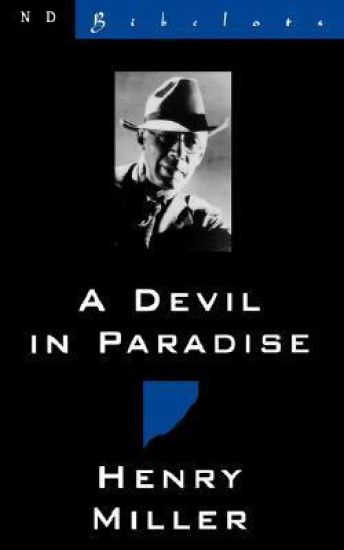
The devil in Henry Miller's Big Sur paradise is Conrad Moricand: "A friend of his Paris days, who, having been financed and brought over from Europe as an act of mercy by Mr. Miller, turns out as exacting, sponging, evil, cunning and ungrateful a guest as can be found in contemporary literature. Mr. Miller has always been a remarkable creator of character. Conrad Moricand is probably his masterpiece. . . . A Devil in Paradise is the work of a great novelist manqu , a novelist who has no stricter sense of form than the divine creator. . . . Fresh and intoxicating, funny and moving. . ." --The Times Literary Supplement (London)
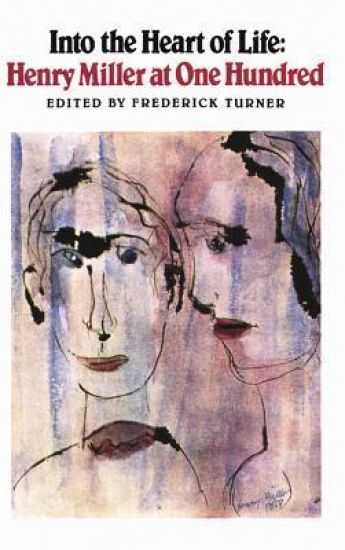
The delights of his prose are many, not the least of which is Miller's comic irony, which as The London Times noted, can be "as stringent and urgent as Swift's." Frederick Turner has organized the whole to highlight the autobiographical chronology of Miller's life, and along the way places the author squarely where he belongs--in the great tradition of American radical individualism, as a child of Emerson, Thoreau, and Whitman. Miller, who joyously declared "I am interested--like God--only in the individual," would have been pleased. The keynotes here are self-liberation and the pleasures of Miller's "knotty, cross-grained" genius, as Turner describes it--"defying classification, ultimately unamenable to any vision, any program not his] own." Or, as Henry Miller himself put it: "I am the hero and the book is myself."
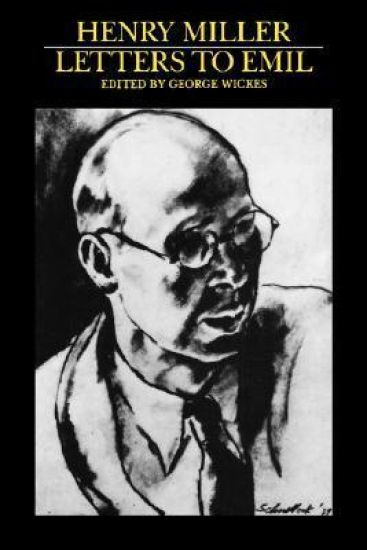
Prepared by Henry Miller for publication in 1938, Letters to Emil--correspondence from 1921 through 1934 with his boyhood friend and successful artist Emil Schnellock--remained unpublished until 1989. A chance encounter by the two men, out of touch since childhood, led to Miller's decision to become a writer. Throughout the '20s and into the '30s, Schnellock acted as his chief mentor, to whom he voiced his exuberant, sometimes cranky views of life and anxiously discussed his dying marriage to June Mansfield and his growing involvement with Ana s Nin. Miller's letters are a compelling record of the writer in the making, beginning with his first efforts in 1922, tracing his ten-year struggle to find his own voice, and reaching a climax with the publication of Tropic of Cancer in 1934. Indeed, it was in his actual letters to Emil that Henry Miller developed his vigorously earthy yet philosophical style.
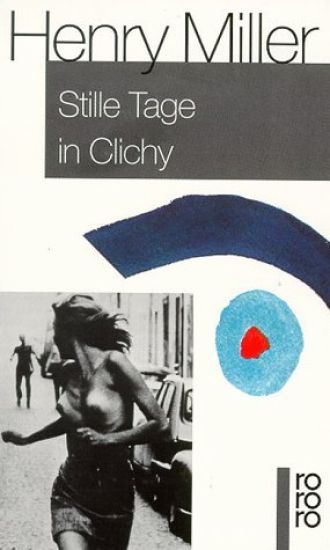
Auch in diesem inzwischen weltberühmten und verfilmten Buch zeigt sich der unsterbliche Henry Miller als Prophet und Moralist. Jahrelang mußte er auf die Veröffentlichung warten. Denn "Stille Tage in Clichy" ist nicht, wie der Titel vermuten lassen könnte, eine Idylle im Werk des "obszönsten Schriftstellers der Weltliteratur" (Sir Herbert Read). Doch sei es, daß sich sein Erzähler Joey dem Mädchen Nys nähert, das er im Caf? trifft, sei es Mara-Marignan, die sich auf den Champs-?lys?es nach ihm umdreht: Joeys Abenteuer sind von erstaunlicher Heiterkeit. Ganz gleich, ob eine Mutter unter dem Gekreisch ihrer Kinder entblößt wird oder ob Joey mit zwei Dirnen in der Badewanne Brot und Wein zu sich nimmt, fast immer sind seine Handlungen von Gelächter begleitet, gehen unter in wilder Ausgelassenheit. Zugleich beschwört Henry Miller das Paris der dreißiger Jahre und seine Atmosphäre überschäumender Lebenslust.
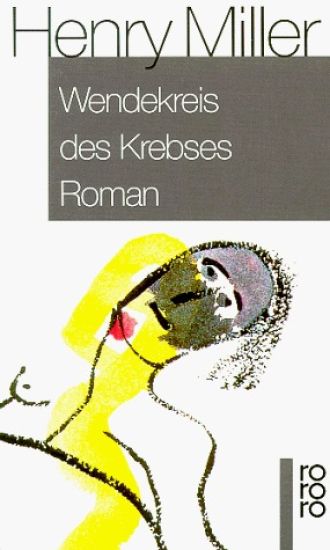
Mit diesem jahrzehntelang verketzerten und verbotenen Buch fegte der einst verfemte, heute weltberühmte Autor alle tabus hinweg. Es war der erste heftige Angriff gegen eine Gesellschaft, die den Boden bereitet, auf dem das Laster gedeiht. Es schlug die entscheidende Bresche in eine Mauer von Heuchelei und Prüderie.
A “melo-melo in seven scenes,” Just Wild About Harry is Henry Miller’s only excursion into playwriting. Harry is pure Miller, welling up from the same abundant love of life and freedom from convention that made its author the dean of writers dedicated to human liberation. Admittedly inspired by lonesco and the Theatre of the Absurd, Miller’s tragicomic slapstick is nevertheless as American as the Marx Brothers and the blues––the simple story of a heartless Harry (the one the ladies are wild about) who learns a bittersweet lesson about life, death, and love. Begun in Europe in 1960, Just Wild About Harry was first published by New Directions in 1963.
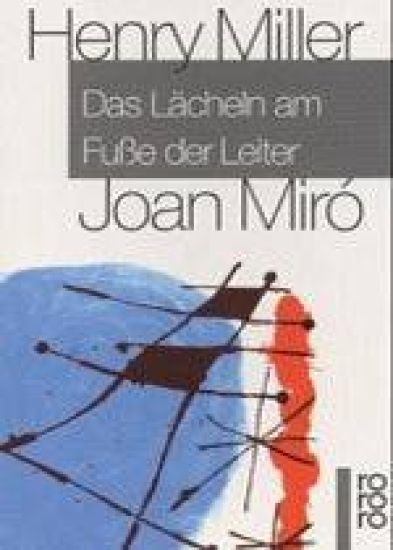
Das erzählerische Kabinettstück Henry Millers: Die Geschichte vom Clown, der sich nicht damit zufriedengeben mag, die Leute zum Lachen zu bringen, sondern ihnen Glückseligkeit schenken will. Ein seltener Glücksfall künstlerischen Zusammenwirkens: den poetischen Traum Henry Millers illustrieren die Blätter von Joan Mir?.