Kirjojen hintavertailu – 12 903 735 kirjaa ja 27 kauppaa
Kirjailija
Henry N. Pontell
Kirjat ja teokset yhdessä paikassa: 6 kirjaa, julkaisuja vuosilta 1985–2023, suosituimpiin kuuluu Wayward Dragon. Vertaile teosten hintoja ja tarkista saatavuus suomalaisista kirjakaupoista.
This book provides a novel criminological understanding of white-collar crime and corporate lawbreaking in China focusing on: lack of reliable official data, guanxi and corruption, state-owned enterprises, media censorship, enforcement and regulatory capacity. The text begins with an introduction to the topic placing it in global perspective, followed by chapters examining the importance of comparative study, corruption as a major crime in China, case studies and etiology, domestic, regional and global consequences, and concluding theoretical and policy issues that can inform future research.
This book provides a novel criminological understanding of white-collar crime and corporate lawbreaking in China focusing on: lack of reliable official data, guanxi and corruption, state-owned enterprises, media censorship, enforcement and regulatory capacity. The text begins with an introduction to the topic placing it in global perspective, followed by chapters examining the importance of comparative study, corruption as a major crime in China, case studies and etiology, domestic, regional and global consequences, and concluding theoretical and policy issues that can inform future research.
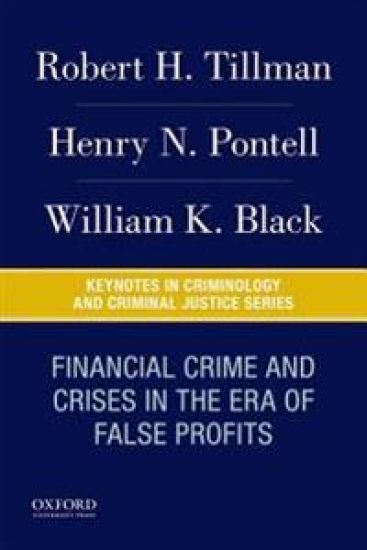
In this brief, accessible text, Robert Tillman, Henry N. Pontell, and William K. Black provide a thorough overview of financial crimes and crises and their consequences. Integrating theories and concepts from criminology, sociology, and economics to address major questions, they provide a concise and accessible yet in-depth introduction to the topic by reducing complex financial crimes to their essentials. About the Series Keynotes in Criminology and Criminal Justice, edited by Henry N. Pontell, provides essential knowledge on important contemporary matters of crime, law, and justice to a broad audience of readers. Volumes are written by leading scholars in that area. Concise, accessible, and affordable, these texts are designed to serve either as primers around which courses can be built or as supplemental books for a variety of courses.
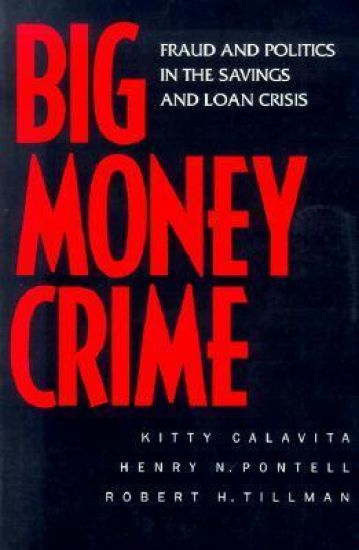
At a cost of $500 billion to American taxpayers, the savings and loan debacle of the 1980s was the worst financial crisis of the twentieth century as well as a crime unparalleled in American history. Yet the vast majority of its perpetrators will never be prosecuted, and those who were have received minimal sentences. In the first in-depth scrutiny of the ways and means of this disaster, this groundbreaking book comes to disturbing conclusions about the deliberate nature of this financial fraud, the political collusion involved, and the leniency of the criminal justice system in dealing with these 'Gucci-clad white-collar criminals'. Using material from over one hundred interviews with government officials and industry leaders and recently declassified documents, the authors show how - contrary to previous government and 'expert' explanations that chalked the disaster up to business risks gone awry or adverse economic conditions - S&L leaders engaged in deliberate fraud, stealing from their own corporations to speculate on high-risk ventures. Tempted by the insurance net, perpetrators looted their own institutions in a new kind of white-collar crime the authors dub 'collective embezzlement'. "Big Money Crime" also demonstrates how systematic political collusion - not just policy errors - was a critical ingredient in this unprecedented series of frauds. Bringing together statistics from a variety of government agencies, the authors provide a close reading of the track record of prosecutions and sentencing and find that 'suite crime' receives much more lenient treatment than 'street crime', despite its significantly higher price tag. The book concludes with a number of modest, but no less urgent, policy recommendations to counter the current deregulatory trend and to avert a replay of the S&L debacle in other financial sectors. From the book: 'We built thick walls; we have cameras; we have time clocks on the vaults ...all these controls were to protect against somebody stealing the cash. Well, you can steal far more money, and take it out the back door. The best way to rob a bank is to own one' - House Committee on Government Operations, 1988.
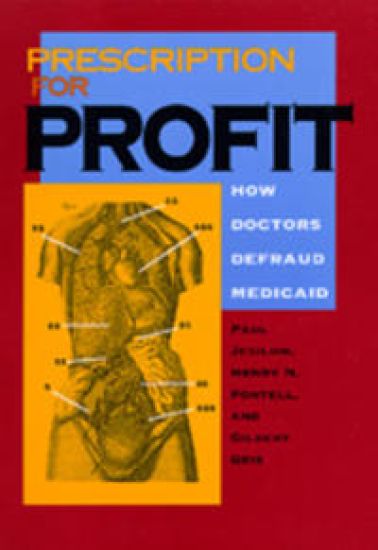
In this explosive expose of our health care system, Paul Jesilow, Henry N. Pontell, and Gilbert Geis uncover the dark side of physician practice. Using interviews with doctors and federal, state, and private officials and extensive investigation of case files, they tell the stories of doctors who profit from abortions on women who aren't pregnant, of needless surgery, overcharging for services, and excessive testing. How can doctors, recipients of a sacred trust and sworn to the Hippocratic Oath, violate Medicaid so egregiously? The authors trace patterns of abuse to the program's inauguration in the mid 1960s, when government authorities, not individual patients, were entrusted with responsibility for payments. Determining fees and regulating treatment also became the job of government agencies, thus limiting the doctors' traditional role. Physicians continue to disagree with Medicare and Medicaid policies that infringe on their autonomy and judgment. The medical profession has not accepted the gravity or extent of some members' illegal behavior, and individual doctors continue to blame violations on subordinates and patients. In the meantime, program guidelines have grown more confusing, hamstringing efforts to detect, apprehend, and prosecute Medicaid defrauders. Failure to institute a coherent policy for fraud control in the medical benefit program has allowed self-serving and greedy practitioners to violate the law with impunity. Prescription for Profit is a shocking revelation of abuse within a once-hallowed profession. It is a book that every doctor, and every patient, needs to read this year.
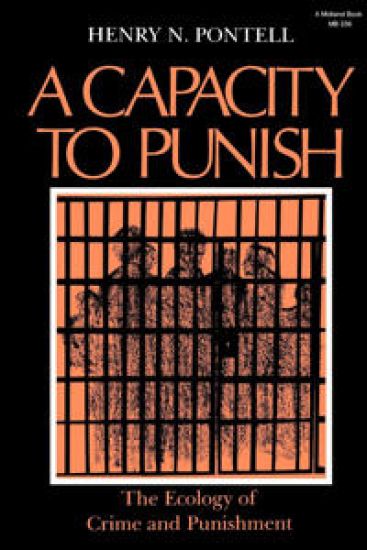
Henry Pontell convincingly demonstrates that despite the expenditure of millions of dollars, the enactment of many new laws exacting harsher punishments, and the growth of a vast criminal justice system, America is losing its "war on crime." By focusing on deterrence through punishment meted out by our criminal justice system, our courts receive more cases than they can handle, and our prisons and jails overflow with inmates. The message from a beleaguered criminal justice system, according to the author, is clear: there is limited capacity to punish. Pontell suggests that the first step toward solving the crime problem is to stop perceiving it—and using it—as a political issue and to begin to approach it from a reasoned, scientific, humane methodology.