Kirjojen hintavertailu – 12 903 742 kirjaa ja 27 kauppaa

Kirjailija

Henry Rousso

Kirjat ja teokset yhdessä paikassa: 5 kirjaa, julkaisuja vuosilta 1994–2016, suosituimpiin kuuluu Vichy. Vertaile teosten hintoja ja tarkista saatavuus suomalaisista kirjakaupoista.

5 kirjaa

Kirjojen julkaisuvuodet: 1994–2016.

The Latest Catastrophe

The Latest Catastrophe

Henry Rousso

University of Chicago Press
2016
sidottu
The writing of recent history tends to be deeply marked by conflict, by personal and collective struggles rooted in horrific traumas and bitter controversies. Frequently, today’s historians can find themselves researching the same events that they themselves lived through. This book reflects on the concept and practices of what is called “contemporary history,” a history of the present time, and identifies special tensions in the field between knowledge and experience, distance and proximity, and objectivity and subjectivity. Henry Rousso addresses the rise of contemporary history and the relations of present-day societies to their past, especially their legacies of political violence. Focusing on France, Germany, the United Kingdom, and the United States, he shows that for contemporary historians, the recent past has become a problem to be solved. No longer unfolding as a series of traditions to be respected or a set of knowledge to be transmitted and built upon, history today is treated as a constant act of mourning or memory, an attempt to atone. Historians must also negotiate with strife within this field, as older scholars who may have lived through events clash with younger historians who also claim to understand the experiences. Ultimately, The Latest Catastrophe shows how historians, at times against their will, have themselves become actors in a history still being made.
The Latest Catastrophe

The Latest Catastrophe

Henry Rousso

University of Chicago Press
2016
nidottu
The writing of recent history tends to be deeply marked by conflict, by personal and collective struggles rooted in horrific traumas and bitter controversies. Frequently, today’s historians can find themselves researching the same events that they themselves lived through. This book reflects on the concept and practices of what is called “contemporary history,” a history of the present time, and identifies special tensions in the field between knowledge and experience, distance and proximity, and objectivity and subjectivity. Henry Rousso addresses the rise of contemporary history and the relations of present-day societies to their past, especially their legacies of political violence. Focusing on France, Germany, the United Kingdom, and the United States, he shows that for contemporary historians, the recent past has become a problem to be solved. No longer unfolding as a series of traditions to be respected or a set of knowledge to be transmitted and built upon, history today is treated as a constant act of mourning or memory, an attempt to atone. Historians must also negotiate with strife within this field, as older scholars who may have lived through events clash with younger historians who also claim to understand the experiences. Ultimately, The Latest Catastrophe shows how historians, at times against their will, have themselves become actors in a history still being made.

Vichy

Vichy

Henry Rousso

C.H. BECK
2009
pokkari
Das scheinbar unabhängige Frankreich und die Kollaboration mit Nazi-Deutschland Das Regime von Vichy wurde nach der französischen Niederlage im Juni 1940 auf deutschen Druck hin etabliert. Seine Legitimation bezog es fast ausschließlich vom Ruf seines greisen Führers, dem Mar?chal P?tain, aber auch ohne direkten deutschen Druck strebte das Regime eine nationalistische und rassistische Umwandlung der französischen Gesellschaft und eine Eingliederung Frankreichs in ein von Deutschland beherrschtes Europa an. Auf dem neuesten Stand der Forschung gibt dieses Buch eine chronologische Zusammenfassung und einen Überblick über alle Aspekte der Vichy-Regierung
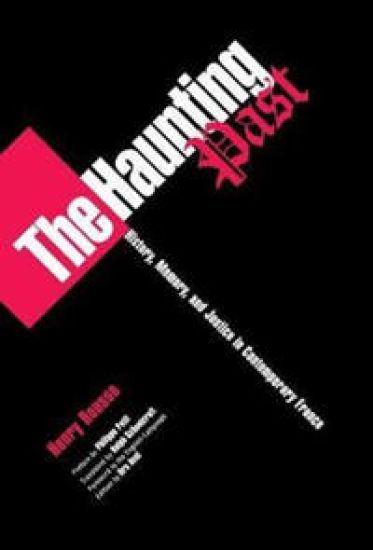
The Haunting Past

The Haunting Past

Henry Rousso

UNIVERSITY OF PENNSYLVANIA PRESS
2002
sidottu
In The Haunting Past, French historian Henry Rousso discusses the varied and controversial treatments of French collaboration with the Nazis during the Vichy regime, focusing specifically on the roles played by historians, and history itself, in the postwar trials of accused collaborators. While discussion of Nazi collaboration was mostly suppressed in the years immediately following World War II, recent changes in public sentiment paved the way for formal trials of former Vichy officials charged with collaborating with Nazi Germany. In a series of pointed interviews conducted by journalist Philippe Petit, Rousso considers events of the recent past-especially the emotionally charged Papon trial in France and the revelations that have come to light with the opening of Communist archives. While Rousso was one of the historians called to testify at a number of sensational political trials, he was also one of the few who chose not to, arguing that history is constantly changing and being rewritten and therefore should not be taken into consideration as judicial evidence. Throughout the course of these trials, the public repeatedly claimed that historians had failed to account for the crimes of Vichy and that the time had come for the truth to be known and justice delivered. Rousso, on the other hand, argued against the combination of history and justice, claiming that justice is a matter of ethics or law, while history should be free from judgment. The Haunting Past explores the methods historians employ to understand and frame varying perspectives on knowledge and truth, the ways an open society can or should manage information, and the moral and civic responsibilities of the intellectual elite in a democracy. In light of the sensational part often played by the modern media, this is a timely critique of institutions and of the relationship among politics, the courts, and the press. Rousso raises profound questions regarding the way true knowledge of the recent past is attained, untangling the roles of the historians, judges, and journalists empowered by society to bring forth historical truth and communicate it to the public.
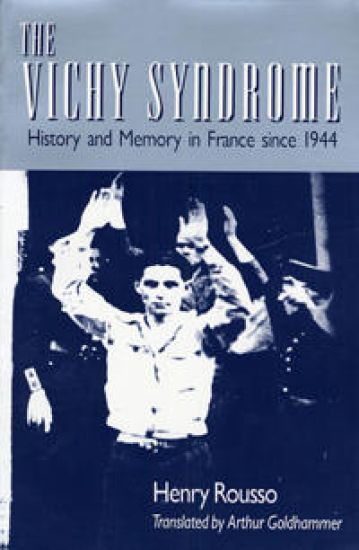
The Vichy Syndrome

The Vichy Syndrome

Henry Rousso; Stanley Hoffmann

Harvard University Press
1994
nidottu
From the Liberation purges to the Barbie trial, France has struggled with the memory of the Vichy experience: a memory of defeat, occupation, and repression. In this provocative study, Henry Rousso examines how this proud nation—a nation where reality and myth commingle to confound understanding—has dealt with les années noires. Specifically, he studies what the French have chosen to remember—and to conceal.