
Kirjailija
Henry Sidgwick
Kirjat ja teokset yhdessä paikassa: 63 kirjaa, julkaisuja vuosilta 1877–2026, suosituimpiin kuuluu The Methods of Ethics (Cram Edition). Vertaile teosten hintoja ja tarkista saatavuus suomalaisista kirjakaupoista.
63 kirjaa
Kirjojen julkaisuvuodet: 1877–2026.
A Supplement To The Second Edition Of The Methods Of Ethics
Henry Sidgwick
KESSINGER PUBLISHING, LLC
2008
sidottu
A Supplement To The Second Edition Of The Methods Of Ethics
Henry Sidgwick
Kessinger Pub
2007
pokkari

Lectures on the Philosophy of Kant and Other Philosophical Lectures & Essays
Henry Sidgwick
Kessinger Pub
2007
sidottu
Lectures on the Ethics of T. H. Green, Mr. Herbert Spencer and J. Martineau
Henry Sidgwick
Kessinger Pub
2007
sidottu

Lectures on the Philosophy of Kant and Other Philosophical Lectures and Essays
Henry Sidgwick
Kessinger Pub
2007
pokkari
Lectures on the Ethics of T. H. Green, Mr. Herbert Spencer and J. Martineau
Henry Sidgwick
Kessinger Pub
2007
pokkari


Essays on Ethics and Method is a selection of the shorter writings of the great nineteenth-century moral philosopher Henry Sidgwick. Sidgwick's monumental work The Methods of Ethics is a classic of philosophy; this new volume is a fascinating complement to it. These essays develop further Sidgwick's ethical ideas, respond to criticism of the Methods, and discuss rival theories. Other aspects of Sidgwick's thought are also illuminated, in particular his interests in method, verification, and proof. The essays show Sidgwick to be a forerunner of twentieth-century analytical philosophy: they illustrate his emphasis on common sense and ordinary language, and exemplify not only his care, clarity, and precision, but also the wit and humour that are not prominent in his longer works. Marcus Singer provides a substantial editorial introduction to Sidgwick and his intellectual context. The volume will be a rich resource for anyone interested in moral philosophy or the development of modern analytical philosophy.
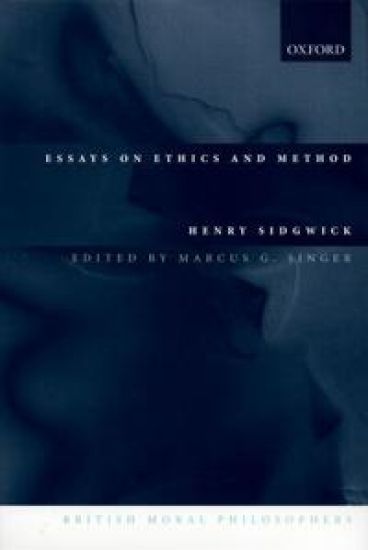
Essays on Ethics and Method is a selection of the shorter writings of the great nineteenth-century moral philosopher Henry Sidgwick. Sidgwick's monumental work The Methods of Ethics is a classic of philosophy; this new volume is a fascinating complement to it. These essays develop further Sidgwick's ethical ideas, respond to criticism of the Methods, and discuss rival theories. Other aspects of Sidgwick's thought are also illuminated, in particular his interests in method, verification, and proof. The essays show Sidgwick to be a forerunner of twentieth-century analytical philosophy: they illustrate his emphasis on common sense and ordinary language, and exemplify not only his care, clarity, and precision, but also the wit and humour that are not prominent in his longer works. Marcus Singer provides a substantial editorial introduction to Sidgwick and his intellectual context. The volume will be a rich resource for anyone interested in moral philosophy or the development of modern analytical philosophy.
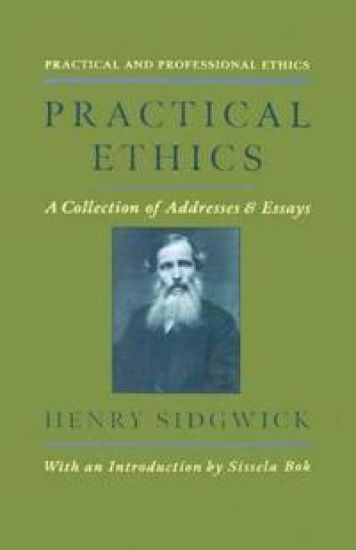
This book is a reissue of a long-unavailable work by the English philosopher and educator Henry Sidgwick (1838-1900). Published in 1898, it collects nine essays, in which Sidgwick discusses such issues as when public officials might be justified in lying or breaking promises, whether scientists may legitimately inflict suffering on animals for research purposes, along with a score of other problems in practical ethics. The noted ethicist Sissela Bok has contributed a Foreword to this reissue, arguing for the book's continuing relevance to contemporary debates.
Sketches out the history of Greek, of medieval, and of English reflections on the aims and laws of human conduct.
This Hackett edition, first published in 1981, is an unabridged and unaltered republication of the seventh (1907) edition as published by Macmillan and Company, Limited. From the forward by John Rawls: In the utilitarian tradition Henry Sidgwick (1838-1900) has an important place. His fundamental work, The Methods of Ethics (first edition 1874, seventh and last edition 1907, here reprinted), is the clearest and most accessible formulation of what we may call 'the classical utilitarian doctorine.' This classical doctrine holds that the ultimate moral end of social and individual action is the greatest net sum of the happiness of all sentient beings. Happinesss is specified (as positive or negative) by the net balance of pleasure over pain, or, as Sidgwick preferred to say, as the net balance of agreeable over disagreeable consciousness...