Kirjojen hintavertailu – 12 859 824 kirjaa ja 27 kauppaa

Kirjailija

Henry Veltmeyer

Kirjat ja teokset yhdessä paikassa: 28 kirjaa, julkaisuja vuosilta 1999–2025, suosituimpiin kuuluu Agrarian Change, Migration and Development. Vertaile teosten hintoja ja tarkista saatavuus suomalaisista kirjakaupoista.

28 kirjaa

Kirjojen julkaisuvuodet: 1999–2025.

Multinationals on Trial

Multinationals on Trial

James Petras; Henry Veltmeyer

Ashgate Publishing Limited
2007
sidottu
The role and economic power of corporations that dominate the world economy has generated considerable controversy. The most heated debate and the most critical questions surrounding the role of multinational corporations relate to foreign direct investment (FDI). This key volume offers an entirely fresh perspective of the role of multinationals and the development impact of FDI. Contrary to prevailing opinion, it examines whether imperialism is a much more useful concept for describing and explaining the dynamics of world development than globalization. FDI is a mechanism for empire-centred capital accumulation, a powerful lever for political control and for re-ordering the world economy. This is a much needed analysis of global capitalism and its impact around the world, resulting in an excellent resource for students, academics and activists.
On the Move

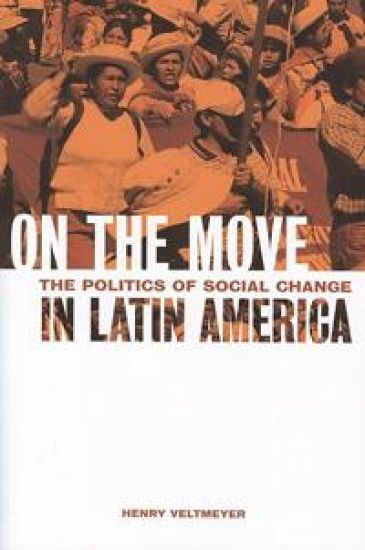
On the Move

Henry Veltmeyer

Broadview Press Ltd
2007
pokkari
Will social change in Latin America lead to a kinder, gentler form of globalization or a model that offers a radical rethinking of how we produce and distribute wealth? What are the effects on social movements and their ability to push for change when progressive governments are elected? Does democratic participation mean greater economic equality? On the Move addresses these questions by providing an up-to-date, continent-wide account of political and social change in Latin America. Globalization has, over the last two decades, structurally adjusted local communities to conform to a new world order. It is no surprise then that social discontent is widespread in those countries where large portions of the population have not shared in the gains of economic development. Nowhere is this more evident than in Latin America where social discontent has totally transformed the political landscape in recent years. Whether it is local communities writing their own budgets in Brazil, landless workers organizing in the fields of Bolivia or a new leftist government taking hold in Ecuador, change has been dramatic. The question now is whether this change will lead to a milder form of neo-liberal globalization, or whether these social movements will continue to push for a development alternative that aims not just for greater political participation but greater economic equality as well. Veltmeyer explores these forces of political change offering a critical analysis of the most recent research by political and economic sociologists, development economists, and political scientists.
Social Movements and State Power

Social Movements and State Power

James Petras; Henry Veltmeyer

Pluto Press
2005
pokkari
The 2003 electoral victory of Lucio Gutiérrez in Ecuador was met with the same sense of optimism that greeted the election of Ignacio 'Lula' da Silva in Brazil, and Hugo Chavez in Venezuela. Gutierrez's victory was viewed as a major advance for the country in its 500 year-long struggle for freedom and democracy. In Bolivia, Evo Morales similarly came within an electoral whisker of achieving state power in 2002, and in 2003 Nestor Kirchner became President of Argentina. Many journalists , academics and politicians speak of a "left-turn" in Latin America, characterizing these regimes as "center -left". They came to power on the promise of delivering a fundamental change of direction that would steer their countries away from neo-liberal economic policies, and towards greater social equity. Their success awakened major hopes on the Left for a new dawn in Latin American politics. This book challenges these assumptions. It critically examines their agreements with the IMF, their social and economic policies, and the economic ties of leading policy makers, as well as the beneficiaries and losers under these regimes. Latin America is unique in that it has experienced two decades of popular resistance to neo-liberal policies: each of the four countries examined here has a rich history of diverse indigenous and working class movements coming together to promote radical political change. The authors examine the political dynamics between the state and its agenda, and the strategy of mass mobilisation taken by the mass movements. They explore the intensifying conflicts between the movements and their former allies in the state.
Cardoso's Brazil

Cardoso's Brazil

James Petras; Henry Veltmeyer

Rowman Littlefield Publishers
2003
nidottu
Offering a systematic, critical analysis of the presidency of Fernando Cardoso, this ambitious case study assesses government policies within the framework of the 'new economic model' of globalization and structural adjustment. Petras and Veltmeyer argue that Cardoso paved the way for what amounted to the takeover of a large and important part of Brazil's economy by foreign investors. The authors discuss the neoliberal model of capitalist development, the privatization of key sectors and enterprises, the human cost of structural adjustment, and the search for a community-based form of local development. The crisis in agriculture and the dynamic responses of the country's rural landless workers precipitated the rise of Brazil's populist new president, Lula, whom the authors charge has started down the same path as his predecessor.
System In Crisis

System In Crisis

Henry Veltmeyer; James Petras

FERNWOOD PUBLISHING CO LTD
2003
nidottu
In the late 1960s the operating world capitalist system hit a snag, exposing cracks that went to its very foundations. At first, this crisis was viewed as part of a normal business cycle of capital accumulation in which markets become saturated. The reaction created a mass of unemployed workers, reduced purchasing power and consumption capacity which initiated a further downward cycle of disinvestment and recession. The efforts to revitalize the capitalist system included the restructuring of world production, new information-based technologies designed to revolutionize the structure of production, a new mode of capital accumulation and regulatory regime, and a program of policy reforms and structural adjustments. By discussing the very cracks that neo-liberalism tries to disguise, James Petras and Henry Veltmeyer explain how these reactions attempt to prop up a system that continues to fail the global community. System in Crisis also examines the nature of the class divisions and the political repercussions of the anti-globalization movement. This analysis provides readers with a more general perspective on the broader anti-globalization movement and the possibilities for unifying the diverse forces of resistance and opposition to neo-liberalism, capitalism and imperialism–and the prospects for an alternative, more human, socialist form of development.
The Dynamics of Social Change in Latin America

The Dynamics of Social Change in Latin America

Henry Veltmeyer; J. Petras

Palgrave Macmillan
2000
nidottu
This study examines fundamental theoretical and conceptual issues of social change in Latin America in the context of detailed empirical analysis. It challenges the major assumptions and propositions that underlie globalization theory, reworking and fine tuning the concepts of imperialism and social class as relevant to understanding the 'new world order'. The study centers on the structural features of Latin America and the state policies reconcentrating power in the capitalist class at the expense of labor. The study surveys the contradictory tendencies of concentrated wealth and power and the emergence of new socio-political movements and alternative development strategies to the dominant paradigm.
The Dynamics of Social Change in Latin America

The Dynamics of Social Change in Latin America

Henry Veltmeyer; J. Petras

Palgrave Macmillan
2000
sidottu
This study examines fundamental theoretical and conceptual issues of social change in Latin America in the context of detailed empirical analysis. It challenges the major assumptions and propositions that underlie globalization theory, reworking and fine tuning the concepts of imperialism and social class as relevant to understanding the 'new world order'. The study centers on the structural features of Latin America and the state policies reconcentrating power in the capitalist class at the expense of labor. The study surveys the contradictory tendencies of concentrated wealth and power and the emergence of new socio-political movements and alternative development strategies to the dominant paradigm.
The Dynamics of Social Change in Latin America

The Dynamics of Social Change in Latin America

Henry Veltmeyer; J. Petras

Palgrave Macmillan
1999
sidottu
This study examines fundamental theoretical and conceptual issues of social change in Latin America in the context of detailed empirical analysis. It challenges the major assumptions and propositions that underlie globalization theory, reworking and fine tuning the concepts of imperialism and social class as relevant to understanding the 'new world order'. The study centers on the structural features of Latin America and the state policies reconcentrating power in the capitalist class at the expense of labor. The study surveys the contradictory tendencies of concentrated wealth and power and the emergence of new socio-political movements and alternative development strategies to the dominant paradigm.