Kirjojen hintavertailu – 12 859 828 kirjaa ja 27 kauppaa

Kirjailija

Henry W. Shoemaker

Kirjat ja teokset yhdessä paikassa: 35 kirjaa, julkaisuja vuosilta 1913–2025, suosituimpiin kuuluu Penn's Cave. Vertaile teosten hintoja ja tarkista saatavuus suomalaisista kirjakaupoista.

Nimi esiintyy myös muodoissa: Henry W Shoemaker

35 kirjaa

Kirjojen julkaisuvuodet: 1913–2025.

Extinct Pennsylvania Animals (Volume 2): Wolf Days in Pennsylvania
Extinct Pennsylvania Animals, Vol II: Wolf Days In Pennsylvania By Henry W. Shoemaker INDEX I. Preface II. The Last 'Wolf- Who Gets the Credit III. The Last Pack IV. Three Kinds of Wolves V. Description and Habits VI. Former Prevalence VII. The Biggest Wolf VII. A White Wolf in Sugar Valley IX. Cause of Extinction X. Wolf Hunting in Pennsylvania XI Possible Re-Introduction XII. Superstitions XIII. Bravest of the Brave XIV. Catching Wolves With Fish Hooks XV. Historical Data I. PREFACE That a new book treating on the much-discussed wolf can be written at all the animal must be described from an entirely different point of view, else it would be superfluous. Happily the author feels that there is a side, an important one, to the wolfish character, which has been overlooked or perverted. It is a side decidedly favorable to the animal, to its inherent right to live, to be protected by mankind. The wolf of Pennsylvania accomplished much more good than harm. At the time when the Indians ranged the Continent and Nature's balance was perfect, the wolf played an important role. With the panther it preyed upon the weak and sickly wild animals and birds, preventing the perpetuation of imperfect types and the spread of pestilences. It kept up a high standard of excellence among the lesser creatures, was the great preserver of type and perfection. Wolves having no animals to prey on them killed the sick and weakly specimens of their own race, thereby keeping up the standard of strength and virility. Charles John Andersson, in his remarkable book. "The Lion and the Elephant," in speaking of the lions of Central Africa said: "Destroy them and the hoofed animals would perish in masses of inanition." In addition wolves devoured bugs, insects, grubs and worms of an injurious nature. When the white man appeared on the scene and began killing all living things indiscriminately, the food supply of the wolves was affected. The wolfish diet required meat, and this at times became unobtainable. Crazed with hunger the wolves attacked calves, pigs and sheep, which slow of motion and easily captured, occupied the same relative position to them as had the formerly abundant weak and imperfect deer, elk, rabbits and hares. Just as some otherwise harmless men commit murder when crazed by lack of food, the wolves played havoc in farm yards that otherwise they would have left unmolested. But most of the sheep killed by "wolves" were slain by half-wild, vicious dogs. There are fewer sheep in Pennsylvania today than when there were wolves. What is needed is an efficient dog law. As the result, bounties were put on the... ------------------------------------------------------------------------------------------------------------------------------------------ Windham Press is committed to bringing the lost cultural heritage of ages past into the 21st century through high-quality reproductions of original, classic printed works at affordable prices. This book has been carefully crafted to utilize the original images of antique books rather than error-prone OCR text. This also preserves the work of the original typesetters of these classics, unknown craftsmen who laid out the text, often by hand, of each and every page you will read. Their subtle art involving judgment and interaction with the text is in many ways superior and more human than the mechanical methods utilized today, and gave each book a unique, hand-crafted feel in its text that connected the reader organically to the art of bindery and book-making. We think these benefits are worth the occasional imperfection resulting from the age of these books at the time of scanning, and their vintage feel provides a connection to the past that goes beyond the mere words of the text.

Eldorado Found

Eldorado Found

Henry W. Shoemaker

Pennsylvania State University Press
2013
pokkari
In this 1917 guidebook from the pre-automobile era, Henry Shoemaker breaks from his typical literary-folklore subjects to chronicle the natural and social landscapes of central Pennsylvania. The reader is introduced to the wildlife and the geographic features of Clinton, Centre, Mifflin, Union, Lycoming, Cameron, and Snyder Counties through Shoemaker’s detailed narration and anecdotal notes. A staunch opponent of automobile tourism, Shoemaker urges his readers to avoid this “deadly, soul destroying machine . . . fatal to the lover of scenery or the naturalist.” As most roads of the time were not suitable for travel by automobile, this volume gives the modern reader a glimpse into the touring norms of the early twentieth century—on foot, by carriage, or on horseback. In the text, Shoemaker points to supposed locations for numerous legends found in his collected works. Heavily illustrated with scenic turn-of-the-century photographs, Eldorado Found brings central Pennsylvania’s history to life.
Black Forest Souvenirs

Black Forest Souvenirs

Henry W. Shoemaker

Pennsylvania State University Press
2012
pokkari
Black Forest Souvenirs was inspired by Henry Shoemaker’s early experience in the Black Forest of Germany and the mystical draw of its vast expanse of hemlocks, spruces, and pines interspersed with lumbermen and roaming wildlife. On trips to Clinton, Potter, McKean, and Lycoming Counties in Pennsylvania between 1899 and 1902, Shoemaker discovered forests still intact, evoking the romantic ideal of the German Schwarzwald. However, upon returning to the mountains five years later, he found these forests desolated by the logging industry, practically a ruin—a vision far from the romanticized wilderness he had encountered early in life. This destruction inspired Shoemaker to attempt to preserve the region’s folklore, recording stories and tales told by elderly residents of the area. Traversing the line between fact and fiction, Black Forest Souvenirs reveals a pristine landscape preserved in the minds of its people. This collection of legends from the northern regions of the state was originally printed by the Bright-Faust Printing Company in Reading, Pennsylvania, in 1914 and includes photographs by William T. Clarke.
Juniata Memories

Juniata Memories

Henry W. Shoemaker

Pennsylvania State University Press
2011
pokkari
Published in 1916, Juniata Memories was Henry W. Shoemaker’s eighth volume of Pennsylvania folklore. Written in the author’s typical literary style, this volume includes twenty-six legends set in Central Pennsylvania and the Juniata Valley. These stories, “secured from old people, hermits, farmers, lumbermen, teamsters, hostlers, hunters, trappers, old soldiers, and their ladies,” prominently feature the Stone, Kishacoquillas, and Penn’s Valleys and the many towns that lie within and around them, such as Huntingdon, Lewistown, and Selinsgrove. The stories share a common theme with those in many of Shoemaker’s other volumes, portraying Pennsylvania’s pioneers as having a decidedly spiritual connection with nature. Juniata Memories includes some of Shoemaker’s best-known legends, such as “Nita-Nee: A Tradition of a Juniata Maiden” (the story of Mount Nittany’s formation in Centre County) and “The Standing Stone: A Legend of the Ancient Oneidas” (set in Huntingdon County). These popular tales stand alongside Shoemaker’s telling of famous area love stories, ghost lore, supposed Indian legends, hunting lore, and even a story of buried treasure along the Susquehanna River. The volume is illustrated with scenic turn-of-the-century photographs taken by the Pennsylvania Railroad’s official photographer.
Allegheny Episodes: Legends and Traditions, Old and New, Gathered Among the Pennsylvania Mountains
Published in 1924, More Allegheny Episodes is the last of twelve volumes in Henry Shoemaker’s Pennsylvania Folklore Series, published during the first three decades of the twentieth century. This volume is a companion and sequel to the author’s 1922 Allegheny Episodes, containing more stories compiled from across Central and Western Pennsylvania. This collection includes twenty-eight tales recounted in Shoemaker’s typical literary style.
Pennsylvania Deer and Their Horns

Pennsylvania Deer and Their Horns

Henry W. Shoemaker

Metalmark Books
2007
pokkari
Pennsylvania Deer and Their Horns, published in 1915, stands alongside a number of Shoemaker’s volumes, such as Wolf Days in Pennsylvania and Pennsylvania Lion or Panther, dedicated to telling the tales of vanishing or extinct Pennsylvania wildlife. Pennsylvania Deer and Their Horns places these tales within the greater context of the Pennsylvania sportsmen’s and hunting culture. While lamenting the extinction of the old-stock Pennsylvania deer species, Shoemaker celebrates the hunter and the sport and writes in a hopeful spirit that the sport will continue without causing extinction. Shoemaker writes that the book is meant to “establish a standard of comparison of old and new deer and their horns . . . by presenting descriptions and measurements of the best known heads of moose, elk and deer killed in the commonwealth, an added zest will be given to efforts of collectors and hunters.” In the chapters that follow, the author describes and compares fossil and extinct Pennsylvania deer, big deer, little deer, the gray moose or elk, and black moose. Descriptions of famous hunters, hunting methods, and traditions appear alongside hunting lore and tales of legendary stags and their famous pursuers. The volume concludes with three chapters on deer, elk, and moose horns, with descriptions and measurements of antlers, along with stories of unusual and “freak” heads and sets of antlers. The text is heavily illustrated with photographs of famous hunters and their game, alongside many photographs of the deer and horns themselves.
Allegheny Episodes

Allegheny Episodes

Henry W. Shoemaker

Metalmark Books
2007
pokkari
Allegheny Episodes is the eleventh of twelve volumes in Henry Shoemaker’s Pennsylvania Folklore Series. Published in 1922—years before Shoemaker’s time as Pennsylvania’s first state folklorist—Allegheny Episodes includes twenty-five stories written in his typical literary style. Some tales recall famous hunters and loggers who made their way through Pennsylvania’s rough country; others center on rivalry and lost love, ghosts and other supernatural phenomena, and the wilderness itself. Shoemaker saw Pennsylvania’s folklore as a melding of Native American and European practices. Though his methods have been contested over the years, Shoemaker’s work as a folklorist stemmed from his deep affinity for Pennsylvania’s fading wilderness and his desire to capture the heart of its people through the spoken and written word.
Penn's Grandest Cavern

Penn's Grandest Cavern

Henry W. Shoemaker

Pennsylvania State University Press
2007
pokkari
Published in 1916, this illustrated edition of Penn’s Grandest Cavern begins with several legends of Penn’s Cave and the surrounding area, followed by a description and history, all compiled and written by Henry W. Shoemaker. His description of the caverns reads like a travel guide, with information about not only the cave but also its formations, such as “The Lobster’s Claw,” “Statue of Liberty,” and “Garden of the Gods.” Shoemaker provided his readership with advice on the best ways to travel to the cave, including appropriate trains to take, and a review of the accommodations there. A history traces the ownership of the property and details its exploration and development into a tourist site. Shoemaker also noted how Penn’s Cave compared to other local caves and their development. This volume presents seven of Shoemaker’s stories relating to Penn’s Cave and Penn’s Valley, including two of his most famous legends: “The Legend of Penn’s Cave” and “Nita-nee: The Indian Maiden for Whom Nittany Mountain Was Named.”
Pennsylvania Lion or Panther & Felis Catus in Pennsylvania?
This Metalmark volume combines two of Henry W. Shoemaker’s pamphlets, both published by Shoemaker’s Times Tribune Co., which also published his newspaper, the Altoona Tribune. Pennsylvania Lion or Panther, published in 1914, provides a narrative look into the history and romance of Pennsylvania’s mountain lion. Hunting lore and legends mix with local and natural history and Shoemaker’s musings on the disappearance of this once prevalent animal. The pages are dedicated to J. T. Rothrock, whose description of the mountain lion’s haunting cry graces the pages of this text. The second pamphlet, Felis Catus in Pennsylvania?, gathers reports of the 1922 capture of a wildcat in Bucks County, Pennsylvania, which many speculated was a European wildcat.
Pennsylvania Mountain Stories

Pennsylvania Mountain Stories

Henry W. Shoemaker

Metalmark Books
2006
pokkari
Henry W. Shoemaker (1880–1958) was known for his deep love for the wilderness and native cultures of Pennsylvania. The state’s first official folklorist, he wrote more than twenty books detailing Pennsylvania’s modern mythology. Pennsylvania Mountain Stories is perhaps Shoemaker’s definitive collection of folktales. The idea for this book came to Shoemaker during his college years, when he spent his vacations traveling through the mountains of Pennsylvania—on foot, on horseback, or by buggy. He claimed that he heard the stories, “mostly after supper,” from people he met at lumber camps, farmhouses, and backwoods taverns. “As so many of the tales are devoted to subjects of a more or less supernatural order they cannot very well be true,” he writes, but then hastens to add, “neither are they of the author’s invention.” In this ethereal space between fact and fiction, Pennsylvania Mountain Stories reveals the values, the passions, the obsessions of the people who told them. This volume, published under the Metalmark Books imprint, contains a facsimile reproduction of the 1911 edition, originally published by the Reading Times Publishing Company.
Susquehanna Legends

Susquehanna Legends

Henry W Shoemaker

Pantianos Classics
1913
pokkari
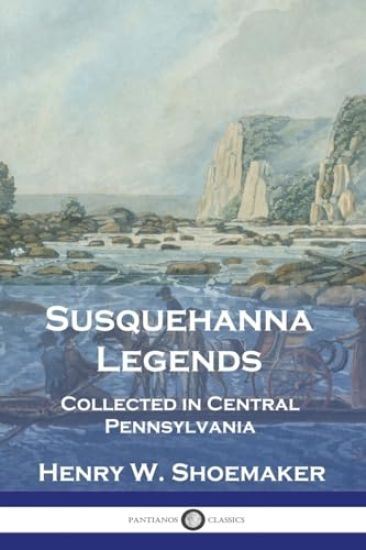
The rugged hillscapes of Pennsylvania have for centuries been fertile ground for legends and folk tales; this collection features many of the finest stories of the region. Some of the yarns date back to a time before white European settlers arrived in the area; repeated and shared over many generations, their narratives often employ nature and natural phenomena as both setting and plot device; mountain ranges, ponds and lakes, dense woodlands. The appearance of ghosts or spirits is melded with the reality of life; living in the lap of nature was no easy business, with Native Americans and settlers alike fending with the weather and wilderness dangers. The author casts himself as a mere compiler of various legends that have circulated in Pennsylvania for countless years. Pursuing accuracy and honesty rather than literary convention, the stories are transcribed as closely as possible to versions passed down in the oral tradition. Writing in the early 20th century, Henry Shoemaker's personal view is that the tales defy convention; many lack the traditional happy conclusions and end on a gloomy or spooky note. Nevertheless, their value - both as historic recollection of a Pennsylvania long-departed, and as folk literature - stands undoubted.