Kirjojen hintavertailu – 12 859 819 kirjaa ja 27 kauppaa
Kirjailija
Henryk Sienkiewicz
Kirjat ja teokset yhdessä paikassa: 433 kirjaa, julkaisuja vuosilta 1997–2026, suosituimpiin kuuluu Hania. Vertaile teosten hintoja ja tarkista saatavuus suomalaisista kirjakaupoista.
Premio Nobel de Literatura 1905. Quo Vadis? Uno de los grandes cl sicos de la literatura moderna, comienza en el a o 63 d. C., en tiempos del C sar Ner n, de la dinast a de los Julio-Claudios. El joven Vinicio visita a su t o Petronio, uno de los favoritos de Ner n, para que le ayude a conseguir a Ligia, una reh n del ej rcito romano que vive con una familia que la considera su hija adoptiva. Sin embargo, Vinicio no sabe que la bella Ligia de la que se ha enamorado es cristiana, ni que s lo podr casarse con ella si se convierte al cristianismo. Henryk Sienkiewicz avista mucho m s all de la compleja historia de amor entre Marco y Ligia. Con una habilidad magistral, el Nobel polaco retrata el contraste entre la aristocracia romana, con sus excesos y frivolidades, y los primeros cristianos, perseguidos y martirizados por un Ner n desenfrenado que lleg a acusarles del incendio de Roma. Muchos cr ticos y lectores han querido ver en Quo Vadis? una met fora pol tica de la Polonia en que vivi su autor, sojuzgada por el imperialismo de Rusia y su Zar (doble hist rico del C sar Ner n), equiparando as a los polacos de entonces, que se hab an levantado contra la ocupaci n rusa, con los primeros cristianos perseguidos por Roma. Publicada en 1896, Quo vadis? se convirti en poco tiempo en un cl sico de la literatura y se han realizado varias adaptaciones cinematogr ficas de esta novela, entre las que sobresale la que en 1951 protagonizaron Robert Taylor, Deborah Kerr y Peter Ustinov.
The Deluge was first published in 1886 and it is the second volume of a three-volume series known to Poles as "The Trilogy," having been preceded by With Fire and Sword (Ogniem i mieczem, 1884) and followed by Fire in the Steppe (Pan Wolodyjowski, 1888). The novel tells a story of a fictional Polish-Lithuanian Commonwealth soldier and noble Andrzej Kmicic and shows a panorama of the Commonwealth during its historical period of the Deluge, which was a part of the Northern Wars. The novel itself is in three volumes, of which this is the second.
The Deluge was first published in 1886 and it is the second volume of a three-volume series known to Poles as "The Trilogy," having been preceded by With Fire and Sword (Ogniem i mieczem, 1884) and followed by Fire in the Steppe (Pan Wolodyjowski, 1888). The novel tells a story of a fictional Polish-Lithuanian Commonwealth soldier and noble Andrzej Kmicic and shows a panorama of the Commonwealth during its historical period of the Deluge, which was a part of the Northern Wars. The novel itself is in three volumes, of which this is the third.
The Deluge was first published in 1886 and it is the second volume of a three-volume series known to Poles as "The Trilogy," having been preceded by With Fire and Sword (Ogniem i mieczem, 1884) and followed by Fire in the Steppe (Pan Wolodyjowski, 1888). The novel tells a story of a fictional Polish-Lithuanian Commonwealth soldier and noble Andrzej Kmicic and shows a panorama of the Commonwealth during its historical period of the Deluge, which was a part of the Northern Wars. The novel itself is in three volumes, of which this is the first.
The book includes more than 100 illustrations. The Story of a Lighthouse Keeper (translated in 2016 by Sergiej Nowikow). Henryk Sienkiewicz is the 1905 laureate of the Nobel Prize in Literature. It is an overwhelming story of a retired elderly soldier who takes the job of a lighthouse keeper in the Caribbean Sea. A striking surprise is waiting for him on the shore of Panama. This is the translation by S. Nowikow, which is easy to read and understand. It is one of the best translations of the work ever published. In Desert and Wilderness (translated by Max A. Drezmal). Another work by Henryk Sienkiewicz. This is a novel by Henryk Sienkiewicz, his only work for children and teenagers. The book describes the wanderings of two children in Africa. It is a fascinating narrative full of adventure. This is one of the most famous books by the author. The translation by Max Drezmal conveys the original meaning in brilliant detail. The layout of the book is really easy to use and navigate. It also includes awesome illustrations that go right along with the story.
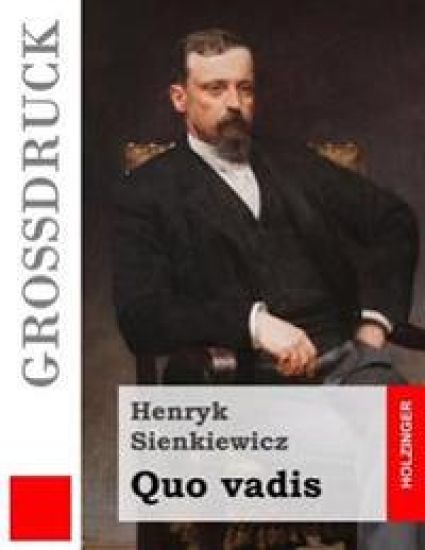
Henryk Sienkiewicz: Quo vadis Lesefreundlicher Gro druck in 16-pt-Schrift Edition Holzinger. Gro format, 216 x 279 mm Berliner Ausgabe, 2016 Durchgesehener Neusatz bearbeitet und eingerichtet von Michael Holzinger Erstdruck in: Gazeta Polska und Czas, Krakau 26.3.1895-29.2.1896. Hier nach der bers. v. Paul Seliger. Textgrundlage sind die Ausgaben: Sienkiewicz, Henryk: Quo vadis? bers. v. Paul Seliger, Zwei B nde, Leipzig: Philipp Reclam jun., o. J.] Herausgeber der Reihe: Michael Holzinger Reihengestaltung: Viktor Harvion Umschlaggestaltung unter Verwendung des Bildes: Kazimierz Pochwalski, Henryk Sienkiewicz, 1890 Gesetzt aus der Minion Pro, 16 pt.
PETRONIUS woke only about midday, and as usual greatly wearied. The evening before he had been at one of Nero's feasts, which was prolonged till late at night. For some time his health had been failing. He said himself that he woke up benumbed, as it were, and without power of collecting his thoughts. But the morning bath and careful kneading of the body by trained slaves hastened gradually the course of his slothful blood, roused him, quickened him, restored his strength, so that he issued from the el othesium, that is, the last division of the bath, as if he had risen from the dead, with eyes gleaming from wit and gladness, rejuvenated, filled with life, exquisite, so unapproachable that Otho himself could not compare with him, and was really that which he had been called, -arbiter elegantiarum.