Kirjojen hintavertailu – 12 859 819 kirjaa ja 27 kauppaa

Kirjailija

Herb Boyd

Kirjat ja teokset yhdessä paikassa: 8 kirjaa, julkaisuja vuosilta 2000–2020, suosituimpiin kuuluu Simeon's Story. Vertaile teosten hintoja ja tarkista saatavuus suomalaisista kirjakaupoista.

8 kirjaa

Kirjojen julkaisuvuodet: 2000–2020.

Harold Neal and Detroit African American Artists

Harold Neal and Detroit African American Artists

Herb Boyd; Julia R. Myers

Eastern Michigan University Press
2020
nidottu
Over the last twenty years, numerous scholarly publications have treated the work of African American artists of the 1950s, 1960s and 1970s. At that time, Detroit was the fifth largest city in the country with a large African American population and a vibrant Black arts scene. Nevertheless, the aforementioned publications fail to discuss Detroit African American artists. This book, which accompanies an exhibition of the same title, focuses on the life and work of Memphis born, Detroiter Harold Neal, who created some of the most forceful artistic statements of the Civil Rights and Black Power Movements. It also discusses other Detroit African American artists, including his predecessors Hughie Lee Smith and Oliver LaGrone, who greatly influenced his career; his contemporaries Glanton Dowdell, Charles McGee, Jon Onye Lockard, Henri Umbaji King, LeRoy Foster and Shirley Woodson, and his successors Aaron Ibn Pori Pitts and Allie McGhee, who were greatly impacted by his work. Additionally the book addresses the rift in the Detroit African American art community in the wake of the Black Power/Black Arts Movements. Neal, like other artists of the Black Arts Movement, felt that art should speak directly to the experience of African Americans using African American figurative subjects, while others artists, like Charles McGee, sought to compete in the white art world, working in the abstract, non-objective styles then dominant in New York galleries. The result of some ten years of research, this book presents a view of post-World War II African American art history essentially unknown to other scholars. It expands our understanding of Detroit African American art first set forth in the author's 2009 publication Energy: Charles McGee at Eighty Five. For this later project, Dr. Myers conducted extensive interviews with artists, scholars, friends and family members of the above mentioned artists. Most of their works remains in private collections, and Dr. Myers surveyed many of these, some in states outside of Michigan, in order to select the highest quality works for the exhibition. The book is based on hundreds of contemporary articles, published in Michigan Chronicle, Detroit's African American newspaper and in other local newspapers, as well as on other hard-to-locate archival materials. Dr. Myers assesses these Detroit artists in relation to their peers in other major metropolises such as New York, Chicago, Los Angeles/San Francisco, thus establishing that Detroit artists were significant contributors to African American art in the 1950s, 1960s and 1970s.
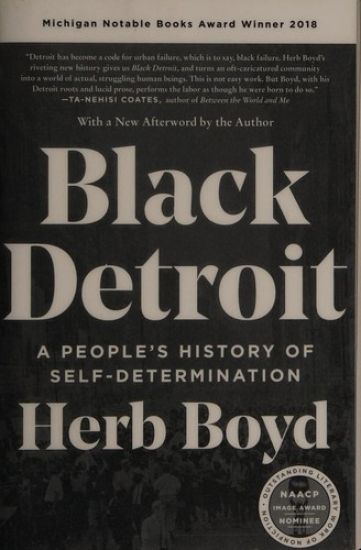
Black Detroit

Black Detroit

Herb Boyd

HarperCollins
2018
nidottu
Award-winning journalist Herb Boyd chronicles the fascinating history of Detroit through the lens of the African American experience. Offering an expansive discussion of this iconic city, Black Detroit ranges in subject from Antoine de Lamothe Cadillac's initial vision of what would become a thriving metropolis to the city's glory days as the center of American commerce; from the waves of fugitives traveling on the Underground Railroad to the advent of the People Mover circling downtown; from the creation of the unparalleled sound of Motown to the emergence of Wayne State University as a hotbed of political thought. Boyd combines deep passion and a stunning eye for detail to seamlessly blend personal experience, exhaustive research, and eyewitness accounts collected from some of the city's wisest griots. Black Detroit looks at the influence African Americans have had on various aspects of the city's history, culture, and politics, including the auto industry-both as the cornerstone of the union movement and the majority population on the factory floor-and it reframes the riots sparked by police brutality and housing discrimination from the perspective of the people most impacted by the city's neglectful policies. In the process, the book presents a roll call of the illustrious men and women who have defined and shaped the Motor City, including Malcolm X, Aretha Franklin, Berry Gordy, Fannie Richards, abolitionist William Lambert, and Coleman Young, Detroit's first black mayor. This important book documents how a committed work ethic, a well-developed spirit of resistance, and a deep sense of heritage continue to run strong through Detroit's black community-providing the true engine propelling the city's reemergence as a viable urban center for the twenty-first century.
Black Panthers  for Beginners

Black Panthers for Beginners

Herb Boyd

For Beginners
2015
nidottu
A crowd of onlookers gawked from the sidewalk as four young black men dressed in black leather jackets and berets leaped from a Volkswagen, each of them wielding shotguns with bandoliers strapped across their bodies. The young men surrounded two white police officers who had accosted a black man and had him spread-eagled against a building. The young men did not say a word as the police officers watched them nervously, their eyes fixed on the shotguns. One of the young men held a large law book in his hand... This was the Black Panther Party in ideal action. The real story--the whole story--was both more and less heroic. So begins Black Panthers For Beginners. The late 1960s, when the Panthers captured the imagination of the nation's youth, was a time of regulation. While their furious passage was marked by death, destruction and government sabotage, the Panthers left an instructive legacy for anyone who dares to challenge the system. Herb Boyd has done exhaustive research, examined the claims of all parties involved, and boiled the story down to "the truth." We believe this is the most truthful book on the market, but each Panther has his or her own story to tell. We suggest that you check out the stories of all the Black Panthers.
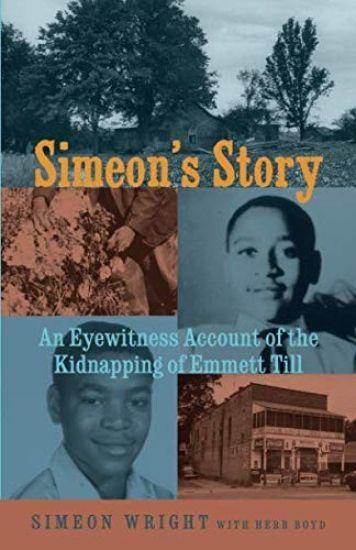
Simeon's Story

Simeon's Story

Simeon Wright; Herb Boyd

Zephyr Press
2011
pokkari
Skipping Stones Multicultural & International Awareness Books Honor Award No modern tragedy has had a greater impact on race relations in America than the kidnapping and murder of Emmett Till. A 14-year-old black boy from Chicago visiting relatives in Mississippi in 1955, Till was taken from his uncle’s home by two white men; several days later, his body was found in the Tallahatchie River. This grotesque crime became the catalyst for the civil rights movement. At age 12, author Simeon Wrightsaw and heard his cousin Emmett whistle at a white woman at a grocery store; he was sleeping in the same bed with him when Emmett was taken; and he was at the sensational trial. This is his gripping coming-of-age memoir.
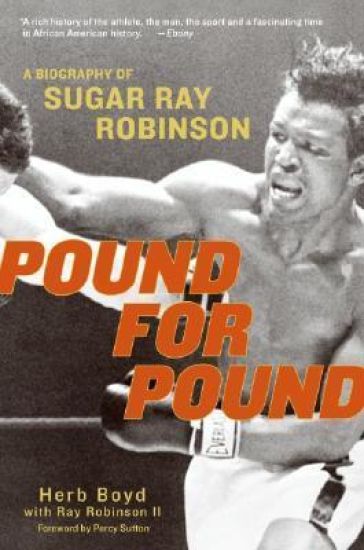
Pound For Pound

Pound For Pound

Herb Boyd; Ray Robinson

Amistad Press
2006
nidottu
Hailed by critics as a long-overdue portrait of Sugar Ray Robinson, a man as elusive outside the ring as he was magisterial in it, Pound by Pound is a lively and nuanced profile of an athlete who is arguably the best boxer the scene has ever seen. But the same discipline that Robinson brought to the sport eluded him at home, leading him to emotionally and physically abuse his family. Exposing Robinson's flaws as well as putting his career in the context of his life, this book tells for the first time the full story of a truly complex man.
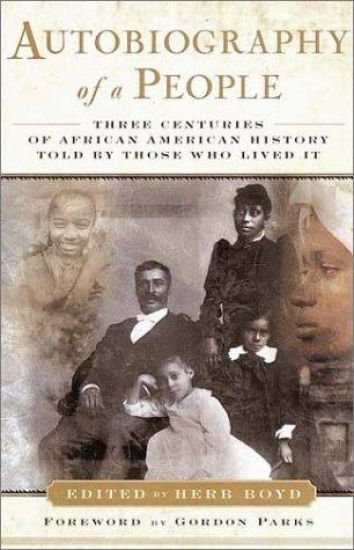
Autobiography of a People: Three Centuries of African American History Told by Those Who Lived It
Autobiography of a People is an insightfully assembled anthology of eyewitness accounts that traces the history of the African American experience. From the Middle Passage to the Million Man March, editor Herb Boyd has culled a diverse range of voices, both famous and ordinary, to creat a unique and compelling historical portrait: Benjamin Banneker on Thomas JeffersonOld Elizabeth on spreading the Word Frederick Douglass on life in the North W. E. B. Du Bois on the Talented Tenth Matthew Henson on reaching the North Pole Harriot Jacobs on running awayJames Cameron on escaping a mob lynichingAlvin Ailey on the world of danceLangston Hughes on the Harlem Renaissance Curtis Morriw on the Korean WarMax ROach on "jazz" as a four-letter wordLL Cool J on rapMary Church Terrell on the Chicago World's FairRev. Bernice King on the future of Black America And many others.