Kirjojen hintavertailu – 12 903 735 kirjaa ja 27 kauppaa

Kirjailija

Herman J. Viola

Kirjat ja teokset yhdessä paikassa: 5 kirjaa, julkaisuja vuosilta 2000–2022, suosituimpiin kuuluu It Is a Good Day to Die. Vertaile teosten hintoja ja tarkista saatavuus suomalaisista kirjakaupoista.

5 kirjaa

Kirjojen julkaisuvuodet: 2000–2022.

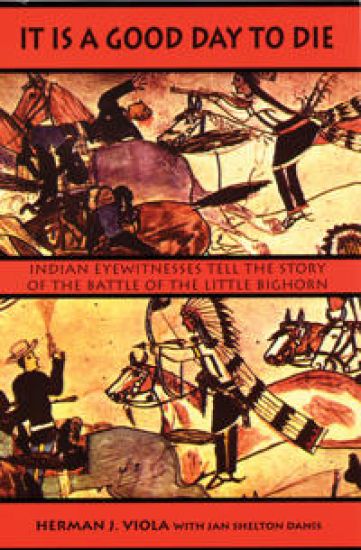
It Is a Good Day to Die

It Is a Good Day to Die

Herman J. Viola; Jan Shelton Danis

Bison Books
2001
pokkari
"I am an old man, and soon my spirit must leave this earth to join the spirit of my fathers. Therefore, I shall speak only the truth in telling what I know of the fight on the Little Bighorn River where General Custer was killed. Curly, who was with us, will tell you that I do not lie." So spoke White Man Runs Him, a Crow Indian who with five other Crow warriors had served as a scout for Custer's Seventh Cavalry on June 25, 1876, the day of the battle known to generations of white Americans as "Custer's Last Stand." They survived the battle, but Custer and more than 250 troopers did not. Thus their accounts and those of the Lakotas and Cheyennes who triumphed at Little Bighorn (or Greasy Grass, as it was known to the Lakotas) offer the only firsthand picture of what happened that fateful day. These stories-from leaders as renowned as Black Elk and Sitting Bull, warriors such as Wooden Leg, a Cheyenne woman, and Arikara and Crow scouts-at last bring one of the most unforgettable showdowns in American history to vivid, complex, multifaceted life.
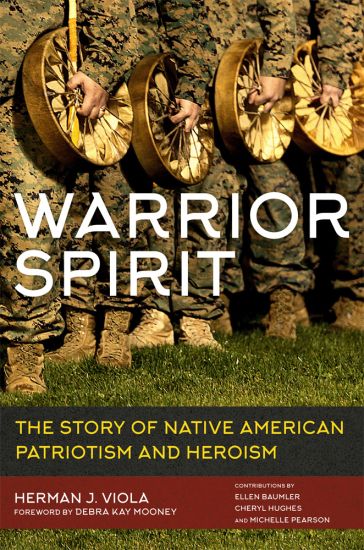
Warrior Spirit

Warrior Spirit

Herman J. Viola; Debra Kay Mooney

UNIVERSITY OF OKLAHOMA PRESS
2022
nidottu
For decades, American schoolchildren have learned only a smattering of facts about Native American peoples, especially when it comes to service in the U. S. military. They might know that Navajos served as Code Talkers during World War II, but more often they learn that Native Americans were enemies of the United States, not allies or patriots. In Warrior Spirit, author Herman J. Viola sets the record straight by highlighting the military service—and major sacrifices—of Native American soldiers and veterans in the U. S. armed services. American Indians have fought in uniform in each of our nation’s wars. Since 1775, despite a legacy of broken treaties, cultural suppression, and racial discrimination, indigenous Americans have continued to serve in numbers that far exceed their percentage of the general U. S. population. Warrior Spirit introduces readers to unsung heroes, from the first Native guides and soldiers during the Revolutionary War to those servicemen and -women who ventured to Vietnam, Iraq, and Afghanistan. This outstanding record of service begs a question: Why do American Indians willingly serve a country that has treated them so poorly? Native veterans invariably answer that they are a warrior people who have a sacred obligation to defend their homeland and their families. Written to be accessible to young adult readers, Warrior Spirit is a valuable resource for any reader interested in Native American military history.
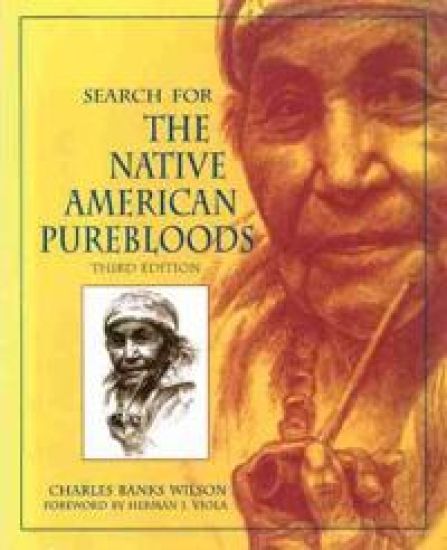
Search for the Native American Purebloods

Search for the Native American Purebloods

Charles Banks Wilson; Herman J. Viola

University of Oklahoma Press
2011
nidottu
Over several decades, renowned Oklahoma artist Charles Banks Wilson sought out ""purebloods"" (that is, Indians of a single tribal heritage) of each of Oklahoma's tribes to create a gallery of American Indian portraits. Search for the Native American Purebloods captures the state's visual heritage in a series of seventy-seven remarkable pencil drawings, each accompanied by a narrative describing Wilson's visits with the subject. The first edition, Search for the Purebloods, served as a catalogue for an exhibition of the artist's work at the United States Capitol. This third edition contains thirteen additional drawings and an afterword by Wilson. Out of print since 2005, the book is once again available with the generous assistance of the College of Arts and Sciences at the University of Oklahoma.
Dreamer-Prophets of the Columbia Plateau

Dreamer-Prophets of the Columbia Plateau

Robert H. Ruby; John A. Brown; Herman J. Viola

University of Oklahoma Press
2002
nidottu
Seekers after wisdom have always been drawn to American Indian ritual and symbol. This history of two nineteenth-century Dreamer-Prophets, Smohalla and Skolaskin, will interest those who seek a better understanding of the traditional Native American commitment to Mother Earth, visionary experiences drawn from ceremony, and the promise of revitalization implicit in the Ghost Dance. To white observers, the Dreamers appeared to imitate Christianity by celebrating the sabbath and preaching a covenant with God, nonviolence, and life after death. But the Prophets also advocated adherence to traditional dress and subsistence patterns and to the spellbinding Washat dance. By engaging in this dance and by observing traditional life-ways, the Prophets claimed, the living Indians might bring their dead back to life and drive the whites from the earth. They themselves brought heaven to earth, they said, by ""dying, going there, and returning,"" in trances induced by the Washat drums. The Prophets' sacred longhouses became rallying points for resistance to the United States government. As many as two thousand Indians along the Columbia River, from various tribes, followed the Dreamer religion. Although the Dreamers always opposed war, the active phase of the movement was brought to a close in 1889 when the United States Army incarcerated the younger Prophet Skolaskin at Alcatraz. Smohalla died of old age in 1894. Modern Dreamers of the Columbia plateau still celebrate the Feast of the New Foods in springtime as did their spiritual ancestors. This book contains rare modern photographs of their Washat dances. Readers of Indian history and religion will be fascinated by the descriptions of the Dreamer-Prophets' unique personalities and their adjustments to physical handicaps. Neglected by scholars, their role in the important pan-Indian revitalization movement has awaited the detailed treatment given here by Robert H. Ruby and John A. Brown.
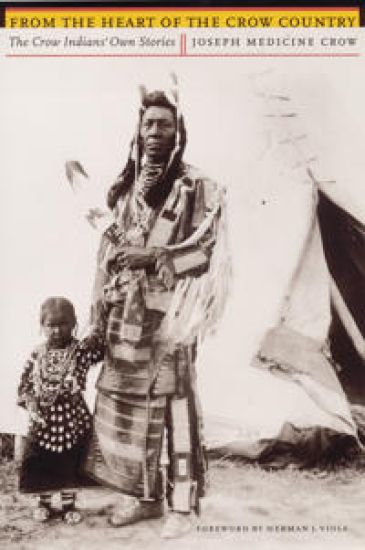
From the Heart of the Crow Country

From the Heart of the Crow Country

Joseph Medicine Crow; Herman J. Viola

Bison Books
2000
pokkari
The world of the Crow Indians comes to life in this extraordinary collection of stories from respected elder and famed storyteller Joseph Medicine Crow. Raised by traditional grandparents, who remembered life before the reservation days, Medicine Crow as a child would listen to stories that his grandfather and other elders told during sweat baths. He also learned about the Indian wars of earlier years from White Man Runs Him, one of Custer's Crow scouts. Medicine Crow became a passionate collector of stories and information about Crow life and history. This volume is a fascinating and informative collection of legends, humorous tales, history, and detailed accounts of life and culture, all told from Crow points of view.