Kirjojen hintavertailu – 12 859 818 kirjaa ja 27 kauppaa

Kirjailija

Herman Melville

Kirjat ja teokset yhdessä paikassa: 1 182 kirjaa, julkaisuja vuosilta 1851–2026, suosituimpiin kuuluu Pierre. Vertaile teosten hintoja ja tarkista saatavuus suomalaisista kirjakaupoista.

1 182 kirjaa

Kirjojen julkaisuvuodet: 1851–2026.

John Marr and Other Poems

John Marr and Other Poems

Herman Melville

ALPHA EDITION
2022
pokkari
This book has been considered important throughout the human history, and so that this work is never forgotten we have made efforts in its preservation by republishing this book in a modern format for present and future generations. This whole book has been reformatted, retyped and designed. These books are not made of scanned copies and hence the text is clear and readable.
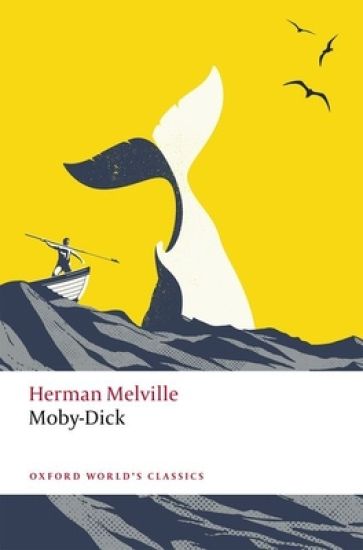
Moby-Dick

Moby-Dick

Herman Melville

Oxford University Press
2022
nidottu

Halvin toimitettuna 17,90 €

"It will be a strange sort of a book, tho', I fear; blubber is blubber you know; tho' you may get oil out of it, the poetry runs as hard as sap from a frozen maple tree;--& to cook the thing up, one must needs throw in a little fancy.... Yet I mean to give the truth of the thing, spite of this." Moby-Dick has a monumental reputation. Less well known are the novel's unexpectedly weird, funny, tantalizing, messy, and wondrous moments. Narrator Ishmael, along with the whaleship Pequod's other "meanest mariners, and renegades and castaways", is beguiled into joining Captain Ahab in his vengeful pursuit of the white whale that "dismasted" him. But along the way, Ishmael takes the reader along many a detour into variegated ways of knowing. In a tone "strangely compounded of fun and fury", Moby-Dick brings outlandish curiosity to bear on the multitudinous, oceanic scale of our diverse world. ABOUT THE SERIES: For over 100 years Oxford World's Classics has made available the widest range of literature from around the globe. Each affordable volume reflects Oxford's commitment to scholarship, providing the most accurate text plus a wealth of other valuable features, including expert introductions by leading authorities, helpful notes to clarify the text, up-to-date bibliographies for further study, and much more.
Jimgrim and Allahs Peace

Jimgrim and Allahs Peace

Herman Melville

VIJ Books (India) Pty Ltd
2022
nidottu
Ce livre classique a t initialement publi il y a des d cennies sous le titre "" Israel Potter His Fifty Years of Exile "". Il a maintenant t traduit par Writat en langue fran aise pour leurs lecteurs francophones. Chez Writat, nous sommes passionn s par la pr servation du patrimoine litt raire du pass . Nous avons traduit ce livre en fran ais afin que les g n rations pr sentes et futures puissent le lire et le conserver.
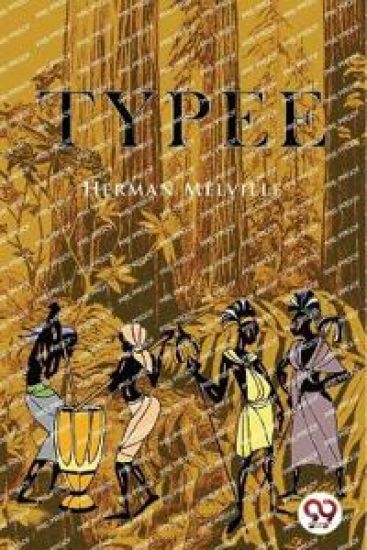
Typee

Typee

Herman Melville

Double 9 Books LLP
2022
nidottu
The whaling ship The Dolly arrives at the Marquesas Islands in the South Pacific after sailing for six months without seeing land. The narrator, later known as Tommo, decides to leave the ship with Toby after growing weary of the hardships and abuse they suffered on board. Until they can board a better boat, the two guys want to remain hidden on the island of Nukuheva while subsisting on tropical fruits. Due to his injured leg, Kory-Kory feeds Tommo by hand, takes him around, and gives him a morning bath in the nearby stream. Toby immediately claims that the first time they are given meat, it is a roast human baby, and refuses to eat it. But as time passes, Tommo learns to relax and genuinely appreciate Typees life. He observes a portion of a partially eaten body after a battle with the Happars and concludes that the Typees consumed the dead Happars. Then, he keeps thinking about running away. Tommo runs away from a Nukuheva native in Typee who is attempting to buy his freedom for an Australian captain of a whaling ship.
Moby Dick

Moby Dick

Herman Melville

Chartwell Books Inc.,U.S.
2022
sidottu
Journey to the heart of the sea with this larger-than-life classic. Regarded as the Great American Novel, Moby Dick is the ultimate tale of seeking vengeance. Narrated by the crew member Ishmael, this epic whaling adventure follows the crew of the Pequod, as its captain, Ahab, descends deeper and deeper into madness on his quest to find and kill the white whale that maimed him. Beyond the surface—of ship life, whaling, and the hunt for the elusive Moby Dick—are allegorical references to life, and even the universe, in this masterpiece by Herman Melville. Complete and unabridged, this newly designed edition features an introduction by American literature scholar Christopher McBride and a timeline of the life and times of Herman Melville. Essential volumes for the shelves of every classic literature lover, the Chartwell Classics series includes beautifully presented works and collections from some of the most important authors in literary history. Chartwell Classics are the editions of choice for the most discerning literature buffs. Other titles in the Chartwell Classics Series include: The Essential Tales & Poems of Edgar Allen Poe; The Essential Tales of H. P. Lovecraft; The Federalist Papers; The Inferno; The Call of the Wild and White Fang; Emma; The Odyssey; Pride and Prejudice; Grimm’s Fairy Tales; The Alchemist; The Great Gatsby; The Secret Garden; Anne of Green Gables; The Phantom of the Opera; The Communist Manifesto and Das Kapital; The Republic; Frankenstein; Twenty Thousand Leagues Under the Sea; The Picture of Dorian Gray; Meditations; Alice’s Adventures in Wonderland and Through the Looking-Glass; A Tales of Two Cities; Beowulf; The Strange Case of Dr. Jekyll and Mr. Hyde; Adventures of Huckleberry Finn; Little Women; Wuthering Heights; Peter Pan; Persuasion; Aesop’s Fables; The Constitution of the United States and Selected Writings; Crime and Punishment; Dracula; Great Expectations; The Iliad; Irish and Fairy Folk Tales; The Legend of Sleepy Hollow; The War of the Worlds; and The Time Machine and The Invisible Man.
Typee

Typee

Herman Melville

Bibliotech Press
2022
sidottu
Typee: A Peep at Polynesian Life is the first book by American writer Herman Melville, published in the early part of 1846, when Melville was 26 years old. Considered a classic in travel and adventure literature, the narrative is based on the author's actual experiences on the island Nuku Hiva in the South Pacific Marquesas Islands in 1842, supplemented with imaginative reconstruction and research from other books. The title comes from the valley of Taipivai, once known as Taipi. Typee was Melville's most popular work during his lifetime; it made him notorious as the "man who lived among the cannibals". The book delivers quite a wild tale and from the beginning there were questions about whether any of it could possibly be true. Prior to the London edition of the book appearing within the Colonial and Home Library series (nonfiction accounts of foreigners in exotic places), the publisher John Murray required reassurance that Melville's experiences were first-hand. Melville's desertion from the Acushnet in 1842Not long after the initial publication of the book, many of the events described were corroborated by Melville's fellow castaway, Richard Tobias Greene ("Toby"). Additionally, an affidavit was found from the ship's captain that corroborated that both men did indeed desert the ship on the island in the summer of 1842. Typee attempts to be something of a work of proto-anthropology. Melville continually admits vast ignorance of the culture and language he is describing while also trying to bolster and supplement his own experiences with a great deal of other reading and research. He also has a tendency to employ a fair amount of hyperbole and attempts at humor. A few recent scholars have dedicated themselves to questioning the basic factuality of Melville's account. For instance, the length of stay on which Typee is based is presented as four months in the narrative and this was likely an extension and exaggeration of Melville's actual stay on the island. There is also not known to have ever been a lake on the island where Melville might have gone canoeing with Fayaway, as described in the book. (wikipedia.org)
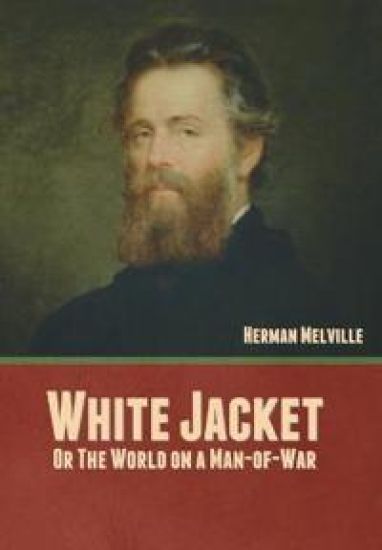
White Jacket; Or, The World on a Man-of-War

White Jacket; Or, The World on a Man-of-War

Herman Melville

Bibliotech Press
2022
sidottu
White-Jacket; or, The World in a Man-of-War is the fifth book by American writer Herman Melville, first published in London in 1850. The book is based on the author's fourteen months' service in the United States Navy, aboard the frigate USS Neversink (actually USS United States). Based on Melville's experiences as a common seaman aboard the frigate USS United States from 1843 to 1844 and stories that other sailors told him, the novel is severely critical of virtually every aspect of American naval life and thus qualifies as Melville's most politically strident work. At the time, though, the one thing that journalists and politicians focused on in the novel was its graphic descriptions of flogging and the horrors caused by its arbitrary use; in fact, because Harper & Bros. made sure the book got into the hands of every member of Congress, White-Jacket was instrumental in abolishing flogging in the U. S. Navy forever. Melville scholars also acknowledge the huge number of parallels between White-Jacket and Billy Budd and view the former as "a major source for naval matters" in the latter. The novel takes its title from the outer garment that the eponymous main character fashions for himself on board ship, with materials at hand, being in need of a coat sufficient for the rounding of Cape Horn. Due to a ship-wide rationing of tar, however, White-Jacket is forever denied his wish to tar the exterior of his coat and thus waterproof it. This causes him to have two near-death experiences, once when he is reclining among the canvases in the main-top and, his jacket blending in with the surrounding material, he is nearly unfurled along with the main sail; and once when, having been pitched overboard while reeving the halyards, he has to cut himself free from the coat in order not to drown. He having done so, his shipmates mistake the discarded jacket for a great white shark and harpoon it, sending it to a watery grave. The symbolism of the color white, introduced in this novel in the form of the narrator's jacket, is more fully expanded upon in Moby-Dick, where it becomes an all-encompassing "blankness". The mixture of journalism, history, and fiction; the presentation of a sequence of striking characters; the metaphor of a sailing ship as the world in miniature, all prefigure Moby-Dick, his next novel. (wikipedia.org)
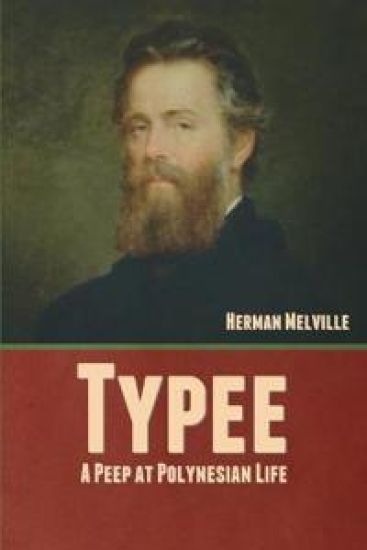
Typee

Typee

Herman Melville

Bibliotech Press
2022
pokkari
Typee: A Peep at Polynesian Life is the first book by American writer Herman Melville, published in the early part of 1846, when Melville was 26 years old. Considered a classic in travel and adventure literature, the narrative is based on the author's actual experiences on the island Nuku Hiva in the South Pacific Marquesas Islands in 1842, supplemented with imaginative reconstruction and research from other books. The title comes from the valley of Taipivai, once known as Taipi. Typee was Melville's most popular work during his lifetime; it made him notorious as the "man who lived among the cannibals". The book delivers quite a wild tale and from the beginning there were questions about whether any of it could possibly be true. Prior to the London edition of the book appearing within the Colonial and Home Library series (nonfiction accounts of foreigners in exotic places), the publisher John Murray required reassurance that Melville's experiences were first-hand. Melville's desertion from the Acushnet in 1842Not long after the initial publication of the book, many of the events described were corroborated by Melville's fellow castaway, Richard Tobias Greene ("Toby"). Additionally, an affidavit was found from the ship's captain that corroborated that both men did indeed desert the ship on the island in the summer of 1842. Typee attempts to be something of a work of proto-anthropology. Melville continually admits vast ignorance of the culture and language he is describing while also trying to bolster and supplement his own experiences with a great deal of other reading and research. He also has a tendency to employ a fair amount of hyperbole and attempts at humor. A few recent scholars have dedicated themselves to questioning the basic factuality of Melville's account. For instance, the length of stay on which Typee is based is presented as four months in the narrative and this was likely an extension and exaggeration of Melville's actual stay on the island. There is also not known to have ever been a lake on the island where Melville might have gone canoeing with Fayaway, as described in the book. (wikipedia.org)
White Jacket; Or, The World on a Man-of-War

White Jacket; Or, The World on a Man-of-War

Herman Melville

Bibliotech Press
2022
pokkari
White-Jacket; or, The World in a Man-of-War is the fifth book by American writer Herman Melville, first published in London in 1850. The book is based on the author's fourteen months' service in the United States Navy, aboard the frigate USS Neversink (actually USS United States). Based on Melville's experiences as a common seaman aboard the frigate USS United States from 1843 to 1844 and stories that other sailors told him, the novel is severely critical of virtually every aspect of American naval life and thus qualifies as Melville's most politically strident work. At the time, though, the one thing that journalists and politicians focused on in the novel was its graphic descriptions of flogging and the horrors caused by its arbitrary use; in fact, because Harper & Bros. made sure the book got into the hands of every member of Congress, White-Jacket was instrumental in abolishing flogging in the U. S. Navy forever. Melville scholars also acknowledge the huge number of parallels between White-Jacket and Billy Budd and view the former as "a major source for naval matters" in the latter. The novel takes its title from the outer garment that the eponymous main character fashions for himself on board ship, with materials at hand, being in need of a coat sufficient for the rounding of Cape Horn. Due to a ship-wide rationing of tar, however, White-Jacket is forever denied his wish to tar the exterior of his coat and thus waterproof it. This causes him to have two near-death experiences, once when he is reclining among the canvases in the main-top and, his jacket blending in with the surrounding material, he is nearly unfurled along with the main sail; and once when, having been pitched overboard while reeving the halyards, he has to cut himself free from the coat in order not to drown. He having done so, his shipmates mistake the discarded jacket for a great white shark and harpoon it, sending it to a watery grave. The symbolism of the color white, introduced in this novel in the form of the narrator's jacket, is more fully expanded upon in Moby-Dick, where it becomes an all-encompassing "blankness". The mixture of journalism, history, and fiction; the presentation of a sequence of striking characters; the metaphor of a sailing ship as the world in miniature, all prefigure Moby-Dick, his next novel. (wikipedia.org)
The Confidence-Man

The Confidence-Man

Herman Melville

Bibliotech Press
2022
pokkari
The Confidence-Man: His Masquerade, first published in New York on April Fool's Day 1857, is the ninth book and final novel by American writer Herman Melville. The book was published on the exact day of the novel's setting. Centered on the title character, The Confidence-Man portrays a group of steamboat passengers. Their interlocking stories are told as they travel the Mississippi River toward New Orleans. The narrative structure is reminiscent of The Canterbury Tales (1392). Scholar Robert Milder notes: "Long mistaken for a flawed novel, the book is now admired as a masterpiece of irony and control, although it continues to resist interpretive consensus." The novel's title refers to its central character, an ambiguous figure. He sneaks aboard a Mississippi steamboat on April Fool's Day. This stranger attempts to test the confidence of the passengers. Their varied reactions constitute the bulk of the text. Each person, including the reader, is forced to confront the placement of his trust. The novel is written as cultural satire, allegory, and metaphysical treatise, dealing with themes of sincerity, identity, morality, religiosity, economic materialism, irony, and cynicism. Many readers place The Confidence-Man alongside Melville's Moby-Dick and "Bartleby, the Scrivener" as a precursor to 20th-century literary pre-occupations with nihilism, existentialism, and absurdism. The work includes satires of 19th-century literary figures: Mark Winsome is based on Ralph Waldo Emerson, while his "practical disciple" Egbert is Henry David Thoreau; Charlie Noble is based on Nathaniel Hawthorne; and a beggar in the story was inspired by Edgar Allan Poe. The Confidence-Man was probably inspired by the case of William Thompson, a con artist active in New York City in the late 1840s. The novel was turned into an opera by George Rochberg; it was premiered by the Santa Fe Opera in 1982, but was not held to be a success. The 2008 movie The Brothers Bloom, starring Adrien Brody, Mark Ruffalo and Rachel Weisz, borrows some of the plot and makes numerous references to the book: One of the characters is named Melville, the steamer ship is named Fid le, and the initial mark refers to these coincidences. (wikipedia.org)
The Piazza Tales

The Piazza Tales

Herman Melville

Bibliotech Press
2022
pokkari
The Piazza Tales is a collection of six short stories by American writer Herman Melville, published by Dix & Edwards in the United States in May 1856 and in Britain in June. Except for the newly written title story, "The Piazza," all of the stories had appeared in Putnam's Monthly between 1853 and 1855. The collection includes what have long been regarded as three of Melville's most important achievements in the genre of short fiction, "Bartleby, the Scrivener", "Benito Cereno", and "The Encantadas", his sketches of the Gal pagos Islands. (Billy Budd, arguably his greatest piece of short fiction, would remain unpublished in his lifetime.)Melville had originally intended to entitle the volume Benito Cereno and Other Sketches, but settled on the definitive title after he had written the introductory story. The book received largely favorable reviews, with reviewers especially praising "The Encantadas" but did not sell well enough to get Melville out of his financial straits, probably because short fiction for magazines had little appeal to bookbuyers. From after Melville's rediscovery to the end of the twentieth century, the short works that attracted the most critical attention were "Bartleby," "Benito Cereno" and "The Encantadas," with "The Piazza" a little behind those. For Warner Berthoff, Melville's short works of the mid-1850s show a grasp of his subject matter not previously in his possession, not even in Moby-Dick: "a clarity of exposition and a tonic firmness and finality of implication". John Bryant points to the experimental use of narrative voice in the stories: in addition to third-person narration, Melville makes his fictionalized narrators "less and less reliable." The lawyer-narrator in "Bartleby" is "not so reliable", Bryant finds, but the third-person narrator of "Benito Cereno" represents a "less conspicuous form of unreliability" and precisely because this third-person position seems objective, while in reality Delano's distorted point of view is adhered to. In line with other writers of short stories of the time like Poe, Melville's narrative structures stimulate readers to look beyond their initial readings to understand more. This view of "the stories to have a hidden text" has proven to be persuasieve. Writing in the twenty-first century, Bryant makes essentially the same point when he notes that "carefully modulated ironies" are put to such use that "the brightness of sentiment and geniality would be made to reveal its darker edges: deception, sexuality, alienation, and poverty." For Robert Milder, in the best of the short stories these different levels of meaning are fused "in a vision of tragedy more poignant than Moby-Dick's or Pierre's because it is more keenly responsive to the lived human condition." (wikipedia.org)

Pierre; or, The Ambiguities

Pierre; or, The Ambiguities

Herman Melville

Bibliotech Press
2022
sidottu
Pierre; or, The Ambiguities is the seventh book by American writer Herman Melville, first published in New York in 1852. The novel, which uses many conventions of Gothic fiction, develops the psychological, sexual, and family tensions between Pierre Glendinning; his widowed mother; Glendinning Stanley, his cousin; Lucy Tartan, his fianc e; and Isabel Banford, who is revealed to be his half-sister. According to scholar Henry A. Murray, in writing Pierre Melville "purposed to write his spiritual autobiography in the form of a novel" rather than to experiment and incidentally work some personal experience into the novel. Published after the lukewarm reaction to Moby-Dick, Pierre was a critical and financial disaster. Reviewers universally condemned its morals and its style. More recent critics have shown greater sympathy toward the book, seeing it as a "psychological novel - a study of the moods, thought processes, and perceptions of his hero". The characteristics of the style, described by Murray as a "miscellany of grammatical eccentricities, convoluted sentences, neologisms, and verbal fetishisms", are by themselves enough to set Pierre off as "a curiosity of literature." The chapter arrangement, by contrast, with each chapter called "Book" and sub-divided into short numbered sections, seems to aim for a clear structure that for critic Warner Berthoff helps "to salvage some degree of organization and pace from the chaos of Melville's purposes." Walter Leyden Brown directed a theatrical adaptation of the book at La MaMa Experimental Theatre Club in Manhattan's East Village in 1974. The book was the source for the 1999 French film Pola X (Pierre ou les ambigu t s) directed by Leos Carax. The Denver Center Theatre Company developed and produced the world premiere of Pierre in 2002, a stage play written by Jeffrey Hatcher, and directed by Bruce K. Sevy. The cast included Christopher Kelly as Pierre Glendinning and Morgan Hallett as Isabel Banford. American composer Richard Beaudoin wrote an opera based on the book; Act I was staged in August 2007 at London's Arcola Theatre. (wikipedia.org)
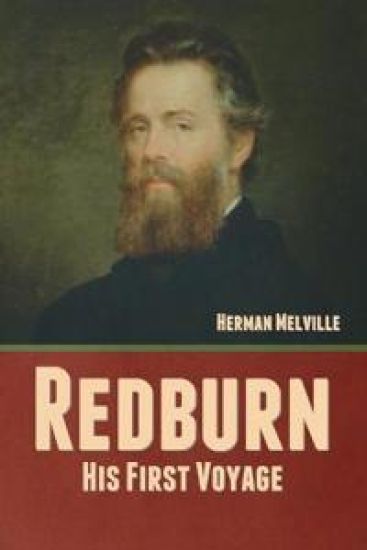
Redburn

Redburn

Herman Melville

Bibliotech Press
2022
sidottu
Redburn: His First Voyage is the fourth book by the American writer Herman Melville, first published in London in 1849. The book is semi-autobiographical and recounts the adventures of a refined youth among coarse and brutal sailors and the seedier areas of Liverpool. Melville wrote Redburn in less than ten weeks. While one scholar describes it as "arguably his funniest work", scholar F. O. Matthiessen calls it "the most moving of its author's books before Moby-Dick". Melville referred to Redburn and his next book White-Jacket as "two jobs which I have done for money-being forced to it as other men are to sawing wood". It was reviewed favorably in all the influential publications, American and British, with many critics hailing it as Melville's return to his original style. The critics were divided along national lines when reviewing the scene in Launcelots Hey, the British dubbing it "improbable", the Americans "powerful". In 1884 William Clark Russell, the most popular writer of sea stories in his generation, praised the book's force and accuracy in print. He also sent Melville a personal letter where, among other items, he said "I have been reading your Redburn for the third or fourth time and have closed it more deeply impressed with the descriptive power that vitalises every page." John Masefield would later single the book out as his favorite of Melville's works. When Redburn was praised, Melville wrote in his journal, "I, the author, know it] to be trash, & wrote it to buy some tobacco with". He later complained: "What I feel most moved to write, that is banned-it will not pay. Yet, altogether, write the other way I cannot. So the product is a final hash, and all my books are botches." (wikipedia.org)
Omoo

Omoo

Herman Melville

Bibliotech Press
2022
pokkari
Omoo: A Narrative of Adventures in the South Seas is the second book by American writer Herman Melville, first published in London in 1847, and a sequel to his first South Sea narrative Typee, also based on the author's experiences in the South Pacific. After leaving the island of Nuku Hiva, the main character ships aboard a whaling vessel that makes its way to Tahiti, after which there is a mutiny and a third of the crew are imprisoned on Tahiti. In 1949, the novel was adapted into the exploitation film Omoo-Omoo, the Shark God. In the Preface to Omoo, Melville claimed the book was autobiographical, written "from simple recollection" of some of his experiences in the Pacific in the 1840s and strengthened by his retelling the story many times before family and friends. But scholar Charles Roberts Anderson, working in the late 1930s, discovered that Melville had not simply relied on his memory and went on to reveal a wealth of other sources he drew on in writing the book. Later, Melville scholar Harrison Hayford made a detailed study of these sources and, in the introduction to a 1969 edition of Omoo, summed up the author's practice, showing that this was a repetition of a process previously used in Typee: "He had altered facts and dates, elaborated events, assimilated foreign materials, invented episodes, and dramatized the printed experiences of others as his own. He had not plagiarized, merely, for he had always rewritten and nearly always improved the passages he appropriated.....first writing out the narrative based on his recollections and invention, then using source books to pad out the chapters he had already written and to supply the stuff of new chapters that he inserted at various points in the manuscript." (wikipedia.org)
Redburn

Redburn

Herman Melville

Bibliotech Press
2022
pokkari
Redburn: His First Voyage is the fourth book by the American writer Herman Melville, first published in London in 1849. The book is semi-autobiographical and recounts the adventures of a refined youth among coarse and brutal sailors and the seedier areas of Liverpool. Melville wrote Redburn in less than ten weeks. While one scholar describes it as "arguably his funniest work", scholar F. O. Matthiessen calls it "the most moving of its author's books before Moby-Dick". Melville referred to Redburn and his next book White-Jacket as "two jobs which I have done for money-being forced to it as other men are to sawing wood". It was reviewed favorably in all the influential publications, American and British, with many critics hailing it as Melville's return to his original style. The critics were divided along national lines when reviewing the scene in Launcelots Hey, the British dubbing it "improbable", the Americans "powerful". In 1884 William Clark Russell, the most popular writer of sea stories in his generation, praised the book's force and accuracy in print. He also sent Melville a personal letter where, among other items, he said "I have been reading your Redburn for the third or fourth time and have closed it more deeply impressed with the descriptive power that vitalises every page." John Masefield would later single the book out as his favorite of Melville's works. When Redburn was praised, Melville wrote in his journal, "I, the author, know it] to be trash, & wrote it to buy some tobacco with". He later complained: "What I feel most moved to write, that is banned-it will not pay. Yet, altogether, write the other way I cannot. So the product is a final hash, and all my books are botches." (wikipedia.org)