Kirjailija
Hermann Hesse
Kirjat ja teokset yhdessä paikassa: 583 kirjaa, julkaisuja vuosilta 1922–2026, suosituimpiin kuuluu Hermann Hesse Unterwegs.. Vertaile teosten hintoja ja tarkista saatavuus suomalaisista kirjakaupoista.
583 kirjaa
Kirjojen julkaisuvuodet: 1922–2026.
mit CD: Hermann Hesse liest
Siddhartha - Bilingual Edition, German & English
Hermann Hesse
Digital Pulse Publishing
2005
nidottu
Halvin toimitettuna 22,90 €
Hermann Hesse's Siddhartha is a literary classic. It continues to be the most popular of the many novels by the prolific Nobel Prize laureate. The touching story of one man's search for the meaning of life, for enlightenment and knowledge is related with a graceful simplicity that is common only to great literature. From the original German, Siddhartha has been translated into most of the world's languages and has enjoyed great success. Hesse's style of writing - clear, straightforward and direct - has made the tale of Siddhartha's search for truth and wisdom accessible to a wide variety of readers around the globe. To assist students, scholars and others who might be interested in a better understanding of Hesse's elegantly simple prose, this bilingual edition has been assembled with the English translation on the facing page mirroring the German text paragraph by paragraph. Those familiar with both languages will appreciate the opportunity to read this great work in both languages and will surely marvel at the directness with which Hermann Hesse's German translates into English. Those not familiar with both languages will be surprised at how very similar the two languages are. Those wishing to improve their own language skills, in either language, could hardly choose a better example of fine writing than that of Hermann Hesse's Siddhartha.
One America's Favorite Books, PBS's The Great American Read Nobel Prize-winning author: This classic of 20th-century literature chronicles the spiritual evolution of a man living in India at the time of the Buddha--a tale that has inspired generations of readers Here is a fresh translation of the classic Herman Hesse novel, from Sherab Ch dzin Kohn--a gifted translator and longtime student of Buddhism and Eastern philosophy. Kohn invites readers along Siddhartha's spiritual journey--experiencing his highs and lows, loves and disappointments along the way. We first meet Siddhartha as a privileged brahmin's son. Handsome, well-loved, and growing increasingly dissatisfied with the life expected of him, he then sets out on his journey, not realizing that he is fulfilling the prophesies proclaimed at his birth. Siddhartha blends in with the world, showing the reader the beauty and intricacies of the mind, nature, and his experiences on the path to enlightenment. Sherab Ch dzin Kohn's flowing, poetic translation conveys the philosophical and spiritual nuances of Hesse's text, paying special attention to the qualities of meditative experience. Also included is an extensive introduction by Paul W. Morris that discusses the impact Siddhartha has had on American culture.
After a young writer leaves his Swiss mountain village to experience the world, his illusions are crushed by the suffering he witnesses, until a friendship with an invalid restores his hope.
In the spring of 1922, several months after completing "Siddhartha," Hermann Hesse wrote a fairy tale that was also a love story, inspired by the woman who was to become his second wife. That story, "Pictor's Metamorphoses," is the centerpiece of this anthology of Hesse's luminous short fiction. Based on "The Arabian Nights" and the work of the Brothers Grimm, the nineteen stories collected here represent a half century of Hesse's short writings. They display the full range of Hesse's lifetime fascination with fantasy--as dream, fairy tale, satire, or allegory.
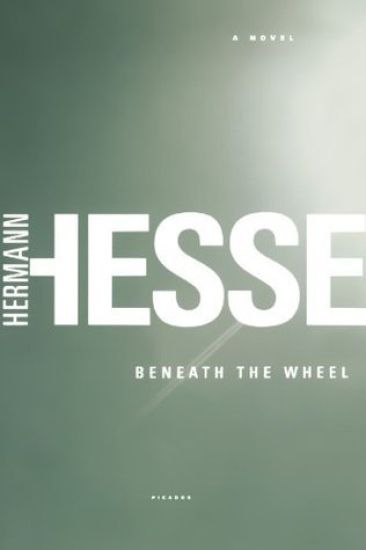
In Hermann Hesse's Beneath the Wheel, Hans Giebernath lives among the dull and respectable townsfolk of a sleepy Black Forest village. When he is discovered to be an exceptionally gifted student, the entire community presses him onto a path of serious scholarship. Hans dutifully follows the regimen of study and endless examinations, his success rewarded only with more crushing assignments. When Hans befriends a rebellious young poet, he begins to imagine other possibilities outside the narrowly circumscribed world of the academy. Finally sent home after a nervous breakdown, Hans is revived by nature and romance, and vows never to return to the gray conformity of the academic system.
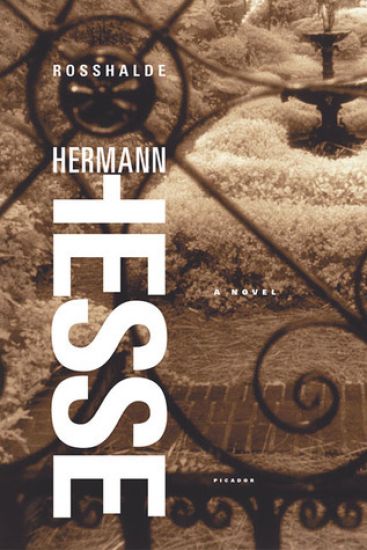
A successful artist, Johann Veraguth finds himself torn between his responsibility toward his family, including his estranged wife and beloved young son, his personal fears of the unknown, and his own desperate longing for spiritual fulfillment. Reprint.
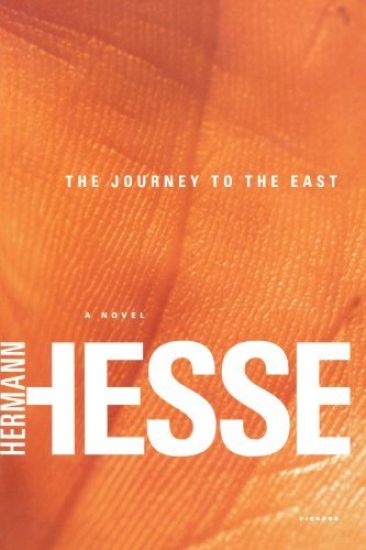
The hero, a German choirmaster recalls an unfruitful pilgrimage to the East during his youth and begins to realize its hidden spiritual meanings. Reprint.
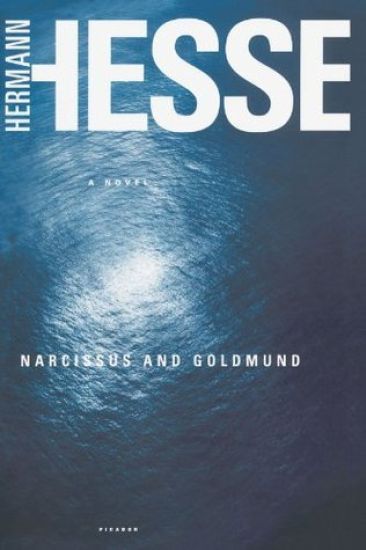
Leaving behind the medieval monastary of Mariabronn at the urgings of his instructor, Narcissus, Goldmund embarks on a fantastic journey to recapture his past and discover his future. Reprint.
Siddhartha
Hermann Hesse; Joachim Neugroschel
Black Classics
2003
pokkari
Halvin toimitettuna 18,30 €
Blends elements of psychoanalysis and Asian religions to probe an Indian aristocrat's efforts to renounce sensual and material pleasures and discover spiritual truths.
A critique of bourgeois society is viewed through the perceptions and beliefs of a lonely and sensitive man through his partly beautiful, partly diseased fantasies as he struggles to reconcile the rational man and primeval wolf within himself. Reprint.
The Glass Bead Game: (Magister Ludi) a Novel
Hermann Hesse
Holt Paperbacks
2002
nidottu
Halvin toimitettuna 23,60 €
The final novel of Hermann Hesse, for which he won the Nobel Prize for Literature in 1946, The Glass Bead Game is a fascinating tale of the complexity of modern life as well as a classic of modern literature Set in the 23rd century, The Glass Bead Game is the story of Joseph Knecht, who has been raised in Castalia, the remote place his society has provided for the intellectual elite to grow and flourish. Since childhood, Knecht has been consumed with mastering the Glass Bead Game, which requires a synthesis of aesthetics and scientific arts, such as mathematics, music, logic, and philosophy, which he achieves in adulthood, becoming a Magister Ludi (Master of the Game).
With characteristic insight and penetration, Hermann Hesse explores the destructive nature of human love. As a sensitive, disabled young composer, the narrator is drawn to a sensual singer named Gertrude through their mutual love of music. Gradually he becomes engulfed by an enduring and hopeless passion for her but, because of his fear of arousing sympathy instead of passion, he loses her. When Gertrude marries his friend, a famous singer, he is compelled to stand by and watch passively as their obsessive relationship disintegrates into tragedy.
Unterm Rad. EinFach Deutsch Unterrichtsmodelle
Hermann Hesse; Stefan Rogal
Schoeningh Verlag
2002
nidottu