Kirjojen hintavertailu – 12 903 725 kirjaa ja 27 kauppaa

Kirjailija

Hermann Scheer

Kirjat ja teokset yhdessä paikassa: 6 kirjaa, julkaisuja vuosilta 2004–2018, suosituimpiin kuuluu Handbook of Renewable Energies in the European Union. Vertaile teosten hintoja ja tarkista saatavuus suomalaisista kirjakaupoista.

6 kirjaa

Kirjojen julkaisuvuodet: 2004–2018.

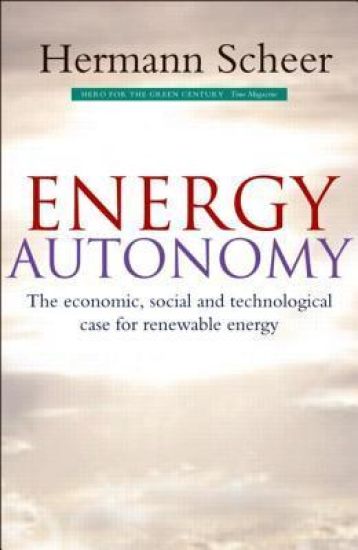
Energy Autonomy

Energy Autonomy

Hermann Scheer

Routledge
2018
nidottu
For 200 years industrial civilization has relied on the combustion of abundant and cheap carbon fuels. But continued reliance has had perilous consequences. On the one hand there is the insecurity of relying on the world's most unstable region - the Middle East - compounded by the imminence of peak oil, growing scarcity and mounting prices. On the other, the potentially cataclysmic consequences of continuing to burn fossil fuels, as the evidence of accelerating climate change shows. Yet there is a solution: to make the transition to renewable sources of energy and distributed, decentralized energy generation. It is a model that has been proven, technologically, commercially and politically, as Scheer comprehensively demonstrates here. The alternative of a return to nuclear power - again being widely advocated - he shows to be compromised and illusory. The advantages of renewable energy are so clear and so overwhelming that resistance to them needs diagnosis - which Scheer also provides, showing why and how entrenched interests and one-dimensional structures of thinking oppose the transition, and what must be done to overcome these obstacles. The new book from the award-winning author of THE SOLAR ECONOMY and A SOLAR MANIFESTO demonstrates why the transition to renewable energy is essential and how it can be done.

The Energy Imperative

The Energy Imperative

Hermann Scheer

Earthscan Ltd
2011
sidottu
For decades, Hermann Scheer was one of the world's leading proponents of renewable energy. In this, his last book before his death in 2010, he lays out his vision for a planet 100% powered by renewables and examines the fundamental ethical and economic imperatives for such a shift. And most importantly, he demonstrates why the time for this transition is now. In Scheer's view, talk of "bridging technologies" such as carbon capture and storage or nuclear energy even (and perhaps especially) by environmentalists is actively damaging the more the pressing agenda of the move to 100% renewable energy. Instead, he offers up examples of the technologies which are working (economically) today and details the policy and market conditions which would allow them to flourish. In 1993, Scheer's A Solar Manifesto laid the foundations for the road which has led to annual newly installed renewable capacity today rivalling that of conventional power sources. The Energy Imperative provides a practical, inspirational map for the next stage of the journey.
Energy Autonomy

Energy Autonomy

Hermann Scheer

Earthscan Ltd
2006
sidottu
For 200 years industrial civilization has relied on the combustion of abundant and cheap carbon fuels. But continued reliance has had perilous consequences. On the one hand there is the insecurity of relying on the world's most unstable region - the Middle East - compounded by the imminence of peak oil, growing scarcity and mounting prices. On the other, the potentially cataclysmic consequences of continuing to burn fossil fuels, as the evidence of accelerating climate change shows. Yet there is a solution: to make the transition to renewable sources of energy and distributed, decentralized energy generation. It is a model that has been proven, technologically, commercially and politically, as Scheer comprehensively demonstrates here. The alternative of a return to nuclear power - again being widely advocated - he shows to be compromised and illusory. The advantages of renewable energy are so clear and so overwhelming that resistance to them needs diagnosis - which Scheer also provides, showing why and how entrenched interests and one-dimensional structures of thinking oppose the transition, and what must be done to overcome these obstacles. The new book from the award-winning author of THE SOLAR ECONOMY and A SOLAR MANIFESTO demonstrates why the transition to renewable energy is essential and how it can be done.
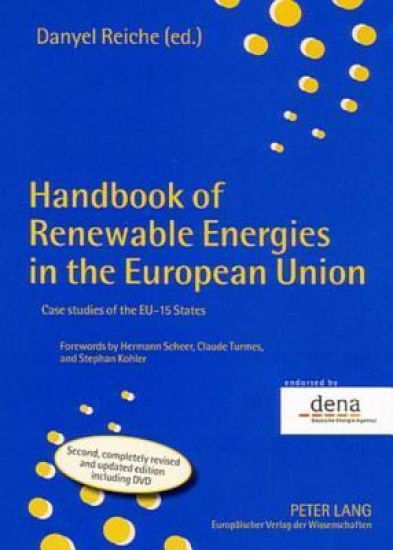
Handbook of Renewable Energies in the European Union

Handbook of Renewable Energies in the European Union

Claude Turmes; Stephan Kohler; Hermann Scheer

Peter Lang GmbH
2005
nidottu
This publication is the completely revised and updated second edition of the Handbook of Renewable Energies. The handbook is a collection of systematic case studies describing national renewable energy policies in the EU-15. In all case studies of this edition data from 2003 was used. All the recent developments in the field of renewable energies were integrated, such as new support schemes, for example in Austria, the Netherlands and Sweden, and changing administrative responsibilities as in Germany. As in the first edition, all chapters follow the same structure. At the beginning of each case study, a definition of renewable energies is given for the individual country and the starting position in energy policy as well as the main actors are described. The instruments for promoting renewable energies are shown and each section concludes with an analysis of current obstacles and conditions for future success. Finally, a service chapter informs the reader about the most important associations, websites, and journals pertinent to the subject matter and provides some general information about the EU-15 States.
A Solar Manifesto

A Solar Manifesto

Hermann Scheer

James James (Science Publishers) Ltd
2005
nidottu
In the decade since the 'Earth Summit' in Rio de Janiero, the response of the world's governments and authorities to the threats to the global environment has been to enforce the reduction of energy consumption and harmful emissions - solutions primarily based around conventional energy resources and conventional thinking. The question is, though, whether this strategy is radical enough to address the key challenges how facing the environment, and whether it can be effective in avoiding catastrophe on a global scale. For Herman Scheer, the answer is a definite no. In this fully updated edition of A Solar Manifesto, he once more attacks the lack of political will to find answers outside a conventional frame of reference. Climate change, pollution, deforestation, destruction of the ozone layer, poverty and the population explosion are all problems created or exacerbated by the use of conventional energy. Seven years after the first edition of this book, answers are now more urgently required that ever, as current policies serve merely to alleviate the escalating symptoms rather than attempting a cure for what could become a terminal affliction. Herman Scheer shows that this crisis may yet be reversed – but it can only be made to happen through a fundamental change in political and economic strategies, paving the way towards a global solar energy economy sustained by new social principles. A Solar Manifesto champions the replacement of fossil and nuclear fuels with solar energy, as a real solution to the threat to the environment and associated social consequences. Scheer constructs a radical yet innovative political and economic model and argues the case with passion and conviction for the global solar economy as the route to a sustainable environment. Thought-provoking and profoundly challenging, this book will be an inspiration to anyone concerned with energy and the global environment.
The Solar Economy

The Solar Economy

Hermann Scheer

Earthscan Ltd
2004
nidottu
The global economy and our way of life are based on the exploitation of fossil fuels, which not only threaten massive environmental and social disruption through global warming but, at present rates of consumption, will run out within decades, causing huge industrial dislocation and economic collapse. Even before then, the conflicts it causes in the Middle East and elsewhere will be frighteningly exacerbated. The alternative exists: renewable energy from renewable sources - above all, solar. Substituting renewable for fossil resources will take a new industrial revolution to avert the worst of the damage and establish a new international order. It can be done, and it can be done in time. The Solar Economy, by one of the world's most effective analysts and advocates, lays out the blueprints, showing how the political, economic and technological challenges can be met using indigenous, renewable and universally available resources, and the enormous opportunities and benefits that will flow from doing so.