Kirjojen hintavertailu – 12 903 725 kirjaa ja 27 kauppaa
Kirjailija
Hermes Trismegistus
Kirjat ja teokset yhdessä paikassa: 66 kirjaa, julkaisuja vuosilta 1999–2026, suosituimpiin kuuluu The Hermetica: The Corpus Hermeticum, The Lost Wisdom of The Pharaohs, The Divine Pymander. Vertaile teosten hintoja ja tarkista saatavuus suomalaisista kirjakaupoista.
Nimi esiintyy myös muodoissa: Hermes Trismegistus.
This ornate gift edition brings together the classic Hermetic texts, The Emerald Tablet of Hermes and The Kybalion, presented in a beautiful pocket hardback volume with gilded page edges. The Emerald Tablet of Hermes is an ancient cryptic text, said to impart the wisdom of legendary figure Hermes Trismegistus whose teachings are at the heart of Hermetic philosophy. With ideas on astrology, alchemy and spiritual transformation, it explores the metaphysical link between the physical and spiritual world, as encapsulated by the phrase "as above, so below", famously quoted from this text. While The Emerald Tablet is enigmatic, The Kybalion is elucidating, distilling the seven principles of Hermeticism and its practical applications for personal growth and self-improvement. In bringing together these two classic texts, this beautiful collection makes a perfect companion for anyone wanting to return to ancient Hermetic wisdom in search of new enlightenment. This elegant gift edition features an original Arcturus translation from the Latin of The Emerald Tablet of Hermes and is luxuriously presented with gilded page-edges, gold cover accents and patterned endpapers, making a making a stunning addition to any library or collection. ABOUT THE SERIES: Arcturus Ornate Classics are beautifully bound editions of iconic literary works across history. These compact, foil-embossed hardbacks are printed using deluxe ivory paper and make the perfect gift.
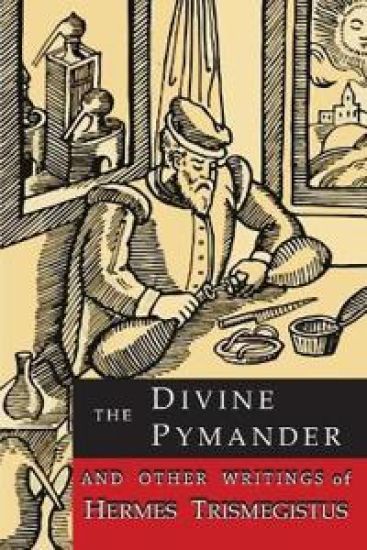
An Unabridged Edition to include the following with Glory of the World (The Emerald Table) and The Divine Pymander (Hermes Trismegistus, His First Book) at book's end: History of the Tablet - Translations From: Jabir Ibn Hayyan - German of Ruska - Twelfth Century Latin -Aurelium Occultae Philosophorum - Issac Newton - Kriegsmann - Sigismund Bacstrom - Madame Blavatsky - Fulcanelli - Idres Shah - Hypothetical Chinese Original - Textual Remarks - Commentaries - General - A Commentary of Ibn Umail - Appendix - Bibliography - Glory of the World (The Emerald Table) - The Divine Pymander (Hermes Trismegistus, His First Book).
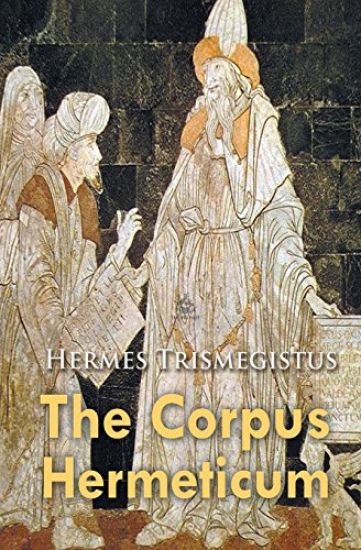
The Corpus Hermeticum is a collection of Egyptian-Greek wisdom texts from the 2nd century or earlier. The texts form the basis of Hermeticism, which is a religious, philosophical, and esoteric tradition that held great importance during both the Renaissance and the Reformation periods. The work discusses the divine, the cosmos, the mind, alchemy, astrology, and nature. The Corpus Hermeticum dwells upon the oneness and goodness of God, urges purification of the soul, and discusses a spiritual rebirth through the enlightenment of the mind. Much of the importance of Hermeticism arises from its connection with the development of science between 1300 to 1600 AD. The prominence that it gave to the idea of influencing or controlling nature led many scientists to look to magic and its allied arts. Sir Isaac Newton placed great faith in the concept of an unadulterated, pure, ancient doctrine, which he studied vigorously to aid his understanding of the physical world. This case laminate collector's edition includes a Victorian inspired dust-jacket.
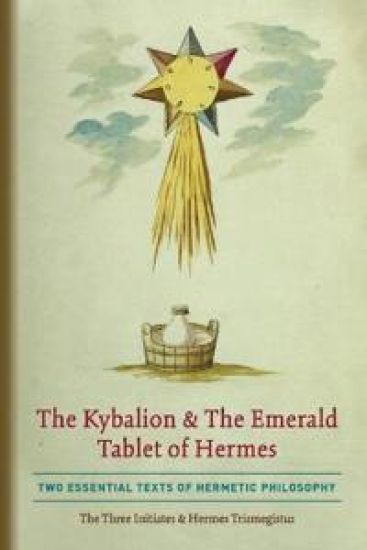
The Kybalion & The Emerald Tablet of Hermes compose two pillars of Hermetic thought. Combined here in one volume, these two works share true wisdom with those ready to receive it. "When the ears of the student are ready to hear, then cometh the lips to fill them with wisdom." The Kybalion was first published anonymously in 1908 by "The Three Initiates." The true authorship of the work is unknown, although theories suggest it was written entirely or in part by William Walker Atkinson. Atkinson was a prolific writer and supported the New Thought movement of the 19th and early 20th centuries. New Thought included the belief that our realities can be manifested by mental effort, which is also suggested in Hermetic principles. Scholars point to similarities in style and content between The Kybalion and Atkinson's own The Arcane Teachings as evidence that he was one (or all) of "The Three Initiates." The Kybalion provides an introduction to the teachings of Hermes Trismegistus--Hermes "the Thrice-Greatest." This "Master of Masters" is said in The Kybalion to have lived 300 years on Earth, and believed by some to be the founder of both astrology and alchemy (precursors to astronomy and chemistry, respectively). Hermes Trismegistus was deified after his death as Toth by the ancient Egyptians, and Hermes by the Greeks. In both pantheons, this man-turned-god was considered a symbol of great wisdom. The Kybalion's explanation of Hermetic teachings are claimed to have been passed down orally for centuries, eventually reaching "The Three Initiates." The fundamental Hermetic traditions presented in The Kybalion consist of seven "working principles" Mentalism, Correspondence, Vibration, Polarity, Rhythm, Cause and Effect, and Gender. Within these seven principles is true wisdom, tied to no particular place and no particular religion. It is the "sacred flame" kept lit by a chosen few used to "re-light the lesser lamps of the outside world when the light of truth grew dim..." In short, these are the truths of the universe, regardless of era or creed. The Emerald Tablet of Hermes is a short, ancient text attributed to Hermes Trismegistus himself. Unlike The Kybalion, which aims to provide some explanation and instruction, the brief Emerald Tablet has been puzzling and fascinating scholars for over 1,000 years. Consisting of a mere 14 stanzas, the Emerald Tablet is said to contain the secrets of prima materia--the foundational material of the universe. The Emerald Tablet and its teaching influenced freemasonry and philosophy throughout history. The text of the tablet has been translated and commented on by a variety of scholars, including Sir Isaac Newton who was inspired by its teachings throughout his life and work. The earliest known version of the text comes from an Arabic work written between the 6th and 8th centuries by Balinas. He claimed to have found the tablet hidden in a vault beneath a statue of Hermes. Another story claims the tablet was written by Seth, the third son of Adam and Eve. And yet another says the tablet was uncovered and then reburied by Alexander the Great. The source and material of the physical tablet is unknown. It was reported to be a rectangular green stone, with text in raised bas-relief rather than engraved. Some even claim there never was a physical tablet at all, although several accounts claim it was on display in Egypt in 330 BCE. Whatever its origins and history, the work was first introduced to the West in the 12th century through Latin translations. Since then, this cryptic text has been translated and re-translated, pored-over and analyzed by philosophers, historians, and theologians alike.
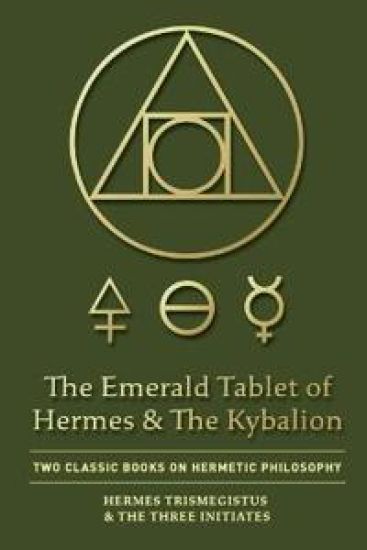
The The Emerald Tablet of Hermes & Kybalion compose two pillars of Hermetic thought. Combined here in one volume, these two works share true wisdom with those ready to receive it. "When the ears of the student are ready to hear, then cometh the lips to fill them with wisdom." The Kybalion was first published anonymously in 1908 by "The Three Initiates." The true authorship of the work is unknown, although theories suggest it was written entirely or in part by William Walker Atkinson. Atkinson was a prolific writer and supported the New Thought movement of the 19th and early 20th centuries. New Thought included the belief that our realities can be manifested by mental effort, which is also suggested in Hermetic principles. Scholars point to similarities in style and content between The Kybalion and Atkinson's own The Arcane Teachings as evidence that he was one (or all) of "The Three Initiates." The Kybalion provides an introduction to the teachings of Hermes Trismegistus--Hermes "the Thrice-Greatest." This "Master of Masters" is said in The Kybalion to have lived 300 years on Earth, and believed by some to be the founder of both astrology and alchemy (precursors to astronomy and chemistry, respectively). Hermes Trismegistus was deified after his death as Toth by the ancient Egyptians, and Hermes by the Greeks. In both pantheons, this man-turned-god was considered a symbol of great wisdom. The Kybalion's explanation of Hermetic teachings are claimed to have been passed down orally for centuries, eventually reaching "The Three Initiates." The fundamental Hermetic traditions presented in The Kybalion consist of seven "working principles" Mentalism, Correspondence, Vibration, Polarity, Rhythm, Cause and Effect, and Gender. Within these seven principles is true wisdom, tied to no particular place and no particular religion. It is the "sacred flame" kept lit by a chosen few used to "re-light the lesser lamps of the outside world when the light of truth grew dim..." In short, these are the truths of the universe, regardless of era or creed. The Emerald Tablet of Hermes is a short, ancient text attributed to Hermes Trismegistus himself. Unlike The Kybalion, which aims to provide some explanation and instruction, the brief Emerald Tablet has been puzzling and fascinating scholars for over 1,000 years. Consisting of a mere 14 stanzas, the Emerald Tablet is said to contain the secrets of prima materia--the foundational material of the universe. The Emerald Tablet and its teaching influenced freemasonry and philosophy throughout history. The text of the tablet has been translated and commented on by a variety of scholars, including Sir Isaac Newton who was inspired by its teachings throughout his life and work. The earliest known version of the text comes from an Arabic work written between the 6th and 8th centuries by Balinas. He claimed to have found the tablet hidden in a vault beneath a statue of Hermes. Another story claims the tablet was written by Seth, the third son of Adam and Eve. And yet another says the tablet was uncovered and then reburied by Alexander the Great. The source and material of the physical tablet is unknown. It was reported to be a rectangular green stone, with text in raised bas-relief rather than engraved. Some even claim there never was a physical tablet at all, although several accounts claim it was on display in Egypt in 330 BCE. Whatever its origins and history, the work was first introduced to the West in the 12th century through Latin translations. Since then, this cryptic text has been translated and re-translated, pored-over and analyzed by philosophers, historians, and theologians alike.
The Kybalion & The Emerald Tablet of Hermes compose two pillars of Hermetic thought. Combined here in one volume, these two works share true wisdom with those ready to receive it. "When the ears of the student are ready to hear, then cometh the lips to fill them with wisdom." The Kybalion was first published anonymously in 1908 by "The Three Initiates." The true authorship of the work is unknown, although theories suggest it was written entirely or in part by William Walker Atkinson. Atkinson was a prolific writer and supported the New Thought movement of the 19th and early 20th centuries. New Thought included the belief that our realities can be manifested by mental effort, which is also suggested in Hermetic principles. Scholars point to similarities in style and content between The Kybalion and Atkinson's own The Arcane Teachings as evidence that he was one (or all) of "The Three Initiates." The Kybalion provides an introduction to the teachings of Hermes Trismegistus--Hermes "the Thrice-Greatest." This "Master of Masters" is said in The Kybalion to have lived 300 years on Earth, and believed by some to be the founder of both astrology and alchemy (precursors to astronomy and chemistry, respectively). Hermes Trismegistus was deified after his death as Toth by the ancient Egyptians, and Hermes by the Greeks. In both pantheons, this man-turned-god was considered a symbol of great wisdom. The Kybalion's explanation of Hermetic teachings are claimed to have been passed down orally for centuries, eventually reaching "The Three Initiates." The fundamental Hermetic traditions presented in The Kybalion consist of seven "working principles" Mentalism, Correspondence, Vibration, Polarity, Rhythm, Cause and Effect, and Gender. Within these seven principles is true wisdom, tied to no particular place and no particular religion. It is the "sacred flame" kept lit by a chosen few used to "re-light the lesser lamps of the outside world when the light of truth grew dim..." In short, these are the truths of the universe, regardless of era or creed. The Emerald Tablet of Hermes is a short, ancient text attributed to Hermes Trismegistus himself. Unlike The Kybalion, which aims to provide some explanation and instruction, the brief Emerald Tablet has been puzzling and fascinating scholars for over 1,000 years. Consisting of a mere 14 stanzas, the Emerald Tablet is said to contain the secrets of prima materia--the foundational material of the universe. The Emerald Tablet and its teaching influenced freemasonry and philosophy throughout history. The text of the tablet has been translated and commented on by a variety of scholars, including Sir Isaac Newton who was inspired by its teachings throughout his life and work. The earliest known version of the text comes from an Arabic work written between the 6th and 8th centuries by Balinas. He claimed to have found the tablet hidden in a vault beneath a statue of Hermes. Another story claims the tablet was written by Seth, the third son of Adam and Eve. And yet another says the tablet was uncovered and then reburied by Alexander the Great. The source and material of the physical tablet is unknown. It was reported to be a rectangular green stone, with text in raised bas-relief rather than engraved. Some even claim there never was a physical tablet at all, although several accounts claim it was on display in Egypt in 330 BCE. Whatever its origins and history, the work was first introduced to the West in the 12th century through Latin translations. Since then, this cryptic text has been translated and re-translated, pored-over and analyzed by philosophers, historians, and theologians alike.
The Corpus Hermeticum are Egyptian-Greek wisdom texts from which are mostly presented as dialogues in which a teacher enlightens a disciple. The texts form the basis of Hermeticism. They discuss the divine, the cosmos, mind, and nature. Some touch upon alchemy, astrology, and related concepts. Hermes Trismegistus is the purported author of the Corpus Hermeticum, a series of sacred texts that are the basis of Hermeticism. Hermes Trismegistus may be a representation of the syncretic combination of the Greek god Hermes and the Egyptian god Thoth.
The Corpus Hermeticum: The Teachings of Hermes Trismegistus translated by G. R. S. Mead. The Hermetica are Egyptian-Greek wisdom texts from the 2nd century AD and later, which are mostly presented as dialogues in which a teacher, generally identified as Hermes Trismegistus ("thrice-greatest Hermes"), enlightens a disciple. The texts form the basis of Hermeticism. They discuss the divine, the cosmos, mind, and nature. Some touch upon alchemy, astrology, and related concepts. The fifteen tractates of the Corpus Hermeticum, along with the Perfect Sermon or Asclepius, are the foundation documents of the Hermetic tradition. Written by unknown authors in Egypt sometime before the end of the third century C. E., they were part of a once substantial literature attributed to the mythic figure of Hermes Trismegistus, a Hellenistic fusion of the Greek god Hermes and the Egyptian god Thoth. This literature came out of the same religious and philosophical ferment that produced Neoplatonism, Christianity, and the diverse collection of teachings usually lumped together under the label "Gnosticism": a ferment which had its roots in the impact of Platonic thought on the older traditions of the Hellenized East. There are obvious connections and common themes linking each of these traditions, although each had its own answer to the major questions of the time.
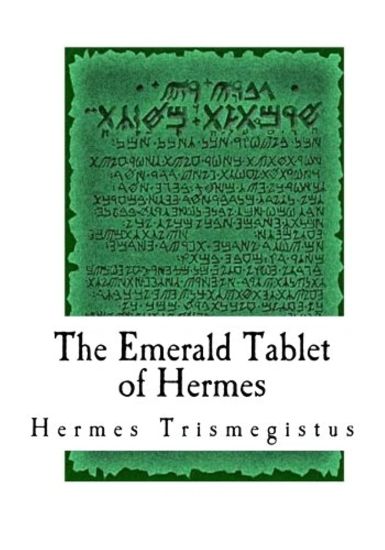
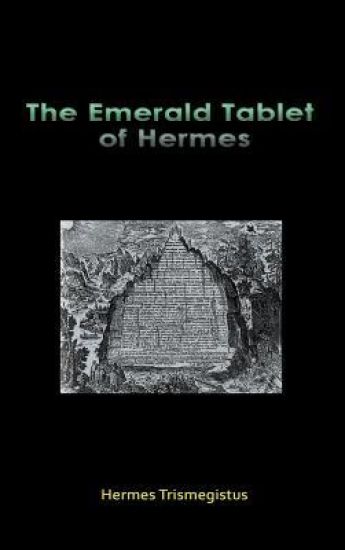
The Emerald Tablet of HermesAlso known as The Smaragdine Table, or Tabula Smaragdinaby Hermes TrismegistusThe Emerald Tablet, also known as the Smaragdine Table, or Tabula Smaragdina, is a compact and cryptic piece of the Hermetica reputed to contain the secret of the prima materia and its transmutation. It was highly regarded by European alchemists as the foundation of their art and its Hermetic tradition. The original source of the Emerald Tablet is unknown. Although Hermes Trismegistus is the author named in the text, its first known appearance is in a book written in Arabic between the sixth and eighth centuries. The text was first translated into Latin in the twelfth century. Numerous translations, interpretations and commentaries followed. The Tablet probably first appeared in the West in editions of the psuedo-Aristotlean Secretum Secretorum which was actually a translation of the Kitab Sirr al-Asar, a book of advice to kings which was translated into latin by Johannes Hispalensis c. 1140 and by Philip of Tripoli c.1243. Other translations of the Tablet may have been made during the same period by Plato of Tivoli and Hugh of Santalla, perhaps from different sources. The date of the Kitab Sirr al-Asar is uncertain, though c.800 has been suggested and it is not clear when the tablet became part of this work. Holmyard was the first to find another early arabic version (Ruska found a 12th centruy recension claiming to have been dictated by Sergius of Nablus) in the Kitab Ustuqus al-Uss al-Thani (Second Book of the Elements of Foundation) attributed to Jabir. Shortly after Ruska found another version appended to the Kitab Sirr al-Khaliqa wa San at al-Tabi a (Book of the Secret of Creation and the Art of Nature), which is also known as the Kitab Balaniyus al-Hakim fi'l- Ilal (book of Balinas the wise on the Causes). It has been proposed that this book was written may have been written as early as 650, and was definitely finished by the Caliphate of al-Ma'mun (813-33).