Kirjojen hintavertailu – 12 903 725 kirjaa ja 27 kauppaa

Kirjailija

Herwig Todts

Kirjat ja teokset yhdessä paikassa: 4 kirjaa, julkaisuja vuosilta 2008–2024, suosituimpiin kuuluu James Ensor, Occasional Modernist. Vertaile teosten hintoja ja tarkista saatavuus suomalaisista kirjakaupoista.

4 kirjaa

Kirjojen julkaisuvuodet: 2008–2024.

James Ensor and the Graphic Experiment

James Ensor and the Graphic Experiment

Willemijn Stammis; Ad Stijnman; Herwig Todts

Cannibal/Hannibal Publishers
2024
sidottu
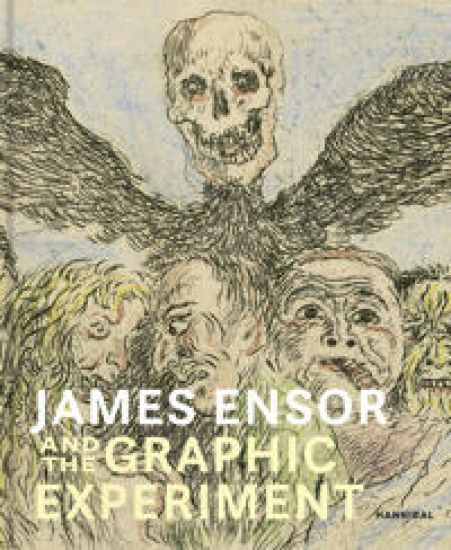
James Ensor (1860–1949) was a Belgian painter known for his provocative and innovative works, often featuring masks and grotesque figures. Through mediums like etching and lithography, Ensor delved into themes of existential exploration and the macabre. His graphic oeuvre showcases his mastery of line and form, inviting us into a realm where masks, skeletons, and surreal landscapes converge to challenge conventions and provoke thought. But how did Ensor make prints? What techniques did he use? Which old masters inspired him and in what way did he experiment with this medium? James Ensor and the Graphic Experiment gathers the most remarkable results of Ensor's graphic experiments: preparatory drawings, copper plates and various states of prints. Image © Museum Plantin-Moretus, Antwerp
James Ensor, Occasional Modernist

James Ensor, Occasional Modernist

Herwig Todts

Brepols N.V.
2019
sidottu
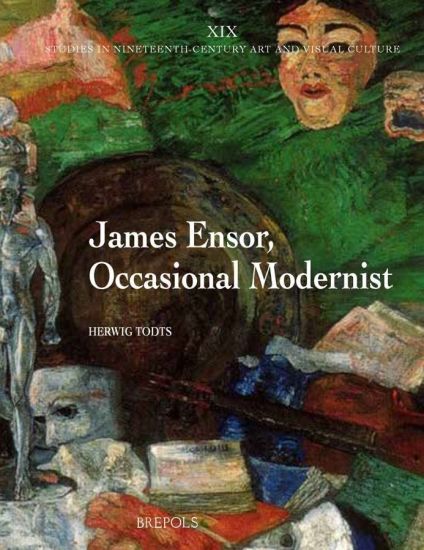
In the course of the twentieth century, under the influence of the increasing success of Modernism, a misleading image of James Ensor emerged. One might even say that Ensor was confined within a modernist 'straitjacket'. In order to understand the artist's motivations, this book follows the advice given to the art critic Andre De Ridder by Ensor himself in 1930: 'I recommend you re-read Les Ecrits de James Ensor, where I explain my research and defend my ideas'. Ensor's writings can roughly be divided into two categories - his letters and 'les ecrits', encompassing his journalistic work, satirical exhibition reviews, comical speeches, words of thanks and praise, and open letters in brochures. The analysis of Ensor's writings is no small task, for he gave little attention to structure and coherence, and employed a complex 'wondermiraclelikefulistic' language - archaisms, neologisms, staggering vitriolic rants, hyperboles, from which the essence of his personal views and beliefs is often difficult to distill. Nevertheless, his writings are a crucial source of knowledge on his opinions on Christian faith, rationality, hypocrisy, the dangers of an emerging Flemish nationalism, animal cruelty, the destruction of natural beauty and ancient monuments, and a number of other topics. Ensor believed art ought to be a source of 'ravishment' for both the viewer and the artist, and continually defended the right of the latter to create an incoherent oeuvre, experimenting with ever new and diverse 'manieres', styles, subjects, techniques and genres. This book explores the artist's writings, ideas and works in greater depth than they have hitherto enjoyed in art-historical scholarship.
James Ensor

James Ensor

Luc Tuymans; Herwig Todts; Adrian Locke

Royal Academy of Arts
2017
sidottu
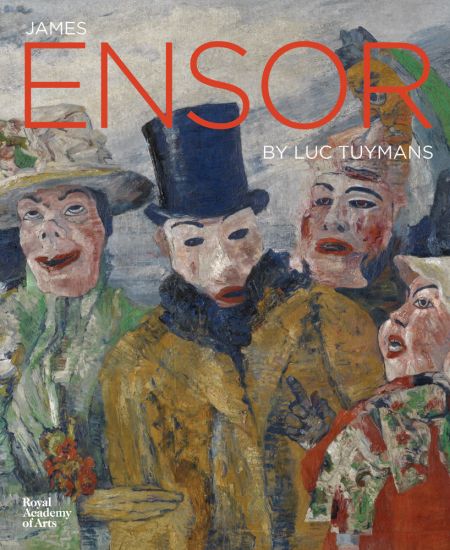
James Ensor (1860-1949) produced one of the most unusual bodies of work at the turn of the twentieth century. Marked by psychological complexity, contradictions and sheer eccentricity, his works - featuring such bizarre subject-matter as dressed-up skeletons and macabre carnival masks - have continued to baffle and intrigue in equal measure. Ensor was born in Ostend and barely left his home town during his lifetime; his family, however, ran a curio shop filled with an array of exotic objects including parrots, a monkey and masks from around the world, which perhaps in part influenced the imagery of his mature work. In this volume, essays explore Ensor's life and legacy, while Luc Tuymans's comments on his selection provide a dictinctive picture of James Ensor, who has been such a major influence on Expressionism and Surrealism.
Jan Cox: Living One's Art

Jan Cox: Living One's Art

Claire Van Damme; Herwig Todts; Valerie Verhack

Stichting Kunstboek BVBA
2008
sidottu
Jan Cox (1919-1980) was born in The Hague and spent his youth in Amsterdam. Shortly before World War II, he moved to Antwerp with his parents and his brother, the composer Harry Cox, and studied History of Art at the State University of Ghent. After the war he settled down in Brussels to become a co-founder of the Jeune Peinture Belge (Young Belgian Painting). He had contacts with the members of Cobra and became close friends with Hugo Claus and Pierre Alechinsky. In 1956 Jan Cox left for the USA where he was appointed Head of the Painting Department at the School of the Museum of Fine Arts in Boston. In 1974 he returned to Belgium and found a new home in the circle of the Gallery De Zwarte Panter (The Black Panther) in Antwerp. Jan Cox thought of his artistic calling as an artistic and a humanist project. His painting has a strong surreal and magical bias but he also created imposing expressionist images. He liked classical themes: the myth of Orpheus, Homer's Iliad, Judith and Holofernes, the Calvary. Jan Cox managed to merge autobiographical elements with the universal problems of human existence. His paintings invite the beholder to reflect on the human condition, hope and the terrors of the modern world.