Kirjojen hintavertailu – 12 876 058 kirjaa ja 26 kauppaa

Kirjailija

Hideo Furukawa

Kirjat ja teokset yhdessä paikassa: 6 kirjaa, julkaisuja vuosilta 2012–2024, suosituimpiin kuuluu The Book of Tokyo. Vertaile teosten hintoja ja tarkista saatavuus suomalaisista kirjakaupoista.

6 kirjaa

Kirjojen julkaisuvuodet: 2012–2024.

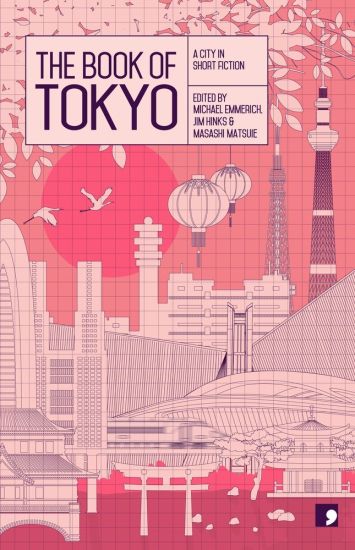
The Book of Tokyo

The Book of Tokyo

Banana Yoshimoto; Shuichi Yoshida; Nao-Cola Yamazaki; Hiromi Kawakami; Hitomi Kanehara; Mitsuyo Kakuta; Toshiyuki Horie; Osamu Hashimoto; Hideo Furukawa

Comma Press
2015
nidottu

Halvin toimitettuna 20,50 €

At first, Tokyo appears in these stories as it does to many outsiders: a city of bewildering scale, awe-inspiring modernity, peculiar rules, unknowable secrets and, to some extent, danger. Characters observe their fellow citizens from afar, hesitant to stray from their daily routines to engage with them. But Tokyo being the city it is, random encounters inevitably take place - a naive book collector, mistaken for a French speaker, is drawn into a world he never knew existed; a woman seeking psychiatric help finds herself in a taxi with an older man wanting to share his own peculiar revelations; a depressed divorcee accepts an unexpected lunch invitation to try Thai food for the very first time... The result in each story is a small but crucial change in perspective, a sampling of the unexpected yet simple pleasure of other people's company. As one character puts it, 'The world is full of delicious things, you know.'
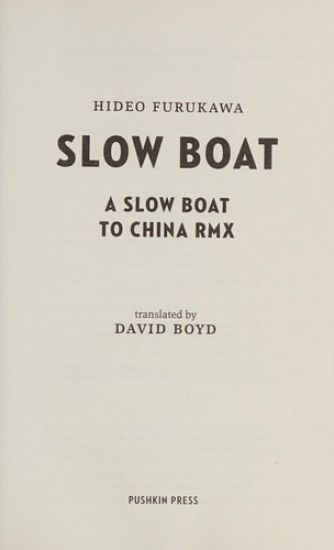
Slow Boat

Slow Boat

Hideo Furukawa

PUSHKIN PRESS
2024
nidottu

Halvin toimitettuna 18,90 €

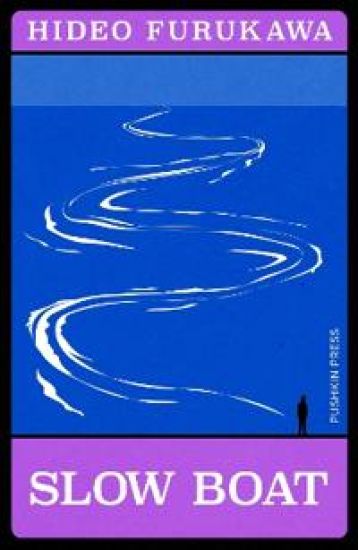
A startling novella from the heir to Haruki Murakami and Gabriel García Márquez 'I've never made it out of Tokyo. I can't tell you how many times I've asked myself if the boundary is real. Of course it's real. And if you think I'm lying, you can come and see for yourself.' Trapped in Tokyo, left behind by a series of girlfriends, the narrator of Slow Boat sizes up his situation. His missteps, his violent rebellions, his tiny victories. But he is not a passive loser, content to accept all that fate hands him. He attempts one last escape to the edges of the city, holding the only safety net he has known - his dreams. Filled with lyrical longing and humour, Slow Boat captures perfectly the urge to get away and the necessity of finding yourself in a world which might never even be looking for you. Hideo Furukawa, born in 1966, is an acclaimed and prize-winning writer, hailed by many in Japan's literary world as a prodigy worthy of inheriting the mantle of Haruki Murakami. He was awarded the Mishima Prize in 2006 for Love. His best-known novel is the 2008 Holy Family, an epic work of alternate history set in north-eastern Japan, where he was born.
Slow Boat

Slow Boat

Hideo Furukawa

UKBooks
2017
Pehmeäkantinen
A startling novella from the heir to Haruki Murakami and Gabriel Garcia Marquez Trapped in Tokyo, left behind by a series of girlfriends, the narrator of Slow Boat sizes up his situation. His missteps, his violent rebellions, his tiny victories. But he is not a passive loser, content to accept all that fate hands him. He attempts one last escape to the edges of the city, holding the only safety net he has known - his dreams. Filled with lyrical longing and humour, Slow Boat captures perfectly the urge to get away and the necessity of finding yourself in a world which might never even be looking for you.
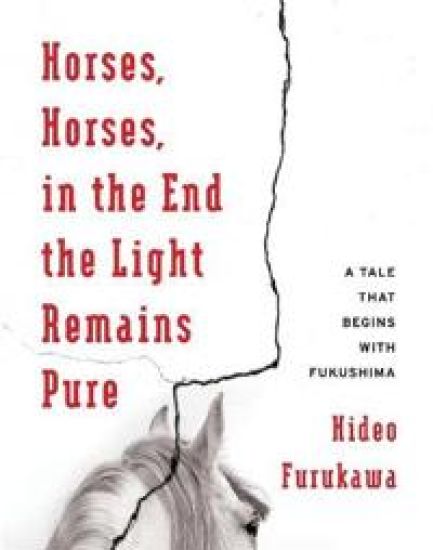
Horses, Horses, in the End the Light Remains Pure

Horses, Horses, in the End the Light Remains Pure

Hideo Furukawa

Columbia University Press
2016
pokkari
"As we passed from the city center into the Fukushima suburbs I surveyed the landscape for surgical face masks. I wanted to see in what ratios people were wearing such masks. I was trying to determine, consciously and unconsciously, what people do in response. So, among people walking along the roadway, and people on motorbikes, I saw no one with masks. Even among the official crossing guards outfitted with yellow flags and banners, none. All showed bright and calm. What was I hoping for exactly? The guilty conscience again. But then it was time for school to start. We began to see groups of kids on their way to school. They were wearing masks." Horses, Horses, in the End the Light Remains Pure is a multifaceted literary response to the earthquake, tsunami, and nuclear meltdown that devastated northeast Japan on March 11, 2011. The novel is narrated by Hideo Furukawa, who travels back to his childhood home near Fukushima after 3/11 to reconnect with a place that is now doubly alien. His ruminations conjure the region's storied past, particularly its thousand-year history of horses, humans, and the struggle with a rugged terrain. Standing in the morning light, these horses also tell their stories, heightening the sense of liberation, chaos, and loss that accompanies Furukawa's rich recollections. A fusion of fiction, history, and memoir, this book plays with form and feeling in ways reminiscent of Vladimir Nabokov's Speak, Memory and W. G. Sebald's The Rings of Saturn yet draws its own, unforgettable portrait of personal and cultural dislocation.
Horses, Horses, in the End the Light Remains Pure

Horses, Horses, in the End the Light Remains Pure

Hideo Furukawa

Columbia University Press
2016
sidottu
"As we passed from the city center into the Fukushima suburbs I surveyed the landscape for surgical face masks. I wanted to see in what ratios people were wearing such masks. I was trying to determine, consciously and unconsciously, what people do in response. So, among people walking along the roadway, and people on motorbikes, I saw no one with masks. Even among the official crossing guards outfitted with yellow flags and banners, none. All showed bright and calm. What was I hoping for exactly? The guilty conscience again. But then it was time for school to start. We began to see groups of kids on their way to school. They were wearing masks." Horses, Horses, in the End the Light Remains Pure is a multifaceted literary response to the earthquake, tsunami, and nuclear meltdown that devastated northeast Japan on March 11, 2011. The novel is narrated by Hideo Furukawa, who travels back to his childhood home near Fukushima after 3/11 to reconnect with a place that is now doubly alien. His ruminations conjure the region's storied past, particularly its thousand-year history of horses, humans, and the struggle with a rugged terrain. Standing in the morning light, these horses also tell their stories, heightening the sense of liberation, chaos, and loss that accompanies Furukawa's rich recollections. A fusion of fiction, history, and memoir, this book plays with form and feeling in ways reminiscent of Vladimir Nabokov's Speak, Memory and W. G. Sebald's The Rings of Saturn yet draws its own, unforgettable portrait of personal and cultural dislocation.
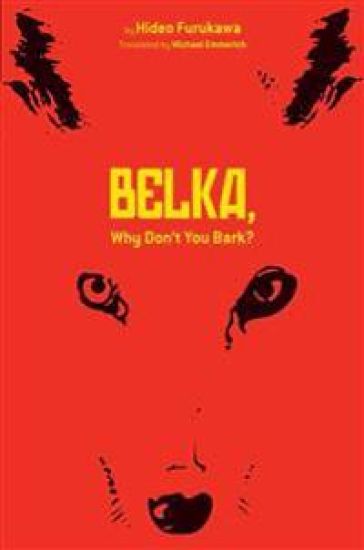
Belka, Why Don't You Bark?

Belka, Why Don't You Bark?

Hideo Furukawa

Haikasoru
2012
sidottu
The history of the contemporary world, as seen through the story of WWII military dogs and their descendants. Belka, Why Don’t You Bark? begins in 1943, when Japanese troops retreat from the Aleutian island of Kiska, leaving four military dogs behind. One of them dies in isolation, and the others are taken under the protection of U. S. troops. Meanwhile, in the USSR, a KGB military dog handler kidnaps the daughter of a Japanese yakuza. Named after the Russian astronaut dog Strelka, the girl develops a psychic connection with canines. A multi-generational epic as seen through the eyes of man’s best friend, the dogs who are used as mere tools for the benefit of humankind gradually discover their true selves, and learn something about us. Belka, Why Don’t You Bark? begins in 1943, when Japanese troops retreat from the Aleutian island of Kiska, leaving four military dogs behind. One of them dies in isolation, and the others are taken under the protection of U. S. troops. Meanwhile, in the USSR, a KGB military dog handler kidnaps the daughter of a Japanese yakuza. Named after the Russian astronaut dog Strelka, the girl develops a psychic connection with canines. A multi-generational epic as seen through the eyes of man’s best friend, the dogs who are used as mere tools for the benefit of humankind gradually discover their true selves, and learn something about us.