
Kirjailija
Hilaire Belloc
Kirjat ja teokset yhdessä paikassa: 472 kirjaa, julkaisuja vuosilta 1922–2026, suosituimpiin kuuluu Jim. Vertaile teosten hintoja ja tarkista saatavuus suomalaisista kirjakaupoista.
472 kirjaa
Kirjojen julkaisuvuodet: 1922–2026.

The Battle of Blenheim (German: Zweite Schlacht bei H chst dt; French Bataille de H chst dt), fought on 13 August 1704, was a major battle of the War of the Spanish Succession. The overwhelming Allied victory ensured the safety of Vienna from the Franco-Bavarian army, thus preventing the collapse of the Grand Alliance. Louis XIV of France sought to knock the "Holy Roman" Emperor, Leopold out of the war by seizing Vienna, the Habsburg capital, and gain a favourable peace settlement. The dangers to Vienna were considerable: the Elector of Bavaria and Marshal Marsin's forces in Bavaria threatened from the west, and Marshal Vend me's large army in northern Italy posed a serious danger with a potential offensive through the Brenner Pass. Vienna was also under pressure from R k czi's Hungarian revolt from its eastern approaches. Realising the danger, the Duke of Marlborough resolved to alleviate the peril to Vienna by marching his forces south from Bedburg and help maintain Emperor Leopold within the Grand Alliance. A combination of deception and skilled administration - designed to conceal his true destination from friend and foe alike - enabled Marlborough to march 250 miles (400 kilometres) unhindered from the Low Countries to the River Danube in five weeks. After securing Donauw rth on the Danube, Marlborough sought to engage the Elector's and Marsin's army before Marshal Tallard could bring reinforcements through the Black Forest. However, with the Franco-Bavarian commanders reluctant to fight until their numbers were deemed sufficient, the Duke enacted a policy of plundering in Bavaria designed to force the issue. The tactic proved unsuccessful, but when Tallard arrived to bolster the Elector's army, and Prince Eugene arrived with reinforcements for the Allies, the two armies finally met on the banks of the Danube in and around the small village of Blindheim, from which the English "Blenheim" is derived. Blenheim was one of the battles that altered the course of the war, which until then was leaning for Louis' coalition, and ended French plans of knocking the Emperor out of the war. France suffered as many as 38,000 casualties including the commander-in-chief, Marshal Tallard, who was taken captive to England. Before the 1704 campaign ended, the Allies had taken Landau, and the towns of Trier and Trarbach on the Moselle in preparation for the following year's campaign into France itself. The offensive never materialised as the Grand Alliance's army had to depart the Moselle to defend Li ge from a French counteroffensive. The war would rage on for another decade. By 1704, the War of the Spanish Succession was in its fourth year. The previous year had been one of success for France and her allies, most particularly on the Danube, where Marshal Villars and the Elector of Bavaria had created a direct threat to Vienna, the Habsburg capital. Vienna had been saved by dissension between the two commanders, leading to the brilliant Villars being replaced by the less dynamic Marshal Marsin. Nevertheless, by 1704, the threat was still real: R k czi's Hungarian revolt was already threatening the Empire's eastern approaches, and Marshal Vend me's forces threatened an invasion from northern Italy. In the courts of Versailles and Madrid, Vienna's fall was confidently anticipated, an event which would almost certainly have led to the collapse of the Grand Alliance.
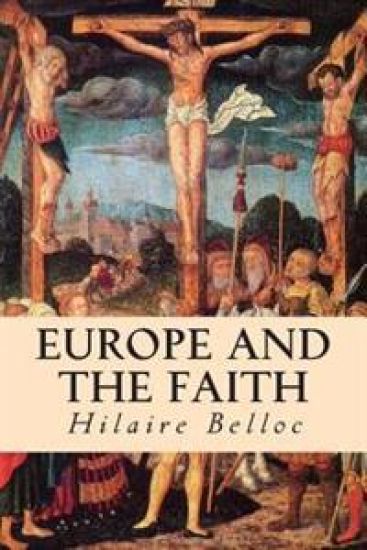
Europe and the Faith is a classic Christian studies text by Hilaire Belloc. I say the Catholic "conscience" of history--I say "conscience"--that is, an intimate knowledge through identity: the intuition of a thing which is one with the knower--I do not say "The Catholic Aspect of History." This talk of "aspects" is modern and therefore part of a decline: it is false, and therefore ephemeral: I will not stoop to it.

The object of The French Revolution, by Hilaire Belloc, is not to recount once more the history of the French Revolution: that can be followed in any one of a hundred text-books. Their object is rather to lay, if that be possible, an explanation of it before the English reader; so that he may understand both what it was and how it proceeded, and also why certain problems hitherto unfamiliar to Englishmen have risen out of it. The French Revolution was a period of far-reaching social and political upheaval in France and its colonies that lasted from 1789 until 1799. It was partially carried forward by Napoleon during the later expansion of the French Empire. The Revolution overthrew the monarchy, established a republic, catalyzed violent periods of political turmoil, and finally culminated in a dictatorship under Napoleon who brought many of its principles to areas he conquered in Western Europe and beyond. Inspired by liberal and radical ideas, the Revolution profoundly altered the course of modern history, triggering the global decline of absolute monarchies while replacing them with republics and liberal democracies. Through the Revolutionary Wars, it unleashed a wave of global conflicts that extended from the Caribbean to the Middle East. Historians widely regard the Revolution as one of the most important events in human history. The causes of the French Revolution are complex and are still debated among historians. Following the Seven Years' War and the American Revolution, the French government was deeply in debt. It attempted to restore its financial status through unpopular taxation schemes, which were heavily regressive. Years of bad harvests leading up to the Revolution also inflamed popular resentment of the privileges enjoyed by the aristocracy and the Catholic clergy of the established church. Demands for change were formulated in terms of Enlightenment ideals and contributed to the convocation of the Estates General in May 1789. During the first year of the Revolution, members of the Third Estate (commoners) took control, the Bastille was attacked in July, the Declaration of the Rights of Man and of the Citizen was passed in August, and a women's march on Versailles that forced the royal court back to Paris in October. A central event of the first stage, in August 1789, was the abolition of feudalism and the old rules and privileges left over from the Ancien R gime. The next few years featured political struggles between various liberal assemblies and right-wing supporters of the monarchy intent on thwarting major reforms. The Republic was proclaimed in September 1792 after the French victory at Valmy. In a momentous event that led to international condemnation, Louis XVI was executed in January 1793.

The Modern Traveler (1898)
Hilaire Belloc; Basil Temple Blackwood
Literary Licensing, LLC
2014
sidottu

The Modern Traveler (1898)
Hilaire Belloc; Basil Temple Blackwood
Literary Licensing, LLC
2014
nidottu


A Moral Alphabet: In Words of from One to Seven Syllables
Hilaire Belloc
Literary Licensing, LLC
2014
nidottu



The Inquisition: A Political and Military Study of Its Establishment
Hoffman Nickerson; Hilaire Belloc
Literary Licensing, LLC
2013
nidottu
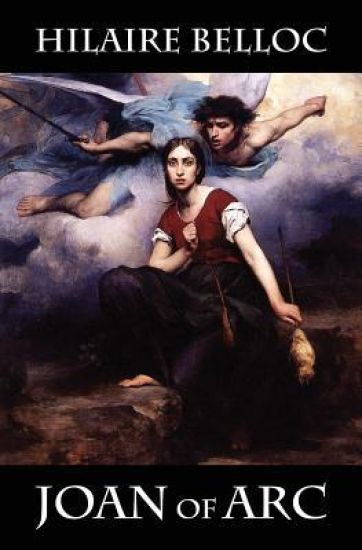

Hilaire Belloc's Europe and the Faith will be of interest to all those - Catholic and non-Catholic equally - who value the contributions of European Civilisation and see possibilities in a United Europe beyond the trade agreements, red tape and political bureaucracy of the present EU. Belloc, the famous poet, essayist, novelist and historian, here shows the organic unity upon which Europe was built over the course of centuries, her rise, flourishing, subversion and decline into petty-statism, capitalism and tyranny. He looks beyond the persistent anti-Catholic propaganda and shows that Catholic Europe was the high point of European Civilisation where even the humblest of people lived well. Belloc shows that tyranny, greed, exploitation and disunity were ushered by the Reformation, heralding the capitalism and plutocracy that continue to enslave the world. Kerry Bolton's 'Introduction' reviews Belloc's major points, drawing from the famous social commentator William Cobbett, who showed that even the humblest classes of Medieval Europe lived far better than their counterparts centuries later. Bolton shows further that the present conception of European Union is a counterfeit and a fraud, planned and implemented by the Church's traditional enemy, Freemasonry, whose aim is not a Europe of faith but a secular Europe as a prelude to a 'Universal Republic', as shown by Masonic boasts. Also traced is the meaning of 'Europe', its birth as a spiritual concept, and the way the peoples of the Occident prior to the Reformation had a common identity, ethics, and notion of what it was to be 'European'.
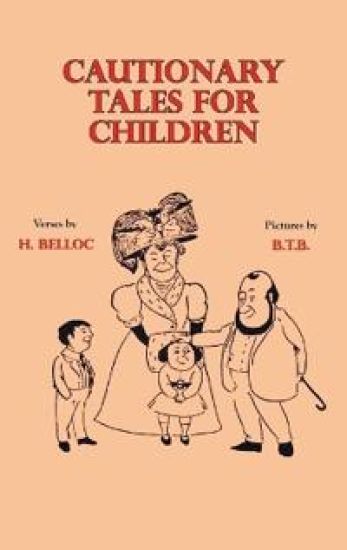

Here, Belloc writes of a trip through Sweden and Denmark in 1938, a nostalgic trip taken forty-three years after his first Scandanvian trip in 1895. This volume includes Belloc's history and topography of the area.

The Mustard Tree: An Argument On Behalf Of The Divinity Of Christianity
Hilaire Belloc; O. R. Vassall Phillips
Createspace Independent Publishing Platform
2012
nidottu

The Question and the Answer: Science and Culture Series
Hilaire Belloc; Joseph Husslein
Literary Licensing, LLC
2012
nidottu
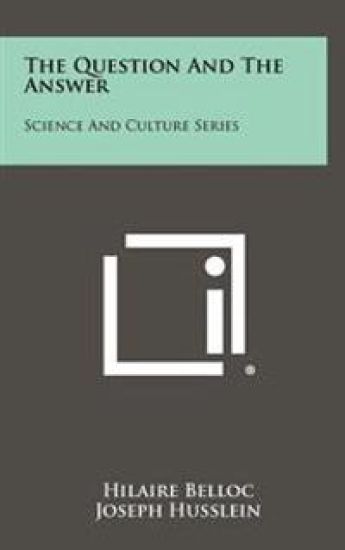
The Question and the Answer: Science and Culture Series
Hilaire Belloc; Joseph Husslein
Literary Licensing, LLC
2012
sidottu
The Question And The Answer is a book written by Hilaire Belloc, a renowned writer and historian. This book is a part of the Science and Culture series and explores the relationship between science and culture. Belloc delves into the question of how science and culture have influenced each other throughout history and how they continue to do so in the modern world. The book is divided into two parts: the first part deals with the question of science and culture, while the second part provides the answer. Belloc argues that science and culture are not separate entities but are intertwined and that they have influenced each other in various ways throughout history. He also discusses the impact of science on culture and how culture has influenced the development of science. In the second part of the book, Belloc provides his answer to the question of science and culture. He argues that science and culture should work together to create a better world. He suggests that science should be used to enhance and enrich culture, and that culture should provide a framework for scientific inquiry. Overall, The Question And The Answer is a thought-provoking book that explores the complex relationship between science and culture. Belloc's insights and arguments are compelling and provide a unique perspective on this important topic. This scarce antiquarian book is a facsimile reprint of the old original and may contain some imperfections such as library marks and notations. Because we believe this work is culturally important, we have made it available as part of our commitment for protecting, preserving, and promoting the world's literature in affordable, high quality, modern editions, that are true to their original work.