Kirjojen hintavertailu – 12 859 819 kirjaa ja 27 kauppaa

Kirjailija

Hilary Brown

Kirjat ja teokset yhdessä paikassa: 11 kirjaa, julkaisuja vuosilta 1997–2022, suosituimpiin kuuluu Person-Centred Lifestyles for People with Intellectual Disabilities. Vertaile teosten hintoja ja tarkista saatavuus suomalaisista kirjakaupoista.

11 kirjaa

Kirjojen julkaisuvuodet: 1997–2022.

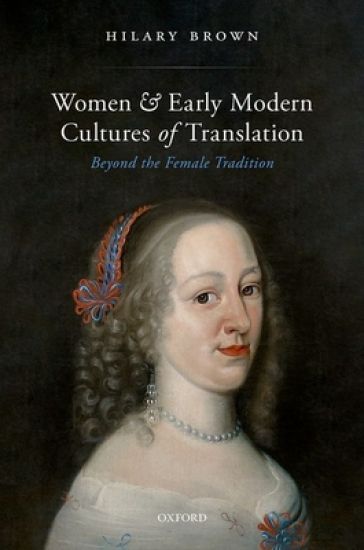
Women and Early Modern Cultures of Translation

Women and Early Modern Cultures of Translation

Hilary Brown

Oxford University Press
2022
sidottu
Women and Early Modern Cultures of Translation: Beyond the Female Tradition is a major new intervention in research on early modern translation and will be an essential point of reference for anyone interested in the history of women translators. Research on women translators has often focused on early modern England; the example of early modern England has been taken as the norm for the rest of the continent and has shaped research on gender and translation more generally. This book brings a new European perspective to the field by introducing the case of Germany. It draws attention to forty women who can be identified as translators in sixteenth- and seventeenth-century Germany and shows how their work does not fit easily into traditional narratives about marginalization and subversiveness. The study uses the example of Germany to argue against reading the work of translating women primarily through the lens of gender and to challenge claims about the existence of a female translation tradition which transcends the boundaries of time and place. Broadening our perspective to include Germany provides a more nuanced and informed account of the position of women within European translation cultures and forces us to rethink gender as a category of analysis in translation history. The book makes the case for a new 'woman-interrogated' approach to translation history (to borrow a concept from Carol Maier) and as such it will provide a blueprint for future work in the area.

War Tourist

War Tourist

Hilary Brown

Friesenpress
2021
pokkari
Hilary Brown has filed television reports from every continent except Antarctica. She was once profiled on TVO's 'The Agenda' as 'Canada's best-ever female foreign correspondent.' This embarrasses her. She was one of the last journalists to be lifted by helicopter from the roof of the American Embassy in Saigon in 1975, during the Communist takeover of South Vietnam. One of her ABC reports later appeared in the motion picture 'The Deer Hunter' in what Brown calls her 'fifteen seconds of fame.' During the 1980's she was an Anchor for the Canadian Broadcasting Corporation in Toronto, an experience she describes as 'death by hairspray.' She later returned to ABC News for another 18 years to do the work she loved best: foreign news reporting. She was married to the British biographer and BBC correspondent John Bierman, who she met in Pakistan during the Indo-Pak war of 1971. He became her mentor, best friend, and father of her only child. Their life together, in half a dozen countries over three decades, is a great love story that only ended with his death in 2006. As a widow, Brown continued to work at what she calls 'the best job in the world' before she finally hung up her trench coat. Two years later she fell in love with a Canadian businessman who, until the global pandemic, flew her around the world in the relentless pursuit of pseudo-extreme sports for which she was totally unqualified. She says he keeps her in a constant state of excitement and fear, which is just like being a foreign correspondent, all over again. Foreign correspondents are like war tourists in flak jackets, ' she writes. 'They document human misery, and then move on.' But many are left with the emotional baggage of guilt, and a search for atonement. This is one of the many themes in Brown's lively memoir, and it's quite a ride. To readers of all ages, but especially her own, her message is that life is never over... until it's over.
When She Woke She Was an Open Field

When She Woke She Was an Open Field

Hilary Brown

Headmistress Press
2017
pokkari
*Finalist for the Charlotte Mew Prize These poems have an incredibly beautiful and painful landscape. The body becomes the field splayed open, as does memory, as does love, as does language. The imagery of the body is sensual and electric and you can feel the speaker risking so much as they turn from one line to another.-Natalie Diaz, judge of the Charlotte Mew Prize Hillary Brown's When She Woke She Was an Open Field are poems written on the surface of the body to be felt in the reverberations of our bones. They are necessary poems written in these times to remind us of our humanity. This is the perilous work of poetry. They are not easy to read and even more difficult to write. These are poems of unflinching bravery, full of complications and difficult truths.-Truong Tran "Remember your landmarks," writes Hilary Brown, whose poems are at once lyric imperatives and stirring invocations, all of them asking us to reckon with the body of our landscape and vice versa. When She Woke She Was an Open Field arrives with a fresh and clear voice that invites its reader to remember they are always already a viewer, a visitor, a voyeur, too. Brown writes the best kind of short poem-careful in its lyricism and reckless with imagistic surprise-& this collection is nothing if not a memorable landmark.-Meg Day "Cleave" means both to cut something in half and to hold fast to a body or object we hold dear. Hillary Brown's poems investigate the remade female self after brain surgery: an operation that cleaves her vision of herself and the world, but also allows her to imagine a self more fully cleaved to the world she inhabits, where the tongue becomes a "prickly pear/ blossom open/ for rain," and any anonymous young woman can still "be fearless, full to bursting, free."-Paisley Rekdal Hilary Brown is one of those poets who doesn't look away. Who invites you to stare and meets your eyes with her own always steady gaze-even when the world is unsteady, full of loss and all the slow death capitalism has on offer. These poems provide something else, aching bright and sharp. They sing the queer body, the disabled body. They know about not having enough to eat, about country roads, about church and how to live through it. These poems know, most of all, "There's power in there, holding / the discomfort of it close."-Stephanie Young
Integrated Care in Action

Integrated Care in Action

Robin Miller; Hilary Brown; Catherine Mangan

Jessica Kingsley Publishers
2016
pokkari
Integration is now a key expectation within the delivery of health and social care services in the UK and internationally. However, it still remains difficult to achieve and sustain in practice. Based on learning from successful, and unsuccessful, integrated care initiatives, this book is an invaluable guide for those responsible for leading, managing and delivering integrated care across health, social care and housing. Written by an experienced team of researchers who have studied, led and supported integrated care for many years Integrated Care in Practice draws on latest evidence, innovative practice and helpful theory. It provides insights into the common pitfalls that such initiatives can encounter and demonstrates positive approaches to anticipating and responding to such challenges. Throughout, real-case examples are provided, and concepts and models are connected with the realities of day-to-day life for those working within these services. Integrated care is a goal to aspire to - this book helps to explain how we can turn this goal into practical action and positive outcomes.
Person-Centred Lifestyles for People with Intellectual Disabilities

Person-Centred Lifestyles for People with Intellectual Disabilities

Jan Alcoe; Hilary Brown

Pavilion Publishing (Brighton) Ltd
2014
muu
This simple but powerful staff and service development exercise provides a vital stimulus to exploring and evaluating attitudes, services and practice in relation to people with intellectual disabilities and the quality of lives they are enabled to lead. It can be used with any group of stakeholders, in any kind of service - whether public, private or voluntary - and in any country of the world. Whatever the nature of the organisation and the cultural context, the exercise offers a way of holding existing attitudes, practices, systems and structures 'up to the light', in order to ensure that they meet the values we would espouse for our own lives and those of our families and loved ones. The aim is not only to guard against the violation of human rights and to meet minimum standards imposed by regulatory bodies, but also to make genuine progress towards creating consistent person-centred responses - individualised, flexible, and self-directed, and clearly based on human values of dignity, respect and equality. The exercises can be used for a wide range of purposes, including developing a vision for a new service and/or values statement, designing or changing services, including environments, systems and staffing, changing problematic cultures, preparing for inspection, introducing more person-centred ways of thinking and planning, meeting and monitoring quality standards and codes of practice, staff induction and development. This pack contains an A4 manual with full instructions and examples for running the exercises; DVD containing slides and clips of filmed training sessions and slides, 132 discussion cards and 12 header cards.
Preventing the Emotional Abuse and Neglect of People with Intellectual Disability

Preventing the Emotional Abuse and Neglect of People with Intellectual Disability

Hilary Brown; Sally Robinson

Jessica Kingsley Publishers
2013
pokkari
There's so many different types of abuse, and it all comes down to the same thing. It's making people nothing. And Fran was nothing. There was never anything nice said about her, everything was negative. And she had to put up with that, and we had to put up with that, until we all sort of believed it, almost.'Preventing the Emotional Abuse and Neglect of People with Intellectual Disability throws light onto the traumatic experiences faced by people with intellectual disability living in disability accommodation services. Through the narratives of nine people with intellectual disability and their family members, it reveals: the problem of systematic abuse; the cumulative impact of emotional and psychological abuse and neglect over time; recognition of the abuse by people with intellectual disability; and the lack of moral authority afforded to them in abuse acknowledgement and reporting. The author suggests a number of positive approaches and methods to help all those working with people with intellectual disability to prevent emotional abuse, respond appropriately and effectively support the recovery of victims. This book will prove to be indispensable for social care workers, care home managers, social workers, researchers and academics in the disability field, social sciences students, human rights workers and abuse practitioners.
Luise Gottsched the Translator

Luise Gottsched the Translator

Hilary Brown

Camden House Inc
2012
sidottu
By focusing on Luise Gottsched's extraordinary volume and range of translations, Hilary Brown sheds an entirely new light on Gottsched and her oeuvre. Critics have paid increasing attention to the oeuvre of Luise Gottsched (1713-62), Germany's first prominent woman of letters, but have neglected her lifelong work of translation, which encompassed over fifty volumes and an extraordinary range, from drama and poetry to philosophy, history, archaeology, even theoretical physics. This first comprehensive overview of Gottsched's translations places them in the context of eighteenth-century intellectual, literary, and cultural history, showing that they were part of an ambitious, progressive program undertaken with her famous husband to shape German culture during the Enlightenment. In doing so it casts Gottsched and her work in an entirely new light. Including chapters on all the main subject areas and genres from which Gottsched translated, it also explores the relationship between her translations and her original works, demonstrating that translation was central to her oeuvre. A bibliography of Gottsched's translations and source texts concludes the volume. Not only a major new addition to a growing body of research on the Gottscheds, the book will also be valuable reading for scholars interested more broadly in women's writing, the history of translation, and the literature and culture of the German (and European) Enlightenment. Hilary Brown is Lecturer at the University of Birmingham, UK.
Physiology and Pharmacology of the Heart

Physiology and Pharmacology of the Heart

Hilary Brown; Roland Kozlowski

Blackwell Science Ltd
1997
nidottu
Profusely illustrated, Physiology and Pharmacology of the Heart contains lucid descriptions of the following topics: anatomy of the heart; foetal circulation; congenital malformations; mechanical events in the normal heart; electrical excitations of the heart; mechanical properties of cardiac muscle and its control; measurement of cardiac output; coronary circulation; ischaemic heart disease and its therapy; and cardiac failure and its therapy.