

Kirjailija
Hildred Geertz
Kirjat ja teokset yhdessä paikassa: 6 kirjaa, julkaisuja vuosilta 1978–2014, suosituimpiin kuuluu Kinship in Bali. Vertaile teosten hintoja ja tarkista saatavuus suomalaisista kirjakaupoista.
6 kirjaa
Kirjojen julkaisuvuodet: 1978–2014.

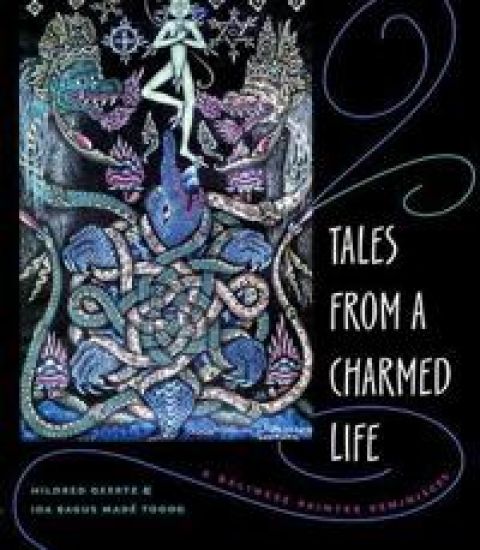
Tales from a Charmed Life
Hildred Geertz; Ida Bagus; Made Togog
University of Hawai'i Press
2005
sidottu
Tales from a Charmed Life is the last in a trilogy of works by Hildred Geertz exploring the complexity of Balinese history, religion, and society. A landmark study by one of the most distinguished anthropologists of Indonesia, it centers around the stories and paintings of Ida Bagus Made Togog (1913-1989), an artist and ritual specialist who played a significant role in the history of Balinese ethnography. In the 1930s, Togog was central to Mead and Bateson's pioneering studies of ""Balinese character"" and came under the influence of expatriate artists Walter Spies and Rudolf Bonnet to emerge as a major representative of the Batuan style of painting. Togog's art and anecdotal stories of his most memorable life experiences are here interwoven with Geertz's illuminating commentary to construct an innovative framework for understanding Balinese culture. Togog shares stories of his early life, relating dilemmas from his childhood and youth. Growing up in the wake of Dutch colonization, he came into contact with new languages, customs, and economic opportunities that presented him with puzzling and poignant experiences. He tells of his association with Spies and Bonnet and later Mead and Bateson and his role in the creation of a genre of painting for which Bali is now famous. This is a view of Bali from the inside - a vivid, highly personal look at a world where spirits, ancestors, and sorcerers have the power to intervene in one's life. According to Togog, who narrowly escaped death numerous times, his was indeed a ""charmed life.
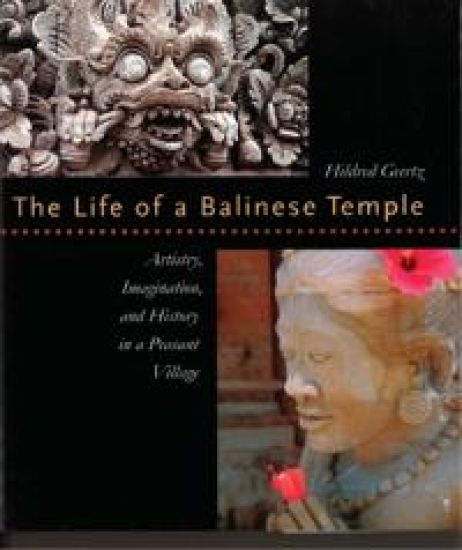
Should a temple be seen as a work of art, its carvers as artists, its worshipers as art critics and patrons? What is a temple (and its art) to the people who made and use it? Noted anthropologist Hildred Geertz attempts to answer these and other questions in this unique look at transformations in material culture and social relations over time in a village temple in Bali. Throughout, Geertz offers insightful glimpses into what the statues, structures, and designs of Pura Desa Batuan convey to those who worship there, deepening our understanding of how a village community evaluates workmanship and imagery. Following an introduction to the temple and villagers of Batuan, Geertz explores the problematics of the Western concept of ""art"" as a guiding framework in research. She goes on to outline the many different kinds of work - ideational as well as physical - undertaken in connection with the temple and the social institutions that enable, constrain, and motivate their creation. Finally, the ""art-works"" themselves are presented, set within the intricate sociocultural contexts of their making.
Letters of a Javanese Princess by Raden Adjeng Kartini
Hildred Geertz
University Press of America
1992
nidottu
Translated from the original Dutch by Agnes Louise Symmers and originally published by Alfred A. Knopf, this collection of letters was written by the daughter of a Javanese civil servant in the Dutch colonial government. She had been permitted the unusual privilege of attending a Dutch elementary school, but then returned home to seclusion during her adolescence, as was the Indonesian custom for women. The letters provide a fascinating picture of the life and spirit of the time during the period when Java was undergoing intimate contact with Western civilization. Through her writings she became a spokesman for the liberation and education of women, as well as an advocate for Indonesian nationalist aspirations. Co-published with the Asia Society.
This work constitutes the first book-length examination of Balinese kinship in English and an important theoretical analysis of the central ethnographic concept of "kinship system." Hildred and Clifford Geertz's findings challenge the prevailing anthropological notion of a kinship system as an autonomous set of institutionalized social relationships. Their research in Bali suggests that kinship cannot be studied in isolation but must be perceived as a symbolic subsystem governed by ideas and beliefs unique to each culture.