
Kirjojen hintavertailu – 12 903 735 kirjaa ja 27 kauppaa

Kirjailija

Hitoshi Nasu

Kirjat ja teokset yhdessä paikassa: 2 kirjaa, julkaisuja vuosilta 2009–2019, suosituimpiin kuuluu International Law on Peacekeeping. Vertaile teosten hintoja ja tarkista saatavuus suomalaisista kirjakaupoista.

2 kirjaa

Kirjojen julkaisuvuodet: 2009–2019.

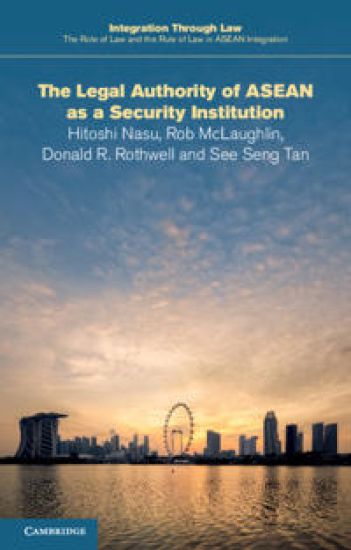
The Legal Authority of ASEAN as a Security Institution

The Legal Authority of ASEAN as a Security Institution

Hitoshi Nasu; Rob McLaughlin; Donald R. Rothwell; See Seng Tan

Cambridge University Press
2019
pokkari
The Association of Southeast Asian Nations (ASEAN) has achieved deeper regional market integration to lay a socio-economic foundation for the development of a regional community, yet inter-state trust is by no means assured as Southeast Asian nations remain steadfast in maintaining their political regime stability against external interference. However, through its institutional practices, ASEAN has emerged as a distinct model of security institution, while the region's contemporary security landscape has diversified with various non-traditional security issues. By looking beyond the veneer of diplomacy and prevailing political circumstances, this book examines the legal nature and form of ASEAN's authority to address diverse regional security issues. It provides a fresh perspective on ASEAN's role as a security institution. With an interdisciplinary analysis, this book reveals the normative role that ASEAN plays in facilitating the processes of norm development, localisation and internalisation as it deals with contemporary security challenges confronting Southeast Asia.
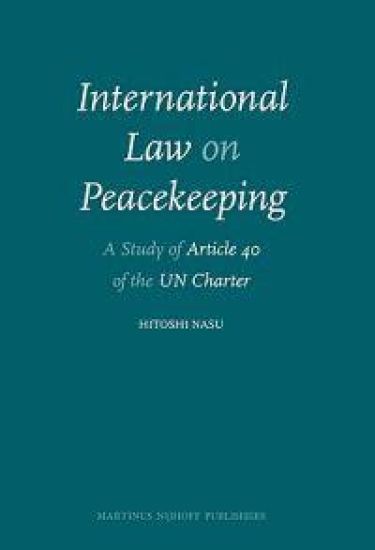
International Law on Peacekeeping
It is generally considered that the UN Security Council has been galvanised since the end of the Cold War. However, the existence and development of armed conflicts remain the reality in the international scene. Is the upsurge in instances of invoking Chapter VII of the UN Charter truly a sign of the invigoration of the Security Council’s authority or mere evidence of its failure to prevent the aggravation of armed conflicts? To what extent is the Security Council authorised to exercise the peacekeeping power in order to take a more flexible approach to conflict management from an earlier stage of conflict? This book explores the potential of the UN peacekeeping power, placing Article 40 of the UN Charter at the centre of the legal regime governing peacekeeping measures. It traces the origins of peacekeeping measures primarily in the experience of the League of Nations and identifies Article 40 of the Charter as the primary legal basis for, and the legal restraints upon, the exercise of the peacekeeping power. It examines the regulatory framework within which the United Nations, particularly the Security Council, is authorised and may even be required to direct peacekeeping measures to prevent the aggravation of armed conflicts. It suggests that the legal accountability of the Security Council in directing peacekeeping measures will be enhanced by utilising procedural mechanisms for self-regulation