Kirjojen hintavertailu – 12 870 887 kirjaa ja 27 kauppaa

Kirjailija

Hong Shen

Kirjat ja teokset yhdessä paikassa: 6 kirjaa, julkaisuja vuosilta 2010–2023, suosituimpiin kuuluu Looking East – William Howard Taft and the 1905 U.S. Diplomatic Mission to Asia: the Photographs of Harry Fowler Woods. Vertaile teosten hintoja ja tarkista saatavuus suomalaisista kirjakaupoista.

6 kirjaa

Kirjojen julkaisuvuodet: 2010–2023.

Alibaba

Alibaba

Hong Shen

TAYLOR FRANCIS LTD
2023
nidottu
This book examines the political-economic dynamics in the development of a leading global Internet giant: Alibaba. As both a prominent example of, as well as providing the basic infrastructure for, China’s outward expansion, Alibaba demonstrates the complex interplay between different state agencies and units of capital in the context of the rise of global China. Hong Shen investigates the development and expansions of Alibaba and discusses how Alibaba has not only become a leader of China’s increasingly globalizing internet but has also increasingly served as a basic infrastructure model for other Chinese companies to go global. Shen also addresses how this process has been constantly shaped and reshaped by complex state-capital interactions along the way. This book shows how different units of capital, both inside and outside of China, have interacted with Alibaba’s developmental strategies and illustrates how different state agencies, both domestic and international, have enabled or constrained the company’s development, especially its global expansion. This book will appeal to students and scholars of critical political economy of media, global media and digital industries, communication, technology and society, and internet studies. It will also be relevant to policy-makers working in the arena of global internet and trade policies.
Alibaba

Alibaba

Hong Shen

Routledge
2021
sidottu
This book examines the political-economic dynamics in the development of a leading global Internet giant: Alibaba. As both a prominent example of, as well as providing the basic infrastructure for, China’s outward expansion, Alibaba demonstrates the complex interplay between different state agencies and units of capital in the context of the rise of global China. Hong Shen investigates the development and expansions of Alibaba and discusses how Alibaba has not only become a leader of China’s increasingly globalizing internet but has also increasingly served as a basic infrastructure model for other Chinese companies to go global. Shen also addresses how this process has been constantly shaped and reshaped by complex state-capital interactions along the way. This book shows how different units of capital, both inside and outside of China, have interacted with Alibaba’s developmental strategies and illustrates how different state agencies, both domestic and international, have enabled or constrained the company’s development, especially its global expansion. This book will appeal to students and scholars of critical political economy of media, global media and digital industries, communication, technology and society, and internet studies. It will also be relevant to policy-makers working in the arena of global internet and trade policies.

Looking East – William Howard Taft and the 1905 U.S. Diplomatic Mission to Asia: the Photographs of Harry Fowler Woods

Looking East – William Howard Taft and the 1905 U.S. Diplomatic Mission to Asia: the Photographs of Harry Fowler Woods

Margo Taft Stever; James Taft Stever; Hong Shen; Kevin Grace

University of Cincinnati Press
2015
sidottu
Since the mid-19th century, relations between the United States in the West and Asian countries in the East have been an aggregate of diplomatic miscues and achievements, of trade policy successes and failures, and of cultural chasms and bridges. From the Treaty of Wangxia in 1844 that provided America with trading rights in China on a par with European countries to the contemporary political debates and educational partnerships in nations like Japan, Vietnam, India, and China, the element of understanding and appreciating differences has been paramount. A singular event in this heritage of almost 150 years in the 1905 mission that sent William Howard Taft on a combination trade and culture junket to Asian countries. Occurring just a few years after U. S. Secretary of State's John Hay's 1899 Open Door Note that sought to keep China open to equitable trade with all countries, the Taft delegation primarily visited China, Japan, and the Philippines to shore up America's interests and to learn more about their emerging partners in the new century. In Looking East, authors Margo Taft Stever, James Taft Stever, and Hong Shen explore this journey not only by an assiduous use of archives and historical analyses, but especially through the extraordinary images captured by photographer Harry Fowler Woods. Both Taft and Woods are ancestors of two of the authors so there is a particular interest on their part. With scholar Shen, they uncovered these photos and created exhibitions and published the initial Chinese-language edition of this volume by Zhejiang University Press in 2012. In this new, English-language edition, William Howard Taft's 1905 endeavors in Asia are freshly accorded the insight and appreciation they deserve in American diplomatic history.
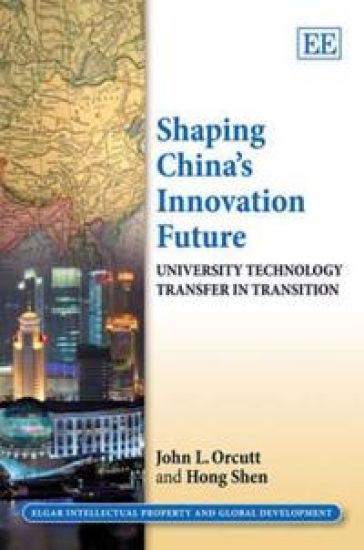
Shaping China’s Innovation Future

Shaping China’s Innovation Future

John L. Orcutt; Hong Shen

Edward Elgar Publishing Ltd
2012
nidottu
Since the 1980s, China has worked to develop the technology commercialization capacity of its universities. Progress has occurred, but university technology commercialization remains on the periphery of Chinese economic development. Because university technology commercialization is predominantly a 'law-based' strategy, the authors examine whether China's legal system adequately supports such efforts. Since the law does not operate in isolation, the authors conduct their analysis through the lens of China's overall innovation system. This holistic approach enables the authors first to provide a more accurate analysis of the Chinese legal system's ability to support university technology commercialization and also to generate useful insights on the strengths, weaknesses and future of the country's commercialization efforts. One of the problems with analyzing inherently complex systems - like that of China's innovation system - is the need for expertise from a very broad range of disciplines. In that vein, Shaping China's Innovation Future employs a thorough analysis of a combination of factors including: the role of law and China's legal system; economic theory and the development of China's economy; China's educational, intellectual property, and financial systems; China's innovation capacity; and Chinese culture. Though the recommendations on how to improve China's technology commercialization system are unique for China, the scope of the research makes the conclusions found here applicable to other countries facing similar challenges. This unique analysis will be of significant interest to policymakers in China and other developing countries who are seeking to increase their level of technology-based economic development; academics studying China, China's legal system, university technology transfer, national innovation systems, entrepreneurialism, international intellectual property, or international economic development; and Chinese scientists and entrepreneurs and those wishing to work with them.
Shaping China’s Innovation Future

Shaping China’s Innovation Future

John L. Orcutt; Hong Shen

Edward Elgar Publishing Ltd
2010
sidottu
Since the 1980s, China has worked to develop the technology commercialization capacity of its universities. Progress has occurred, but university technology commercialization remains on the periphery of Chinese economic development. Because university technology commercialization is predominantly a 'law-based' strategy, the authors examine whether China's legal system adequately supports such efforts. Since the law does not operate in isolation, the authors conduct their analysis through the lens of China's overall innovation system. This holistic approach enables the authors first to provide a more accurate analysis of the Chinese legal system's ability to support university technology commercialization and also to generate useful insights on the strengths, weaknesses and future of the country's commercialization efforts. One of the problems with analyzing inherently complex systems - like that of China's innovation system - is the need for expertise from a very broad range of disciplines. In that vein, Shaping China's Innovation Future employs a thorough analysis of a combination of factors including: the role of law and China's legal system; economic theory and the development of China's economy; China's educational, intellectual property, and financial systems; China's innovation capacity; and Chinese culture. Though the recommendations on how to improve China's technology commercialization system are unique for China, the scope of the research makes the conclusions found here applicable to other countries facing similar challenges. This unique analysis will be of significant interest to policymakers in China and other developing countries who are seeking to increase their level of technology-based economic development; academics studying China, China's legal system, university technology transfer, national innovation systems, entrepreneurialism, international intellectual property, or international economic development; and Chinese scientists and entrepreneurs and those wishing to work with them.