
Kirjailija
Honoré de Balzac
Kirjat ja teokset yhdessä paikassa: 4 060 kirjaa, julkaisuja vuosilta 1974–2027, suosituimpiin kuuluu Ursula. Vertaile teosten hintoja ja tarkista saatavuus suomalaisista kirjakaupoista.
Nimi esiintyy myös muodoissa: Honore de Balzac, Honorè de Balzac
4 060 kirjaa
Kirjojen julkaisuvuodet: 1974–2027.

This book has been considered important throughout the human history, and so that this work is never forgotten we have made efforts in its preservation by republishing this book in a modern format for present and future generations. This whole book has been reformatted, retyped and designed. These books are not made of scanned copies and hence the text is clear and readable.

Ai margini di Le Berry si trova una citt che, bagnata dalla Loira, attira infallibilmente lo sguardo del viaggiatore. Sancerre corona l'altezza pi alta di una catena di colline, l'ultima della gamma che d variet al Nivernais. La Loira inonda le pianure ai piedi di queste pendici, lasciando un alluvione giallo estremamente fertile, tranne in quei luoghi in cui li ha inondati di sabbia e li ha distrutti per sempre, da uno di quei terribili sollevamenti che sono anche casuali della Vistola -La Loira della costa settentrionale. La collina su cui sono raggruppate le case di Sancerre cos lontana dal fiume che il piccolo porto fluviale di Saint-Thibault prospera della vita di Sancerre. L il vino viene spedito e vengono sbarcate le doghe di rovere, con tutti i prodotti portati dalla Loira superiore e inferiore. Nel periodo in cui inizia questa storia i ponti sospesi a Cosne e Saint-Thibault erano gi costruiti. I viaggiatori da Parigi a Sancerre per la strada meridionale non venivano pi traghettati attraverso il fiume da Cosne a Saint-Thibault; e questo di per s sufficiente a dimostrare che la grande mescolanza incrociata del 1830 era un ricordo del passato, poich la Casa d'Orleans ha sempre avuto cura dei miglioramenti sostanziali, anche se un po 'alla moda di un marito che fa regali alla moglie dalla sua parte matrimoniale.

The first new translation of Balzac’s 1847 novel Splendeurs et misÈres des courtisanes in half a century, fully annotated and with an extensive introduction In Lost Souls, HonorÉ de Balzac’s brilliant evocation of nineteenth-century Paris, we enter a world of glittering wealth and grinding poverty, teeming with strivers, poseurs, and pleasure seekers along with those who struggle merely to survive. Between the heights of Parisian society and the criminal world lurking underneath, fate is about to catch up with Lucien de RubemprÉ, last seen in Lost Illusions, as his literary aspirations, his love for the courtesan Esther van Gobseck, and his scheme to marry the wealthy Clotilde become entangled in the cunning and ultimately disastrous ambitions of the AbbÉ Herrera, a villain for the ages. An extraordinary volume in Balzac’s vast Human Comedy (in which he endeavored to capture all of society), Lost Souls appears here in its first new English translation in half a century. Keenly attuned to the acerbic charm and subtleties of Balzac’s prose, this edition also includes an introduction presenting thorough biographical, literary, and historical context, as well as extensive notes throughout the text-an invaluable resource for today’s readers as they navigate Balzac’s copious allusions to classical and contemporaneous politics and literature.


The Firm of Nucingen "", has been considered a very important part of the human history, but is currently not available in printed formats. Hence so that this work is never forgotten we have made efforts in its preservation by republishing this book in a modern format so that it is never forgotten and always remembered by the present and future generations. These books are not made of scanned copies of their original work and hence the text is clear and readable. This whole book has been reformatted, retyped and designed.
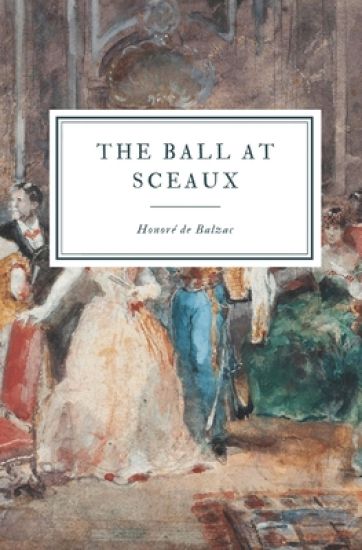
The Ball at Sceaux is the second work in Balzac's La Com die humaine published by Hawthorne Classics. The novella tells the story of young milie de Fontaine who, despite ambitions of a lofty match, falls in love with the mysterious Maximilien Longueville.
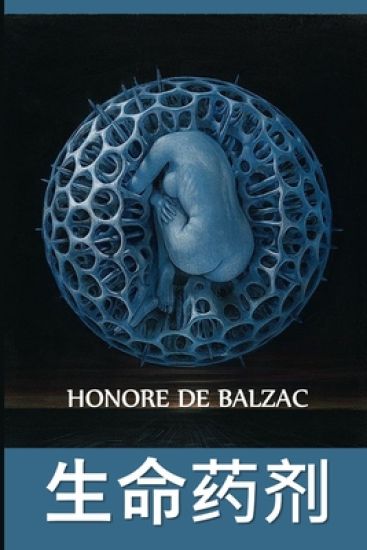
一个冬天的晚上,唐-胡安-贝维德维罗 在费拉拉 王子的宫殿里,宴请了埃斯特 的王子。 在那个时代,宴会是奇妙的景象,只有王室财富或强大的君主才能提供。 七个坐在笑声中的女人坐在一张桌子上,桌子上散发着芬芳的锥度,彼此交流着甜蜜的谈话。 围绕着它们的高贵艺术品的白色大理石在红色粉刷墙壁上脱颖而出,与浓郁的土耳其地毯形成鲜明对比。 每个人都讲述了一个充满活力的激情故事,其中包括美丽的妆容,这些缎子披着缎子,闪闪发光的金色,上面覆盖着比他们的眼睛还亮的宝石。 他们的思想和语言都没有不同。 但是他们的眼神,眼神,偶尔的手势或声音的语气为他们的话语提供了评论,坦率,肆意,忧郁或讽刺。

"亲爱的男孩,当您真的想知道一个女人的年龄时,请看着她的太阳穴和鼻子的尖端。无论妇女用化妆品可以取得什么成就,她们都无法对付那些廉洁的见证人。那里的每一年生命都留下了它的污名。当女人的太阳穴松弛,接缝,以特定方式枯萎时;当在她的鼻尖看到细微的斑点时,它们看起来像是在伦敦燃烧的煤烟囱散发出的难以察觉的黑色污渍......你的仆人,先生!那女人三十多岁。她可能很英俊,机智,有爱心-随便你怎么想,但她已经三十多岁了,她正走向成熟。我不怪男人依恋那种女人。只不过,一个出类拔萃的男人一定不要把冬季皮蓬误认为是一个夏天的小苹果,在树枝上微笑着,等着你来嚼它。爱永远不会去研究出生和婚姻的记录。没有人爱一个女人,因为她长得英俊,丑陋,愚蠢或聪明。我们爱是因为我们爱。"


Father Goriot (1835) is a novel by French author Honoré de Balzac. An early work in his La Comédie humaine sequence, Father Goriot has since become one of Balzac’s most critically and commercially successful novels. It contains several characters who appear throughout his other books and is considered to be the first novel in which he perfected his hallmark realist style. The novel, set in Paris, follows Eugène de Rastignac, a young law student who lives at a boarding house owned by a widow named Madame Vauquer. Her other residents include Jean-Joachim Goriot, a retired businessman whose fortune has been spent on his two adult daughters, and Vautrin, a hardened and mysterious criminal. As Rastignac navigates urban life, he develops a fascination with high society that soon turns into an unhealthy obsession with joining the ranks of the wealthy. Although he falls in love with Goriot’s daughter Delphine, a married woman, Rastignac is pressured by Vautrin to court the young unmarried Victorine. Proposing they attempt to steal her family’s fortune—for which he offers to have her brother murdered—Vautrin does his best to corrupt the young and ambitious Rastignac, who will gradually be forced to choose between a life of luxury and a life of moral decency. In the background of their plotting, the story of Father Goriot unfolds, a tragic portrait of a man who gives everything to his family while wanting nothing more than their love and respect in return. Father Goriot is a complex yet effective novel. Criticized for extensive pessimism upon publication, its reputation for brutal honesty and social realism have aided its reception in recent years, and it is now considered one of Balzac’s most important works. With a beautifully designed cover and professionally typeset manuscript, this edition of Honoré de Balzac’s Father Goriot is a classic of French literature reimagined for modern readers.
Father Goriot (1835) is a novel by French author Honoré de Balzac. An early work in his La Comédie humaine sequence, Father Goriot has since become one of Balzac’s most critically and commercially successful novels. It contains several characters who appear throughout his other books and is considered to be the first novel in which he perfected his hallmark realist style. The novel, set in Paris, follows Eugène de Rastignac, a young law student who lives at a boarding house owned by a widow named Madame Vauquer. Her other residents include Jean-Joachim Goriot, a retired businessman whose fortune has been spent on his two adult daughters, and Vautrin, a hardened and mysterious criminal. As Rastignac navigates urban life, he develops a fascination with high society that soon turns into an unhealthy obsession with joining the ranks of the wealthy. Although he falls in love with Goriot’s daughter Delphine, a married woman, Rastignac is pressured by Vautrin to court the young unmarried Victorine. Proposing they attempt to steal her family’s fortune—for which he offers to have her brother murdered—Vautrin does his best to corrupt the young and ambitious Rastignac, who will gradually be forced to choose between a life of luxury and a life of moral decency. In the background of their plotting, the story of Father Goriot unfolds, a tragic portrait of a man who gives everything to his family while wanting nothing more than their love and respect in return. Father Goriot is a complex yet effective novel. Criticized for extensive pessimism upon publication, its reputation for brutal honesty and social realism have aided its reception in recent years, and it is now considered one of Balzac’s most important works. With a beautifully designed cover and professionally typeset manuscript, this edition of Honoré de Balzac’s Father Goriot is a classic of French literature reimagined for modern readers.

Изморен от бедност и обезсърчение и ужасен в този момент от собствената си презумпция, младият неофит може би не би се осмелил да влезе в присъствието на господаря, на когото дължим възхитителния си портрет на Хенри IV., Ако случайността не беше хвърлила неочаквано помощ по неговия начин. Възрастен мъж се качи на спиралното стълбище. Странността на роклята му, великолепието на дантелените му волани, солидната увереност в умишлената му стъпка накараха младежите да предположат, че тази забележителна личност трябва да бъде покровителят или поне интимният приятел на художника. Той се изтегли обратно в ъгъла на площадката и направи място за новодошлия; гледайки го внимателно и с надеждата да открие или откровената добронамереност на артистичния темперамент, или полезното разположение на онези, които популяризират изкуствата. Но напротив, той си представи, че вижда нещо дяволско в израза на лицето на стареца - нещо, не знам какво, което има качеството да примамва артистичния ум.
Lost Illusions (1837-1843) is a novel by French author Honoré de Balzac. Written as part of his La Comédie humaine sequence, Lost Illusions looks at scenes of Parisian and provincial life involving friendship, desire, and literary ambition. Inspired by his own experiences as a journalist and publisher, Balzac sought to tell a story adjacent to his own, a story concerning a young man for whom talent is abundant but recognition is woefully scarce. The novel’s protagonist, Lucien Chardon, features in Balzac’s work A Harlot High and Low, as does the villain Vautrin, who appears toward the end of Lost Illusions and throughout Father Goriot, one of author’s most popular and enduring works. The son of a middle-class father and aristocratic mother, Lucien Chardon is a promising young poet. He lives in Angoulême with his now-impoverished mother—who is also a widow—and his sister Ève. In the province, he spends his days with his loyal friend David Séchard, who encourages his literary lifestyle while studying to be a scientist. David’s eventual marriage to Ève only brings the two friends closer together, but when Lucien meets the wealthy and influential Mme. de Bargeton, with whom he flees to Paris, their friendship is lost to Lucien’s unstoppable ambition. In the city, abandoned by Mme. de Bargeton and living under his mother’s maiden name, Lucien de Rubempré sacrifices morality, friendship, and family at the altar of poetry, slowly becoming another person altogether. Lost Illusions is one of Balzac’s most sustained character studies, a novel which critiques humanity and high society as much as it does his own commercial interests as a professional writer. With a beautifully designed cover and professionally typeset manuscript, this edition of Honoré de Balzac’s Lost Illusions is a classic of French literature reimagined for modern readers.

Cousin Pons (1847) is a novel by French author Honoré de Balzac. One of the final works in Balzac’s La Comédie humaine sequence, Cousin Pons originally began as a novella before being extended to the length of a novel. It serves as both a beautiful meditation on the nature of Platonic male friendship and a vitriolic condemnation of the vanity and greed of the French bourgeoisie. In typical fashion, however, Balzac also turns a critical eye to the lower class, ensuring his uniquely holistic vision of French society spares no one—and leaves no stone unturned. When he isn’t performing with a Parisian boulevard orchestra, Sylvain Pons can be found in deep conversation with his good friend Wilhelm Schmucke, admiring his collection of paintings, or enjoying a gourmet meal with his cousins, M. and Mme. Camusot de Marville, whose food he greatly prefers to that of his landlady’s, Mme. Cibot. Pons’ life and company are of little interest to anyone other than his friend Wilhelm—by family and acquaintances, he is treated at best with tolerance, and at worst with disdain. After failing to find a suitable match for their daughter Cécile—which Pons attempts as a form of repayment for his shared meals with the Camusots—his cousins dispel him from their home and lives for good. But when they discover the value of his art collection—as do Mme. Cibot and several shady characters of the lower classes—a mad scramble ensues that threatens Sylvain Pons’ gentle nature as well as his life. Cousin Pons, a subtle and underrated novel by Honoré de Balzac, takes an unforgiving look at the consequences of greed as well exposes the imbalance between the economic and aesthetic values of art. With a beautifully designed cover and professionally typeset manuscript, this edition of Honoré de Balzac’s Cousin Pons is a classic of French literature reimagined for modern readers.