Kirjojen hintavertailu – 12 903 732 kirjaa ja 27 kauppaa

Kirjailija

Horace Randall Williams

Kirjat ja teokset yhdessä paikassa: 5 kirjaa, julkaisuja vuosilta 2009–2025, suosituimpiin kuuluu Johnnie. Vertaile teosten hintoja ja tarkista saatavuus suomalaisista kirjakaupoista.

5 kirjaa

Kirjojen julkaisuvuodet: 2009–2025.

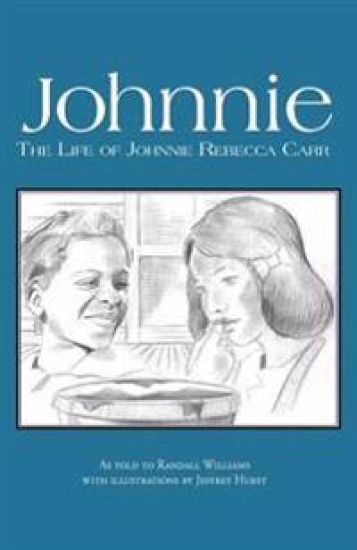
Johnnie

Johnnie

Horace Randall Williams

UNIVERSITY OF GEORGIA PRESS
2009
pokkari
The personal account of the triumph of a Southern black woman Mrs. Johnnie Carr, who overcame poverty, limited education, and racism to become a wife, mother, and civic leader. Johnnie also reveals the civil rights movement in Montgomery, Alabama. A childhood friend of Rosa Parks, as an adult she inspired Mrs. Parks to join the NAACP. Since 1968, Mrs. Carr has been president of the group which organized the Montgomery Bus Boycott. Her connection to Parks, Martin Luther King, Jr., and E. D. Nixon gives her a unique opportunity to offer insights and observations.
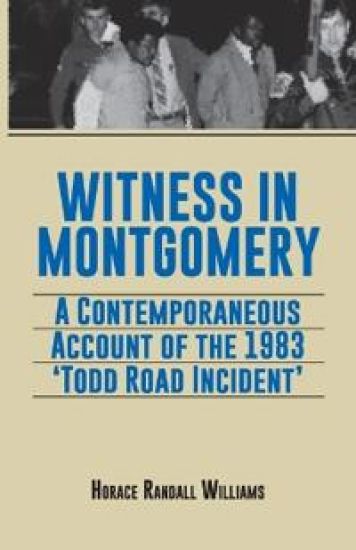
Witness in Montgomery

Witness in Montgomery

Horace Randall Williams

Black Belt Press
2025
pokkari
On February 27, 1983, in Montgomery, Alabama, a group of black mourners, many from up north, was assembled in the deceased's home following the funeral. Before the night was over, two white plainclothes policemen had been injured, one critically, and eight mourners arrested. The police say they identified themselves, were taken hostage and then beaten and shot. The mourners say the two whites did not identify themselves as police but kicked down the door to the house and charged in with their guns drawn, at which time the blacks disarmed them and then called the police. Later, the mourners say, more police arrived and the two whites tried to escape and shots were fired. The two accounts of what came to be called "The Todd Road Incident" varied so widely that Montgomery citizens could only wait and hope that upcoming trials would reveal the truth. However, the police department's early handling of the incident was seen by blacks and many whites as a gross over-reaction and an attempt to cover up possible improper conduct by the two officers. For example, Police Chief Charles Swindall held a pre-dawn press conference to denounce the mourners as "wild animals who had prey on their ground." He used the word torture to describe the treatment of the officers, said one of them had had his throat slashed requiring seventy-five stitches, and made other highly inflammatory comments. These comments were later found to be inaccurate or exaggerated. Meanwhile, a Montgomery newspaper reporter went to Michigan, searched police records, and interviewed friends and family of the defendants. His report showed that those accused of being "animals" were well-respected, hard-working churchgoers and family members in their home communities. The situation followed a decade of other incidents in which the Montgomery police were accused of abuse and wrongful arrests and a general discontent over what was seen as a militarization by controversial Mayor Emory Folmar of the local police in terms of uniforms, tactics, and command structure. In any case, the city was plunged into a racial divisiveness not seen since the civil rights struggles of the Montgomery Bus Boycott, the Freedom Riders, and the Selma to Montgomery March of 1955-65. In response, three interracial organizations emerged to try defusing the tensions through communication and good-will. All three organizations made achievements and two of the three are still active in 2025. In the end, charges against most of the accused mourners were dismissed. One case went to trial and ended in a hung jury. There were no convictions.

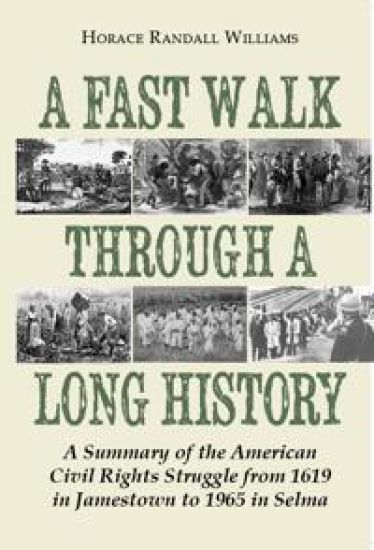
A Fast Walk Through a Long History

A Fast Walk Through a Long History

Horace Randall Williams

UNIVERSITY OF GEORGIA PRESS
2018
nidottu
A Fast Walk Through a Long History is a brisk but richly informative retelling of our civil rights history, originally prepared for inclusion in History Refused to Die: The Enduring Legacy of the African American Art of Alabama (Tinwood Books, 2015). In just 8,000 words, the essay presents a powerful telescopic view of the legacies of slavery and segregation, which the author traces back to back to the arrival of the first enslaved Africans in Jamestown, Virginia, in 1619. These first African Americans—literally—may have had status somewhat similar to European indentured servants already in the colonies, but soon the Africans’ skin color and the greed for cheap labor would consign them and their descendants to chattel slavery until the end of the Civil War. Post-war Reconstruction brought a brief moment of hope for equality, but these hopes were dashed by white supremacist terrorism abetted by politics and economics. Then followed a century of Jim Crow segregation, which was finally overcome—legally at least—in the 1950s and 1960s. The victories of civil rights and voting rights were the result of decades of black-led organizing, resistance, legal actions, and activism in communities across the nation but especially in the Deep South states. Alabama was at the center of this movement from 1955 to 1975. No brief essay can provide a comprehensive understanding of the African American freedom struggle, but A Fast Walk Through a Long History offers its readers a helpful perspective on the interconnectedness of the signal events, which continue to shape our national identity even today.
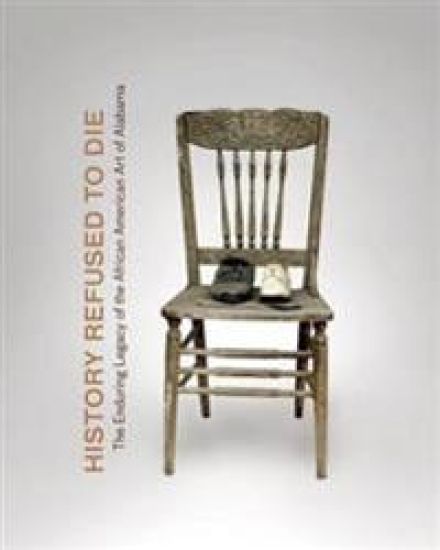
History Refused to Die: The Enduring Legacy of African American Art in Alabama

History Refused to Die: The Enduring Legacy of African American Art in Alabama

Horace Randall Williams; Karen Wilkin; Sharon Holland

Tinwood Books
2015
sidottu
After the death of Martin Luther King Jr., Alabama produced an impressive number of African American self-taught artists whose work particularly focused on the Civil Rights Movement and on aspects of history that led to it. This happened, in part, because the action was right on their doorsteps: Rosa Parks and the Montgomery Bus Boycott, the Selma March, the murder of four little girls in the bombing of the 16th Street Baptist Church in Birmingham. It was a spontaneous response to an emerging opportunity, and it occurred all over the South. History Refused to Die documents this phenomenon by highlighting the men and women whose artistic accomplishments deserve to be recognized by American art history, identifying six various themes that run through the works of almost all of these Alabama artists: Slavery, Agricultural and Industrial Alabama, The African-American Woman, The Civil Rights Era, Surviving Modern Times, and Autobiography and Commemoration. Featuring the work of fourteen African American artists from Alabama, including Thornton Dial, Lonnie Holley, Joe Minter, Ronald Lockett, Mose Tolliver, and several quilters from Gee's Bend, Alabama, this volume provides insight into black Alabama and African American visual expression through the presentation and analysis of more than 100 works of art.
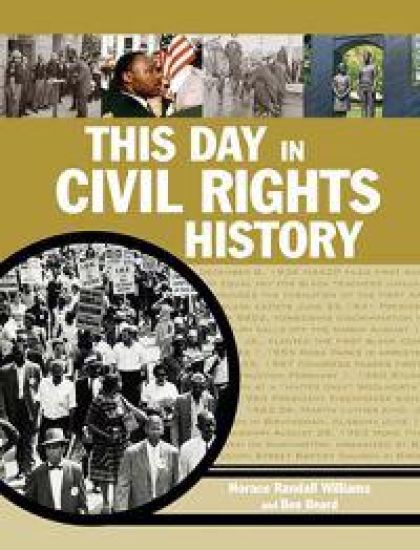
This Day in Civil Rights History

This Day in Civil Rights History

Ben Beard; Horace Randall Williams

UNIVERSITY OF GEORGIA PRESS
2009
pokkari
A unique catalog of historic civil rights events, This Day in Civil Rights History details the struggles, sacrifices, and triumphs on the road to equal rights for all U. S. citizens. From the Quakers’ 17th-century antislavery resolution to slave uprisings during the Civil War, to the infamous Orangeburg Massacre in 1968, and beyond, authors Horace Randall Williams and Ben Beard present a vivid collection of 366 events—one for every day of the year plus Leap Day—chronicling African Americans’ battle for human dignity and self-determination. Every day of the year has witnessed significant events in the struggle for civil rights. This Day in Civil Rights History is an illuminating collection of these cultural turning points.