
Kirjailija
Howard A Snyder
Kirjat ja teokset yhdessä paikassa: 30 kirjaa, julkaisuja vuosilta 1996–2024, suosituimpiin kuuluu Called to Community. Vertaile teosten hintoja ja tarkista saatavuus suomalaisista kirjakaupoista.
Nimi esiintyy myös muodoissa: Howard A. Snyder
30 kirjaa
Kirjojen julkaisuvuodet: 1996–2024.
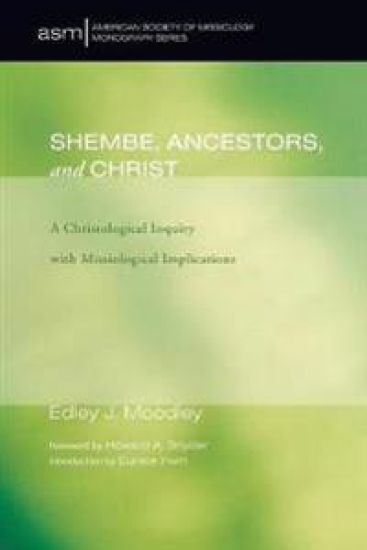
The Christian axis has shifted dramatically southward to Africa, Asia, and Latin America, so much so that today there are more Christians living in these southern regions than among their northern counterparts. In the case of Africa, the African Initiated Churches-founded by Africans and primarily for Africans-has largely contributed to the exponential growth and proliferation of the Christian faith in the continent. Yet, even more profoundly, these churches espouse a brand of Christianity that is indigenized and thoroughly contextual. Further, the power and popularity of the AICs, beyond the unprecedented numbers joining these churches, are attributed to their relevance to the existential everyday needs and concerns of their adherents in the context of a postcolonial Africa. At the heart of Christian theology is Christology-the confessed uniqueness of Christ in history and among world religions. Yet this key feature of Christianity, as with other important elements of the Christian faith, may be variously understood and re-interpreted in these indigenous churches. The focus of this study is the amaNazaretha Church, an influential religious group founded by the African charismatic prophet Isaiah Shembe in 1911 in the province of KwaZulu-Natal, South Africa. The movement today claims a following of some two million adherents and has proliferated beyond the borders of South Africa to neighboring countries in Southern Africa. The book addresses the complex and at times ambivalent understanding of the person and work of Christ in the amaNazaretha Church, presenting the genesis, history, beliefs, and practices of this significant religious movement in South Africa, with broader implications for similar movements across the continent of Africa and beyond. Edley J. Moodley is Director of Intercultural Studies and Associate Professor of Intercultural Studies at Lee University (Cleveland, TN). He holds a PhD in Intercultural Studies from the E. Stanley Jones School of World Missions and Evangelism, Asbury Theological Seminary (Wilmore, KY).
John Wesley Redfield (1810-1863), controversial "lay" evangelist in the Methodist Episcopal and later Free Methodist churches, was the cofounder of the Free Methodist Church and in the 1840s and 50s had a broad ministry in the M. E. Church and beyond. An outspoken abolitionist, Redfield was controversial among Methodist leaders and in the M. E. press as his revivals typically were marked by dramatic emotional manifestations, including people being slain in the Spirit and dramatic conversions. This book makes available for the first time his autobiography, a 425-page handwritten manuscript Redfield wrote shortly before he died. Redfield's manuscript details (briefly) his early life; his conversion; his brief stormy marriage and divorce; his abolitionist activities; his contacts with Phoebe Palmer, one of the founders of the Holiness Movement; his occasional practice of medicine; and his remarkable revivals, which are further clarified and documented by the author's footnotes. This book presents Redfield's manuscript in its entirety-with critical and contextual notes-and serves as an important primary source for the study of the Wesleyan Holiness tradition, American Methodism, revivalism, and abolitionism.
This updated best seller challenges the reader to examine the current church structure. If you have never read this classic, you have missed a treasure chest of information and wisdom from one of the most respected authors of our time. Wine (the gospel of Jesus Christ) and Wineskins (the man-made structures of the church). How do the two relate? What happens when new wine is poured into old wineskins? What about making new wineskins? In short: What kinds of church structures are most compatible with the gospel in our modern, techno-urban society? Snyder addresses these questions -- and provides some challenging answers. In the course of his argument he discusses the fellowship of the Holy Spirit, the mind of Christ, the role of spiritual gifts, the pastor as a superstar,"" and renewal that is deeply spiritual and immediately practical. No other book has had more influence in shaping my understanding of ministry at the local church level. It is a must read for every Christian leader."" --Michael Slaughter, Pastor, Ginghamsburg United Methodist Church Howard Snyder's 'Radical Renewal' is even more relevant today than when it first appeared as 'The Problem of Wineskins' in 1975. The world has changed, but Snyder's challenges are still very much alive today."" --Vinson Synan, Dean and Professor of Divinity, Regent University School of Divinity Important books do not die . . . all they need is a little dusting and polishing to become as vital and challenging as their first appearance. So it is with this . . . revision. Not only is it just as relevant, but given the changes taking place in society and the current state of the church, it is even more timely and necessary."" --Robert Banks, Director and Dean, Macquarie Christian Studies Institute Howard A. Snyder is Visiting Director of the Manchester Wesley Research Centre in Manchester, England. He has served as a pastor and as a professor at Asbury Theological Seminary (1996-2006), Tyndale Seminary in Toronto (2007-2012), and elsewhere. His books include The Problem of Wineskins, The Radical Wesley, Models of the Kingdom, and Salvation Means Creation Healed (with Joel Scandrett).
A classic revisited--revised and expanded. For over twenty-five years, Howard Snyder'sCommunity of the King has set the standard for a penetrating look at the relationship between the kingdom of God and the earthly church. Biblically and practically Snyder helps us think through such crucial questions as What is the kingdom of God? What role does it play in history? What does it mean for the church to be an agent of the kingdom? Once we grasp the nature of the kingdom, Snyder helps us explore its implications for the church as we experience it in daily life. The church, he argues, is part of God's dramatic plan to reconcile all things to himself. The church that is true to its calling will emphasize the God-given gifts of all its members and develop structures and strategies that reflect God's reign in the world. In addition to a completely new chapter on developments in Christian thinking on the church since its first publication, this new edition ofCommunity of the King contains a fully updated bibliography and is revised throughout. Here is a classic book for all concerned with church life and growth.
The Church gets into trouble whenever it thinks it is in the church business rather than the Kingdom business. In the church business, people are concerned with Kingdom activities, all human behavior and everything God has made.... Church people think about how to get people into the church; Kingdom people think about how to get the church into the world.