
Kirjailija
Howard Davies
Kirjat ja teokset yhdessä paikassa: 18 kirjaa, julkaisuja vuosilta 2001–2026, suosituimpiin kuuluu Global Financial Regulation. Vertaile teosten hintoja ja tarkista saatavuus suomalaisista kirjakaupoista.
18 kirjaa
Kirjojen julkaisuvuodet: 2001–2026.
When the Treasury lost control of interest rates to the Bank of England in 1997, its status looked under threat. However, it quickly reasserted its power by dominating policymaking across Whitehall and diminishing other ministries in the process. It also successfully fought off attempts by Prime Ministers, from Blair to Johnson, to cut it down to size. In this fascinating insider account, based on in-depth interviews with the Chancellors and key senior officials, Howard Davies shows how the past twenty-five years have nonetheless been a roller-coaster ride for the Treasury. Heavily criticized for its response to the global financial crisis, and for the rigours of the austerity programme, it also ran into political controversy through its role in the Scottish referendum and the Brexit debate. The Treasury’s dire predictions of the impact of Brexit have not been borne out. Redemption of a kind, though a costly one, came from its muscular response to the COVID crisis. Anyone with an interest in economic policymaking, in the UK and elsewhere, will find this a valuable and entertaining account.
When the Treasury lost control of interest rates to the Bank of England in 1997, its status looked under threat. However, it quickly reasserted its power by dominating policymaking across Whitehall and diminishing other ministries in the process. It also successfully fought off attempts by Prime Ministers, from Blair to Johnson, to cut it down to size. In this fascinating insider account, based on in-depth interviews with the Chancellors and key senior officials, Howard Davies shows how the past twenty-five years have nonetheless been a roller-coaster ride for the Treasury. Heavily criticized for its response to the global financial crisis, and for the rigours of the austerity programme, it also ran into political controversy through its role in the Scottish referendum and the Brexit debate. The Treasury’s dire predictions of the impact of Brexit have not been borne out. Redemption of a kind, though a costly one, came from its muscular response to the COVID crisis. Anyone with an interest in economic policymaking, in the UK and elsewhere, will find this a valuable and entertaining account.
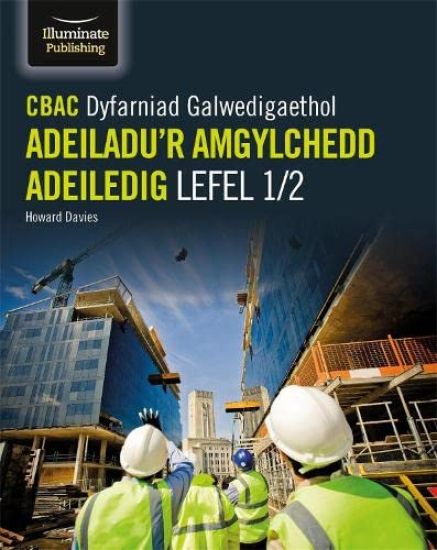
CBAC Dyfarniad Galwedigaethol Adeiladu'r Amgylchedd Adeiledig Lefel 1/2
Howard Davies
Illuminate Publishing
2020
nidottu
Written by an experienced Construction professional, this resource is designed to be accessible and practical. The comprehensive coverage of new specification requirements will support students through their course. // Suitable for Level 1 and 2 students, the depth of coverage, language and design of the book has been carefully tailored to their learning needs // Each unit is made relevant and purposeful through applied learning in a vocational context // A dedicated assessment section helps students thoroughly prepare for both their non-exam assessment and exams

How could a horse born and bred on a disused allotment by a rag-tag syndicate of twenty-odd members become the world famous subject of awards' winning documentary, Dark Horse and the star of a major, international film, Dream Horse? It beggars belief, but it happened and it happened for as little as ten pounds, per week contributed by each member. What started out as, "a bit of a fun to breed a horse to get on a racecourse" developed into literally the ride of a lifetime. Dream Alliance - Miracle Racehorse, is an insightful, honest and humorous account told by the author (played in Dream Horse by Golden Globe/Primetime Emmy winning, Damian Lewis OBE) who managed the syndicate from its conception through to its dissolution in 2012. From the depths of despair as the horse's life hung by a thread to the peak of elation as he recovered to take on the best horses in the country these actual events gave rise to one of the best underdog (sorry, horse) stories ever.
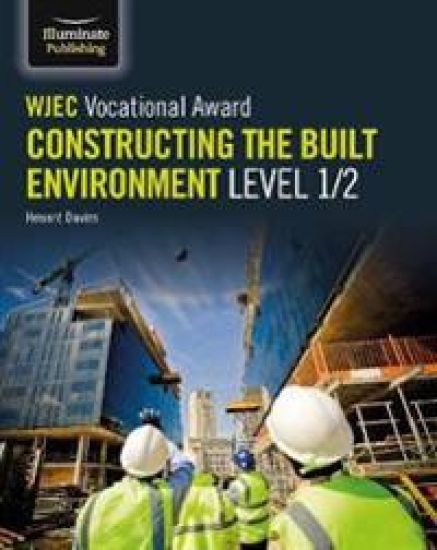
WJEC Vocational Award Constructing the Built Environment Level 1/2
Howard Davies; Steve Jones
Illuminate Publishing
2019
nidottu
Written by experienced Construction professionals and teachers, this resource is designed to be accessible and practical. The comprehensive coverage of new specification requirements for England will support students through their course; ? Suitable for Level 1 and 2 students, the depth of coverage, language and design of the book has been carefully tailored to their learning needs? Each unit is made relevant and purposeful through applied learning in a vocational context? A dedicated assessment section helps students thoroughly prepare for both their non-exam assessment and exams

As China becomes the world’s largest economy, so it becomes important to understand the key issues shaping the country’s business environment and the behaviour of Chinese businesspeople. This is difficult because those issues are contested. Is China growing at 3% or 8%? Is the Chinese consumer going to save the world? Are state-owned enterprises national champions or zombies? Have we reached the end of "Cheap China"? Can China innovate? Is business still dominated by personal connections? Are markets or the state in control? Does Chinese culture impede or support organizational effectiveness? Are Chinese dragons at your door? Will the finance and property sectors implode? Is the Chinese model sustainable, or will it end in tears? On all these issues there is ill-informed "noise", and an abundance of partisan interpretations. The purpose of this book, therefore, is to provide an even-handed analysis of the key issues that will shape the threats and opportunities arising from China’s development in the next decade. It cannot resolve the competing claims made. However, it does provide the reader with the ideas and the sources of evidence needed to understand and to make well thought-out judgments as China continues to evolve.
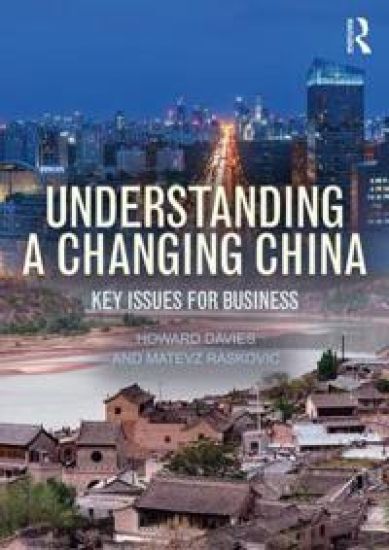
As China becomes the world’s largest economy, so it becomes important to understand the key issues shaping the country’s business environment and the behaviour of Chinese businesspeople. This is difficult because those issues are contested. Is China growing at 3% or 8%? Is the Chinese consumer going to save the world? Are state-owned enterprises national champions or zombies? Have we reached the end of "Cheap China"? Can China innovate? Is business still dominated by personal connections? Are markets or the state in control? Does Chinese culture impede or support organizational effectiveness? Are Chinese dragons at your door? Will the finance and property sectors implode? Is the Chinese model sustainable, or will it end in tears? On all these issues there is ill-informed "noise", and an abundance of partisan interpretations. The purpose of this book, therefore, is to provide an even-handed analysis of the key issues that will shape the threats and opportunities arising from China’s development in the next decade. It cannot resolve the competing claims made. However, it does provide the reader with the ideas and the sources of evidence needed to understand and to make well thought-out judgments as China continues to evolve.
The Global Financial Crisis overturned decades of received wisdom on how financial markets work, and how best to keep them in check. Since then a wave of reform and re-regulation has crashed over banks and markets. Financial firms are regulated as never before. But have these measures been successful, and do they go far enough? In this smart new polemic, former central banker and financial regulator, Howard Davies, responds with a resounding ‘no’. The problems at the heart of the financial crisis remain. There is still no effective co-ordination of international monetary policy. The financial sector is still too big and, far from protecting the economy and the tax payer, recent government legislation is exposing both to even greater risk. To address these key challenges, Davies offers a radical alternative manifesto of reforms to restore market discipline and create a safer economic future for us all.
The Global Financial Crisis overturned decades of received wisdom on how financial markets work, and how best to keep them in check. Since then a wave of reform and re-regulation has crashed over banks and markets. Financial firms are regulated as never before. But have these measures been successful, and do they go far enough? In this smart new polemic, former central banker and financial regulator, Howard Davies, responds with a resounding ‘no’. The problems at the heart of the financial crisis remain. There is still no effective co-ordination of international monetary policy. The financial sector is still too big and, far from protecting the economy and the tax payer, recent government legislation is exposing both to even greater risk. To address these key challenges, Davies offers a radical alternative manifesto of reforms to restore market discipline and create a safer economic future for us all.
There is still no consensus on who or what caused the financial crisis which engulfed the world, beginning in the summer of 2007. A huge number of suspects have been identified, from greedy investment bankers, through feckless borrowers, dilatory regulators and myopic central bankers to violent video games and high levels of testosterone among the denizens of trading floors. There is not even agreement on whether the crisis shows a need for more government intervention in markets, or less: some maintain that government encouragement of home ownership lay at the heart of the problem in the US, in particular. In The Financial Crisis Howard Davies charts a course through these arguments, and the evidence advanced for each of them. The reader can thereby assess the weight to be attached to each, and the likely effectiveness of the remedies under development.
There is still no consensus on who or what caused the financial crisis which engulfed the world, beginning in the summer of 2007. A huge number of suspects have been identified, from greedy investment bankers, through feckless borrowers, dilatory regulators and myopic central bankers to violent video games and high levels of testosterone among the denizens of trading floors. There is not even agreement on whether the crisis shows a need for more government intervention in markets, or less: some maintain that government encouragement of home ownership lay at the heart of the problem in the US, in particular. In The Financial Crisis Howard Davies charts a course through these arguments, and the evidence advanced for each of them. The reader can thereby assess the weight to be attached to each, and the likely effectiveness of the remedies under development.
The crash of 2008 revealed that the world's central banks had failed to offset the financial imbalances that led to the crisis, and lacked the tools to respond effectively. What lessons should central banks learn from the experience, and how, in a global financial system, should cooperation between them be enhanced? Banking on the Future provides a fascinating insider's look into how central banks have evolved and why they are critical to the functioning of market economies. The book asks whether, in light of the recent economic fallout, the central banking model needs radical reform. Supported by interviews with leading central bankers from around the world, and informed by the latest academic research, Banking on the Future considers such current issues as the place of asset prices and credit growth in anti-inflation policy, the appropriate role for central banks in banking supervision, the ways in which central banks provide liquidity to markets, the efficiency and cost-effectiveness of central banks, the culture and individuals working in these institutions, as well as the particular issues facing emerging markets and Islamic finance. Howard Davies and David Green set out detailed policy recommendations, including a reformulation of monetary policy, better metrics for financial stability, closer links with regulators, and a stronger emphasis on international cooperation. Exploring a crucial sector of the global economic system, Banking on the Future offers new ideas for restoring financial strength to the foundations of central banking.

This is a history of Jean-Paul Sartre's monthly review Les Temps Modernes, an immensely influential publication launched in 1945. The journal set out from the beginning to effect a revolutionary redefinition of psychology, sociology, political theory and anthropology, in order to assist in the socialist transformation of France and the world. Dr Davies is the first author to examine the review from a multidisciplinary viewpoint. The result is a panorama of forty years of French intellectual history, of debate and rivalry informed by and influencing the political struggles of the time - the Cold War, the Algerian revolution, the Gaullist era, May 1968, the Maoism of the 1970s. It is also an important chapter in the biography of Sartre which offers a new sense of the magnitude of his philosophical and moral aspirations and a revaluation of his work and status.
As international financial markets have become more complex, so has the regulatory system which oversees them. The Basel Committee is just one of a plethora of international bodies and groupings which now set standards for financial activity around the world, in the interests of protecting savers and investors and maintaining financial stability. These groupings, and their decisions, have a major impact on markets in developed and developing countries, and on competition between financial firms. Yet their workings are shrouded in mystery, and their legitimacy is uncertain. Here, for the first time, two men who have worked within the system describe its origins and development in clear and accessible terms. Howard Davies was the first Chairman of the UK's Financial Services Authority, the single regulator for the whole of Britain's financial sector. David Green was Head of International Policy at the FSA, after spending thirty years in the Bank of England, and has been closely associated with the development of the current European regulatory arrangements. Now with a revised and updated introduction, which catalogues the changes made since the credit crisis erupted, this guide to the international system will be invaluable for regulators, financial market practitioners and for students of the global financial system, wherever they are located. The book shows how the system has been challenged by new financial instruments and by new types of institutions such as hedge funds and private equity. Furthermore, the growth in importance of major developing countries, who were excluded for far too long from the key decision-making for a has led to a major overhaul. The guide is essential reading for all those interested in the development of financial markets and the way they are regulated. The revised version is only available in paperback.
As international financial markets have become more complex, so has the regulatory system which oversees them. The Basel Committee is just one of a plethora of international bodies and groupings which now set standards for financial activity around the world, in the interests of protecting savers and investors and maintaining financial stability. These groupings, and their decisions, have a major impact on markets in developed and developing countries, and on competition between financial firms. Yet their workings are shrouded in mystery, and their legitimacy is uncertain. Here, for the first time, two men who have worked within the system describe its origins and development in clear and accessible terms. Howard Davies was the first Chairman of the UK's Financial Services Authority, the single regulator for the whole of Britain's financial sector. David Green was Head of International Policy at the FSA, after spending thirty years in the Bank of England, and has been closely associated with the development of the current European regulatory arrangements. Now with a revised and updated introduction, which catalogues the changes made since the credit crisis erupted, this guide to the international system will be invaluable for regulators, financial market practitioners and for students of the global financial system, wherever they are located. The book shows how the system has been challenged by new financial instruments and by new types of institutions such as hedge funds and private equity. Furthermore, the growth in importance of major developing countries, who were excluded for far too long from the key decision-making for a has led to a major overhaul. The guide is essential reading for all those interested in the development of financial markets and the way they are regulated. The revised version is only available in paperback.
Aimed at non-specialist students taking a 2nd or 3rd level (often option) one semester course in business/managerial economics. The level assumes that students have already taken an introductory business economics course. Also appropriate for MBA or DMS students. This book provides a clear introduction to managerial economics for students who have no previous background in economic analysis and at the same time develops the analysis to a level that is appropriate for second or third year undergraduates or for postgraduate students who are taking the subject for the first time. The text shows how economic analysis can be of relevance to business decision making.