Kirjojen hintavertailu – 12 859 828 kirjaa ja 27 kauppaa

Kirjailija

Howard Dick

Kirjat ja teokset yhdessä paikassa: 5 kirjaa, julkaisuja vuosilta 1993–2009, suosituimpiin kuuluu The Emergence of a National Economy. Vertaile teosten hintoja ja tarkista saatavuus suomalaisista kirjakaupoista.

5 kirjaa

Kirjojen julkaisuvuodet: 1993–2009.

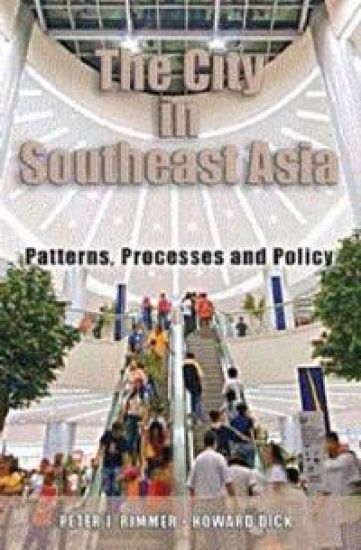
City in Southeast Asia

City in Southeast Asia

Peter J. Rimmer; Howard Dick

Singapore University Press
2009
pokkari
The extended metropolitan regions of Southeast Asia are the dynamic cores of their national economies and societies and the frontiers of accelerating globalization. This title explores ways of moving beyond outmoded paradigms of the Third World City or a Southeast Asian city 'type'.
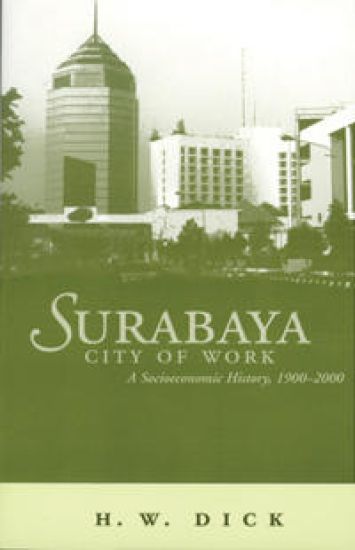
Surabaya, City of Work

Surabaya, City of Work

Howard Dick

Ohio University Press
2002
pokkari
Surabaya is Indonesia’s second largest city but is not well known to the outside world. Yet in 1900, Surabaya was a bigger city than Jakarta and one of the main commercial centers of Asia. Collapse of sugar exports during the 1930s depression, followed by the Japanese occupation, revolution, and independence, brought on a long period of stagnation and retreat from the international economy. Not until the export boom of the 1990s did Surabaya regain prominence as Southeast Asia’s leading non–capital–city industrial area. Previous thinking on Indonesia is being reassessed in light of recent political and economic upheaval. Surabaya, City of Work offers an alternative to the Jakarta-centric focus of most writing on the country. It is a multifaceted view of a fascinating and complex city in the dimensions of time and space, economy and society, and the current transition toward decentralization makes it highly topical. Exploration of this eventful economic history gives new insight into Indonesia’s modern economic development. Industrialization is recognized as being associated with rapid urbanization, but this is the first study of Indonesia from an explicitly urban perspective. Surabaya, City of Work takes a broad approach that links industrialization to socioeconomic trends, the increasing role of government, changing land use, and trade patterns. This well–illustrated local history encompassing national events and trends will be a central work on Indonesia for years to come.

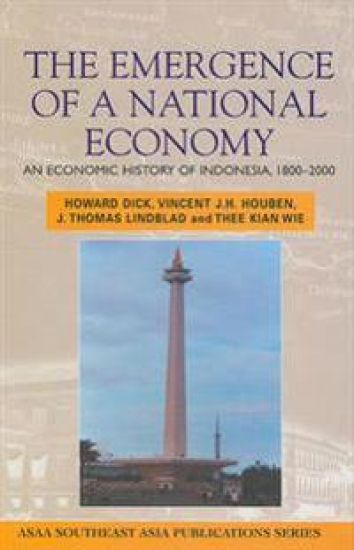
The Emergence of a National Economy

The Emergence of a National Economy

Howard Dick; Vincent JH Houben; J Thomas Lindblad; Thee Kian Wie

University of Hawai'i Press
2002
sidottu
At the beginning of a new century and amidst the turmoil of a new democracy, we need more than ever a historical perspective on modern Indonesia. This economic history connects Soeharto's New Order (1966-1998) back to the colonial era and helps to explain why the transition from colonialism to independence and from New Order to democracy has been difficult and sometimes traumatic. The Emergence of a National Economy identifies three themes in this transformation: globalization, state formation, and economic integration. These themes link chronological chapters from the pre-1800 period to the breakdown of the colonial system after 1930, the birth of modern Indonesia, the New Order, and the Asian crisis of the 1990s. For sale in Asia, Australia, and New Zealand by NUS Press (Singapore)
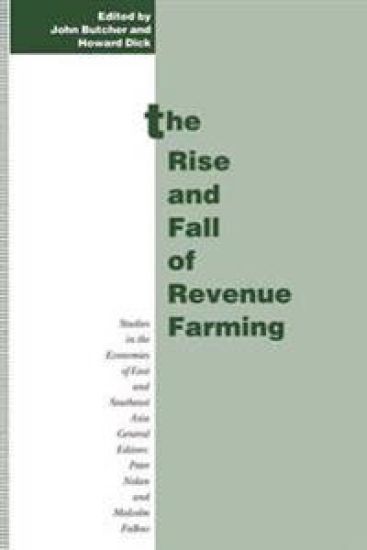
The Rise and Fall of Revenue Farming

The Rise and Fall of Revenue Farming

Howard Dick; John Butcher

Palgrave Macmillan
1993
sidottu
Until the early 1900s governments of Southeast Asia farmed out the right to run opium, gambling and other monopolies. Yet by about 1920 all of the major farms had been abolished and the collection of revenue brought under direct bureaucratic control. This book explains the rise and sudden fall of revenue farming, traces the changing fortunes of the Chinese businessmen who held the major farms, and uses the study of revenue farming to examine the emergence of the modern state in Southeast Asia.
The Rise and Fall of Revenue Farming

The Rise and Fall of Revenue Farming

Howard Dick; John Butcher

Palgrave Macmillan
1993
nidottu
Until the early 1900s governments of Southeast Asia farmed out the right to run opium, gambling and other monopolies. Yet by about 1920 all of the major farms had been abolished and the collection of revenue brought under direct bureaucratic control. This book explains the rise and sudden fall of revenue farming, traces the changing fortunes of the Chinese businessmen who held the major farms, and uses the study of revenue farming to examine the emergence of the modern state in Southeast Asia.